Disclosure: As an Amazon Associate, we earn from qualifying purchases. If you click a link on this page and make a purchase, we may receive a small commission at no extra cost to you.
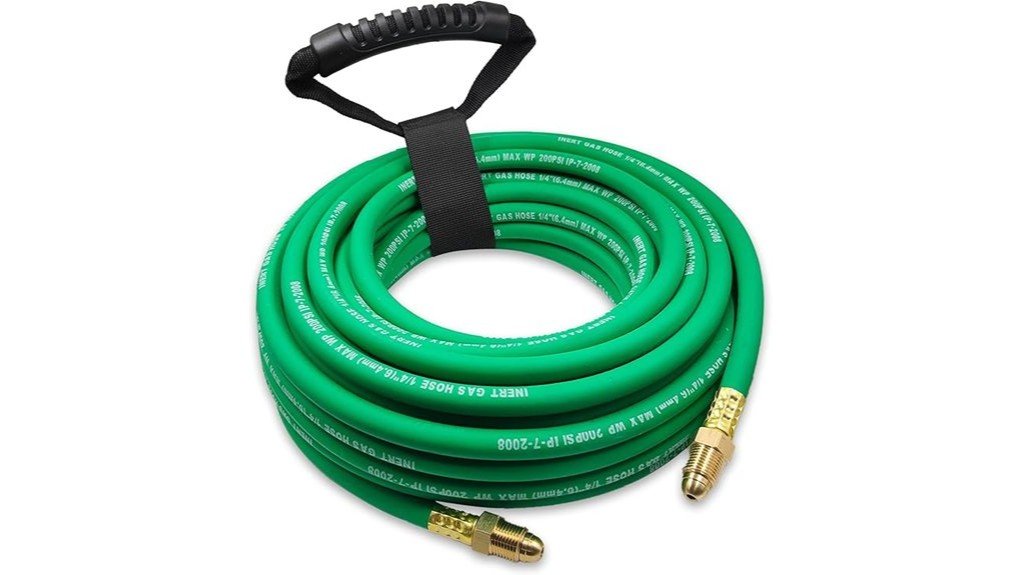
A welding hose has to do more than reach from the cylinder to your work area. It needs the right fittings, enough pressure capacity, and a build that can handle movement around a shop or garage. The 50FT Argon Gas Hose is a long shielding-gas hose listed with a three-layer design, 200 PSI maximum working pressure, and 5/8" UNF-18RH fittings. This review helps you decide whether it fits your welding setup, where its 50 ft length helps most, and when a shorter or different hose may be a better choice.
Quick Verdict
Rating: 8/10, recommended with compatibility checks
Best For: Welders who need extra reach between a shielding-gas cylinder, regulator, and work area.
Bottom Line: The 50FT Argon Gas Hose is worth considering if you need a longer hose for TIG, MIG, or mixed-gas welding setups. Its main strength is reach and layered hose protection, but you should confirm the fitting size and gas compatibility before ordering.
| Specification | Detail |
|---|---|
| Product type | Argon gas hose for welding gas delivery |
| Length | 50 ft |
| Maximum working pressure | 200 PSI |
| Fitting type listed | 5/8" UNF-18RH |
| Construction | Three-layer hose design |
| Core material | Rubber core |
| Reinforcement | Polyester braid |
| Outer layer | Anti-UV outer layer |
| Gas compatibility stated | Argon, CO2, helium combinations, and 75/25 argon/CO2 mixtures when your equipment supports them |
| Best use | Shop, garage, mobile welding, and longer-distance shielding-gas routing |
What Is the 50FT Argon Gas Hose?
The 50FT Argon Gas Hose is a shielding-gas hose for welding setups that need more distance between the gas cylinder and the work area. It is designed for gas delivery between compatible regulators, cylinders, and connectors rather than for welding current or electrical control.
The key appeal is its 50 ft length. That extra reach can help when your cylinder stays against a wall, outside a welding booth, or on a cart that you do not want to move for every small job. The tradeoff is that a long hose needs better routing, leak checks, and storage than a short hose.
Who Should Buy It?
Best For
- Welders who need a 50 ft gas hose for a larger shop or garage layout.
- TIG or MIG users who work with argon or supported mixed shielding gases.
- Buyers who want a hose with a rubber core, braid reinforcement, and an anti-UV outer layer.
Skip If
- Your regulator or connector does not use the listed 5/8" UNF-18RH fitting size.
- You only need a short hose and want less hose to coil, inspect, and store.
- You need a hose rated for oxygen, fuel gas, propane, or acetylene use.
Before You Buy: Match the hose fitting, thread direction, pressure rating, and gas type to your regulator and welding machine. Do not assume every gas hose fits every welding setup.
Material and Construction Quality
The article-supported construction is a three-layer design: a rubber core, polyester braid, and anti-UV outer layer. That layout gives the hose a more protected build than a basic single-layer tube.
The rubber core supports flexible gas delivery, while the braid layer adds reinforcement against movement and normal shop handling. The anti-UV outer layer is helpful if the hose sees bright shop light, garage doors, or occasional outdoor use, but you should still store it away from direct sun when possible.
The listed abrasion resistance and flame-retardant properties are useful around welding benches. They do not make the hose fireproof, so you still need to keep it away from sparks, hot metal, sharp edges, and grinding debris.
Specifications and Compatibility
The hose is listed with a maximum working pressure of 200 PSI. That gives it enough pressure capacity for many shielding-gas applications, but you should always follow the limits on your regulator, cylinder, machine, and hose label.
The listed fitting type is 5/8" UNF-18RH. This matters because gas fittings can vary by machine, regulator, adapter, region, and gas type. If your setup uses quick connectors, a different thread, or an adapter, confirm the whole connection path before buying.
Pro Tip: Before first use, connect the hose, open the cylinder slowly, and check the fittings with an approved leak-check solution. Retest after moving the cylinder or changing adapters.
Gas Compatibility and Safety
This hose is described for argon, CO2, helium combinations, and 75/25 argon/CO2 mixtures. Those gases are common in welding and shielding applications, but the safest choice is to follow the hose label and your equipment manual.
Do not use this hose for oxygen, fuel gas, propane, acetylene, or any gas not approved by the manufacturer. Gas hoses are not interchangeable just because the thread looks similar. A wrong hose can create leak, pressure, or material-compatibility risks.
Inspect the full 50 ft length before use. Look for cracks, hard spots, cuts, crushed areas, loose fittings, and worn outer cover sections. Replace the hose if it leaks or shows damage that could affect gas delivery.
Versatility and Use Cases
The 50FT Argon Gas Hose works best when extra reach improves your workflow. It can help you keep a cylinder in a safer corner, move around a larger workbench, or reach a project without dragging a gas cylinder across the floor.
For mixed-gas welding, the hose can support setups that use 75/25 argon/CO2 mixtures when the rest of your system is compatible. For TIG work, it can help when your argon cylinder sits away from the table or cart. For garage welding, the long hose can reduce how often you reposition heavy equipment.
How It Performs in Real Use
For Garage Welding
In a home garage, the 50 ft length gives you more freedom to place the cylinder away from the immediate work zone. That can be useful when floor space is limited or when you want the cylinder near a wall for better organization.
For Shop Benches and Stationary Setups
For a fixed welding bench, the hose can stay routed from the gas source to the machine without constant setup changes. The longer length is helpful, but you should avoid tight bends, kinks, and paths where people may trip.
For Mobile Welding Carts
When you move a welder around a shop, a 50 ft hose can reduce how often you move the cylinder. This is most useful if the hose is routed cleanly and does not drag across sharp metal or hot work areas.
For Occasional Outdoor Use
The anti-UV outer layer is a plus for occasional outdoor tasks. Still, the hose should not be treated as a permanent outdoor line. Store it dry, shaded, and coiled loosely after use.
How to Use It Correctly
Start by confirming the hose fittings match your regulator and quick connector. Thread the fittings carefully by hand first, then tighten them with the correct tool without over-tightening.
Route the hose along a clear path where it will not touch hot metal, sharp corners, wheels, or foot traffic. A long hose can improve reach, but it also creates more length to snag, kink, or damage.
After setup, check for leaks at both ends and at any adapter connection. If you smell gas, hear a hiss, see bubbles during a leak test, or notice unstable shielding flow, stop using the hose until the issue is fixed.
Cleaning, Maintenance, and Storage
Clean the outside with a damp cloth when dust, shop grime, or metal debris builds up. Avoid harsh solvents unless the hose label says they are safe, because solvents can damage rubber and outer coatings.
Store the hose in a cool, dry place away from direct sunlight, welding sparks, and heavy objects. Coil it loosely instead of bending it sharply. Sharp bends can weaken the hose over time and make gas flow less consistent.
Check the hose before each use and after any job where it was stepped on, pinched, or pulled hard. Regular inspection is the simplest way to catch wear before it becomes a leak.
Pros and Cons
Pros
- 50 ft length gives more reach for larger benches, garages, and shop layouts.
- 200 PSI maximum working pressure supports many shielding-gas welding setups.
- Three-layer design adds reinforcement beyond a basic single-wall hose.
- 5/8" UNF-18RH fitting size may fit many common regulator and connector setups.
- Anti-UV outer layer helps protect the hose during occasional outdoor or bright-shop use.
Cons
- Longer hose length needs more careful routing, leak checks, and storage.
- Not ideal if your setup uses a different fitting size or thread type.
- Not a universal hose for oxygen, fuel gas, propane, or acetylene applications.
Is It Worth the Price?
The 50FT Argon Gas Hose can be a strong value for the price if you specifically need the extra reach. A shorter hose may cost less and feel easier to manage, but it will not solve a layout problem in a larger shop.
You get the most value from this hose if your cylinder, regulator, and welder stay apart during normal work. If your machine and gas bottle sit on the same cart, a shorter hose may be cleaner and easier to store.
The main limitation is compatibility. The hose only makes sense if the fitting size, pressure rating, and approved gas type match your setup.
How It Compares to Alternatives
Compared with a short argon hose, this 50 ft option gives you more reach but also creates more hose to manage. If you work at one small welding cart, a shorter hose may be neater.
Compared with quick-connect extension setups, this hose keeps the review focus on a single long hose assembly. If you want faster machine changes, compare quick-connect kits separately. If you want a longer direct hose route, this model makes more sense.
Frequently Asked Questions
Will this hose fit every argon regulator?
No. The hose is listed with 5/8" UNF-18RH fittings, but not every regulator or connector uses that size. Check your regulator threads before buying.
Can you use it for 75/25 argon and CO2 gas?
The article-supported compatibility includes 75/25 argon/CO2 mixtures. You should still confirm that your regulator, machine, and fittings are rated for the same gas mixture.
Is a 50 ft gas hose too long for a small garage?
It can be too long if your welder and cylinder sit side by side. The extra length is most useful when your cylinder stays away from the workbench or you need to move around a larger area.
How do you check this hose for leaks?
Use an approved leak-check solution on the fittings after connecting the hose. If bubbles appear, shut off the gas and fix the connection before welding.
Can this hose be left outdoors?
The hose is described with an anti-UV outer layer, which helps with occasional exposure. For longer life, store it indoors or in a shaded, dry area when you are not using it.
How should you store a 50 ft argon hose?
Wipe it clean, coil it loosely, and keep it away from heat, sunlight, sharp tools, and heavy objects. Avoid tight bends because they can weaken the hose over time.
Who should skip this hose?
Skip it if you need a different thread type, a shorter hose, or a hose for oxygen or fuel gas. It is best for compatible shielding-gas welding setups that benefit from extra reach.
The Bottom Line
The 50FT Argon Gas Hose is a practical pick if you need a long shielding-gas hose with 200 PSI listed working pressure, 5/8" UNF-18RH fittings, and a three-layer build. It is best for shop, garage, and mobile setups where reach matters, but you should skip it if your fittings, gas type, or layout do not match.