Disclosure: As an Amazon Associate, we earn from qualifying purchases. If you click a link on this page and make a purchase, we may receive a small commission at no extra cost to you.
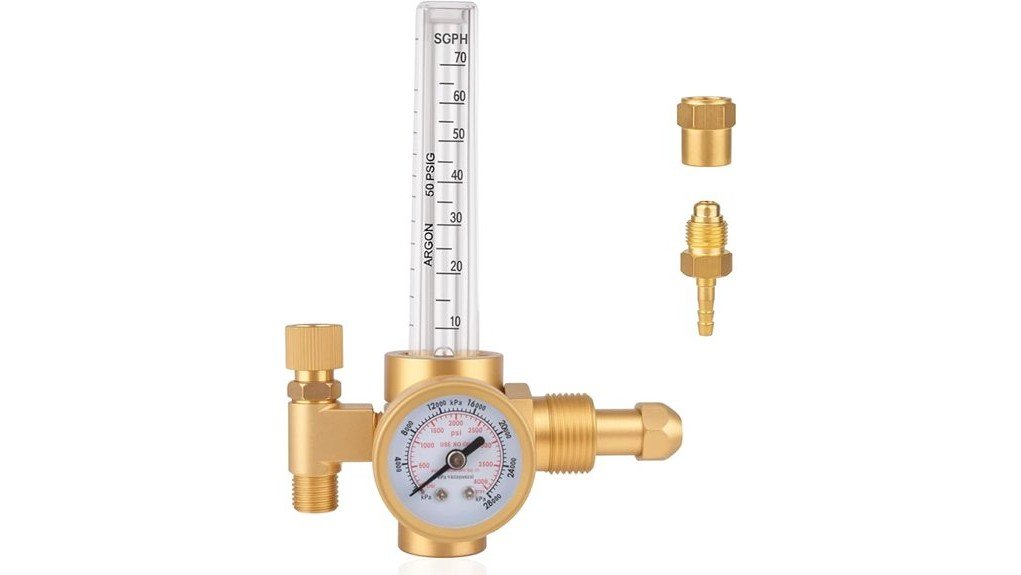
Choosing a welding gas regulator is not just about getting gas from the cylinder to your torch. You need steady readings, safe pressure control, and materials that can handle shop use without constant replacement. This Argon CO2 Regulator is designed for TIG and MIG welding, with a 0-4000 PSI pressure range, copper construction, and an integrated safety relief valve. It looks best for welders who want a practical regulator for shielding gas control, but you should confirm the fitting style and machine requirements before buying because the available article details do not verify every connection spec.
Quick Verdict
Rating: 7.8/10, Recommended with caveats
Best For: TIG and MIG welders who need a copper-body argon/CO2 regulator with clear pressure monitoring.
Bottom Line: This regulator is worth considering if you want article-supported features such as a 0-4000 PSI range, corrosion-resistant copper construction, and a built-in pressure relief valve. The main tradeoff is that the article does not verify brand, fitting type, dimensions, or certifications, so you should match it carefully to your cylinder and welding setup.
| Specification | Detail |
|---|---|
| Product type | Argon CO2 welding gas regulator |
| Amazon ASIN | B0FFT1XB6K |
| Welding compatibility | TIG and MIG welding applications |
| Pressure range | 0-4000 PSI, article-supported |
| Main material | High-quality copper, article-supported |
| Safety feature | Integrated safety relief valve within the pressure gauge, article-supported |
| Performance focus | Reliable flow readings and gauge calibration for shielding gas control |
| Warranty | One year, article-supported |
| Buyer note | Brand, dimensions, fitting type, certification details, and included accessories were not verified from the article. |
What Is the Argon CO2 Regulator?
The Argon CO2 Regulator is a welding gas regulator made for controlling shielding gas flow during TIG and MIG welding. The article-supported details point to a copper-built regulator with a 0-4000 PSI pressure range and a safety relief valve designed to release excessive pressure.
Its main job is to help you keep gas delivery steady enough to support cleaner welds. That matters because inconsistent shielding gas can contribute to porosity, weak bead appearance, and wasted gas. The regulator does not make up for poor setup, dirty metal, or the wrong gas mix, but it can help you manage one of the most important parts of the welding process.
Before You Buy: Confirm your cylinder connection, outlet fitting, gas type, and welder requirements before ordering. The article supports TIG and MIG use, but it does not verify the exact inlet standard, hose size, or included adapters.
Who Should Buy It?
Best For
- Welders using argon or argon/CO2 shielding gas for TIG or MIG work.
- Buyers who want a copper regulator body for corrosion resistance and shop durability.
- Users who value pressure monitoring and a built-in relief valve for safer gas control.
Skip If
- You need a verified brand, exact fitting type, or listed certification before purchase.
- Your welder, cylinder, or hose requires a connection standard that is not confirmed in the article.
- You need a regulator for oxygen, fuel gas, medical gas, or any use outside the manufacturer’s stated purpose.
Design and Safety Features
The strongest article-supported safety detail is the integrated safety relief valve inside the pressure gauge. This feature is intended to release excessive pressure, which can reduce risk during normal welding gas setup when the regulator is used correctly.
The 0-4000 PSI range gives the regulator enough capacity for common high-pressure shielding gas cylinders. For you, that means the regulator is built around cylinder-side pressure control rather than only low-flow adjustment. You should still open the cylinder valve slowly, stand to the side of the gauge, and follow the setup instructions for your welder and gas supplier.
Material Quality and Durability
The article describes the regulator as being constructed primarily from high-quality copper. Copper is a practical material choice for a regulator body because it can resist corrosion and handle repeated use better than cheap, fragile components.
Durability matters most if you move your welder around the shop, connect and disconnect cylinders often, or store the regulator in a garage where moisture and dust are common. A stronger body can help reduce premature replacement, but the gauges, threads, seals, and fittings still need careful handling.
Measurement Accuracy and Welding Performance
For TIG and MIG welding, accurate gas control helps you protect the molten weld pool from contamination. The original article highlights precise measurements, reliable flow readings, gauge calibration, and advanced sensing technology as key performance points.
The buyer benefit is simple: steadier readings make it easier to dial in your setup and repeat the same gas setting across similar jobs. That can help reduce wasted shielding gas and lower the chance of defects caused by poor gas coverage. It does not guarantee perfect welds, since metal prep, torch angle, cup size, wind, and travel speed also affect the result.
Compatibility for TIG and MIG Welding
This regulator is described as compatible with both TIG and MIG welding machines. For TIG work, steady argon flow helps shield the tungsten and the puddle. For MIG work, argon/CO2 blends are common for many steel applications, and a stable regulator helps maintain the shielding envelope around the arc.
The article does not verify exact fitting standards, included hose, adapter style, or cylinder thread type. That is the main compatibility issue to check before purchase. Match the regulator to your gas cylinder, welder input, and hose connection, not just the gas name in the product title.
Setup Tips Before First Use
Install the regulator only after the cylinder is upright, secure, and away from sparks or heat. Make sure the regulator threads match the cylinder connection, then tighten the connection according to the manufacturer’s instructions. Do not force mismatched threads, because that can damage the regulator or cylinder valve.
After connection, check for leaks with an approved leak-check solution. Open the cylinder slowly, watch the gauge response, and set the flow only after the system is pressurized. If the gauge jumps, leaks, sticks, or makes unusual sounds, stop using the regulator until it is inspected.
Pro Tip: Set your gas flow while the welder is configured for actual use, then recheck it after a short test bead. Small leaks, loose hoses, or a partly blocked nozzle can make the gauge look correct while shielding at the weld is still poor.
How It Performs in Real Use
For TIG Welding
In TIG welding, gas consistency is critical because the tungsten and weld puddle need clean shielding. A regulator with clear readings can help you keep argon flow steady during fine work, especially on thinner material where contamination shows quickly.
For MIG Welding
For MIG welding with argon/CO2 shielding gas, the regulator supports repeatable gas setup across common shop jobs. You still need to match the gas blend to the wire, material, and welding process, but steady regulation helps reduce one variable during setup.
For Shop and Garage Use
The copper construction described in the article makes sense for welders who store equipment in garages, small workshops, or industrial spaces where tools see regular handling. Good material quality can help with long-term reliability, but gauges and fittings should still be protected from drops and impact.
For Long-Term Ownership
The article mentions a one-year warranty and replacement parts through specialized vendors. That gives you some support path if a part wears out, but it is not the same as having confirmed parts availability from the manufacturer. Keep the order information and product details in case you need service later.
Compatibility and Safety
This regulator should be used only with gases and equipment it is designed to handle. Do not adapt it for oxygen, acetylene, propane, medical gas, or any fuel-gas system unless the manufacturer specifically states that use is allowed. A regulator that fits physically is not always safe for a different gas.
Always inspect the gauge face, threads, seals, and pressure relief area before use. Replace damaged hoses, cracked gauges, or leaking fittings before welding. If you are unsure about cylinder pressure, gas compatibility, or connection type, ask your gas supplier or a qualified welding technician before using the regulator.
Pros and Cons
Pros
- 0-4000 PSI pressure range supports common high-pressure shielding gas cylinder use.
- Designed for both TIG and MIG welding applications.
- Copper construction supports corrosion resistance and longer service life.
- Integrated safety relief valve adds a useful pressure-management feature.
- Reliable flow readings can help you repeat gas settings across similar welding jobs.
Cons
- Brand, model name, dimensions, and exact fitting type are not verified in the article.
- You must confirm cylinder and hose compatibility before purchase.
- It will not fix weld quality problems caused by poor prep, wrong gas mix, wind, or incorrect welding settings.
Is It Worth the Price?
This Argon CO2 Regulator is worth considering if you want a practical welding regulator with article-supported durability and safety features. Its strongest value points are the copper construction, 0-4000 PSI pressure range, TIG/MIG compatibility, and integrated relief valve.
It is a smart buy for everyday use if the fittings match your cylinder and welder. It is not the best fit if you need a fully verified brand, published certification list, exact connection details, or a regulator for gases outside argon and argon/CO2 welding use.
How It Compares to Alternatives
Compared with a basic low-cost regulator, this model has stronger article-supported claims around copper construction, pressure range, and safety relief design. Compared with premium name-brand regulators from established welding suppliers, the main drawback is the lack of verified brand, fitting, dimension, and certification details in the source article.
The Argon CO2 Regulator makes the most sense if you want a straightforward Amazon option for TIG or MIG shielding gas control and are comfortable confirming compatibility before buying. If you need documented industrial compliance or exact replacement-part support, compare it with regulators from major welding brands before deciding.
Frequently Asked Questions
What welding machines is this Argon CO2 Regulator compatible with?
The article supports compatibility with TIG and MIG welding applications. Before buying, confirm that the regulator fittings, hose connection, and cylinder connection match your exact welder and gas bottle.
Can it be used with both argon and CO2 gas?
The product is described as an Argon CO2 regulator, and the article positions it for TIG and MIG shielding gas use. You should still check the seller’s product details and your gas supplier’s guidance before using it with any specific gas blend.
What does the 0-4000 PSI range mean?
The 0-4000 PSI range refers to the regulator’s pressure reading capacity as stated in the article. This matters because welding shielding gas cylinders can be high-pressure containers, so you need a regulator made for that pressure class.
How do you install the Argon CO2 Regulator safely?
Secure the cylinder upright, confirm the connection type, attach the regulator without forcing the threads, and check for leaks with an approved leak-check solution. Open the cylinder valve slowly and follow the instructions for your gas cylinder, regulator, and welder.
Is the copper construction a useful feature?
Yes, the article-supported copper construction is useful because it points to better corrosion resistance and durability than weaker materials. It still needs careful handling because gauges, seals, and threaded parts can be damaged by drops or overtightening.
Can this regulator fix poor weld quality?
It can help with gas control, but it cannot fix every weld problem. Porosity, spatter, weak beads, and contamination can also come from dirty metal, wind, poor torch angle, wrong gas mix, incorrect flow, or bad machine settings.
What is the warranty period?
The article states a one-year warranty period. Because warranty terms can depend on the seller and manufacturer, check the current Amazon listing and product documentation before purchase.
Who should skip this regulator?
Skip it if you need a verified brand name, exact dimensions, known fitting standards, or documented certifications before buying. You should also skip it for non-welding gases unless the manufacturer specifically approves that use.
The Bottom Line
The Argon CO2 Regulator is a solid choice for TIG and MIG welders who want article-supported features such as copper construction, a 0-4000 PSI pressure range, reliable flow readings, and an integrated safety relief valve. You should skip it if you cannot confirm cylinder, hose, and welder compatibility before ordering. Its main strength is practical shielding gas control, while its main limitation is the lack of verified brand, fitting, and certification details in the source article.