Disclosure: As an Amazon Associate, we earn from qualifying purchases. If you click a link on this page and make a purchase, we may receive a small commission at no extra cost to you.
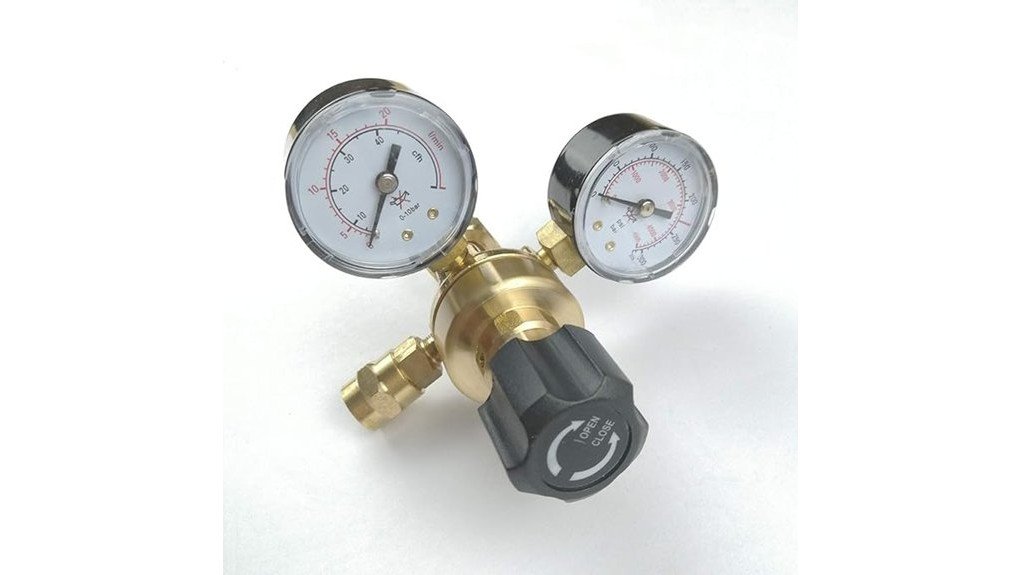
Choosing a shielding-gas regulator is mostly about getting the right cylinder connection, readable gauges, and dependable control without paying for features you do not need. The Blawicat Argon/CO2 CGA580 Welding Regulator, ASIN B085GB25FG, is a straightforward dual-gauge option built around a brass regulator body, CGA580 connection, and internal pressure-relief design. It is intended for MIG and TIG shielding-gas setups and gives you a simple way to monitor cylinder pressure and regulate gas delivery. Its biggest limitation is compatibility, because the CGA580 connection should not be confused with the CGA320 connection commonly used on standard pure-CO2 cylinders in the United States.
Quick Verdict
Rating: Recommended with caveats
Best For: MIG and TIG users who need a basic CGA580 regulator for compatible argon or shielding-gas cylinders.
Bottom Line: The Blawicat regulator offers a useful combination of dual 2-inch gauges, brass construction, an internal pressure-relief design, and simple adjustment. The main tradeoff is that you must verify your cylinder connection before buying, especially if you plan to use a pure-CO2 cylinder.
Key Specifications
| Specification | Detail |
|---|---|
| Brand | Blawicat |
| Product identifier | ASIN B085GB25FG |
| Product type | Argon/CO2 shielding-gas welding regulator |
| Recommended processes | MIG and TIG welding |
| Cylinder connection | CGA580 |
| Gauge design | Dual 2-inch gauges |
| Argon tank gauge range | 0 to 4500 PSI |
| Regulator body | Brass |
| Adjustment | Plastic adjustment knob |
| Safety feature | Internal pressure-relief design |
| Listed outlets | 5/8-inch female and 9/16-inch male |
| Package contents | 1 regulator |
| Typical environments | Welding, commercial, industrial, and laboratory gas-control applications with compatible connections |
Key Takeaways
- The Blawicat regulator uses a CGA580 cylinder connection, so checking your cylinder valve before ordering is essential.
- Its dual 2-inch gauges give you separate information for monitoring the gas system while welding.
- The listed argon tank gauge covers 0 to 4500 PSI.
- A brass regulator body provides a solid foundation for normal workshop use.
- An internal pressure-relief design adds protection against excessive internal pressure.
- The regulator is intended for MIG and TIG shielding-gas applications, rather than being a universal regulator for every compressed gas cylinder.
What Is the Blawicat Argon/CO2 CGA580 Regulator?
The Blawicat B085GB25FG is a dual-gauge gas regulator intended to control shielding gas for welding setups that use a compatible CGA580 cylinder connection. The product is commonly described as an Argon/CO2 regulator and is marketed for both MIG and TIG applications.
The regulator combines a brass body, two 2-inch gauges, an adjustable plastic control knob, and an internal pressure-relief design. Its high-pressure argon gauge is listed for a 0 to 4500 PSI range. The package contains one regulator, so hoses, adapters, and other accessories should not be assumed to be included unless the current seller listing specifically says so.
This is a relatively simple regulator design. It makes the most sense when you want a conventional gauge-based setup instead of a larger flow-tube system and you already know that your gas cylinder, hose, and welding equipment match its connections.
Before You Buy: Check the valve stamped or specified on your gas cylinder. This regulator uses CGA580. Do not assume that the words “Argon/CO2” mean it will screw directly onto every pure-CO2 cylinder. Standard pure-CO2 cylinders in the United States commonly use a different CGA320 connection.
Who Should Buy It?
Best For
- MIG welders using a compatible CGA580 shielding-gas cylinder.
- TIG users who need straightforward gas regulation without a complex control system.
- Home shops, repair areas, and light industrial setups that want readable dual gauges and simple manual adjustment.
Skip If
- Your cylinder uses CGA320 or another inlet connection instead of CGA580.
- You specifically want a flowmeter with a visible floating-ball flow tube.
- You require a regulator backed by clearly documented professional-grade service, parts, and warranty information.
Key Features of the Blawicat Argon/CO2 Regulator
Dual 2-Inch Gauges
The two gauges are one of the most useful parts of this design. At 2 inches across, they are large enough to read without forcing you to get extremely close to the regulator. The listed high-pressure argon gauge runs from 0 to 4500 PSI, giving you a clear view of cylinder pressure.
A gauge-style regulator is also compact compared with many tall flowmeter designs. That can be helpful when your cylinder and welder sit against a wall or under a welding cart. You should still position the cylinder so the gauges cannot be struck by workpieces, carts, or tools.
Brass Regulator Body
The regulator uses a brass body, which is a practical material choice for compressed-gas hardware. The body gives the regulator a solid structure around the inlet, adjustment mechanism, and gauge connections.
Build quality matters because the regulator is attached directly to a high-pressure cylinder. Even with a brass body, you should inspect the regulator before installation and avoid using it if the inlet, gauge, threads, or body appear damaged.
Internal Pressure-Relief Design
Blawicat lists an internal safety pressure-relief design. This feature is intended to provide protection against unwanted internal pressure buildup. It is a useful safeguard, but it should not be treated as a substitute for correct setup, the right cylinder fitting, or routine inspection.
You should never force an incompatible fitting simply because the regulator appears close to the correct size. Gas-service connections are intentionally standardized to help reduce incorrect equipment combinations.
Simple Adjustment Knob
The plastic adjustment knob is designed for smooth manual adjustment. This lets you make controlled changes without needing a separate tool for normal regulator adjustment.
The benefit is simplicity. Once your cylinder and hose are connected correctly, you can use the knob to set gas delivery for the welding process. Final gas settings should follow your welder, torch, consumable, and gas supplier recommendations rather than a single universal number.
CGA580 Connection and Listed Outlets
The inlet is a CGA580 fitting. The product information also lists a 5/8-inch female outlet and 9/16-inch male outlet. These dimensions are worth checking against the hose or equipment you already own before ordering.
The connection standard is more important than the words printed in a marketplace title. A regulator that says Argon/CO2 can still have an inlet that does not match a particular pure-CO2 cylinder.
Where This Regulator Makes Sense
MIG Welding
For MIG welding with a compatible shielding-gas cylinder, the Blawicat regulator provides the basic controls needed between the cylinder and gas hose. Its dual gauges let you monitor the system while the adjustment knob controls delivery.
This can suit home garages, fabrication benches, maintenance work, and repair shops where a conventional gauge-based regulator is preferred.
TIG Welding
TIG welding also depends on controlled shielding gas around the tungsten electrode and weld puddle. The CGA580 inlet makes this regulator relevant to compatible argon cylinder setups.
If your TIG work requires very fine visual flow adjustment, you may prefer comparing this gauge-style regulator with a dedicated flowmeter regulator before buying.
Commercial, Industrial, and Laboratory Use
The product is also listed for commercial, industrial, and laboratory gas-regulation applications. Compatibility remains the deciding factor. Before using it outside a normal welding setup, confirm the gas type, cylinder valve, pressure requirements, outlet connection, and downstream equipment.
How It Performs in Real Use
For Home Garage Welding
The compact dual-gauge design should suit a basic garage welding station where you want the cylinder mounted beside or behind the welder. The adjustment knob keeps operation simple, and the gauges provide an immediate visual reference without adding a tall flow tube.
For Mobile or Repair Work
A conventional regulator can work well on a portable welding cart, provided the cylinder is secured correctly and the gauges are protected from impacts. The brass body is useful here, but the exposed gauges are still vulnerable components and should not be used as lifting or handling points.
For MIG and TIG Setups
If both of your welding setups use compatible shielding gas and connections, a CGA580 regulator can fit naturally into either workflow. What it does not do is make every gas cylinder interchangeable. Always verify the actual cylinder valve and the gas recommended for the welding process.
For Ongoing Workshop Use
The simple mechanical layout reduces the number of user controls you need to manage. Long-term reliability, however, depends on condition, installation, storage, and handling. No specific service-life figure or manufacturer warranty period should be assumed for this exact model unless your current seller documentation states it.
Setup Tips Before First Use
- Confirm CGA580 compatibility first. Check your cylinder valve rather than relying only on the gas name in the listing.
- Inspect the regulator. Do not install it if a gauge, inlet, thread, or body appears cracked, bent, or damaged.
- Check your hose connection. Verify that the listed regulator outlet matches the hose or adapter used by your welding setup.
- Secure the cylinder. Keep the cylinder upright and secured according to the cylinder supplier and workplace safety requirements.
- Follow your welding equipment instructions. Use the gas type and flow setting recommended for your process, torch, wire, electrode, and material.
Pro Tip: Check the cylinder connection before you buy the regulator, then check the regulator outlet before you buy or reuse a hose. Confirming both ends prevents many compatibility problems before setup begins.
Compatibility and Safety
Gas compatibility is the most important buying issue with this regulator. Its CGA580 inlet is associated with argon and other compatible inert-gas cylinder services. A standard U.S. pure-CO2 regulator commonly uses CGA320, so a pure-CO2 cylinder may not accept this regulator directly.
Do not force, modify, or improvise a cylinder connection because the threads appear similar. If you are uncertain about the cylinder valve, take the cylinder identification to a welding-gas supplier and confirm the correct regulator.
The product’s internal pressure-relief design is a useful safety feature, but safe operation still depends on correct gas service, undamaged components, proper cylinder storage, and following the instructions supplied with your welder and cylinder.
Pros and Cons
Pros
- Dual 2-inch gauges provide easy-to-see system information.
- 0 to 4500 PSI argon tank gauge gives a broad cylinder-pressure range.
- Brass regulator body provides a solid, conventional construction.
- Internal pressure-relief design adds an important protective feature.
- CGA580 inlet suits compatible MIG and TIG shielding-gas setups.
Cons
- CGA580 is not a direct match for the CGA320 connection commonly used on standard pure-CO2 cylinders in the U.S.
- Buyers who prefer a floating-ball flow tube may want a flowmeter-style regulator instead.
- A specific manufacturer warranty period and detailed replacement-parts program could not be verified for this exact model.
Is It Worth the Price?
The Blawicat regulator is best viewed as a value-focused, conventional gauge regulator. It gives you the main hardware features many welders need, including a brass body, dual gauges, CGA580 inlet, pressure-relief design, and manual gas adjustment, without moving into a more elaborate professional flowmeter system.
It makes the most sense if you already have a compatible CGA580 cylinder and simply need a functional regulator for MIG or TIG shielding gas. The value becomes weaker if you need documented premium-brand support, a clearly stated long-term warranty, a flow-tube display, or a different cylinder connection.
Because online pricing changes, judge the current price against established welding-equipment regulators with the same inlet, outlet, and flow-control style rather than buying only because the listing appears inexpensive.
How It Compares to Alternatives
If you want a more professional flowmeter-style system, the Smith 23-50-580 Medium-Duty Dual Flowmeter Regulator is a different class of option. It uses CGA580 and adds a back-pressure-compensated flow tube, a triple scale for argon, helium, and argon/CO2, plus a dedicated fine-adjustment valve. That design is better suited to buyers who want a visual flow tube or need to control two flow outlets.
Another alternative is a Smith Series 30 CGA580 argon regulator. Smith’s professional models emphasize forged-brass construction, protected gauges, and documented manufacturer support. The Blawicat makes more sense when your priority is a simpler dual-gauge regulator and you do not need the additional features of professional gas-control equipment.
Frequently Asked Questions
Is the Blawicat regulator suitable for MIG and TIG welding?
Yes. The product is specifically listed for MIG and TIG applications where controlled shielding-gas delivery is required. Your cylinder, gas type, hose, and welder must still be compatible with the regulator.
What cylinder connection does this regulator use?
It uses a CGA580 inlet connection. Check the identification on your cylinder valve before ordering because gas names alone do not guarantee that two cylinders use the same regulator connection.
Will it fit a standard pure-CO2 cylinder?
Do not assume that it will. This regulator uses CGA580, while standard U.S. CO2 regulator service commonly uses CGA320. Confirm the valve on your actual cylinder or ask your welding-gas supplier before purchasing.
How large are the gauges?
The regulator is listed with two 2-inch gauges. The larger face size helps make readings easier to see during normal workshop use.
What is the pressure range of the tank gauge?
The listed argon cylinder gauge covers 0 to 4500 PSI. This is the high-pressure side used to monitor cylinder pressure rather than a universal welding flow recommendation.
What comes in the package?
The verified product information lists one Argon/CO2 regulator in the package. Do not assume that a hose, cylinder adapter, or additional accessories are included unless the current Amazon listing specifically shows them.
How should you maintain the regulator?
Keep the regulator clean, dry, protected from impacts, and inspect the gauges, inlet, threads, and body before use. If it leaks, shows damage, or gives abnormal readings, stop using it and have the equipment checked by a qualified welding-gas supplier or technician.
Who should skip this regulator?
Skip it if your cylinder does not use CGA580, if you specifically need a pure-CO2 CGA320 regulator, or if you want a professional flowmeter with a visible flow tube. Buyers who require clearly documented manufacturer warranty and service support may also prefer an established industrial gas-control brand.
The Bottom Line
The Blawicat Argon/CO2 CGA580 Welding Regulator is worth considering when you need a straightforward dual-gauge regulator for a compatible MIG or TIG shielding-gas setup. Its 2-inch gauges, brass body, 0 to 4500 PSI tank gauge, manual adjustment knob, and internal pressure-relief design cover the essential features most buyers expect from this type of regulator.
The main reason to skip it is connection compatibility. Confirm that your cylinder really uses CGA580, particularly if you intend to run pure CO2, and consider a professional flowmeter regulator if you want more specialized flow-control features.
Ready to Buy?
Check the latest product details and confirm your cylinder connection before you decide.