Disclosure: As an Amazon Associate, we earn from qualifying purchases. If you click a link on this page and make a purchase, we may receive a small commission at no extra cost to you.
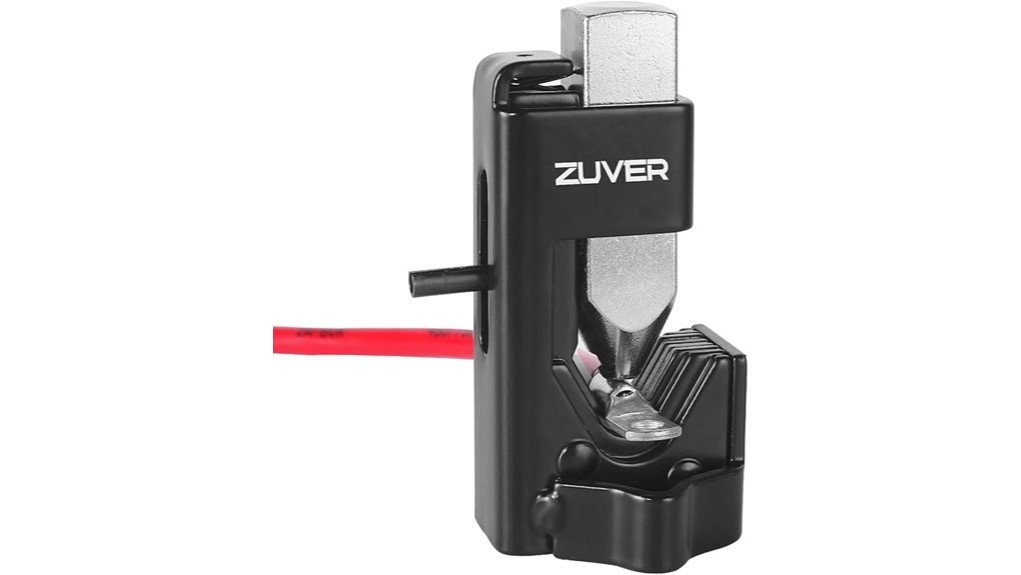
Large battery cables, welding leads, and heavy cable lugs need a tight crimp, but not every buyer wants a full hydraulic crimper kit. The Hammer Lug Crimper Tool is a compact manual option for crimping cable sizes from 8 AWG to 4/0 AWG. It keeps the design simple: place the lug and cable, then apply force with a sledgehammer or a shop vise. This review helps you decide if its low-profile design and high-strength iron build are enough for your work, or if the manual effort is a reason to choose another style.
Quick Verdict
Rating: Recommended with caveats, 8.1/10
Best For: DIYers, mobile mechanics, off-grid power setups, and workshop users who need occasional heavy cable lug crimps.
Bottom Line: The Hammer Lug Crimper Tool is a strong, compact choice if you need 8 AWG to 4/0 AWG crimping without a bulky kit. Its main tradeoff is that every crimp depends on correct setup and enough manual force.
Key Takeaways
- The Hammer Lug Crimper Tool supports cable sizes from 8 AWG to 4/0 AWG, which covers many battery cable and welding cable jobs.
- Its high-strength iron construction is suited to repeated shop use, but it still needs proper alignment and a stable work surface.
- The tool is only 3.75 inches high, so it is easy to store in a toolbox, service truck, or small workshop drawer.
- You can operate it with a sledgehammer or a shop vise, but larger cable sizes can take more effort than smaller lugs.
- It is best for occasional or field-use crimping. Buyers doing high-volume cable work may prefer a hydraulic crimper.
| Specification | Detail |
|---|---|
| Product name | Hammer Lug Crimper Tool |
| Product type | Manual cable lug crimper |
| Crimping range | 8 AWG to 4/0 AWG |
| Compatible cable use | Battery cables, welding cables, and matching cable lug applications within the stated gauge range |
| Material | High-strength iron |
| Tool height | 3.75 inches |
| Operation method | Use with a sledgehammer or shop vise |
| Best use | Occasional heavy cable crimping, field repair, battery cable work, and small-shop projects |
| Safety note | Use on a stable surface, keep hands clear of impact points, and inspect every crimp before energizing a cable. |
What Is the Hammer Lug Crimper Tool?
The Hammer Lug Crimper Tool is a manual tool made for compressing cable lugs onto heavy-gauge wire. Instead of using a powered press or a hydraulic ram, it relies on downward force from a sledgehammer strike or steady pressure from a shop vise. That makes it simple to store and easy to bring to a jobsite, but it also means the user controls the crimp quality.
The key appeal is the 8 AWG to 4/0 AWG crimping range. That range covers many common battery cable, inverter cable, automotive, marine, welding cable, and shop repair tasks. Since the article-supported material is high-strength iron, the tool is built for impact-style work rather than light-duty terminal crimping.
Before You Buy: This is a manual hammer or vise crimper, not a hydraulic crimper. If you need identical crimps all day or have limited hand, arm, or shoulder strength, a hydraulic cable lug crimper may be easier to use.
Who Should Buy It?
Best For
- DIYers building or repairing battery cables for vehicles, trailers, boats, or off-grid power setups.
- Workshop users who need a compact crimper for occasional 8 AWG to 4/0 AWG cable lug jobs.
- Mobile repair kits where small storage size matters more than high-speed production.
Skip If
- You need a low-effort crimper for repeated daily production work.
- You want a full crimping kit with dies, cutters, cable lugs, or storage case accessories.
- You are working with terminals or wire sizes outside the stated 8 AWG to 4/0 AWG range.
Design and Build Quality
The tool uses a compact upright design with a stated height of 3.75 inches. That small size is useful if your shop space is limited or you want a crimper that can stay in a vehicle tool bag. It does not take up the room of a hydraulic crimping kit, and there are no hoses, batteries, or pumps to manage.
The high-strength iron construction is one of the most important details for this type of tool. A hammer crimper must handle repeated impact or vise pressure, so the body needs to resist deformation during normal use. The simple build also gives you fewer parts to lose compared with multi-die crimping sets.
Crimping Range and Compatibility
The supported range of 8 AWG to 4/0 AWG gives this tool broad use for larger electrical cable work. It is not meant for small household wire terminals or delicate electronics work. It makes more sense for cable lugs used with battery banks, welding leads, jumper cable repairs, power inverters, winches, and similar heavy-current setups.
Compatibility still depends on the cable, lug, and crimp style. You should match the lug size to the cable size before crimping, and you should avoid forcing an undersized or oversized connector into the tool. A poor size match can create a weak crimp, even if the tool itself is strong.
Ease of Use
The operation is direct. You position the lug and cable in the crimper, then apply force with a sledgehammer or shop vise. This simple method can work well for users who already have basic shop tools and only need a reliable way to make occasional large cable crimps.
The tradeoff is physical effort. Smaller cable sizes should be easier to crimp, while larger 4/0 AWG lugs may require more careful setup and more force. Since no verified force rating is available, you should judge the crimp by proper compression, secure cable hold, and visual inspection rather than by a fixed number of pounds.
Pro Tip: Practice on scrap cable and a spare lug before making an important battery or welding cable. This helps you learn how much hammer or vise pressure is needed for the cable size you use most.
How to Use It Correctly
Start by cutting the cable cleanly and stripping only enough insulation for the lug barrel. The conductor should seat fully inside the lug without loose strands sticking out. Place the lug squarely in the crimper so the pressure lands on the crimp area, not on the ring, stud hole, or insulated section.
If you use a sledgehammer, set the tool on a stable, hard surface and keep your hands away from the impact path. If you use a shop vise, apply steady pressure and keep the lug aligned while the vise closes. After crimping, tug the cable firmly, inspect the lug for even compression, and cover the connection with heat shrink or other proper insulation when the project requires it.
Compatibility and Safety
This tool is used around electrical cable assemblies, so safety matters. Always disconnect power before working on battery cables or any energized system. A loose or poorly made crimp can increase resistance, create heat, and reduce the reliability of the connection.
Wear eye protection when using a hammer, and do not place fingers between the tool, cable lug, and impact point. Follow the cable lug manufacturer’s instructions when available, especially for cable stripping length, lug material, and inspection. If you are building cables for a high-current system, marine setup, vehicle charging circuit, or critical electrical application, consider having the finished cable checked by a qualified professional.
How It Performs in Real Use
For Battery Cable Repairs
For a battery cable repair, the 8 AWG to 4/0 AWG range gives you room to work with many common cable sizes. The compact tool is also helpful when you do not want to bring a large crimping kit to a garage, driveway, or field repair. The main thing to watch is lug alignment, because a crooked crimp can weaken the connection.
For Welding Cable and Shop Leads
Welding cables are often flexible and thick, which makes a strong crimp important. This tool can be a practical choice when your cable and lug fall within the supported range. You may need extra care with larger cable sizes, since the crimp will depend on firm pressure and a stable work surface.
For Off-Grid and Inverter Projects
Off-grid battery banks and inverter setups often use large lugs and heavy cable. The tool can help you make custom cable lengths without storing a large crimping system. For critical power connections, inspect each finished lug carefully and avoid using any crimp that twists, pulls loose, or looks uneven.
For Travel, Field Kits, and Small Shops
The 3.75-inch height makes the tool easy to keep in a service vehicle or small workshop. It is a better fit for occasional work than for production crimping. If you expect to make many cables in one session, the manual force may become tiring.
Pros and Cons
Pros
- Supports a wide 8 AWG to 4/0 AWG cable size range.
- High-strength iron construction suits impact-style crimping.
- Compact 3.75-inch height makes storage and transport easy.
- Works with common shop tools, either a sledgehammer or a shop vise.
- Good fit for battery cable, welding cable, and occasional heavy lug work.
Cons
- Requires manual force, which can be tiring during longer sessions.
- Crimp quality depends on cable fit, lug placement, and user technique.
- Not ideal for high-volume work where a hydraulic crimper is faster and easier.
Is It Worth the Price?
The Hammer Lug Crimper Tool is worth considering if you need a simple, compact way to crimp large cable lugs without buying a more complex crimping system. Its value comes from the wide 8 AWG to 4/0 AWG range, the high-strength iron body, and the ability to use tools you may already own.
It is a smart buy for occasional use, field repairs, and DIY cable projects. It is not the best fit if you need fast, repeatable crimps for many cables in a row, because a hydraulic crimper can reduce fatigue and improve consistency for high-volume work.
How It Compares to Alternatives
Compared with a hydraulic cable lug crimper, this hammer-style tool is smaller, simpler, and easier to store. A hydraulic crimper is usually better for repeated crimps, larger projects, or users who want less manual effort.
Compared with ratcheting terminal crimpers, this tool is made for much larger cable lugs. Ratcheting crimpers make sense for smaller terminals, while the Hammer Lug Crimper Tool makes more sense for battery cable, welding cable, and other heavy cable assemblies within the stated gauge range.
Frequently Asked Questions
What wire sizes does the Hammer Lug Crimper Tool support?
It supports cable sizes from 8 AWG to 4/0 AWG. That range is most useful for battery cables, welding cables, and similar heavy cable lug applications.
Can you use it with battery cables?
Yes, battery cable work is one of the best matches for this type of manual lug crimper. Make sure the cable, lug, and finished connection are suitable for the electrical load before putting the cable back into service.
Does it work with welding cable?
The article-supported compatibility includes welding cable within the 8 AWG to 4/0 AWG range. Because welding cable can be thick and flexible, take extra care to seat the conductor fully inside the lug before crimping.
Do you need a sledgehammer to use it?
You can use a sledgehammer, but the article also supports use with a shop vise. A vise may give you more control, while a hammer can be faster when you have a solid work surface and enough room to strike safely.
Is this tool good for beginners?
It can work for beginners because the design is simple, but practice matters. Try a scrap cable and spare lug first so you can learn correct placement, pressure, and inspection before making an important cable.
How do you know if the crimp is secure?
The cable should not pull out of the lug, and the crimp should look even and centered on the lug barrel. If the lug is crooked, loose, cracked, or poorly compressed, cut it off and redo the connection.
Who should skip this hammer lug crimper?
Skip it if you need low-effort crimping, daily production speed, or a kit with many dies and accessories. A hydraulic crimper is usually the better choice for repeated large cable work.
The Bottom Line
The Hammer Lug Crimper Tool is a practical choice if you need a compact manual crimper for 8 AWG to 4/0 AWG battery cables, welding cables, and matching cable lugs. Its strongest points are the wide crimping range, high-strength iron build, and small storage size, while its biggest limitation is the manual force required. Choose it for occasional heavy cable work, but consider a hydraulic option if you crimp large lugs often.