JZU Handheld Welding Machine Review
A full-size stick welder can be more machine than you need for a loose bracket, gate repair, or small steel project. The JZU handheld welding machine puts the electrode holder, current control, and display into a compact pistol-style unit powered by a listed 110V input. Its main appeal is portability, but the seller-stated 20 to 250A range and rod support should be treated as listing claims until you confirm them in the current manual. This review helps you decide whether its small format fits your work or whether a conventional inverter welder would be a safer, more capable choice.
Editorial note: This review evaluates the published product listing and available specifications. It is not based on hands-on performance testing, so duty cycle, sustained output, arc quality, and long-term durability remain unverified.
Quick Verdict
Rating: 7.5/10, recommended with caveats
Best For: DIY users who need a compact 110V stick welder for light steel repairs and occasional projects.
Bottom Line: The JZU is easy to store and lists useful beginner aids such as an LCD display, hot start, and anti-stick control. Its tradeoffs are limited verification, no stated duty cycle in the source material, and no aluminum-welding support.
Key Specifications
| Specification | Detail |
|---|---|
| Brand | JZU |
| Product | Upgrade MMA 250A handheld welding machine |
| ASIN | B0D1KBKJQL |
| Welding Process | MMA or stick welding with an IGBT inverter |
| Input Power | Listed for 110V power |
| Listed Current Range | 20 to 250A, seller stated and not independently tested here |
| Controls | LCD display with a rotating current-control switch |
| Electrode Support | Listed for E6013, E7018, E6010, and E6011 rods |
| Rod Diameter | 1/16 to 1/8 inch (1.6 to 3.2 mm) |
| Listed Materials | Mild steel, stainless steel, and iron |
| Aluminum Welding | Not supported by the product description |
| Listed Size | 9.8 x 9.4 inches |
| Listed Weight | 3 lb |
| Arc Aids | Hot start and anti-stick |
| Protection Features | Air cooling plus listed overheat, overload, short-circuit, overcurrent, and insulation protection |
| Storage | A carrying case is listed; confirm the current package contents before purchase |
Before You Buy: The listing does not provide enough information here to verify duty cycle, breaker requirements, lead length, output at the electrode, or sustained performance. Check the current manual and package details before relying on the 250A headline.
What Is the JZU Handheld Welding Machine?
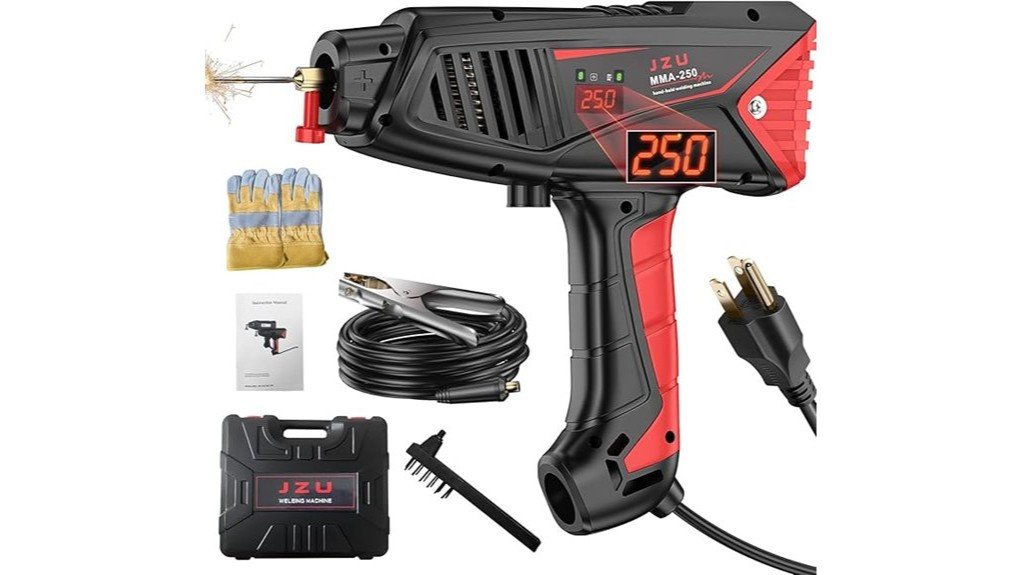
The JZU is a compact MMA stick welder built around a handheld gun-style body. Instead of using a separate electrode holder connected to a larger box, the unit places the display and current adjustment close to your hand. That layout reduces storage space and can make short, occasional repairs easier to set up.
The product listing presents it as a 110V IGBT inverter welder for home DIY, hardware repair, sheet-metal work, machinery maintenance, and light automotive tasks. It is designed for common stick electrodes from 1/16 to 1/8 inch, but actual rod performance will depend on the electrode type, diameter, metal preparation, input circuit, and the machine’s real output.
This format makes the most sense when portability matters more than maximum control or continuous production. A conventional inverter stick welder may offer longer leads, a clearer duty-cycle specification, and a more stable work position for larger jobs.
Who Should Buy It?
Best For
- DIY users making occasional repairs on mild steel, iron, or suitable stainless steel.
- Small garages and workshops where a 3 lb listed weight and compact footprint are useful.
- Beginners who value an LCD display, rotary control, hot start, and anti-stick assistance.
Skip If
- You need aluminum welding, TIG control, MIG wire feeding, or multi-process capability.
- You perform structural, code-regulated, or high-duty-cycle production welding.
- You need independently verified output, duty cycle, warranty terms, or detailed electrical specifications.
Feature-by-Feature Review
Compact Design and Portability
The listed 9.8 x 9.4 inch size and 3 lb weight are the clearest reasons to consider this model. It should be easier to store on a shelf, carry to a gate or workbench, and move between small repair areas than a full-size transformer welder.
The tradeoff is balance and control. Because the electrode is held by the machine body, the tool can feel heavier at your hand than a standard electrode holder. You also need enough clearance to position the entire unit without touching grounded metal, hot work, or nearby obstacles.
Controls, Display, and IGBT Inverter
The LCD display and rotating switch give you a visible starting point for current adjustment. This is more useful than an unmarked low-cost control because you can record a setting that worked for a certain rod and material thickness.
The IGBT inverter design is intended to keep the machine compact and regulate the welding current. However, a displayed number does not prove the exact amperage reaching the arc. Begin with the electrode maker’s guidance and the JZU manual, then make test welds on scrap of the same material before working on the finished part.
Electrode and Material Compatibility
JZU lists E6013, E7018, E6010, and E6011 electrodes in 1/16 to 1/8 inch diameters. That range covers common general-purpose and repair electrodes, but each rod has different storage, polarity, arc-force, and power needs. The listing should not be read as a promise that every diameter and electrode type will perform equally well on a 110V circuit.
The stated base-metal support includes mild steel, iron, and stainless steel. The product is not presented as an aluminum welder. You should also avoid coated, painted, galvanized, plated, or contaminated metal until the coating and fume risks are understood and handled with proper controls.
Hot Start, Anti-Stick, and Cooling
Hot start briefly helps establish the arc, while anti-stick is designed to reduce current when the electrode freezes to the work. These aids can reduce frustration during short tack welds and practice sessions, especially when you are still learning arc length.
The listing also names intelligent air cooling and several protection modes. These systems can protect the machine, but they do not replace a published duty cycle or proper rest periods. Stop if the unit shows a warning, loses output, smells overheated, or behaves differently from the manual.
How It Performs in Real Use
Small Home Repairs
The JZU format is best matched to short welds on brackets, hinges, frames, and similar steel parts that can be cleaned and clamped securely. Its portability lowers setup effort, but you should still prepare the joint, attach the work clamp to clean metal, and practice on scrap before repairing a load-bearing item.
Garage and Workbench Projects
On a bench, the display and rotary control make repeat settings easier. The small body also leaves more storage room than a conventional welder. Keep the machine’s air path clear, place hot electrodes in a safe holder, and remove flammable liquids, sawdust, rags, and aerosols from the welding area.
Light Automotive Work
The listing mentions automotive maintenance, but the JZU should not be treated as a general solution for vehicle welding. Thin body panels can burn through, and structural, suspension, fuel-system, battery, airbag, and high-voltage areas require vehicle-specific procedures. Use a qualified repair professional when the weld affects crash structure or safety-critical parts.
Portable and Outdoor Use
The compact size is convenient for moving around a property, but the welder is an electrical tool. Use it only in dry conditions, protect the unit and connections from moisture, and make sure ventilation does not blow sparks toward dry grass, vehicles, buildings, or other combustibles.
Setup Tips Before First Use
- Confirm the electrical requirements: Check the manual for breaker size, grounding, plug condition, and extension-cord limits. Do not use an undersized or damaged cord.
- Match the rod to the work: Verify electrode type, diameter, polarity, and recommended current before striking an arc.
- Prepare clean metal: Remove rust, oil, paint, and loose scale from the joint and clamp area using methods appropriate for the coating.
- Run a scrap test: Use metal of the same type and thickness to check penetration, sticking, spatter, and heat before welding the final part.
- Plan your hand position: The whole welder sits close to the electrode, so keep its body, vents, cord, and your gloves clear of hot metal and the arc.
Pro Tip: Start with a smaller electrode and a short practice bead on clean scrap. Record the display setting that gives a stable arc, then adjust in small steps rather than jumping to the listed maximum.
Welding Safety and Electrical Precautions
Arc welding can expose you to ultraviolet radiation, hot metal, sparks, fumes, fire, and electrical shock. Wear a correctly selected welding helmet, safety glasses, dry welding gloves, protective clothing, and suitable footwear. Keep bystanders screened from the arc and follow the electrode, machine, and workplace instructions.
Ventilation matters, especially with stainless steel, coatings, confined spaces, or unknown metals. Do not weld on sealed containers, fuel tanks, or parts that held flammable material. Review OSHA welding hazard guidance and obtain qualified help when the material, coating, electrical supply, or repair method is uncertain.
Pros and Cons
Pros
- Listed 3 lb weight and compact body simplify storage and transport.
- LCD display and rotary control make settings easier to repeat.
- Hot start and anti-stick features can help with arc starting and stuck rods.
- Lists support for four common electrode families from 1/16 to 1/8 inch.
- Runs from listed 110V input rather than requiring a dedicated 240V source.
Cons
- No verified duty cycle or independent confirmation of the listed 250A maximum.
- Handheld body may offer less reach and positioning freedom than separate welding leads.
- Not intended for aluminum or demanding structural and production work.
Is It Worth the Price?
The JZU makes the most sense as a budget-oriented, occasional-use welder. You are paying for a compact all-in-one format, simple controls, and listed support for common stick electrodes rather than for a proven high-duty-cycle platform.
It can be worth considering when storage space and portability are your main concerns and your work is limited to small, noncritical steel repairs. It is not the best value when you need verified continuous output, long leads, multi-process capability, service-network support, or documented performance for professional work.
How It Compares to Alternatives
A conventional YESWELDER, TOOLIOM, or ARCCAPTAIN inverter stick welder may be easier to position because the electrode holder is connected by a lead instead of built into the machine body. Those brands also offer models with different process options and more detailed control layouts, although features vary by model.
The JZU stands out when you want the smallest practical setup for short stick-welding jobs. Choose an alternative when cable reach, published duty cycle, service information, or multi-process flexibility matters more than one-piece portability.
Frequently Asked Questions
What is the ASIN for this JZU handheld welder?
The product link uses ASIN B0D1KBKJQL. Confirm that the current Amazon title, photos, voltage, and included accessories still match this review before ordering.
Can the JZU welder run from a household outlet?
The listing describes a 110V plug, but that does not confirm the required breaker size or safe extension-cord length. Check the manual and your electrical circuit before use.
Which welding rods does it support?
JZU lists E6013, E7018, E6010, and E6011 electrodes from 1/16 to 1/8 inch. Results can vary by rod type, diameter, storage condition, polarity, metal preparation, and available input power.
Is the listed 250A output independently verified?
No independent output test is included in the source material. Treat 20 to 250A as the seller-stated adjustment range and check the manual for duty cycle and operating limits.
Can it weld aluminum?
No. The product description presents this model for mild steel, iron, and stainless steel, not aluminum. Choose equipment and filler designed for aluminum if that is your main material.
Is this welder suitable for beginners?
The display, rotary adjustment, hot start, and anti-stick functions may make practice easier. Beginners still need welding safety training, proper PPE, material preparation, and scrap practice before attempting a repair.
Can it be used for automotive repairs?
It may suit selected noncritical steel tasks when the vehicle maker’s procedure allows stick welding. Do not use it casually on structural, fuel, airbag, battery, electronic, or high-voltage areas.
What should you confirm before buying?
Confirm the current package contents, duty cycle, input-circuit requirements, lead or cord length, polarity support, warranty terms, and return policy. These details can affect usability more than the headline amperage.
The Bottom Line
The JZU handheld welding machine is a reasonable fit for DIY buyers who want a compact 110V stick welder for short, light steel repairs. Its strongest points are portability and simple controls, while its main limitations are incomplete technical verification, no stated duty cycle in the source material, and no aluminum support. Skip it for structural, production, or multi-process work.
Ready to Buy?
Check the latest price, package contents, electrical requirements, and product details before you decide.