Disclosure: As an Amazon Associate, we earn from qualifying purchases. If you click a link on this page and make a purchase, we may receive a small commission at no extra cost to you.
Small pests can ruin garden beds, poultry runs, and outdoor storage areas when your barrier has gaps that are too large or material that breaks down too fast. The 1/4 inch hardware cloth is made for buyers who need a rigid metal mesh for fencing, pest control, and protective DIY barriers. Its low carbon steel wire and hot-dipped galvanized coating give it better outdoor durability than untreated steel mesh. This review helps you decide where it works well, where it needs careful framing, and where a more flexible material may fit better.
Quick Verdict
Rating: 8/10
Best For: Garden protection, poultry enclosures, raised beds, tree guards, and DIY mesh barriers
Bottom Line: This 1/4 inch hardware cloth is a strong pick when you need tight galvanized steel mesh for pest control and outdoor protection. The main tradeoff is stiffness, so you need proper tools, gloves, and support framing for cleaner installation.
| Specification | Detail |
|---|---|
| Product Type | Hardware cloth / welded wire mesh |
| Material | Low carbon steel wire |
| Coating | Hot-dipped galvanized |
| Mesh Opening | 1/4 inch |
| Wire Gauge | Approx. 23 gauge |
| Available Sizes | 4 in x 10 ft, 8 in x 20 ft, 12 in x 20 ft |
| Best Use | Poultry fencing, garden protection, raised bed barriers, tree guards, and DIY enclosures |
| Installation Method | Staples, zip ties, fencing nails, or fasteners suited to your frame |
| Safety Note | Cut edges can be sharp, so gloves and eye protection are recommended |
| Not Designed For | Load-bearing structural support or flexible temporary netting |
What Is the 1/4 Inch Hardware Cloth?
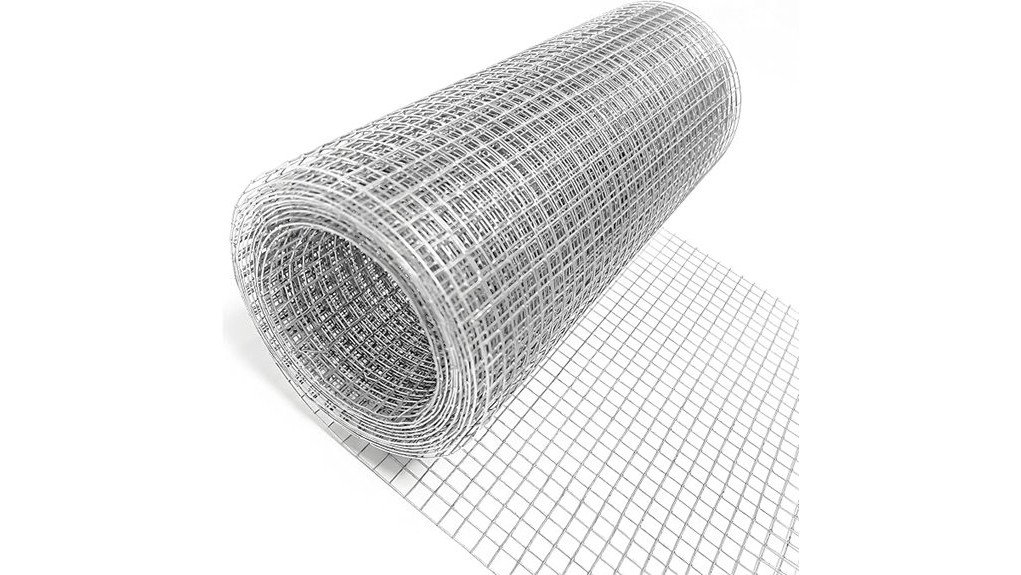
The 1/4 inch hardware cloth is a rigid welded steel wire mesh designed for protective barriers, enclosure work, and pest-control projects. It uses low carbon steel wire, which gives you a balance of shape-holding strength and basic workability around frames, posts, or garden beds.
The 1/4 inch mesh opening is the key buying detail. It creates a tighter barrier than many larger-gap welded wire fences, which helps block small animals while still allowing airflow through the enclosure.
The hot-dipped galvanized coating adds outdoor durability by helping protect the steel wire from rust. It does not make the mesh maintenance-free, especially at cut edges or buried sections, but it gives you a stronger long-term option than untreated steel mesh.
Who Should Buy It?
Best For
- Home gardeners protecting crops, raised beds, or young plants from small pests
- Poultry owners adding mesh to coop windows, vents, runs, or lower fence sections
- DIY users building custom guards, storage cages, tree protectors, or barrier panels
Skip If
- You need soft mesh that bends easily by hand without tools
- You want a pre-framed, ready-to-install fencing panel system
- You need material for structural weight support instead of barrier coverage
Build Quality and Materials
The mesh uses low carbon steel wire, so it can hold its shape better than plastic netting while still allowing cutting and forming during installation. That matters when you need the mesh to stay flat against a frame or keep its shape around a garden bed.
The hot-dipped galvanized finish is the main durability feature. It helps reduce rust formation during outdoor use, especially when the mesh sits above ground and drains well after rain.
Cut edges deserve extra attention because trimming exposes sharp wire ends. If you plan to bury a section or wrap the mesh around a frame, fold or cap exposed edges where hands, animals, or clothing may contact the wire.
Mesh Size and Pest Protection
The 1/4 inch opening gives this hardware cloth a practical advantage over wider welded wire fencing. Larger openings may work for keeping bigger animals out, but they can leave gaps for small rodents or young pests.
For garden protection, the tight spacing helps around raised beds, seedling areas, and low fence sections. For poultry projects, it works best as a protective add-on over openings, vents, windows, or lower areas where small animals may try to enter.
This mesh should not be treated as a complete predator-proof system by itself. Your results also depend on frame strength, fastener spacing, ground gaps, door latches, and how well you secure seams and corners.
Ease of Cutting and Installation
This hardware cloth can be trimmed with wire cutters or heavy-duty scissors, depending on the section and your hand strength. Wire cutters usually give you better control because the steel mesh is rigid and can leave sharp points.
Installation usually requires staples, zip ties, fencing nails, or other fasteners that match your frame material. Wood frames often work well with staples or fencing nails, while temporary panels may work better with zip ties or wire ties.
Pro Tip: Measure twice, cut on a flat surface, and fold trimmed edges inward before fastening the mesh. This reduces sharp-wire exposure and gives the finished panel a cleaner edge.
Setup Tips Before First Use
Plan your cuts before you unroll or bend the mesh. Rigid hardware cloth can spring back, so working on a flat surface helps you keep the sheet aligned and reduces wasted material.
- Use gloves: Cut wire ends can scratch skin quickly, especially when you bend or pull the mesh tight.
- Support wide spans: Add framing or intermediate supports if the mesh covers a large opening.
- Overlap seams: Overlap adjoining pieces and secure them closely so pests cannot push through the joint.
- Check the bottom edge: For garden or coop use, secure the lower edge so animals cannot lift or dig under it.
- Inspect after cutting: Look for sharp points, loose welds, or exposed ends before animals or children are near the area.
Before You Buy: This mesh is rigid enough for fencing and enclosure work, but it is not flexible like fabric netting. Check your project size, bend points, and support frame before choosing a roll size.
Practical Applications
This mesh works best in outdoor and structural barrier projects where small gaps matter. It gives you stronger bite resistance than plastic netting and holds its shape better once fastened to a frame.
- Poultry fencing: Adds protective mesh over coop vents, windows, runs, and lower openings
- Garden protection: Helps block rabbits, squirrels, rodents, and similar pests from crops
- Raised bed barriers: Can be used below or around beds when digging pests are a concern
- Tree guards: Helps reduce bark damage from animals when installed with enough clearance
- DIY enclosures: Useful for storage cages, protective covers, small barriers, and custom panels
How It Performs in Real Use
For Raised Garden Beds
It performs well around raised beds because the tight 1/4 inch spacing helps block small pests while still allowing airflow. You get the best result when the mesh is fastened tightly to a wood frame or buried edge rather than loosely placed against soil.
For Poultry Coops
For coop use, the mesh works well on vents, windows, and run sections where airflow matters. It should be secured with close fastener spacing because animals may test weak edges, loose corners, or gaps near doors.
For Tree Guards and Plant Protection
The mesh can protect young trees or individual plants from chewing damage when shaped into a guard. Leave enough space between the wire and bark or stems so the plant can grow without rubbing against sharp metal edges.
For Long-Term Outdoor Use
The galvanized coating helps with outdoor durability, but ground contact areas can wear faster than raised sections. Moist soil, acidic conditions, and cut ends may shorten service life, so inspect buried or damp areas during seasonal maintenance.
Safety and Material Notes
Cut hardware cloth has sharp metal edges, so you should wear gloves when measuring, trimming, bending, and fastening it. Eye protection is also a smart step when cutting wire because small ends can flick upward.
This mesh is not made for load-bearing construction. Use it as a barrier or protective cover, not as a structural platform, ladder surface, shelf, or support for heavy weight.
If you use it around animals, inspect the finished installation for sharp ends, loose wire, and gaps. The mesh can help protect an enclosure, but it must be paired with strong framing, secure fasteners, and careful placement.
Pros and Cons
Pros
- Hot-dipped galvanized coating helps improve rust resistance outdoors
- 1/4 inch mesh opening helps block small pests better than larger-gap fencing
- Low carbon steel wire holds shape better than soft plastic netting
- Works for gardens, poultry enclosures, tree guards, and DIY barriers
- Available size options support narrow strips and small-to-medium projects
Cons
- Cut edges can be sharp and require careful handling
- Rigid feel makes it slower to shape than plastic or fabric netting
- Large spans may need extra framing or closer fastener spacing
Need a Tight Mesh Barrier?
Check the current product details and roll size before you choose it for your project.
Is It Worth the Price?
This hardware cloth sits in the budget-to-mid range category for DIY fencing and protection materials. It offers strong value for the price when you need a metal barrier that can handle outdoor use better than plastic netting.
You get the most value if your project needs tight spacing, pest protection, and a roll that can be cut to fit custom frames. Gardeners, poultry owners, and DIY builders will likely get more use from it than buyers who only need a quick temporary screen.
It is not the best fit if your main need is soft flexibility, fast removal, or a complete fence system with posts and panels included. In those cases, plastic netting, premade crop cages, or larger welded wire panels may be easier to install.
How It Compares to Alternatives
Compared to plastic garden netting, this hardware cloth offers better chew resistance, more shape retention, and stronger barrier performance. Plastic netting is easier to cut and bend, but it is usually better for temporary coverage than long-term pest control.
Compared to welded wire fencing with larger openings, the 1/4 inch spacing gives you better coverage against small pests. Larger-gap fencing can be faster to install across big areas, but it may leave too much room around gardens, coops, or low openings.
Frequently Asked Questions
Is 1/4 inch hardware cloth good for chicken coops?
Yes, it can work well for coop windows, vents, runs, and lower barrier sections. Secure it tightly to a strong frame because loose seams or gaps can reduce protection.
Can you bury this hardware cloth under a garden bed?
Yes, it can be buried to help block digging pests under raised beds or along fence edges. Buried metal may wear faster in damp soil, especially around cut edges.
What tools do you need to cut it?
Wire cutters are the safest choice for cleaner cuts and better control. Heavy-duty scissors may work for some sections, but gloves are still needed because cut ends can be sharp.
Is galvanized hardware cloth rustproof?
No metal mesh should be treated as completely rustproof. The hot-dipped galvanized coating helps resist rust, but moisture, soil contact, and exposed cut edges can still affect long-term durability.
Is 1/4 inch mesh better than 1/2 inch mesh?
It depends on your project. The 1/4 inch size is better when you need tighter pest control, while 1/2 inch mesh may be easier to handle for larger barriers.
Can it replace a full fence panel?
No, it is mesh material, not a complete fence panel system. You still need posts, framing, fasteners, or an existing structure to hold it securely.
Who should skip this hardware cloth?
Skip it if you need soft, flexible netting for a quick temporary cover. You may also want a premade panel system if you do not want to measure, cut, frame, and fasten metal mesh yourself.
The Bottom Line
The 1/4 inch hardware cloth is worth considering if you need a rigid galvanized steel mesh for garden protection, poultry enclosures, raised beds, tree guards, or DIY barrier panels. Its main strength is tight, durable metal coverage, while its main limitation is the extra care needed when cutting, bending, and fastening sharp-edged mesh.
Buy it if you are comfortable doing basic installation work and need stronger pest protection than plastic netting. Skip it if you want a soft, removable, or pre-framed fencing solution.