Disclosure: As an Amazon Associate, we earn from qualifying purchases. If you click a link on this page and make a purchase, we may receive a small commission at no extra cost to you.
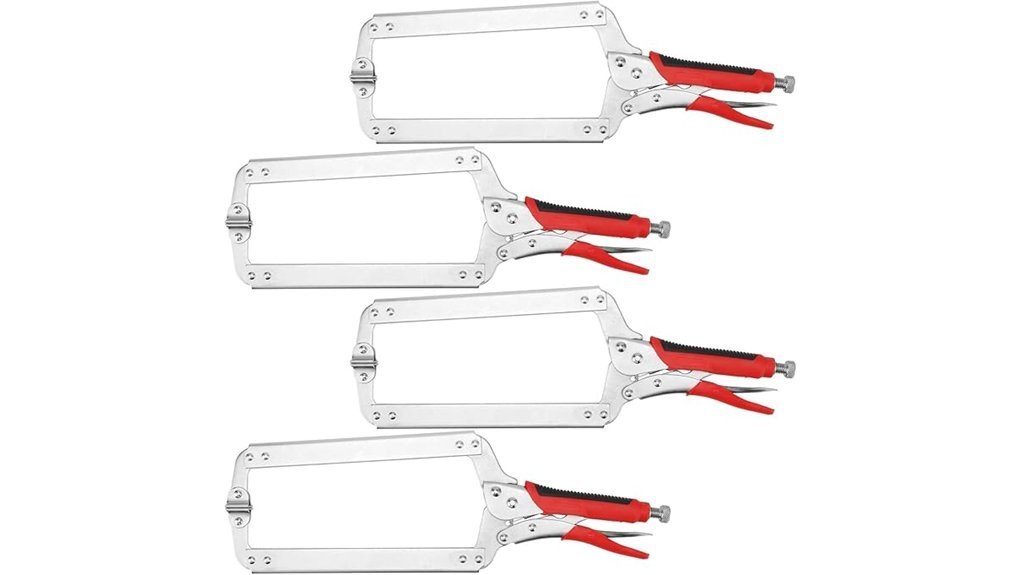
Holding wide, awkward, or deep workpieces steady can be frustrating when a standard locking plier cannot reach far enough. The PINGEUI C Clamp Locking Pliers target that problem with a 7-inch maximum jaw opening and a 9-inch throat depth. Those two specs make the tool more useful for welding setups, woodworking assemblies, and metal alignment than a compact clamp. This review helps you decide whether the extra reach is worth the larger size.
The main strengths are the high-carbon steel build, adjustable torque design, rubber sleeve handles, and swivel pads. The main tradeoff is bulk, because a deep-throat clamp can feel oversized for small household fixes or tight spaces.
Quick Verdict
Rating: 8/10
Best For: Welders, woodworkers, and DIY users who need deep reach clamping on larger materials
Bottom Line: The PINGEUI C Clamp Locking Pliers make sense if you need more reach than a standard locking clamp can provide. They offer strong workshop utility, but the large frame may be too much for light-duty home tasks.
Key Specifications
| Specification | Detail |
|---|---|
| Brand | PINGEUI |
| Product Name | PINGEUI C Clamp Locking Pliers |
| Product Type | C clamp locking pliers |
| Design | Deep-throat locking C-clamp style |
| Max Jaw Opening | 7 inches |
| Throat Depth | 9 inches |
| Material | High-carbon steel |
| Grip | Rubber sleeve handles |
| Surface Contact | Swivel pads included |
| Adjustment | Adjustable torque design |
| Best Use | Welding setup, woodworking, pipe alignment, metal fabrication, and workshop holding tasks |
| Safety Note | Use controlled pressure and avoid over-tightening soft wood, thin sheet metal, or finished surfaces. |
What Is the PINGEUI C Clamp Locking Pliers?
The PINGEUI C Clamp Locking Pliers are heavy-duty hand tools made to hold materials in place while you weld, drill, cut, glue, or align parts. The key design detail is the pairing of a 7-inch jaw opening with a 9-inch throat depth, which gives you more reach into larger workpieces than standard locking pliers.
This tool is built for users who need stable clamping pressure across deeper or thicker material. The high-carbon steel frame supports firm holding force, while the swivel pads help spread pressure across the contact point instead of digging into one small spot.
It is not a compact pocket tool. You get better reach and stronger workshop control, but you also need more room around the workpiece.
Who Should Buy It?
Best For
- Welders who need a deep-reach clamp for holding metal away from the clamp body
- Woodworkers assembling thicker frames, layered boards, or glued parts
- DIY and fabrication users working with pipe, metal stock, or uneven workpieces
Skip If
- You only need a small clamp for light household repairs
- You work mostly in tight spaces where a 9-inch throat depth gets in the way
- You need verified package quantity, warranty, or model details before buying
Build Quality and Materials
The pliers use high-carbon steel, a practical material choice for a clamp that needs to stay rigid under repeated pressure. This matters when you are clamping metal for tack welding, holding boards during assembly, or keeping parts aligned while drilling.
The rubber sleeve handles improve grip comfort during repeated adjustments. They do not turn the clamp into an insulated welding tool, so you should still keep the handles away from heat and wear the right gloves for the job.
The swivel pads are one of the most useful details on this style of clamp. They let the contact points sit flatter against uneven surfaces, which can reduce pressure marks on wood or finished metal when you tighten the tool carefully.
Clamping Reach and Adjustment
The 7-inch maximum jaw opening gives you room for wider workpieces, thicker boards, or larger metal sections. The 9-inch throat depth lets the clamp reach farther into a panel, frame, or pipe setup before the body blocks your work area.
The adjustable torque design helps you match pressure to the material. Use lighter pressure on soft wood, thin aluminum, painted surfaces, or finished panels. Increase pressure only when the material can handle it and you need stronger holding force.
Before You Buy: The 9-inch throat depth improves reach, but it also makes the tool bulkier than standard locking pliers. Measure your work area first if you often clamp inside cabinets, tight frames, engine bays, or small fixtures.
Surface Protection and Grip Comfort
The swivel pads help protect work surfaces by spreading pressure more evenly than a fixed narrow contact point. This is useful on wood, tubing, sheet metal, and finished pieces where deep clamp marks would create extra cleanup.
The rubber sleeve handles give your hand a more comfortable contact point during repeated tightening and release. They help with grip, but you should not rely on them as heat protection or electrical protection during welding or repair work.
How It Performs in Real Use
For Welding Setup and Tack Positioning
The deep throat depth helps you hold metal pieces farther from the clamp body, which can give you more clearance around a joint. That makes it useful when you need to keep two pieces aligned before tack welding or when a standard clamp blocks your welding angle.
For Woodworking and Glue-Ups
The swivel pads are helpful when clamping frames, layered boards, or thicker pieces during assembly. Start with light pressure and check alignment before fully tightening, because too much force can dent soft wood or squeeze parts out of position.
For Pipe and Round-Stock Alignment
The wide jaw opening gives you more room to hold pipe or uneven metal stock while you mark, drill, or align parts. The tool works best when both swivel pads sit securely on the material instead of catching only an edge.
For General Drilling, Cutting, and Fastening
You can use the clamp to hold parts steady while you drill, cut, grind, or fasten. For small home repairs, though, the large frame may slow you down compared with a compact locking plier or a smaller C clamp.
Usage Tips for Better Clamping
Test the fit before tightening the clamp fully. Make sure both pads sit flat and that the clamp body does not block your tool path, weld area, drill angle, or saw line.
Use just enough torque to stop movement. Extra pressure can damage wood fibers, bend thin sheet metal, or leave marks on finished surfaces, especially when the contact area is small.
For welding, keep the clamp positioned so heat, sparks, and spatter do not land directly on the handle sleeves. Use proper welding gloves, eye protection, and the right workholding setup for the material.
Pro Tip: Tighten the clamp in two steps: first set light pressure to confirm alignment, then increase torque only after the workpiece sits exactly where you want it.
Pros and Cons
Pros
- 7-inch jaw opening supports larger workpieces than compact locking pliers
- 9-inch throat depth improves reach into frames, panels, and deeper assemblies
- High-carbon steel construction adds rigidity for workshop clamping tasks
- Swivel pads help reduce surface marks when you use controlled pressure
- Rubber sleeve handles make repeated adjustments more comfortable
Cons
- Large frame may be awkward in tight or crowded work areas
- May be more clamp than you need for basic home repairs
- Needs careful adjustment to avoid over-tightening softer materials
Is It Worth the Price?
This tool fits best as a workshop-focused clamp rather than a casual household tool. The value comes from the 7-inch jaw opening, 9-inch throat depth, high-carbon steel construction, adjustable torque design, and swivel pads.
It is worth considering if you regularly clamp deeper workpieces during welding, woodworking, pipe alignment, or metal fabrication. You get less value from it if your usual tasks involve small repairs, light craft work, or spaces where a full-size clamp cannot move freely.
Because no verified package count, warranty, or accessory list was available from the provided article, check the current listing details before you buy.
How It Compares to Alternatives
Compared with standard locking C clamps, the PINGEUI model gives you more throat depth and wider clamping reach. Compared with smaller locking pliers, it trades compact handling for better access across larger material.
A smaller locking plier is the better choice for tight spaces, quick household fixes, or tool-bag portability. This PINGEUI clamp makes more sense when reach and holding stability matter more than compact size.
Frequently Asked Questions
What materials can the PINGEUI C Clamp Locking Pliers hold?
They can hold metal, wood, pipe, and uneven stock when the pads make secure contact. The high-carbon steel frame and adjustable torque design make the tool better suited for workshop use than light craft clamping.
Is it suitable for welding work?
Yes, it is suitable for welding setup tasks where you need to hold metal in position before or during tack work. Keep the rubber sleeve handles away from direct heat, sparks, and spatter.
How does the 9-inch throat depth help?
A 9-inch throat depth lets you clamp farther into larger workpieces before the frame gets in the way. That helps with frames, panels, pipe setups, and deeper assemblies.
Will the swivel pads prevent surface damage?
The swivel pads can reduce pressure marks by spreading contact more evenly. They do not guarantee a mark-free result, especially on soft wood, thin sheet metal, aluminum, or painted surfaces.
Is this clamp good for beginners?
Yes, beginners can use it, but they should practice adjusting pressure before using it on finished materials. Start with light pressure, check alignment, then tighten gradually.
Who should skip this tool?
Skip it if you mainly need a compact clamp for light household repairs or very tight spaces. The larger frame is useful for reach, but it can feel awkward when space is limited.
What common mistake should you avoid?
The most common mistake is over-tightening before checking alignment. Set the clamp lightly first, confirm pad placement, then add only enough pressure to stop movement.
The Bottom Line
The PINGEUI C Clamp Locking Pliers are a strong fit if you need extended reach, a 7-inch jaw opening, and a 9-inch throat depth for welding, woodworking, pipe alignment, or fabrication tasks. They are not the best choice for small, tight, or light-duty repairs where a compact clamp would be faster to handle.
The 8/10 rating reflects a capable deep-reach clamp with useful surface-protection pads and comfortable grip sleeves, balanced by its bulk and the need for careful pressure control.