Disclosure: As an Amazon Associate, we earn from qualifying purchases. If you click a link on this page and make a purchase, we may receive a small commission at no extra cost to you.
A small copper coupling can decide whether an HVAC line stays sealed or gives you leak problems later. When you are joining 3/8 inch copper tubing in an air conditioning or refrigeration system, fit, surface prep, and heat technique matter as much as the fitting itself.
This review covers the Straight Coupling Copper Fittings 3/8 inch for HVAC-style copper line work. You will see what the fitting does well, where it needs professional installation skill, and when a different fitting style may make more sense.
Quick Verdict
Rating: 8/10, recommended with installation caveats
Best For: HVAC technicians, refrigeration repair work, and experienced DIY users working with 3/8 inch copper tubing
Bottom Line: This fitting is a simple, useful copper connector for permanent copper-to-copper joints. It can deliver a strong seal, but only if you clean, align, and solder or braze the joint correctly.
Key Specifications
| Specification | Detail |
|---|---|
| Product Type | Straight copper coupling fitting |
| Design | Small cylindrical coupler for joining two copper tube ends |
| Pipe Size | 3/8 inch copper tubing, 9.52 mm |
| Material | High-purity copper, 99.9%+ as stated |
| Length | 16 mm, about 0.63 inch |
| Wall Thickness | 0.7 mm |
| Connection Method | Requires soldering or brazing for a sealed joint |
| Compatibility | Copper-to-copper tubing connections only |
| Best Use | HVAC and refrigeration copper line repairs or installations |
| Safety Note | Use proper HVAC tools, leak checks, and professional help for sealed refrigerant systems if you are not trained. |
What Is This Straight Copper Coupling?
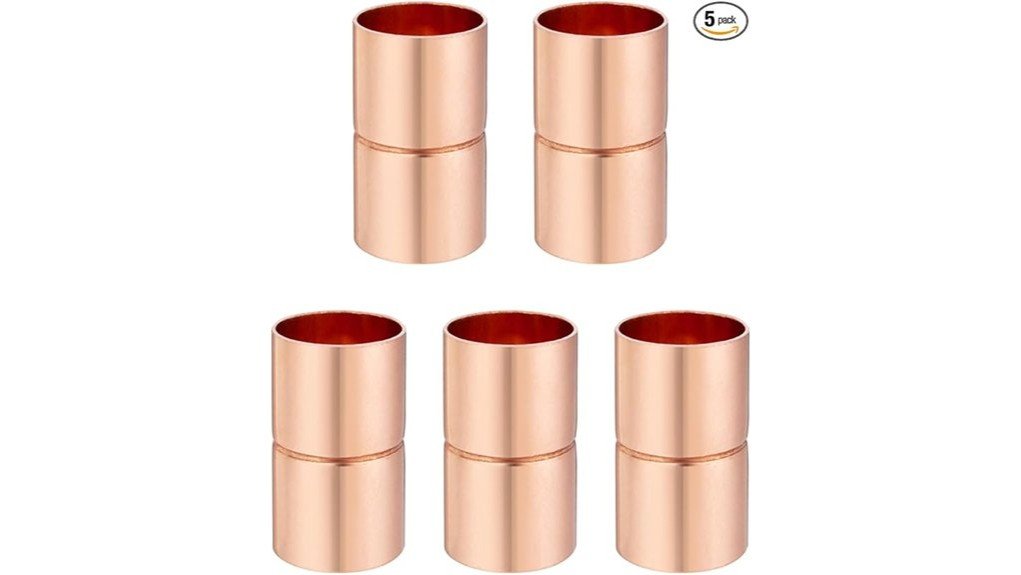
This straight coupling is a small copper connector made to join two 3/8 inch copper pipe or tube ends. It works as a bridge between the two ends so the line can remain continuous after a repair, extension, or installation step.
The fitting is meant for copper-based HVAC and refrigeration work where a compact, permanent joint is preferred. It does not work like a compression fitting or a flare fitting because it depends on heat, filler material, and clean contact surfaces to create the seal.
The main appeal is its simple copper construction. Copper supports heat transfer, resists corrosion in many sealed environments, and matches the material commonly used in air conditioning and refrigeration line sets.
Who Should Buy It?
Best For
- HVAC technicians joining or repairing 3/8 inch copper refrigerant lines
- Experienced DIY users who already know safe copper soldering or brazing methods
- Installers who need a compact permanent coupler in a tight copper line area
Skip If
- You need a removable connection that can be opened again later
- You are working with plastic, steel, aluminum, or mixed-material piping
- You do not have the tools or training to solder or braze copper safely
Fit, Material, and Build Quality
The fitting is sized for 3/8 inch copper tubing, which equals 9.52 mm. That size matters because a loose fit can create gaps, and an overly tight fit can prevent proper insertion and filler flow.
The article-supported material claim is high-purity copper, listed as 99.9%+. That copper content helps the fitting match the thermal behavior of copper tubing and supports a stable joint when the connection is prepared correctly.
The 16 mm length keeps the coupling compact. That can help in cramped HVAC service areas, but it also means you need good pipe alignment because there is not much extra fitting length to hide a poor cut or angled pipe end.
Before You Buy: This is not a push-to-connect, compression, or pre-flared fitting. You must solder or braze it correctly, or the joint may leak under pressure.
Installation and Setup
Installation quality controls the final result. Before heating the joint, you need clean tube ends, smooth cuts, correct insertion depth, and tight alignment between both copper pieces.
Deburring is also important because rough edges can restrict flow or keep the tube from seating fully. Dirt, oxidation, oil, and moisture can weaken the bond and increase the chance of leaks.
For sealed HVAC and refrigeration systems, installation may involve safety rules, refrigerant handling, pressure testing, and leak checking. Use a qualified HVAC technician if you are not trained for that type of work.
Pro Tip: Dry-fit the coupling before heating. Confirm both pipe ends slide in straight, then clean the outside of each tube and the inside of the fitting with a pipe brush or fine abrasive pad.
Compatibility and Safety
This fitting makes the most sense for copper-to-copper connections. Do not treat it as a universal adapter for non-copper pipes, flexible hoses, or fittings that require threads, flare seats, gaskets, or compression nuts.
Use it only where the 3/8 inch size matches your line. A similar-looking fitting in the wrong size can look close by eye but still fail once the system sees pressure, vibration, and temperature changes.
Heat work around HVAC equipment needs care. Keep nearby insulation, wiring, plastic parts, and finished surfaces protected, and follow the equipment maker’s instructions and local code requirements where they apply.
How It Performs in Real Use
For HVAC Repairs
For a small damaged section of copper line, this coupling can create a neat repair when the cut ends are square and clean. It is most useful when you want a permanent joint instead of a removable mechanical connection.
For New Installations
During new copper line setup, the fitting can help extend or join a straight run without taking up much space. Its compact length is helpful in tight areas, but the short body leaves little room for poor alignment.
For Refrigeration Systems
Copper’s thermal conductivity makes it a natural match for refrigeration line work. The fitting should not add much flow restriction when it is sized correctly and installed without internal buildup or debris.
For Maintenance Work
Technicians can keep couplings like this on hand for routine service, line replacement, and small connection repairs. The value comes from having the correct size available before a job turns into a longer repair.
Common Mistakes to Avoid
The most common mistake is rushing the surface prep. Even a good copper fitting can leak when the joint area has oxidation, burrs, dirt, or moisture trapped inside.
Another mistake is using the fitting as a fix for poor line alignment. The coupling should join two straight, properly cut tube ends, not force a bent or stressed line into position.
You should also avoid guessing on system compatibility. Match the fitting size, tubing material, installation method, and service environment before you buy.
Pros and Cons
Pros
- High-purity copper claim supports strong thermal transfer and material match with copper tubing
- 3/8 inch sizing fits common small HVAC and refrigeration copper line work
- Compact 16 mm length helps in tight installation spaces
- Simple straight design keeps the connection clean and low profile
- Useful for permanent copper-to-copper repairs when installed correctly
Cons
- Requires soldering or brazing skill to create a reliable seal
- Not suitable for non-copper piping or removable connections
- Small size leaves little margin for crooked cuts, dirty surfaces, or poor alignment
Need a compact copper coupling for 3/8 inch HVAC tubing?
Is It Worth the Price?
This type of copper coupling usually sits in the budget-to-mid range category, depending on seller and pack size. It offers strong value when you already have the tools and skill needed for copper joint work.
HVAC technicians and repair-focused buyers get the most value because couplings are common consumable parts. Keeping the correct size available can save time during service calls and small line repairs.
It is not the best fit if you want a beginner-friendly connector that installs without heat. In that case, compare approved mechanical alternatives for your exact system and follow professional guidance.
How It Compares to Alternatives
Compared with compression fittings, this straight copper coupling creates a more permanent, low-profile joint, but it needs heat-based installation. Compared with flare fittings, it is more compact and better for a fixed joint, but it is not meant for repeated disassembly.
A slip-style copper repair coupling may be easier for some repair layouts, while this standard straight coupling works best when both pipe ends can be aligned and inserted cleanly. Choose the fitting style based on access, service needs, and the connection method your system allows.
Frequently Asked Questions
What size pipe does this copper coupling fit?
It is designed for 3/8 inch copper tubing, which is 9.52 mm. Confirm your tubing size before ordering because a close-looking size may still create a poor seal.
Can this fitting be used outdoors?
Yes, copper can work outdoors in many HVAC applications, but the joint still needs proper sealing, insulation, and protection. The surrounding system should be installed according to equipment instructions and local requirements.
Do I need special tools for installation?
Yes. You need tools and materials for soldering or brazing copper, plus cleaning and deburring tools for proper surface prep. Refrigerant systems may also require professional service equipment and leak testing.
Is this the same as a compression fitting?
No. A compression fitting uses a nut and ferrule to make a mechanical seal, while this coupling needs soldering or brazing. Pick this fitting when you want a compact permanent joint and have the right installation skill.
Can beginners use this for an AC line repair?
Beginners should be cautious. Copper soldering and brazing require heat control, clean surfaces, and safe handling, and sealed AC systems may require a trained HVAC technician.
What causes this kind of copper joint to leak?
Leaks usually come from poor cleaning, burrs, bad alignment, overheating, underheating, or using the wrong fitting size. The fitting itself is only one part of the seal, so installation technique matters.
Who should skip this fitting?
Skip it if you need a removable connector, a threaded adapter, a flare fitting, or a connection for non-copper material. You should also skip it if you cannot safely perform heat-based copper joining.
The Bottom Line
Straight Coupling Copper Fittings 3/8 inch are a practical choice for HVAC professionals and experienced DIY users who need a compact copper-to-copper connection. The main strength is the simple high-purity copper design, while the main limitation is the need for correct soldering or brazing technique.
Buy it if you need a permanent 3/8 inch copper line joint and have the right tools. Skip it if you need a removable fitting, a non-copper connection, or a beginner-friendly no-heat installation.