Disclosure: As an Amazon Associate, we earn from qualifying purchases. If you click a link on this page and make a purchase, we may receive a small commission at no extra cost to you.
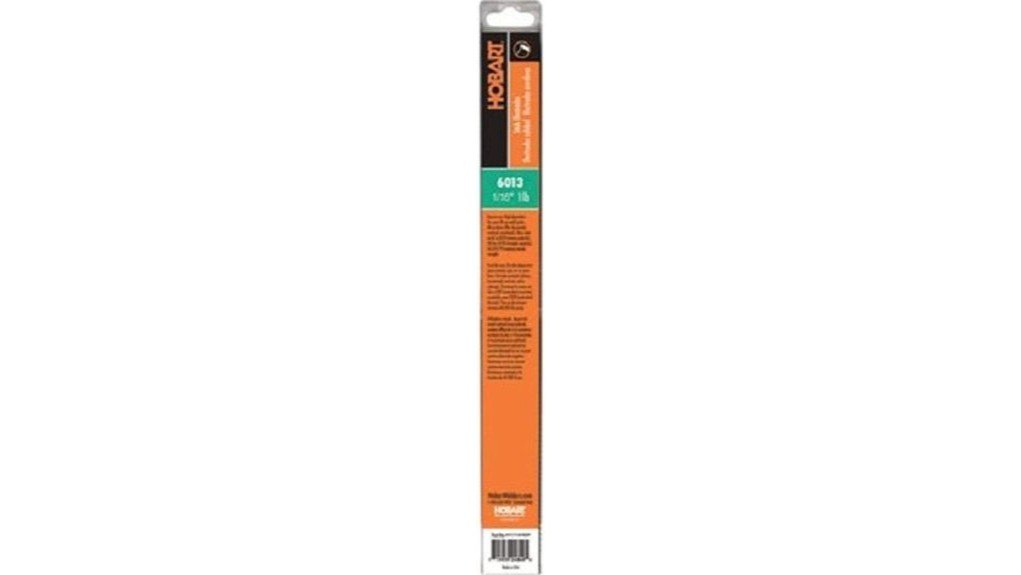
Choosing a small-diameter stick electrode can be difficult when you need something versatile enough for general carbon-steel repairs without buying a large bulk package. The Hobart H117119-RDP 6013 Stick Welding Electrode gives you a 1/16-inch E6013 option in a 38-electrode pack, with support for AC, DCEP, and DCEN welding. Its main strengths are all-position usability, 60,000 PSI tensile strength, and light-to-medium penetration. The main limitation is equally important: this is a carbon-steel electrode, so it is not the right choice when your project calls for a different filler-metal classification or base-metal compatibility.
Quick Verdict
Rating: 8.5/10
Best For: Small carbon-steel repairs, general stick-welding jobs, practice work, and projects that benefit from a thin all-position E6013 electrode.
Bottom Line: The H117119-RDP is a practical choice when you specifically need a 1/16-inch E6013 rod that runs on AC or either DC polarity. Its 38-count package is convenient for occasional work, but it is less suitable if you need a bulk supply or an electrode designed for aluminum, stainless steel, or another specialized application.
Product Features and Specifications
| Specification | Detail |
|---|---|
| Brand | Hobart |
| Model | H117119-RDP |
| Electrode classification | E6013 / 6013 stick electrode |
| Diameter | 1/16 inch |
| Package quantity | 38 electrodes |
| Base-metal use | Carbon steel |
| Welding positions | All positions, including flat, horizontal, vertical, and overhead |
| Polarity | AC, DCEP (reverse), or DCEN (straight) |
| Tensile strength | 60,000 PSI |
| Penetration | Light to medium |
| Best use | General-purpose carbon-steel welding and joints with poor fit-up |
What Is the Hobart H117119-RDP?
The Hobart H117119-RDP is a 1/16-inch E6013 stick welding electrode sold in a package of 38. Hobart describes this electrode as a light-to-medium penetrating, all-purpose option intended for carbon steel.
Its broad polarity compatibility is one of its most useful features. You can run it with AC, DCEP, or DCEN when your welding machine and job setup support the selected polarity. That flexibility makes the electrode useful for welders who work with different stick machines rather than a single fixed setup.
The smaller 1/16-inch diameter is also worth noticing before you order. It gives you a thinner electrode than common larger stick-electrode sizes, but you should still confirm that your welder can operate it within the recommended settings for your equipment and application.
Key Takeaways
- 1/16-inch E6013 design: A small-diameter stick electrode for general carbon-steel work.
- 38-electrode package: Better suited to occasional projects, smaller jobs, or trying the size before buying larger quantities.
- All-position use: Designed for flat, horizontal, vertical, and overhead welding positions.
- Flexible polarity: Runs on AC, DCEP, or DCEN.
- 60,000 PSI tensile strength: Matches the expected strength classification of a 6013 electrode.
- Light-to-medium penetration: Intended for general applications rather than jobs that specifically require a deep-penetrating electrode.
- Poor-fit-up capability: Hobart lists it as suitable for general joints where fit-up is less than ideal.
Who Should Buy It?
Best For
- You need a 1/16-inch E6013 electrode for carbon-steel projects.
- You want an electrode that can run on AC, DCEP, or DCEN.
- You need a small 38-count pack for repairs, practice, or occasional welding.
Skip If
- You need an electrode intended for aluminum, stainless steel, cast iron, or another different base metal.
- You need a large bulk package for high-volume fabrication.
- Your job specifically calls for a deeper-penetrating or higher-strength electrode classification.
Before You Buy: Match the electrode to the base metal, required weld procedure, and your welding machine. The H117119-RDP is designed for carbon steel, so do not choose it simply because the 1/16-inch diameter fits your preferred rod size.
Performance and Application
All-Position Welding
The H117119-RDP is rated for all welding positions. That includes flat, horizontal, vertical, and overhead work. For a general-purpose electrode, this gives you more flexibility than a rod intended only for easier flat-position welding.
All-position capability does not remove the need for proper technique. Your travel speed, arc length, joint preparation, machine settings, and position still affect the finished weld. The advantage is that the electrode itself is not limited to one basic orientation.
AC, DCEP, and DCEN Compatibility
Hobart specifies that this 6013 electrode can run on AC, DCEP, or DCEN. This is useful if you own an AC stick welder or a DC-capable machine and want flexibility when choosing polarity.
You should still follow the guidance for your welding machine and the job you are performing. Polarity changes can affect arc behavior and penetration, so use the setting that matches your equipment, technique, and project requirements.
Light-to-Medium Penetration
This is a light-to-medium penetrating electrode. That makes it a better match for general welding than for applications where deep penetration is the main goal.
This distinction matters when comparing E6013 with other electrode types. If your project involves a joint or surface condition that requires a more aggressive penetration profile, the 6013 classification may not be your best choice even though it is versatile.
Poor Fit-Up and General Repairs
Hobart specifically lists the electrode for general applications and joints with poor fit-up. That can be helpful on ordinary repair projects where the pieces are not prepared as precisely as they would be in controlled production fabrication.
You should not treat that capability as permission to ignore preparation. Cleaning the work area, checking joint alignment, and following sound welding practice still give you a better chance of producing a consistent weld.
Pro Tip: Before starting a visible or important weld, test a rod on scrap carbon steel of similar thickness. Confirm that your machine can maintain a stable arc with the 1/16-inch electrode and adjust your technique according to the welder and electrode instructions.
How It Performs in Real Use
For Small Repair Jobs
The 38-count package makes sense when you have a limited repair list rather than continuous production work. You get enough electrodes for multiple small tasks without automatically committing to a large container of rods.
For Practice and Skill Building
Because the H117119-RDP supports all positions and several polarity options, it gives you room to practice different stick-welding setups on suitable carbon steel. The 1/16-inch diameter also gives you experience with a smaller electrode size, although you still need to match your machine settings to the rod and workpiece.
For Awkward Welding Positions
When a repair cannot be rotated into the flat position, the electrode’s all-position rating becomes useful. You can use the same electrode classification for horizontal, vertical, or overhead work instead of selecting it only for flat joints.
For Poor-Fit-Up Joints
This electrode is marketed for joints with poor fit-up, which can make it practical for general maintenance and repair situations. You should still correct large gaps or alignment problems when possible rather than expecting the electrode to compensate for every preparation issue.
How to Use It Correctly
- Confirm the base metal: Use the electrode for carbon-steel applications that are appropriate for E6013.
- Check your welder: Make sure your machine supports the required setup for a 1/16-inch stick electrode.
- Select polarity carefully: The rod supports AC, DCEP, and DCEN, but your final choice should match your machine and welding procedure.
- Prepare the joint: Remove avoidable contamination and correct fit-up problems when practical.
- Run a test bead: Use similar scrap material before making an important weld.
- Keep unused electrodes dry: Store them in a dry environment and follow the package guidance so moisture does not reduce their usability.
Compatibility and Safety
The most important compatibility point is simple: the H117119-RDP is intended for carbon steel. It should not be treated as a universal electrode for aluminum, stainless steel, cast iron, or other materials that require different filler-metal choices.
When welding, use appropriate protective equipment such as a welding helmet, welding gloves, and flame-resistant clothing. Follow the safety instructions for your welding machine, electrode, work area, and project. If a job involves structural requirements or a welding procedure you are not qualified to evaluate, use the guidance of an experienced or appropriately qualified welding professional.
Pros and Cons
Pros
- 1/16-inch E6013 size gives you a small-diameter stick-electrode option.
- Works in flat, horizontal, vertical, and overhead positions.
- Compatible with AC, DCEP, and DCEN polarity.
- Rated at 60,000 PSI tensile strength.
- Designed for general carbon-steel applications and poor-fit-up joints.
Cons
- The 38-count pack may be too small for frequent or production welding.
- Carbon-steel compatibility limits its usefulness for other base metals.
- Light-to-medium penetration is not ideal when your job specifically requires a deeper-penetrating electrode.
Buyer Feedback and Expectations
Star ratings and review totals on retail sites can change, so they should not be the main reason you choose this electrode. The more useful buying factors are fixed product details: the 1/16-inch size, E6013 classification, 38-count package, all-position rating, carbon-steel application, and support for AC or DC polarity.
Before ordering, compare those specifications with your welder and the job in front of you. A highly reviewed electrode can still be the wrong purchase if the diameter, base metal, penetration characteristics, or electrode classification do not match your work.
Is It Worth the Price?
The H117119-RDP is best viewed as a small-pack convenience option rather than a bulk industrial supply. The 38-electrode quantity can provide good value when you need a modest amount for repairs, practice, or occasional use and do not want a much larger container.
Its value is stronger if the exact combination of 1/16-inch diameter, E6013 characteristics, all-position capability, and AC/DC compatibility fits your needs. It is less attractive if you weld frequently enough to benefit from a larger package or if your projects require a different electrode classification.
How It Compares to Alternatives
The main comparison should be based on electrode type rather than brand name alone. A 6011-type electrode is worth comparing when you need a more penetrating rod for tougher surface conditions, while a 7014-type electrode may make more sense when higher deposition and faster travel are priorities.
The Hobart H117119-RDP makes the most sense when you specifically want the general-purpose behavior of E6013 in a small 1/16-inch size. Do not substitute one electrode classification for another without checking the base metal, joint requirements, machine capability, and welding procedure.
Frequently Asked Questions
What metal is the Hobart H117119-RDP designed to weld?
Hobart specifies this E6013 electrode for carbon steel. If you are welding aluminum, stainless steel, cast iron, or another material, choose an electrode specifically suited to that base metal and your welding procedure.
Can you use this electrode in all welding positions?
Yes. The H117119-RDP is rated for all positions, including flat, horizontal, vertical, and overhead welding. Your technique and machine settings still need to suit the position you are using.
Does the Hobart H117119-RDP work with an AC welder?
Yes. Hobart lists AC as a supported current type for this electrode. It can also run on DCEP or DCEN when your machine and welding setup support those options.
How many electrodes are included?
The H117119-RDP package contains 38 electrodes. That quantity is convenient for smaller projects or occasional use, but frequent welders may prefer to compare larger package sizes.
Is this a deep-penetrating electrode?
Hobart describes the 6013 as a light-to-medium penetrating electrode. If your project specifically requires deeper penetration, compare the required welding procedure with other electrode classifications before buying.
Can it be used when joint fit-up is not perfect?
Yes. Hobart lists this electrode for general applications and joints with poor fit-up. You should still improve alignment and joint preparation when practical rather than relying on the electrode to correct major fit-up problems.
How should you store unused electrodes?
Keep unused electrodes in a dry environment and protect them from unnecessary moisture exposure. Follow the storage guidance on the product packaging or from the manufacturer for the best results.
The Bottom Line
The Hobart H117119-RDP 6013 Stick Welding Electrode is a strong choice when you need a 1/16-inch, 38-count E6013 package for general carbon-steel welding with AC, DCEP, or DCEN. Its all-position capability and light-to-medium penetration make it versatile, but you should skip it when your project requires another base-metal compatibility, deeper penetration, a different strength class, or a larger production-sized supply.