Disclosure: As an Amazon Associate, we earn from qualifying purchases. If you click a link on this page and make a purchase, we may receive a small commission at no extra cost to you.
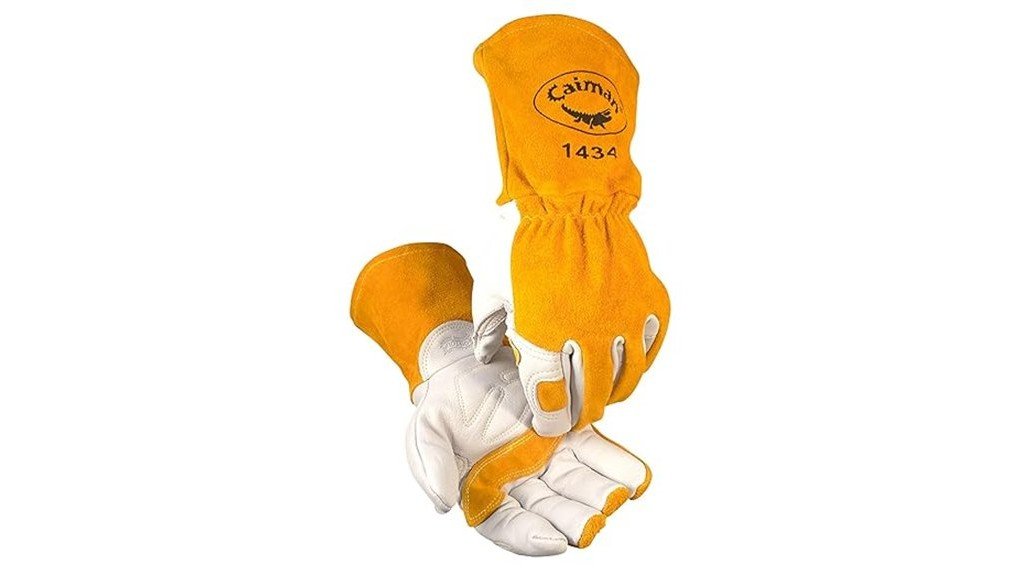
Welding gloves have to balance two competing needs: enough protection for heat, sparks, and abrasion, but enough hand control to hold a gun, electrode holder, or workpiece comfortably. The Caiman Premium Cow Grain MIG/Stick Welding Gloves 1434-5 approach that balance with a cow-grain leather palm, split-cowhide back, cotton/fleece lining, padded palm, and Caiman’s Kontour form-fitting design. The linked 1434-5 version is a Large glove intended primarily for MIG and Stick welding. It is a strong choice when comfort and reinforced leather construction matter, but its insulation and heavier build make it less suitable for precision TIG work or wet environments.
Quick Verdict
Rating: 8.5/10
Best For: MIG and Stick welders who want a lined leather glove with reinforced palm protection and a long cuff.
Bottom Line: The Caiman 1434-5 combines durable cowhide, a padded wear area, fleece-backed comfort, and a shaped fit that gives you better hand control than many bulky welding gloves. Its main tradeoff is that the insulation and reinforced construction are not ideal when you need the thin fingertip feel associated with TIG gloves.
| Specification | Detail |
|---|---|
| Brand | Caiman |
| Series | 1434 |
| Linked Model | 1434-5 |
| Product Type | Welding gloves |
| Linked Size | Large |
| 1434 Series Sizes | S to 2XL |
| Palm Material | Cow-grain leather |
| Back Material | Split cowhide leather |
| Lining | Light cotton/fleece |
| Palm Design | Padded and reinforced with leather wear patch |
| Fit Design | Kontour form-fitting construction |
| Cuff | Scalloped leather gauntlet cuff, approximately 4 inches |
| Stitching | Kevlar |
| Primary Applications | MIG and Stick welding |
| Package | One pair on the linked Amazon listing |
| Water Resistance | Not waterproof or water resistant |
What Is the Caiman 1434-5?
The Caiman 1434-5 is the Large version of Caiman’s 1434 premium cow-grain MIG/Stick welding glove. Its construction combines a grain-leather palm with a split-cowhide back, giving you a smoother palm surface for gripping tools while retaining the thicker leather protection expected from a welding glove.
Inside, light cotton and fleece insulation adds comfort during longer welding sessions. The palm also has internal padding and a reinforced leather wear patch, concentrating extra material where gripping, dragging, and handling workpieces can wear a glove faster.
The other defining feature is the Kontour design. Instead of relying only on a flat glove pattern, the design is shaped to follow the hand more naturally. That matters when you repeatedly open and close your hand around a MIG gun, electrode holder, grinder handle, or metal stock.
Key Takeaways
- The linked Caiman 1434-5 is a Large MIG/Stick welding glove made with cow-grain and split-cowhide leather.
- Light cotton/fleece lining and an internally padded palm add comfort for longer work sessions.
- A reinforced leather palm wear patch targets one of the glove’s highest-wear areas.
- Kontour construction gives the glove a more hand-shaped fit than a basic flat-pattern welding glove.
- The long scalloped leather cuff extends coverage above your wrist.
- It is better suited to MIG and Stick work than precision TIG welding.
Who Should Buy It?
Best For
- MIG welders who want more palm reinforcement than a thin utility glove provides.
- Stick welders who prefer a lined leather glove with forearm coverage.
- Shop, farm, maintenance, and fabrication users who frequently handle hot or abrasive metal around welding work.
Skip If
- You mainly TIG weld and need maximum fingertip sensitivity.
- You need a waterproof glove for wet outdoor work.
- You need a verified cut or puncture rating for a specific workplace hazard.
Before You Buy: The affiliate link points to the Large 1434-5 model. Do not assume that another size uses the same model number. Check the selected size and product details on Amazon before ordering.
Quality and Durability of Caiman Gloves
Durability starts with the glove’s cow-grain leather palm. Grain leather keeps the smoother outer surface of the hide, giving you a useful combination of flexibility, grip, and abrasion resistance for general welding and metal handling.
Caiman reinforces the palm with additional padding and a leather wear patch. This is a practical design choice because the palm takes repeated contact when you hold a MIG gun, electrode holder, grinder, clamps, or metal stock. The extra layer cannot prevent normal wear, but it can reduce how quickly the primary palm surface takes the full load.
The split-cowhide back adds another durable leather layer, while Kevlar stitching is used in the glove’s construction. For welding, seam durability matters because ordinary thread can become a weak point when exposed to heat, sparks, and repeated flexing.
You should still treat these as consumable PPE. Welding gloves eventually harden, burn, tear, or become contaminated. Replace them when the leather develops holes, severe cracking, exposed lining, damaged seams, or other defects that reduce protection.
Comfort Features for Extended Use
The 1434 series uses light cotton/fleece insulation rather than leaving the glove completely unlined. That lining creates a softer interior and helps separate your hand from the leather shell during long work periods.
The internal padded palm is another useful comfort feature. Padding spreads pressure when you grip tools or handle workpieces, which can make repetitive shop work less tiring. The tradeoff is predictable: every layer between your hand and the work reduces some tactile feel.
The Kontour form-fitting pattern helps offset that bulk. A glove that follows the natural hand shape does not need to bunch as much when your fingers close. You still should not expect TIG-glove sensitivity, but the design makes sense for MIG and Stick work where protection and controlled grip are usually more important than extremely fine fingertip feedback.
Pro Tip: Choose your size based on secure finger and palm fit rather than extra room. Too much empty space at the fingertips can make it harder to control your welding gun, electrode holder, clamps, and small adjustments.
Design and Versatility in Welding Applications
The Caiman 1434 is built primarily around MIG and Stick welding. Those processes can expose your hands and lower forearms to sparks, spatter, radiant heat, and hot material, so the glove uses substantially more leather and coverage than a lightweight TIG glove.
The scalloped gauntlet-style cuff extends approximately four inches and helps cover the wrist and lower forearm. This extra length is useful when your jacket sleeve shifts while you reach, reposition material, or change your welding angle.
The glove is also practical for related shop tasks such as moving metal, handling clamps, or operating hand tools around a welding station. That does not make it a universal safety glove. If a task has a specific cut, chemical, electrical, or impact hazard, use PPE rated for that hazard rather than assuming a welding glove covers every risk.
How It Performs in Real Use
For MIG Welding
MIG welding is where the 1434’s balance makes the most sense. The padded cow-grain palm gives you a secure surface around the gun, while the cotton/fleece lining and leather back add more protection than a thin unlined glove. The Kontour shape also helps when you need to reposition the gun or adjust your grip frequently.
For Stick Welding
Stick welding generally rewards more coverage and insulation, especially when you work near spatter and radiant heat. The reinforced palm and gauntlet cuff make the Caiman a reasonable match for this type of work. For unusually high-heat jobs, you may still prefer a heavier glove designed around greater thermal protection.
For Fabrication and Shop Work
The leather palm and wear patch are useful when welding is only one part of your job. You can move between fitting pieces, clamping, grinding setup, and welding without switching to a thin general-purpose glove every few minutes. Always verify that the glove is appropriate for the separate tool or hazard involved.
For Long Welding Sessions
During extended use, the fleece/cotton interior and padded palm are the main advantages. They make the glove more forgiving than an unlined leather shell. The downside is additional warmth and bulk, so the glove may feel hot in warm shops or during continuous physical work.
Fit and Usage Tips
- Confirm the exact size before ordering. The linked model 1434-5 is Large, while other 1434 sizes use different suffixes.
- Check finger length. Excess material beyond your fingertips can reduce control, while a glove that is too tight can restrict movement and place extra stress on seams.
- Keep the cuff outside exposed skin. Arrange your welding jacket and glove cuff so sparks have less opportunity to reach your wrist.
- Inspect the palm regularly. The reinforced area takes heavy wear, but it should still be checked for holes, burns, cuts, or separated stitching.
- Keep the gloves dry. The product is not waterproof, and the Amazon care information says not to wash the gloves.
- Replace damaged PPE. Do not rely on a badly burned or torn glove simply because most of the leather still looks usable.
Material Safety and Care
The main contact materials are leather with a cotton/fleece lining. The manufacturer also lists Kevlar stitching for the 1434 series. These materials are selected for welding use, but you should still follow your employer’s PPE requirements and the current product label.
The current Caiman manufacturer listing displays a California Proposition 65 warning for the 1434 series. California buyers, employers, and safety managers should review the manufacturer’s current warning information if that disclosure affects their purchasing decision.
For cleaning, avoid machine washing or soaking the gloves. Amazon lists the care instruction as Do Not Wash. Remove loose surface dirt when the gloves are cool and dry, then follow the manufacturer’s care instructions. If the leather becomes heavily contaminated, chemically exposed, burned through, or structurally damaged, replacement is safer than aggressive cleaning.
Pros and Cons
Pros
- Cow-grain leather palm provides a durable gripping surface.
- Reinforced padded palm targets a major wear and pressure area.
- Cotton/fleece lining improves comfort during longer sessions.
- Kontour construction gives you a more hand-shaped fit.
- Scalloped gauntlet cuff extends coverage over the wrist and lower forearm.
Cons
- Insulation and palm padding reduce fine fingertip feel compared with TIG gloves.
- The glove is not waterproof or water resistant.
- The linked Amazon ASIN is specifically the Large 1434-5 variant, so buyers needing another size must check the selected model carefully.
Is It Worth the Price?
The Caiman 1434-5 makes the most sense when you value leather construction, a reinforced palm, lining, and a shaped fit more than the lowest possible purchase price. These are practical upgrades for someone who welds regularly and spends enough time in gloves to notice pressure points, poor finger shape, or premature palm wear.
It is less compelling if you only need gloves for occasional brief welding jobs or if your main priority is ultra-thin dexterity. In that situation, paying for an insulated, reinforced MIG/Stick design may not give you much benefit.
Value also depends on fit. A well-built glove in the wrong size can still be uncomfortable and difficult to control, so confirm that the Large 1434-5 is appropriate before buying through the linked listing.
How It Compares to Alternatives
If you want more emphasis on radiant-heat protection, Caiman’s 1810 MIG/Stick glove is worth comparing because that model uses a two-layer insulated back and is positioned as a heavier heat-protection option. The 1434 remains attractive when you prefer its lighter cotton/fleece insulation, reinforced palm, and familiar Kontour construction.
The Lincoln Electric Premium Leather MIG/Stick Welding Gloves are another relevant comparison, combining grain leather, split cowhide, lining, palm padding, and Kevlar thread. For Stick-only work, the Black Stallion 850 takes a different approach with grain elkskin and a Nomex-lined back. Your choice should depend on the welding process, heat exposure, fit, and amount of fingertip control you need.
Frequently Asked Questions
Are the Caiman 1434-5 gloves made for MIG or Stick welding?
Yes. Caiman identifies the 1434 series for MIG and Stick welding. The cow-grain palm, split-cowhide back, lining, reinforced palm, and extended cuff are all consistent with those applications.
Are these a good choice for TIG welding?
They can physically be worn around many shop tasks, but they are not designed as precision TIG gloves. The fleece lining and padded palm add bulk, so a thinner TIG-specific glove usually gives you better filler-rod and fingertip control.
What size is the Amazon model 1434-5?
The linked 1434-5 model is Large. Caiman lists the broader 1434 series in sizes from S through 2XL, but different sizes can carry different model suffixes, so check the selected variant before purchasing.
Are the Caiman 1434 gloves waterproof?
No. The product information does not identify them as waterproof or water resistant. They are welding gloves made primarily for heat, spark, abrasion, and general shop protection rather than wet-environment use.
How should you clean the Caiman welding gloves?
Amazon currently lists the care instruction as “Do Not Wash.” Keep the gloves dry, remove loose dirt after they cool, and follow the current manufacturer instructions rather than soaking or machine washing the leather.
When should you replace welding gloves?
Replace them when you find holes, burned-through leather, badly damaged seams, exposed lining, severe cracking, or contamination that could affect safe use. A reinforced palm can extend useful wear, but it does not make a damaged glove safe indefinitely.
The Bottom Line
The Caiman Premium Cow Grain MIG/Stick Welding Gloves 1434-5 are a solid choice for welders who want a durable leather palm, reinforcement in a high-wear area, soft cotton/fleece lining, and a cuff that extends protection above the wrist. Choose them for MIG, Stick, fabrication, and related shop work, but consider a thinner glove for precision TIG welding or a specialized glove when your job requires a specific cut, chemical, electrical, impact, or waterproof rating.
Ready to Buy?
Check the current size selection, seller information, price, and product details before you decide.