Disclosure: As an Amazon Associate, we earn from qualifying purchases. If you click a link on this page and make a purchase, we may receive a small commission at no extra cost to you.
Choosing welding gloves is not just about buying the thickest pair on the shelf. You need heat, spark, and abrasion protection, but you also need enough hand movement to hold a torch, grip clamps, and position metal without fighting the glove. Caiman Gloves focus on leather protection, palm padding, Kevlar thread stitching, and a pre-curved Kontour fit for TIG, MIG, and general shop work. This review explains where they make sense, where the available details leave questions, and what you should check before buying.
Quick Verdict
Rating: 8.6/10, recommended with caveats
Best For: Welders who want durable leather gloves with padded palm support and better finger shape than basic flat shop gloves.
Bottom Line: Caiman Gloves are a strong fit if you want cow grain leather, Kevlar stitching, reinforced palm protection, and a more natural grip shape for regular welding tasks. The main tradeoff is that the available product details do not confirm an exact heat rating, certification, warranty, or full size chart.
| Specification | Detail |
|---|---|
| Brand | Caiman |
| Product type | Welding gloves |
| Amazon ASIN from source link | B005DLRBGC |
| Main material | High-grade cow grain leather |
| Back material | Reinforced split cowhide leather back |
| Stitching | Kevlar thread stitching |
| Palm design | Patented double-stitched palm padding |
| Reinforcement | Padded palm and thumb saddle |
| Fit design | Kontour design with pre-curved fingers |
| Closure | Hook-and-loop wrist closure |
| Supported applications | TIG welding, MIG welding, and demanding shop tasks |
| Best use | Regular welding, clamping, fitting, grinding setup, and cooled material handling around the weld area |
| Size details | Full size chart not confirmed in the available details |
| Heat rating | Exact temperature rating not confirmed in the available details |
| Certification | No specific safety certification confirmed in the available details |
| Care note | Machine washing is not recommended. Gentle hand cleaning and air drying are better choices for preserving the leather and stitching. |
What Are Caiman Gloves?
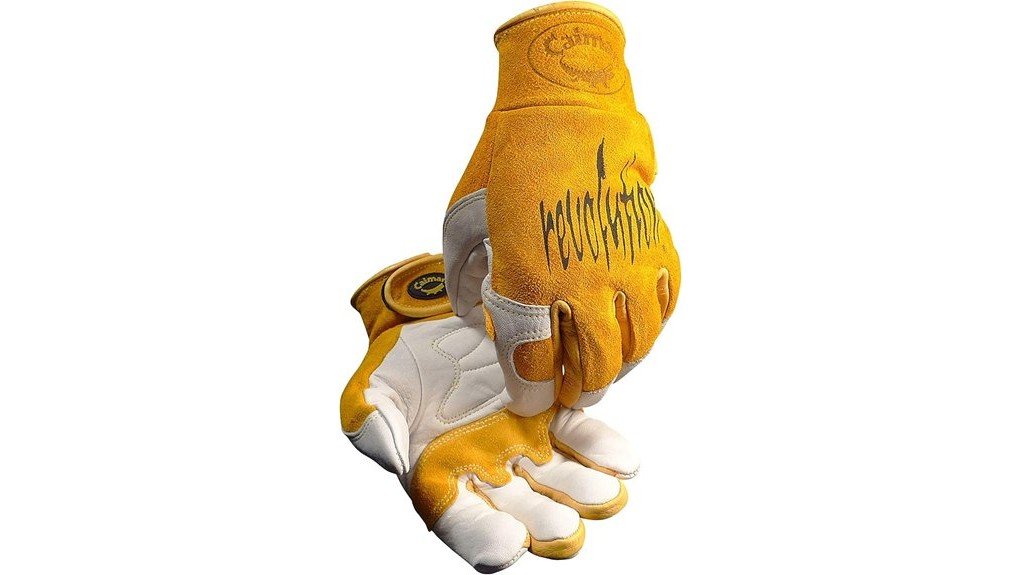
Caiman Gloves are leather welding gloves made for welders who need a balance of protection, grip, and hand mobility. They use high-grade cow grain leather with a reinforced split cowhide leather back, giving you a tougher shell than thin utility gloves used for light-duty shop work.
The main comfort feature is the patented double-stitched palm padding. This padding supports the area that takes pressure when you grip a torch, clamp, grinder, or workpiece. The gloves also use Kevlar thread stitching, which matters because seams often fail before the leather panels do on cheaper welding gloves.
The gloves are also shaped differently from basic flat leather gloves. The Kontour design and pre-curved fingers help the glove follow the natural shape of your hand, so you do not need to squeeze as hard just to hold tools in a steady position.
Who Should Buy It?
Best For
- Welders who want cow grain leather gloves with reinforced split cowhide backing.
- Buyers who prefer padded palm protection for longer TIG, MIG, or fabrication sessions.
- Users who want a more natural finger shape than stiff, flat economy welding gloves.
Skip If
- You need a glove with a verified temperature rating or listed workplace safety certification.
- You want a fully lined glove for heavy stick welding, foundry-style work, or very high-heat handling.
- You need exact sizing details before purchase and do not want to check the Amazon listing.
Before You Buy: The available details support the leather materials, padded palm, Kevlar stitching, hook-and-loop closure, and TIG/MIG use, but they do not confirm an exact heat rating, certification, warranty, or full size chart. Check the Amazon listing details before ordering.
Material and Construction Quality
The strongest reason to consider these gloves is the material build. High-grade cow grain leather gives you a durable outer surface while still allowing more natural hand movement than very stiff, heavy leather. The reinforced split cowhide leather back adds protection in an area that often sees sparks, abrasion, and contact with rough shop surfaces.
Kevlar thread stitching is another useful construction detail. On welding gloves, the leather may hold up while weaker seams start to split. Stronger stitching helps the glove handle frequent bending, gripping, and heat exposure during normal welding work.
The pre-curved Kontour shape also improves the build from a usability standpoint. Flat gloves can feel boxy and tiring because your hand has to force the glove into a gripping position. A pre-curved design can reduce that resistance when you hold a torch, move small parts, or keep a steady wrist angle.
Palm Protection and Reinforcement
Caiman Gloves use patented double-stitched palm padding. That matters because the palm takes constant contact during welding and fabrication. You use it to grip tools, brace workpieces, adjust clamps, and handle shop equipment around the welding area.
The padded palm and thumb saddle add reinforcement in pressure points that often wear quickly. The thumb saddle is especially useful because the space between your thumb and index finger sees repeated stress when you grip a torch, hold a clamp, or pick up material.
These gloves should not be treated as a replacement for specialized high-temperature gloves. The leather build and palm reinforcement make them more protective than thin utility gloves, but the exact heat rating and certification details are not confirmed here.
Fit, Dexterity, and Hand Comfort
The Kontour design is one of the most useful buyer-facing features. Welding gloves can protect well but still feel frustrating if they are too boxy, loose, or stiff. Pre-curved fingers help reduce that stiff-glove feeling because the glove already sits closer to a working hand position.
That design can help during TIG and MIG welding. TIG work usually rewards finer hand movement, while MIG work still benefits from a secure grip, steady wrist position, and less hand fatigue. These gloves aim to balance leather protection with usable movement.
The hook-and-loop closure helps keep the glove secure around your wrist. A secure closure can reduce shifting while you move between welding, clamping, fitting, and positioning tasks.
TIG, MIG, and Shop Compatibility
The supported applications include TIG welding, MIG welding, and demanding shop tasks. For TIG work, the biggest benefit is the glove shape. Pre-curved fingers make torch handling feel less awkward than bulky gloves that resist your grip.
For MIG welding, the reinforced leather build and padded palm are the stronger points. MIG work often involves longer torch passes, repositioning parts, and moving around a table or frame. The gloves give you a durable barrier while still allowing practical movement.
They can also support general shop tasks around welding, including clamp setup, fitting, grinding preparation, and handling materials after they have cooled to a safe level. You should still use tongs, pliers, or other proper tools when metal may be extremely hot.
How It Performs in Real Use
For TIG Welding
The pre-curved fingers are the main advantage for TIG welding. TIG work often requires more hand control than rough fabrication tasks, and a glove that bends naturally can make torch handling feel less awkward. The padded palm still adds protection, but buyers who want very thin fingertip feel may prefer a lighter TIG-specific glove.
For MIG Welding
For MIG welding, the padded palm and thumb saddle are helpful because you may hold the torch for longer passes and reposition parts often. The cow grain leather and split cowhide back add practical durability for regular welding work.
For Long Shop Sessions
Hand fatigue becomes more noticeable during longer jobs. The ergonomic shape, pre-curved fingers, and secure hook-and-loop closure help reduce constant hand tension. The padding also makes the glove more comfortable when you grip tools for extended periods.
For General Fabrication Work
These gloves can support cutting setup, grinding setup, clamping, fitting, and material handling around the welding area. They are best used as protective welding gloves, not as a substitute for dedicated cut-resistant gloves, chemical gloves, or certified high-temperature handling tools.
How to Use Them Correctly
Start by choosing the best available size from the seller listing. A glove that is too loose can shift while you work, while one that is too tight can reduce control and increase fatigue. Since a full size chart is not confirmed here, check the current Amazon listing before ordering.
Before welding, inspect the palm, thumb saddle, seams, and wrist closure. Do not use the gloves if you see open seams, deep cracks, burn-through spots, or loose stitching. Welding gloves are protective equipment, so their condition matters.
Use these gloves for welding and nearby shop tasks, then switch tools when the job demands it. If a workpiece may still be extremely hot, use pliers, tongs, clamps, or another proper handling tool instead of relying only on glove thickness.
Pro Tip: Keep a separate pair of thinner gloves for fine layout work, then switch to these Caiman Gloves when you are ready to weld, clamp, or handle rough material around the weld area.
Material Safety and Comfort
These gloves use leather materials and are designed for welding-related protection. The high-grade cow grain leather, split cowhide back, padded palm, and thumb saddle all help create a barrier between your hands and common shop hazards.
You should still treat them as one part of your safety setup. Use the right helmet, jacket, sleeves, footwear, ventilation, and eye protection for your welding process. If your job requires a specific safety standard, heat rating, or workplace-approved PPE, confirm those details before relying on these gloves.
Leather can dry out, stiffen, or crack if it is soaked, overheated, or stored poorly. Let the gloves dry naturally after light cleaning, and avoid drying them near direct flame, heaters, or strong sunlight.
Cleaning and Maintenance
Machine washing is not recommended for these gloves. A washing machine can damage leather, weaken the structure, and change how the glove fits your hand. Gentle hand cleaning is safer for long-term use.
For routine care, brush off dry debris after work and wipe the surface gently when needed. Let the gloves air dry away from direct heat and store them in a dry place so the leather and stitching stay in better condition.
Replacement timing depends on your welding process, heat exposure, cleaning habits, and frequency of use. Inspect the gloves often instead of relying on a fixed calendar schedule.
Pros and Cons
Pros
- High-grade cow grain leather supports durability and comfort.
- Split cowhide leather back adds reinforcement for demanding shop use.
- Kevlar thread stitching helps strengthen the seams.
- Patented double-stitched palm padding improves comfort in high-contact areas.
- Pre-curved fingers help reduce hand fatigue compared with flat glove designs.
Cons
- Exact heat rating is not confirmed in the available details.
- Full size chart details are not included here, so you need to check the listing.
- Not the best fit if you need a fully lined glove for heavier high-heat work.
Is It Worth the Price?
Caiman Gloves are worth considering if you want a stronger leather welding glove with better palm protection than a basic economy pair. The cow grain leather, split cowhide back, Kevlar stitching, and padded palm give them a more serious build than simple shop gloves.
They offer strong value if your priority is comfort during regular TIG or MIG work. The ergonomic shape is especially useful if you dislike stiff gloves that make your hands work harder than they should.
They are not the best fit if you need verified heat ratings, workplace-specific certifications, or a fully lined glove for more extreme heat exposure. In that case, compare gloves made for that specific requirement and confirm all PPE details before purchase.
How It Compares to Alternatives
Compared with basic split-leather welding gloves, Caiman Gloves stand out for their cow grain leather, padded palm, thumb saddle reinforcement, and pre-curved finger design. Basic gloves may cost less, but they often feel flatter, stiffer, and less refined for tool control.
If you want very thin TIG gloves, a lighter TIG-specific glove may offer more feel. If you want heavier protection for stick welding or high-heat handling, a thicker lined welding glove from brands such as Tillman, Lincoln Electric, or Miller may be worth comparing. Caiman Gloves make the most sense if you want a balanced glove for protection, comfort, and practical movement.
Frequently Asked Questions
Are Caiman Gloves good for TIG and MIG welding?
Yes, the available details support use for both TIG and MIG welding. The pre-curved fingers help with control, while the leather build and palm padding support protection during regular welding tasks.
What materials are used in Caiman Gloves?
The listed materials include high-grade cow grain leather, a reinforced split cowhide leather back, Kevlar thread stitching, padded palm protection, and a reinforced thumb saddle.
Do these gloves have palm padding?
Yes. Caiman Gloves include patented double-stitched palm padding, plus a padded thumb saddle. This helps reduce pressure and wear in high-contact areas.
Are Caiman Gloves available in different sizes?
The full size chart is not confirmed in the available details. Check the current Amazon listing before ordering because a poor fit can reduce grip, control, and comfort.
Can Caiman Gloves be machine washed?
No. Machine washing is not recommended because it can damage the leather and affect the glove structure. Gentle hand cleaning and air drying are safer care methods.
How long do Caiman Gloves last with regular use?
Lifespan varies by welding process, heat exposure, cleaning habits, and how often you use them. Replace the gloves when you see open seams, deep cracks, burn-through marks, loose stitching, or weak closure performance.
Do these gloves replace specialized high-heat gloves?
Not necessarily. The available details support welding use and leather protection, but they do not confirm a specific heat rating or certification. Use specialized PPE when your work requires a verified rating.
Who should skip Caiman Gloves?
Skip them if you need exact published certification data, a verified temperature rating, or a heavier fully lined glove for extreme heat. They are better for buyers who want a balanced leather glove for TIG, MIG, and general welding tasks.
The Bottom Line
Caiman Gloves are a strong choice if you want cow grain leather, reinforced split cowhide, Kevlar stitching, padded palm protection, and a more ergonomic fit for TIG, MIG, and general welding work. They are not the right pick if you need confirmed heat ratings, safety certifications, or a fully lined glove for heavier high-heat jobs.
The best buyer is someone who values durability and hand comfort but is willing to check the Amazon listing for size and product details before ordering.
Ready to Buy?
Check the latest price, sizing, and product details before you decide.