Door skins distort quickly because the outer sheet metal is thin and has little resistance to weld shrinkage. The right method depends on the repair: a complete replacement skin may use adhesive, a hemmed flange, and limited OEM-specified welds, while a small patch may need spaced tack welds. In both cases, accurate fit-up and low heat input matter more than speed.
Quick Answer
To weld a door skin without warping, first confirm whether you are installing a complete skin or welding a patch. Follow the vehicle maker’s attachment procedure, fit the metal tightly, use isolated tack welds and very short bursts where welding is required, move around the panel, let it cool fully, and grind in short passes.
Key Takeaways
- Check the vehicle maker’s body repair procedure before cutting, bonding, hemming, or welding a replacement door skin.
- Do not seam-weld a complete replacement skin unless the repair procedure specifically requires it.
- For a welded patch, use tight fit-up, spaced tacks, very short weld bursts, and a skip-welding sequence.
- Stop if the intrusion beam, its mounts, or the door shell has structural damage.
- Control grinding heat and restore primer, seam sealer, backside coating, and cavity wax after the repair.
At a Glance
| Time Required | About 2 to 5 hours for basic fitting and welding. Full replacement, adhesive curing, corrosion protection, and refinishing can take longer. |
| Difficulty | Advanced DIY to professional collision repair |
| Tools Needed | OEM repair information, solid-wire MIG or approved welding process, clamps, hammer and dolly, door-skin tools, grinder, measuring tools, PPE, ventilation, and fire extinguisher |
| Cost | Varies with the replacement panel, existing tools, adhesive, welding supplies, seam sealer, corrosion protection, and refinishing materials |
Identify the Repair Before Welding
Start by deciding whether you are replacing the complete outer skin, installing a small patch, or repairing the existing skin without cutting it. These jobs may look similar from outside, but they use different attachment methods.
Complete Door-Skin Replacement
A complete replacement skin usually wraps around the door shell with a hemmed flange. Depending on the vehicle maker’s procedure, the repair may use panel adhesive, seam sealer, plug welds at selected locations, or a combination of these methods.
The 3M door-skin replacement procedure shows dry fitting, adhesive application, flange crimping, clamping, curing, and seam sealing. It also directs technicians to follow the vehicle maker’s procedure. Do not run a continuous weld around a complete replacement skin unless the OEM repair information specifically requires that method.
Welded Door-Skin Patch
A small patch may use a butt joint that is gradually closed with tack welds. The patch needs an accurate shape, a tight and even gap, and enough access to inspect or protect the backside. This is the repair type where spaced tacks and skip welding are most useful.
Inspect the Door Shell and Intrusion Beam
Remove enough trim to inspect the door shell, intrusion beam, beam mounts, latch area, hinge area, and inner frame. Do not cover structural damage with a new outer skin. According to I-CAR intrusion-beam guidance, a damaged intrusion beam should not be straightened, and a damaged weld-on beam may require replacement of the complete door shell.
Warning: Stop before welding if you cannot identify the panel material, attachment method, structural damage, airbag precautions, or electrical isolation procedure. Aluminum, galvanized steel, high-strength steel, hybrids, and electric vehicles may require dedicated tools and vehicle-specific repair steps.
What You’ll Need Before Welding Door Skins
Gather your tools before you remove the damaged metal. Good preparation saves time, reduces heat exposure, and helps you avoid discovering a missing tool after the new panel is already clamped in place.
- Vehicle-specific body repair manual or OEM repair procedure
- MIG welder with solid wire, TIG welder, resistance spot welder, or other process approved for the repair
- Clean welding wire and the correct shielding gas and polarity
- Matching scrap metal for setting and technique tests
- Clamps, magnets, Cleco-style fasteners, or panel-holding tools
- Door-skin hammer, dolly, crimping tool, and flange tools when replacing a complete skin
- Marker, scribe, tape measure, straightedge, and datum lines
- Angle grinder, file belt, snips, cutoff tools, and sanding tools
- Welding helmet, safety glasses, gloves, hearing protection, long sleeves, and suitable respiratory protection
- Local exhaust or effective ventilation
- Fire-resistant blankets and a suitable fire extinguisher
- OEM-approved adhesive, primer, seam sealer, backside coating, and cavity wax when required
For light-gauge mild steel, Miller’s sheet-metal welding guidance lists 0.023- or 0.024-inch solid wire as a common choice. It also recommends electrode-positive polarity for solid wire and an argon-rich shielding mixture such as 75% argon and 25% carbon dioxide. Treat these as starting guidance only. The machine chart, wire maker, panel material, and test coupon determine your final settings.
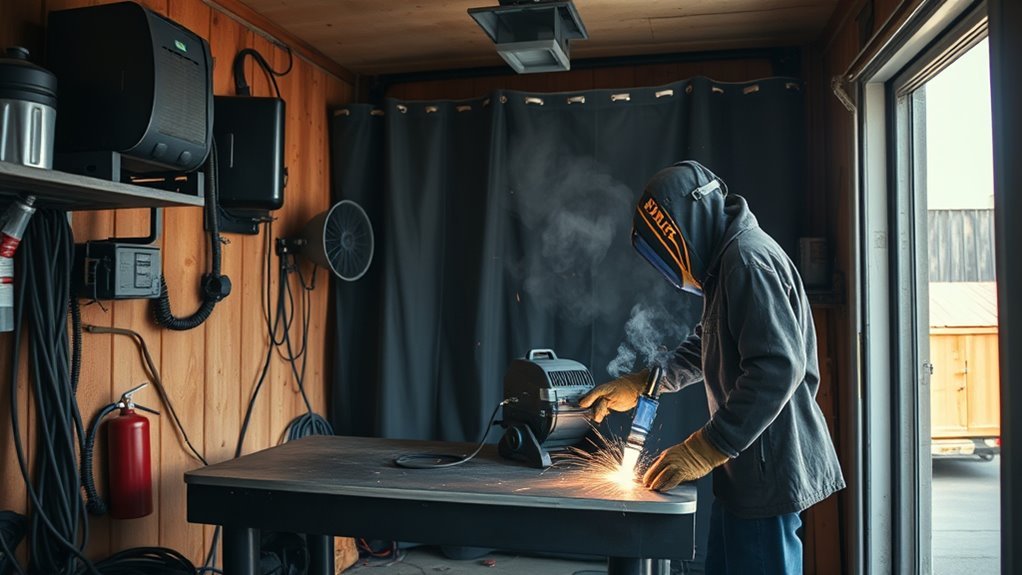
Warning: Remove or protect interior trim, glass, weatherstrips, wiring, vapor barriers, foam, sound deadener, seam sealer, and nearby combustibles. Inspect both sides of the weld area. Keep an extinguisher ready and check the door and surrounding area for smoldering material after hot work.
Paint, zinc coatings, seam sealer, adhesive, and old body filler can create hazardous fumes. Use local exhaust near the arc without pulling away the shielding gas. Follow OSHA welding, ventilation, PPE, and hot-work guidance where it applies. Never weld near chlorinated-cleaner vapors.
Products Worth Considering

【Premium Material】This wire metal sheet thickness gauge set is made of high quality 2Cr13 stainless steel, which is firm and durable, well made, not easy to bend, easy to read, accurate measurement, simple to operate. (There will be a little oil on the wire metal sheet thickness gauge, which is used to prevent rust)


Premium 20 Gauge Mild Steel Sheet Metal – Crafted from high-quality cold rolled steel, these sheets offer exceptional durability and a smooth, uniform surface. Ideal for precision-driven projects requiring reliable material performance without compromising on structural integrit
Why Proper Panel Fit Is Crucial for Successful Welding
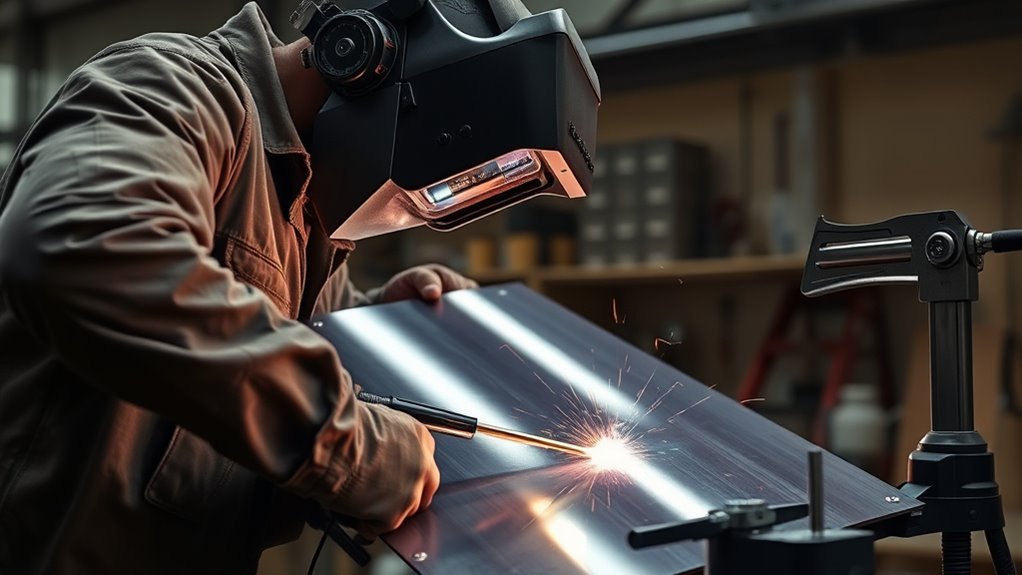
When you weld a door-skin patch, panel fit directly affects weld quality. A tight, even joint needs less filler metal and gives the surrounding sheet more support against shrinkage. A wide or changing gap concentrates heat at the edges and raises the chance of burn-through.
Use datum lines, body lines, scribe marks, and measurements from undamaged areas to locate the panel. Repair accessible dents and straighten the door-shell flanges before the final fit. Do not attempt to straighten a damaged intrusion beam or its mounting points.
Check the lower door line, beltline, character lines, front and rear gaps, and the relationship to the rocker and adjacent panels. Whenever practical, test-fit the door on the vehicle before final attachment. Make sure the door latches without lifting or dropping.
Trim a patch in small stages. Aim for a close, consistent butt fit without forcing either panel. Do not use a fixed gap from an unrelated project. General joint preparation principles for thicker steel still show why clean, consistent edges matter, but do not copy 1/4-inch steel settings or weld lengths for a thin door skin.
Note: Do not force a poor-fitting replacement skin into position with heavy clamping. Excessive clamp pressure stores stress in the panel, and the skin may move when you release the clamps.
Essential Welding Techniques for Door Skins
A sound door-skin repair starts with clean metal, accurate fitment, and the correct attachment method. The welding technique changes depending on whether you are installing a complete replacement or closing a patch seam.
Products Worth Considering

Can now skin the window opening which could not be done in the past

Value Pack: The package includes 24 packs of butt welding clamps, enough quantity to meet your daily needs and replacements. Each butt welding clamps is individually wrapped in a small bag, convenient to carry and use.

Product Type :Auto Accessory
For a Complete Replacement Skin
- Confirm the OEM method. Identify the required adhesive, weld type, weld locations, flange treatment, and corrosion-protection products.
- Prepare the door frame. Remove the old weld nuggets, adhesive, corrosion, and damaged coating without thinning the flange.
- Dry-fit the replacement skin. Correct flange shape and alignment before applying adhesive.
- Restore specified NVH material. Replace foam or damping material only where the repair procedure requires it and keep it away from prohibited weld areas.
- Apply the approved adhesive. Cover bare mating surfaces as directed by the product and OEM instructions.
- Install and hem the skin. Crimp the flange gradually with the correct door-skin tool, hammer, and dolly.
- Add only the specified welds. Use plug welds, resistance spot welds, or another method only at the locations listed in the repair procedure.
- Clamp and cure. Maintain alignment through the adhesive manufacturer’s clamp and cure period.
For a Welded Patch
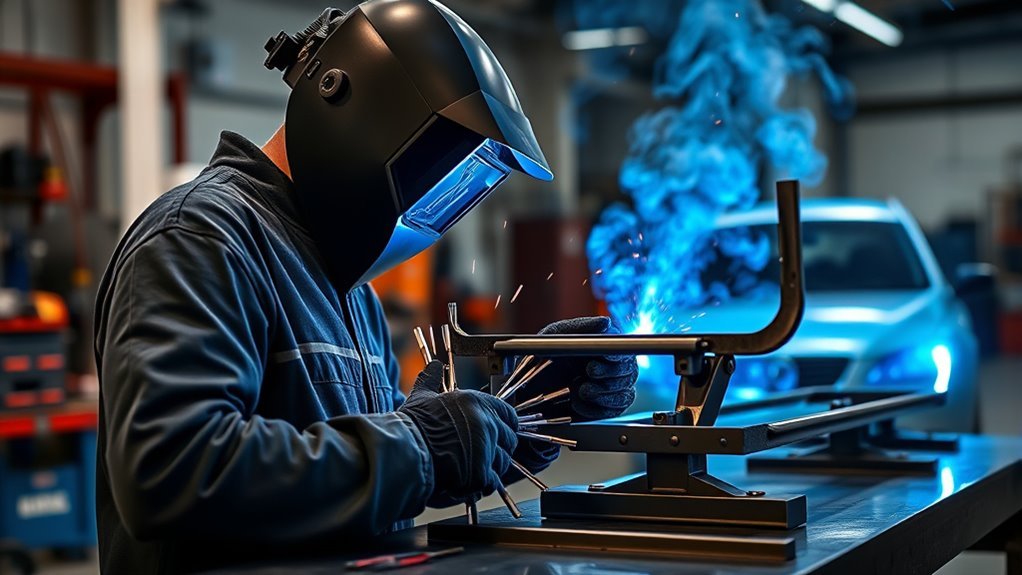
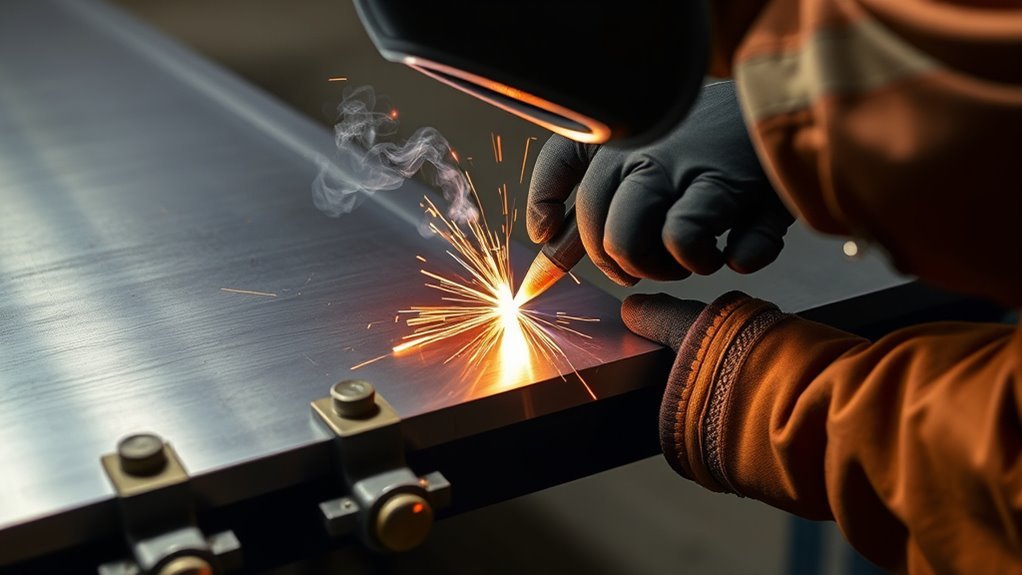
Clamp the patch so the faces sit flush. Add widely separated tacks first, then divide the remaining gaps with more tacks. Miller’s auto-body welding procedure uses initial tacks no more than 1 inch apart, followed by very short bursts that extend the existing tacks after the panel cools.
Do not treat 5/8 inch (16 mm) as a universal stitch length. On a thin door skin, even that distance may add too much heat in one application. A single quick tack may be enough before you move to a distant part of the seam.
| Technique | Purpose | What to Watch |
|---|---|---|
| Initial tack welds | Lock the patch in position | Alignment changes, edge lifting, and burn-through |
| Skip welding | Spread heat around the seam | Avoid returning to a warm area too soon |
| Very short bursts | Join one tack to the next gradually | Do not create a long glowing weld zone |
| Alignment checks | Catch shrinkage before it spreads | High spots, low spots, gaps, and oil-canning |
Pro Tip: Make several test joints from scrap that matches the door skin’s material and thickness. Test the same joint gap, wire, gas, gun angle, tack duration, and grinding method before touching the vehicle.
Step-by-Step Process to Weld a Door-Skin Patch Without Warping
- Prepare the vehicle and work area. Follow the OEM electrical and safety procedure. Remove or protect glass, trim, wiring, sealers, sound deadener, and nearby combustible material.
- Clean the metal. Remove paint, rust, oil, body filler, adhesive, and coatings far enough from the joint to prevent contamination and fumes.
- Shape the patch. Match the contour and body line before trimming the final edge.
- Fit the patch. Align it with datum lines, body lines, and scribe marks. Keep the joint close and consistent.
- Clamp the panel. Hold the patch flush without bending or preloading the surrounding skin.
- Test the settings. Weld matching scrap first. Confirm fusion without blowing holes or creating a large heat-affected area.
- Add the first tacks. Place them at widely separated locations around the patch.
- Recheck the contour. Stop and correct a lifted edge, opening gap, or high spot before adding more heat.
- Divide the gaps. Add more isolated tacks between the first ones while moving around the seam.
- Close the seam gradually. Add very short bursts at the ends of cooled tacks. Never run one continuous bead around the patch.
- Let the metal cool naturally. Do not stack welds into a warm area. Avoid water quenching unless a specific approved procedure requires it.
- Inspect for pinholes. Use good lighting from both sides where possible. Repair only confirmed defects instead of reheating the entire seam.
- Grind the welds carefully. Remove only the proud weld metal with short, light passes.
- Metal-finish the area. Use a straightedge and light hammer-and-dolly work where access and panel condition allow.
- Restore protection. Apply the required primer, seam sealer, backside coating, and cavity wax.
How to Control Heat and Prevent Distortion While Welding
Weld shrinkage cannot be eliminated completely. Your goal is to keep it small and distribute it evenly enough that the panel retains its shape.
- Use the lowest practical total heat input. The weld still needs fusion, so do not lower the settings until the tack merely sits on the surface.
- Keep the arc time short. A quick, properly fused tack usually adds less total heat than a weak tack that needs repeated reheating.
- Move around the seam. Work on distant areas instead of progressing from one end to the other.
- Allow complete cooling. Do not judge only by the loss of the red glow. Thin metal can remain hot enough to distort after it looks cool.
- Maintain fit and clamp pressure. Reposition loose clamps before the joint opens.
- Keep the ground clamp close to clean metal. A poor electrical connection can produce an unstable arc and inconsistent tacks.
- Use controlled gun movement. Avoid weaving across a thin butt joint.
- Control grinding heat. Rotate between areas and pause before the panel becomes hot.
A straight door skin comes from dozens of controlled decisions, not one long weld. Fit first, tack briefly, move away, cool fully, and check the contour before continuing.
Watch your welder settings closely so the tack fuses both edges without creating a large heat-affected area. Miller recommends small-diameter solid wire for most light-gauge sheet-metal work and advises against flux-cored wire because it puts more heat into thin base metal.
If the original panel or replacement part has a zinc-bearing coating, remove coatings only as directed, control the fumes, and restore corrosion protection afterward. Review the hazards covered in this guide to MIG welding galvanized steel and metal fume fever before welding coated material.
Final Adjustments and Cleanup After Welding
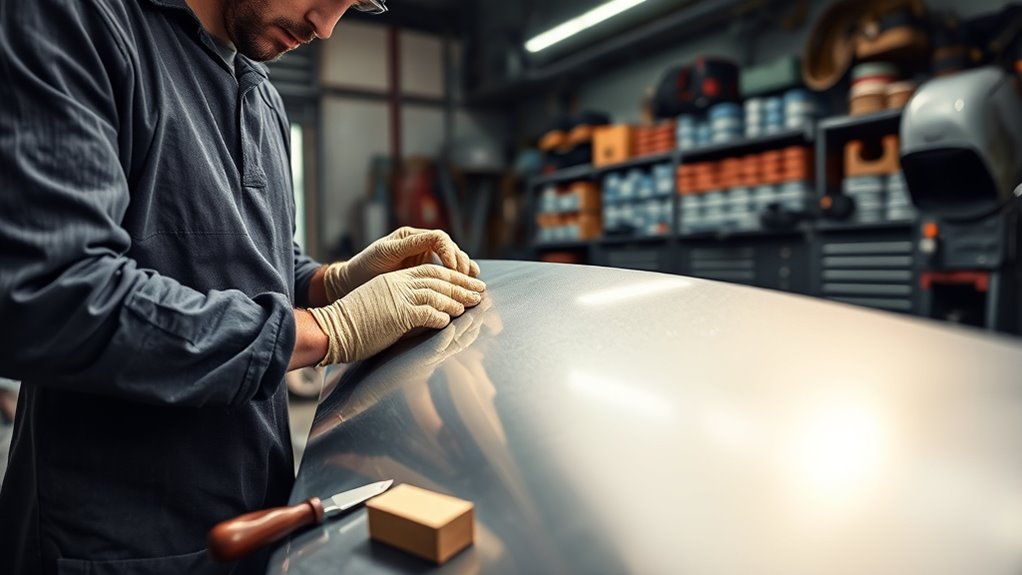
Finish the repair without adding a second round of heat damage. Grinding removes excess weld metal, but it also transfers heat into the panel and can thin the surrounding skin.
- Use an angle grinder or compact abrasive tool for rough weld cleanup and snips for precise trimming before final attachment.
- Keep the abrasive mainly on the weld crown instead of flattening a wide area of original sheet metal.
- Move continuously and use short passes.
- Pause when the panel starts to warm.
- Use a straightedge, flexible sanding block, or guide coat to locate remaining high and low areas.
- Use light hammer-and-dolly work only where you have safe backside access and understand how the panel is moving.
- Inspect for pinholes before applying filler, primer, or seam sealer.
- Check your cutting wheels before cutting or trimming, and replace any damaged or incorrect wheel.
Watch for sharp edges and abrasive fragments during cleanup. Wear gloves, safety glasses, a face shield when appropriate, and hearing protection.
Restore Corrosion Protection
Welding and grinding remove factory protection from the front, backside, and hem flange. Follow the vehicle maker and product maker instructions for every layer you restore.
- Clean the repaired metal with a compatible surface cleaner.
- Apply the specified epoxy, weld-through, direct-to-metal, or other approved primer in the correct locations.
- Reproduce the original seam sealer without blocking door drains.
- Coat accessible backside areas that lost their factory finish.
- Apply cavity wax inside the repaired door after painting or at the stage required by the product procedure.
3M’s corrosion-protection resources recommend cavity wax after repairs to protect internal automotive surfaces and joints.
Complete the Final Door Checks
- Confirm even gaps at the fender, pillar, rocker, and adjacent door.
- Open and close the door several times without slamming it.
- Check that the latch engages without lifting or pulling the door sideways.
- Operate the window through its full travel.
- Confirm that wiring, clips, weatherstrips, vapor barriers, and trim are secure.
- Keep drain holes and water paths open.
- Inspect the repaired seam for pinholes, bare metal, missing sealer, and incomplete backside coating.
Troubleshooting Common Welding Problems
Most door-skin welding problems come from poor fit, excessive arc time, unstable settings, contamination, or grinding too aggressively. Stop when a defect appears and correct its cause before adding more weld.
| Problem | Likely Cause | Corrective Action |
|---|---|---|
| Gap opens during welding | Shrinkage, weak clamping, or poor initial fit | Stop, cool the panel, restore alignment, and reclamp before adding another tack. |
| Burn-through | Large gap, long arc time, excessive heat, or poor aim | Let the area cool, correct the fit, retest the settings, and rebuild the edge with brief tacks instead of holding the trigger. |
| Patch edge sits high | Poor contour, clamp movement, or weld shrinkage | Stop welding and correct the edge while backside access remains available. |
| Panel oil-cans | Stretched metal, concentrated shrinkage, or aggressive grinding | Do not add random heat. Identify the high and low pattern and use trained metal-finishing methods or professional repair. |
| Porous or inconsistent tacks | Dirty metal, poor gas coverage, incorrect polarity, unstable ground, or excessive wind | Clean both sides, check gas flow and polarity, move the ground clamp, and test again on scrap. |
| Welds remain too high | Excess wire deposition or repeated overlapping tacks | Retest wire feed and tack duration. Grind only the crown with short, cool passes. |
| Pinholes remain after grinding | Incomplete fusion or missed spaces between tacks | Mark each pinhole, cool the panel, and repair only the marked locations with brief tacks. |
Loose panels and weak tack welds can lead to distortion, so check the fit before you add more heat. If your welds remain inconsistent, return to matching scrap. You can also review this guide about how to practice body-panel welding with flux core, but self-shielded flux core is not the preferred process for a typical thin door skin.
Common Mistakes to Avoid When Welding Door Skins
Many door-skin problems begin before the first arc. Poor trimming, dirty metal, hidden combustibles, and the wrong attachment method can create more damage than the original dent.
- Do not start without the vehicle maker’s repair procedure.
- Do not treat a complete replacement skin like a butt-welded patch.
- Do not weld over paint, rust, oil, adhesive, body filler, or seam sealer.
- Do not weld near hidden trim, wiring, foam, vapor barriers, or sound deadener.
- Do not repair or straighten a damaged intrusion beam.
- Do not run one long weld bead on thin sheet metal.
- Do not rely on a universal 5/8-inch weld length.
- Do not ignore a small gap because it can grow as the joint shrinks.
- Do not grind hard in one place for too long.
- Do not quench a hot panel with water as a routine heat-control method.
- Do not use self-shielded flux core as the first choice for a thin exterior skin.
- Do not leave bare metal, damaged backside coating, or an unsealed hem flange after the repair.
Frequently Asked Questions
How do you weld body panels without warping?
Use tight fit-up, clean metal, a process suited to thin sheet, isolated tack welds, and a skip-welding sequence. Let each area cool before returning to it. Check the panel contour often and grind the welds in short passes so abrasive heat does not create new distortion.
How do you fix a warped panel after welding?
First stop welding and let the panel cool. Map the high and low areas with a straightedge or guide coat. Use light hammer-and-dolly work only when you have safe backside access and understand the shrink pattern. Severe oil-canning, stretched metal, or inaccessible damage is better handled by a trained collision technician. Do not apply random shrinking heat.
What causes door skins to warp during welding?
The heated weld area expands and then shrinks as it cools. Long welds, repeated tacks in one area, large joint gaps, poor clamping, forced fit-up, and aggressive grinding concentrate that shrinkage and pull the thin panel out of shape.
What is the golden rule when welding thin sheet metal?
Control total heat input while maintaining proper fusion. Fit the joint closely, keep each weld application brief, move to a distant area, let the panel cool fully, and inspect the shape before continuing.
Can you weld a door skin with flux core?
A skilled welder may be able to join some thin panels with flux core, but self-shielded flux core is a poor default choice for a typical door skin. It adds more heat and spatter than small-diameter solid-wire MIG. Use the OEM-approved process and test it on matching scrap first.
Should you weld around the full perimeter of a replacement door skin?
Not unless the vehicle maker’s repair procedure requires it. Many replacement skins use a hemmed flange with approved panel adhesive, seam sealer, and limited welds at specified locations. A continuous perimeter weld can create unnecessary distortion and may not duplicate the factory attachment method.
What MIG wire works well for thin automotive sheet metal?
For light-gauge mild steel, 0.023- or 0.024-inch ER70S-6 solid wire is a common starting choice. Use the polarity and shielding gas required by the wire and machine, then tune the settings on scrap that matches the door skin. Do not assume the panel is ordinary mild steel without checking the repair information.
Should you cool a welded door skin with water?
Do not use water quenching as a routine method. Rapid and uneven cooling can complicate shrinkage, introduce moisture, and hide how much heat you are adding. Move to another area and allow the panel to cool naturally unless an approved repair procedure states otherwise.
Can panel adhesive replace welding on a door skin?
Panel adhesive can replace or supplement some factory attachments when the vehicle maker and adhesive manufacturer approve it. It cannot be used as a universal substitute for every weld. Follow the specified surface preparation, bond-line thickness, clamping, curing, weld locations, and corrosion-protection procedure.
Conclusion
A straight door-skin repair depends on choosing the correct attachment method before you add heat. For a complete replacement, follow the OEM procedure for adhesive, hemming, clamping, welds, and seam sealing. For a patch, use tight fit-up, short tacks, skip welding, full cooling, and frequent contour checks.
Test your welder settings and grinding technique on matching scrap before working on the door. After the metalwork is complete, inspect the door gaps and operation, repair any pinholes, and restore every layer of corrosion protection that the repair removed.
Sources
- 3M Standard Operating Procedure: Door Skin Replacement — supports adhesive application, dry fitting, hem-flange crimping, curing, and seam sealing.
- Miller: How to MIG and TIG Weld Auto Body Sheet Metal — supports tight fit-up, tack spacing, short weld bursts, cooling, and controlled grinding.
- Miller: Successfully Welding Sheet Metal With MIG and TIG — supports small solid wire, shielding gas, polarity, skip welding, and avoiding flux core on thin sheet.
- OSHA 29 CFR 1910.252: Welding, Cutting, and Brazing — supports ventilation, PPE, fire prevention, combustible-material control, and fire-watch precautions.
- I-CAR: Door Intrusion Beams — supports inspection and replacement guidance for damaged intrusion beams.
- 3M Seam Sealer and Corrosion-Protection Resources — supports seam sealing and cavity-wax application after automotive body repairs.