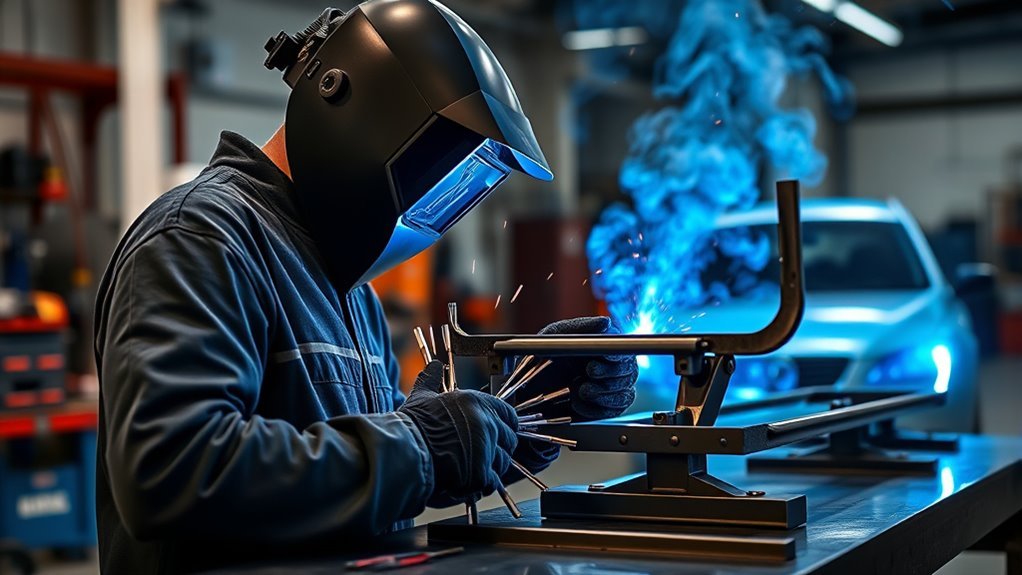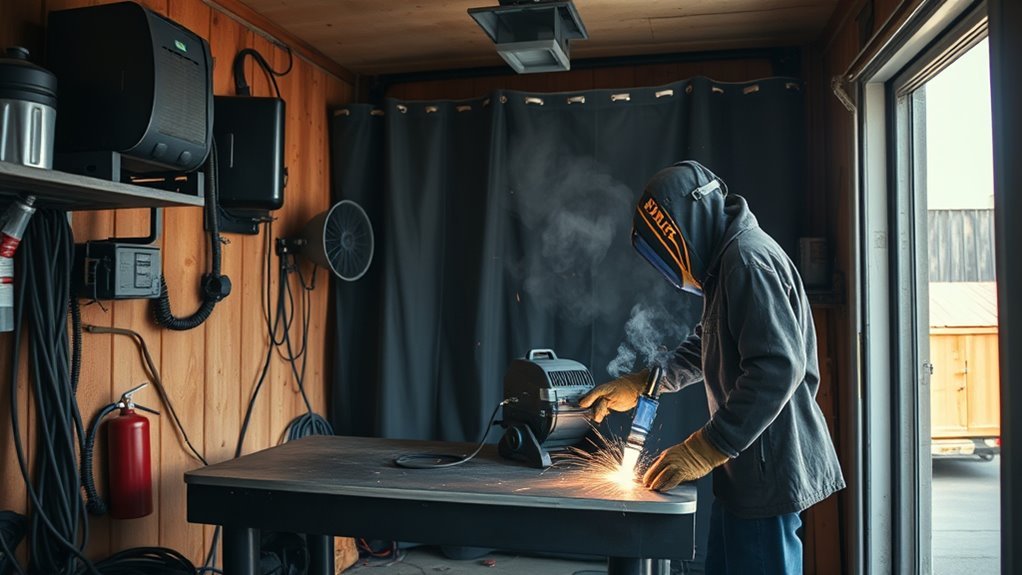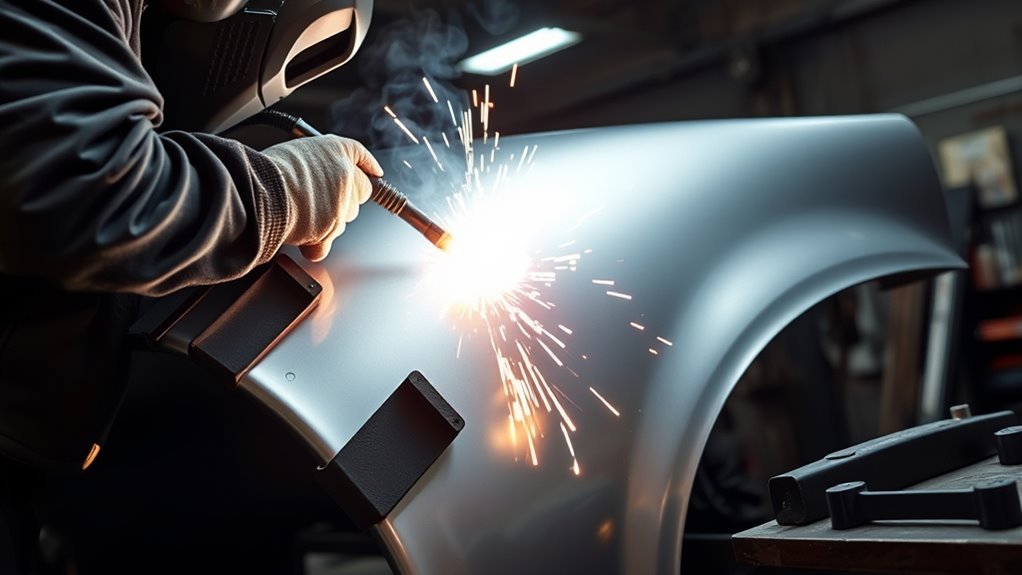
Welding a rocker panel is not just a cosmetic sheet-metal job. On many vehicles, the rocker is part of a layered side structure that helps support the door opening and manage crash loads. A safe repair begins with the exact VIN-specific body-repair procedure, careful measurements, clean metal, approved joining methods, and repeated fit checks.
Quick Answer
To weld a rocker panel safely, first identify whether you are replacing only the outer skin or a structural inner reinforcement. Follow the exact VIN-specific OEM procedure for cut lines, weld type, spacing, wire, and corrosion protection. Test-fit and measure the body, make practice welds, then reproduce the specified joints without overheating the steel.
Key Takeaways
- Use the vehicle’s VIN and current OEM body-repair information to identify the rocker’s materials, approved cut lines, and joining method.
- Do not section an inner reinforcement, pillar joint, or high-strength component unless the manufacturer expressly permits it.
- Record body dimensions and door gaps before cutting, then verify them throughout the repair.
- Protect wiring, fuel and brake lines, interior materials, closed cavities, the 12-volt system, SRS components, and any high-voltage equipment.
- Make and test practice welds on matching metal before welding the vehicle.
- Restore primer, seam sealer, paint, and cavity protection after welding to reduce future corrosion.
At a Glance
| Time Required | One full workday or more; extensive rust, structural measuring, refinishing, and hidden inner-panel damage can add substantial time. |
| Difficulty | Advanced. Structural inner-rocker work requires collision-repair training, body measuring equipment, and OEM repair information. |
| Tools Needed | OEM repair information, measuring tools, approved welder and consumables, spot-weld cutter, clamps, grinder, PPE, local fume extraction, welding blankets, and fire extinguisher. |
| Cost | Varies widely by vehicle, replacement-panel type, corrosion depth, refinishing needs, and the equipment required by the manufacturer. |
Before You Begin, Identify the Exact Repair
Inspect the outer rocker, pinch weld, jacking points, floor edge, inner rocker, pillar joints, and nearby body panels before cutting. Rust visible on the outer skin may extend between layers where it cannot be seen until the outer panel is removed.
Determine whether the damaged part is a nonstructural cover, an exterior rocker skin, or part of the inner reinforced side structure. Ford, for example, identifies rockers as components that can form part of the occupant safety cell. Other manufacturers use different materials and constructions, so do not assume that one vehicle’s method applies to another.
Use the VIN and model year to obtain the current body-repair manual, body-material map, replacement procedure, and joining diagram. Confirm all of the following before work begins:
- The exact replacement part and whether it is serviced as a complete assembly
- The steel or aluminum type and tensile-strength classification
- Whether sectioning is allowed and the approved cut locations
- The required weld, braze, adhesive, rivet, or resistance-spot-weld method
- The specified number, position, size, and spacing of service joints
- Required wire, shielding gas, pulse capability, electrode tips, and welder settings
- Body dimensions, support points, bracing instructions, and post-repair inspections
- Required diagnostic scans, restraint-system checks, or driver-assistance calibrations
Ford’s structural-repair position statement directs repairers to follow published OEM procedures, while Honda’s body-repair information shows why welding methods change with the strength and construction of the steel involved.
The approved OEM joining diagram—not a universal tack-weld pattern—determines where and how a rocker panel should be attached.
Warning: Do not perform a structural rocker repair without the correct body-repair procedure, suitable measuring equipment, and proven welding skill. Incorrect sectioning or excessive heat can weaken the side structure and change how the vehicle performs in a later collision.
Check Body Dimensions and Door Gaps
Open and close every door beside the repair area several times before disassembly. Record the gaps at the front, rear, top, and bottom of the door. Photograph the latch, striker, pinch weld, adjacent panels, and body lines from several angles.
Measure the door opening and any manufacturer-specified body datum points. A door that already sags, a damaged hinge, or a shifted pillar can produce misleading gaps. Correct known dimensional damage before using the door as an alignment reference.
If the rocker or door opening has moved, do not push it into place with an unmeasured port-a-power setup. Structural pulling should be performed on suitable collision-repair equipment while monitoring OEM body dimensions.
Support the vehicle only at approved lifting or anchoring points. Do not place a jack or stand under the rocker section being removed. Some repairs also require temporary bracing across the door opening; use it only where and how the OEM procedure specifies.
Pro Tip: Place removable reference marks on the old panel and adjacent body before cutting. Photos, written measurements, and reference marks make it easier to detect small movement during test fitting.
Prepare the Vehicle for Cutting and Welding
Welding and grinding can damage electronic systems and ignite materials far from the visible side of the repair. Follow the exact service-manual procedure for shutting down the vehicle before disconnecting or removing anything.
- Record diagnostic trouble codes and complete any required pre-repair scan.
- Follow the manufacturer’s 12-volt battery disconnection and reconnection procedure.
- Observe all SRS wait times and handling instructions for airbags and seat-belt pretensioners.
- Locate wiring harnesses, electronic modules, grounds, fuel lines, brake lines, and vapor lines near the repair.
- Remove or shield carpet, trim, insulation, seam sealer, foam, cavity wax, and undercoating that could burn.
- Inspect both sides of every proposed cut and weld location before operating a tool.
- Keep a suitable fire extinguisher ready and assign a fire watch when hidden ignition is possible.
For a hybrid, battery-electric, or fuel-cell vehicle, do not improvise a high-voltage shutdown. The system must be made safe using the exact model-specific procedure, test equipment, personal protective equipment, and lockout steps. Honda’s high-voltage body-repair guidance, for example, requires trained technicians to follow a dedicated disabling procedure and warns that dangerous voltage can remain inside the battery assembly.
OSHA’s hot-work requirements call for welding areas to be made fire-safe, combustibles to be removed or shielded, fire-protection equipment to be available, and a fire watch to be used where required.
Products Worth Considering

✅【Fire-Resistant Carbon Felt Construction】The Matace welding blanket is made from 5mm thick carbon felt and has been tested in accordance with ASTM D6413 standards. Its dense, heavy-duty structure is designed to help manage sparks, hot slag, and radiant heat during welding and high-temperature work.

Made of Flame Retardant Fiberglass

Well-woven Fiberglass Blanket: Constructed from 24.7 oz/yd² fiberglass material, this welding blanket serve as an excellent shield against heat and fire. Tight stitching and exquisite weaving. Our heat resistant mat shield is a nice addition to welding equipment. Standard size : 4x6 ft (122x183cm), thickness: 0.31” (8mm)
What You’ll Need for Rocker Panel Replacement
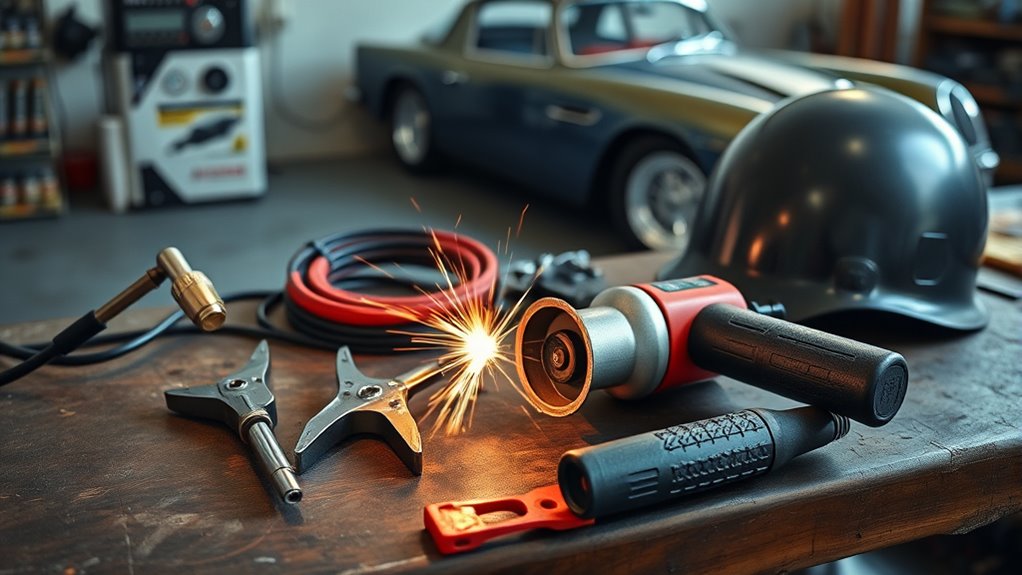
Gather the tools, consumables, and safety equipment before removing the damaged panel. The exact list must match the vehicle manufacturer’s repair procedure.
- Current VIN-specific OEM body-repair information and body dimensions
- MIG, MAG, MIG-brazing, or resistance-spot-welding equipment approved for the specified joint
- Correct welding wire, shielding gas, electrode tips, and consumables
- Matching sheet-metal coupons for setup and destructive weld tests
- Auto-darkening welding helmet with the correct shade range
- Safety glasses, hearing protection, welding gloves, jacket, and closed footwear
- Local fume extraction positioned close to the arc without disturbing shielding gas
- A properly selected and fitted respirator when the exposure assessment requires one
- Angle grinder with its guard, side handle, and correctly rated discs
- Spot-weld cutter, drill, air saw, body saw, or other tools specified for panel removal
- Clamps, locking pliers, cleco-style fasteners, and panel-holding tools
- Measuring tape, tram gauge, straightedge, marker, and contour gauges
- Welding blankets, spark shields, adequate lighting, and a suitable fire extinguisher
- Correct replacement rocker panel matched to the VIN and repair procedure
- Wire brush, file, scraper, and sanding tools for controlled surface preparation
- OEM-approved primer, adhesive, seam sealer, underbody coating, paint materials, and cavity corrosion protection
Do not choose a welder by amperage alone. The machine must support the process, output control, wire, gas, pulse mode, and electrode configuration required for the specific vehicle. A machine is suitable only when it can produce repeatable test welds that meet the manufacturer’s acceptance criteria on a matching metal stack.
Inspect every abrasive disc before use and confirm that its maximum speed is at least as high as the grinder’s no-load speed. Keep the correct guard and handle installed. OSHA’s portable-tool rules address abrasive-wheel guarding, inspection, mounting, and speed compatibility.
Products Worth Considering
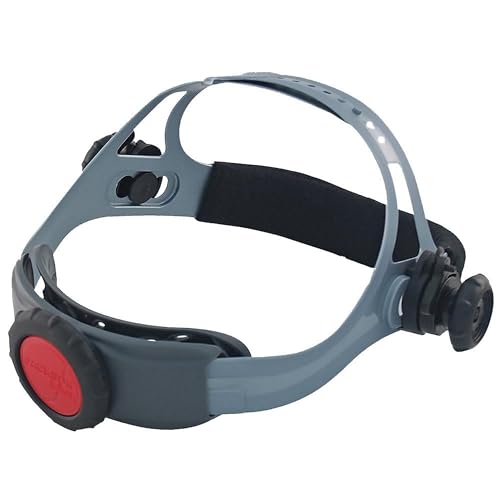
REPLACEMENT WELDING HELMET HEADGEAR - Jackson Safety's Premium 370 Speed Dial Replacement Headgear offers a perfect fit and secure hold for your welding hood


EXTRA LEATHER PROTECTION - Our jacket is made from leather and cotton. Split cowhide leather is incorporated on the arms sleeves, shoulders and chest which are high impact and key protection areas from heat and spatter
Steps to Weld Rocker Panels
- Identify the repair. Determine whether the damage affects a cover, outer skin, inner panel, reinforcement, pillar joint, floor edge, or jacking structure.
- Obtain the OEM procedure. Verify the replacement part, cut lines, material strength, joint type, weld locations, and corrosion-protection steps by VIN.
- Measure and document the body. Record door gaps, latch operation, body dimensions, and adjacent-panel alignment.
- Prepare the vehicle. Follow the required battery, SRS, high-voltage, interior-removal, lifting, and fire-prevention procedures.
- Remove the damaged panel. Expose and release factory joints without cutting hidden reinforcements or good underlying metal.
- Prepare and test-fit the replacement. Trim only at approved locations, clamp the panel, and verify dimensions and door operation.
- Set up and test the welder. Use matching coupons to confirm penetration, nugget size, fusion, and heat control before welding the vehicle.
- Reproduce the approved joints. Make the required spot welds, plug welds, brazed joints, bonded joints, or sectioning welds in the specified sequence.
- Inspect the repair. Check every accessible weld, panel position, door gap, latch, dimension, and backside for heat or fire damage.
- Restore corrosion protection. Reapply primer, seam sealer, coatings, paint, and cavity protection as directed.
- Complete post-repair checks. Reassemble the vehicle, reconnect systems correctly, scan for faults, and perform required calibrations or relearns.
Safely Remove the Damaged Rocker Panel
Mark the manufacturer-approved removal boundaries and expose the factory attachment points. Do not draw a cut line solely around the visible rust; corrosion may continue behind the panel, while an arbitrary cut may enter a reinforcement or prohibited sectioning area.
Remove coatings only as far as necessary to find factory spot welds and sound metal. Use a spot-weld cutter or the removal method specified in the body-repair procedure. A grinder can be useful for controlled cleanup, but it should not be used blindly through a layered rocker assembly.
When using an angle grinder, keep the guard and side handle installed, stand out of the wheel’s plane, and use only undamaged, correctly rated accessories. Review the tool manufacturer’s instructions and the site’s angle-grinder safety procedure before cutting.
Use locking pliers or panel-holding tools to control loose metal. Never hold a cut section by hand near the disc, saw blade, or hot edge.
If the body section has shifted, stop and measure it. Do not force it into position without an anchored measuring and pulling plan. A collision-repair technician should correct structural displacement before the replacement panel is fitted.
After removal, inspect every exposed layer. Continue the repair only when the remaining metal is solid and the approved attachment flanges are intact. Remove burrs, rust, burned coating, old adhesive, and seam sealer from the areas identified in the procedure.
| Step | Preferred Tool or Check | Main Precaution |
|---|---|---|
| Expose factory joints | Scraper, sander, or wire tool | Do not thin the underlying flange |
| Release spot welds | Spot-weld cutter or specified drill | Avoid drilling through the backing panel |
| Cut an approved section line | Body saw, air saw, or guarded cut-off tool | Check behind the cut for reinforcements and lines |
| Assess body movement | OEM dimensions and measuring equipment | Do not pull the structure by eye |
| Prepare attachment areas | File, scraper, and controlled abrasive | Preserve metal thickness and approved coatings |
Securely Fit and Align the New Rocker Panel
Compare the new rocker panel with the removed part and the vehicle before trimming it. Confirm its length, flange shape, drainage openings, jacking-point details, pillar interfaces, and attachment locations.
Prepare mating flanges according to the OEM procedure and the coating manufacturer’s instructions. Weld-through primer is not a universal substitute for the factory coating system. Apply it only where the repair procedure permits it, and keep adhesive-only or bare-weld areas prepared exactly as specified.
Position the new rocker panel against the vehicle body. Check its relationship to the door opening, fender, quarter panel, floor edge, pinch weld, moldings, and weatherstrip surfaces.
Use clamps, locking pliers, temporary fasteners, or panel-holding tools at enough points to keep every flange seated. Tighten them only enough to eliminate gaps without distorting the replacement panel.
Mark the required factory or service weld locations on the replacement part. When plug welds are specified, use the exact hole size, number, and spacing in the body-repair procedure rather than choosing a generic pattern.
Test the door before making any permanent joint. The latch should engage consistently, the weatherstrip surface should remain even, and the gaps should match the documented baseline or OEM dimensions.
Verify Door Functionality After Fitting
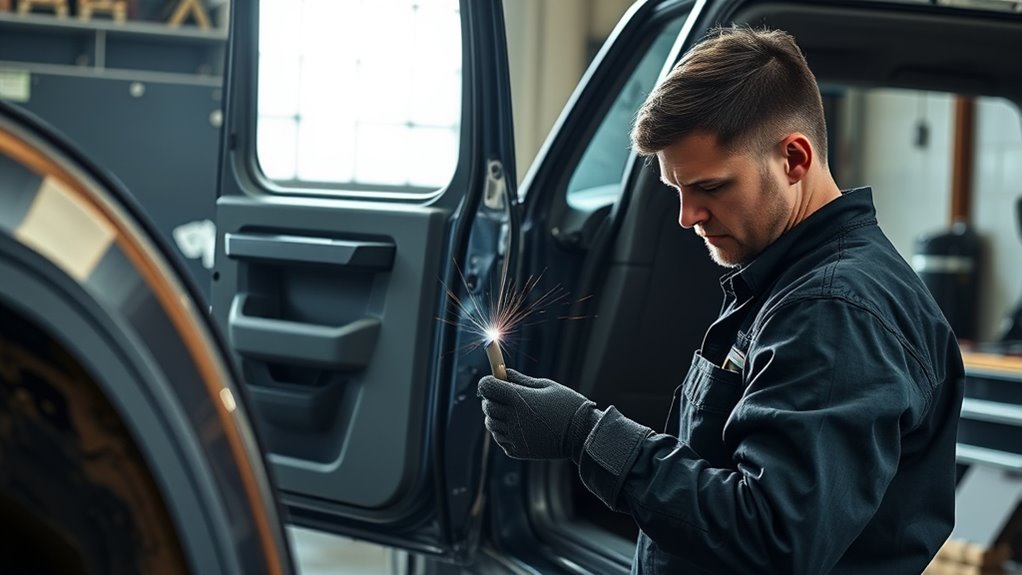
Check door function with the replacement panel fully clamped and the vehicle supported as required by the repair procedure. Inspect the hinges and striker first so an existing door problem is not mistaken for rocker movement.
Close the door gently. Do not slam it against an unfinished or lightly clamped repair. Compare the front, rear, upper, and lower gaps with your measurements and photographs.
Do not use a generic fillet-weld chart to decide how much weld the rocker needs. Automotive panel strength depends on the specified joint design, metal stack, weld count, hole size, penetration, adhesive, and heat-affected zone.
| Check | Action | Acceptable Result |
|---|---|---|
| Latch and striker | Close the door gently and verify both latch stages | Consistent engagement without lifting or forcing the door |
| Door gaps | Measure at the same reference points used before cutting | Matches the documented baseline or OEM specification |
| Panel depth | Sight along the rocker, door skin, fender, and quarter panel | No high, low, or twisted section |
| Pinch weld and moldings | Test-fit removed trim or use its mounting references | Mounting points and edges remain correctly positioned |
| Repeated operation | Open and close the door several times | No progressive movement or change in sound |
If the door does not close smoothly, stop and find the cause before welding. Check support placement, clamps, hinges, striker position, panel seating, and body dimensions. Correcting the fit after all structural joints are complete can require removing the replacement panel again.
Set Up the Welder and Make Test Welds
Use clean coupons that match the type, thickness, coating, number of layers, flange condition, and orientation of the actual joint. Prepare them with the same holes, gaps, primer, adhesive, wire, gas, and electrode access that will be used on the vehicle.
Set the welder according to the OEM procedure and equipment manufacturer’s instructions. Do not copy settings from a thicker fabrication project or an unrelated vehicle. Thin automotive steel can burn through before a joint develops adequate fusion, while high-strength steel may require special wire or a restricted heat input.
Make several practice welds and allow them to cool naturally. Inspect the face and back of each test weld. When the procedure calls for destructive testing, perform the specified peel, chisel, or coupon test and confirm the required nugget, button, or fusion result.
Adjust one variable at a time. Check wire feed, voltage, current, pulse mode, electrode pressure, panel fit, hole size, gun angle, travel speed, gas flow, and ground connection as applicable.
Note: Attach the welding ground where the vehicle manufacturer directs and as close to the repair as practical. Do not allow welding current to travel through bearings, hinges, control modules, high-voltage components, or sensitive electrical paths.
Perform the Approved Rocker Panel Welds
Keep the replacement panel fully clamped and recheck its dimensions immediately before welding. Begin with the locating joints specified by the repair procedure rather than placing tacks at an arbitrary distance.
The approved procedure may call for one or more of the following methods:
- Squeeze-type resistance spot welding: Used where the required electrode access, metal stack, equipment, tip size, pressure, and current are available.
- MAG plug welding: Used at specified service locations with the required hole size, panel contact, wire, shielding gas, and penetration.
- MIG brazing: Used only at manufacturer-approved locations with the specified silicon-bronze wire, gas, pulse capability, and joint design.
- MAG butt or stitch welding: Used only where sectioning is expressly allowed and the procedure provides the joint design and weld sequence.
- Adhesive with welds, rivets, or other fasteners: Used only when the manufacturer specifies the adhesive, surface preparation, bead location, open time, clamps, and mechanical attachments.
Complete the joints in the specified sequence. Maintain full flange contact and stop if a clamp loosens, an adhesive bond line moves, or the panel begins to pull out of position.
When an approved outer-skin section requires intermittent fusion welding, distribute heat around the repair and allow cooling time between welds. Do not convert specified spot or plug welds into a continuous bead. Long continuous welds can increase distortion and enlarge the heat-affected zone.
Keep fresh air moving and capture fumes close to their source. Automotive coatings and zinc-coated steel can produce hazardous fumes when heated. NIOSH recommends engineering controls such as source extraction to reduce welding-fume exposure. Review the site’s guidance on welding galvanized steel as an additional practical reference.
Use only grinder-rated accessories when cleaning a weld or preparing a surface. Never install a circular-saw blade or an accessory that is not approved for the grinder’s speed and guard configuration.
Control Heat and Prevent Panel Distortion
Heat control matters most where an OEM-approved fusion seam or sectioning joint is used. It does not mean reducing the heat so far that the weld sits on top of the metal without fusion.
- Maintain tight fit-up so the arc does not have to bridge a large gap.
- Use the validated settings from the test coupons.
- Follow the specified weld sequence rather than finishing one end first.
- Move between separated weld locations when the procedure allows it.
- Allow the panel to cool naturally between groups of welds.
- Do not quench high-strength body steel unless the manufacturer specifically instructs it.
- Stop and measure the panel if the door gap or body line begins to change.
Generic heat advice for thick plate or cast iron does not apply to thin automotive body steel. Excessive heat can distort an outer panel and may also reduce the properties of some high-strength steels.
Inspect the Welds and Panel Position
Inspect each accessible joint before grinding or covering it. A weld that looks smooth from the front may still lack fusion to the backing panel.
Check for:
- Complete fusion at the required panel layers
- The specified nugget or weld-button size
- No missed factory or service-weld locations
- No cracks, pinholes, porosity, excessive undercut, or burn-through
- No large gaps between mating flanges
- No damage to nearby wiring, hoses, coatings, glass, trim, or interior material
- No smoldering sealer, foam, undercoating, or debris inside the rocker cavity
Continue the fire watch after the last spark or weld. Check the backside and closed cavities with adequate lighting and inspection equipment wherever access allows.
Final Adjustments for Your Rocker Panel Replacement
After the locating and structural joints are complete, verify the door alignment, panel position, and body dimensions again. The door should open, close, and latch without extra force or a change in sound.
Complete only the remaining joints required by the repair procedure. Do not add extra welds in an attempt to make the repair stronger. Additional heat and unapproved joints can damage coatings, alter material properties, or create stress concentrations.
Verify Door Alignment
Measure the same reference points recorded before cutting. Check the latch, striker, weatherstrip contact, lower door gap, adjacent body lines, and molding locations.
If an alignment problem appears, determine whether it comes from panel movement, support placement, a loose clamp, an existing hinge problem, or structural dimensions. Correct the cause before grinding or refinishing hides the joint.
| Step | Action | Pass Condition |
|---|---|---|
| 1. Check latch | Test both latch stages and striker contact | Smooth, repeatable closure |
| 2. Measure gaps | Compare with baseline measurements | No unexplained change |
| 3. Check body lines | Sight and measure adjacent surfaces | Rocker, door, fender, and quarter align |
| 4. Verify dimensions | Recheck required body datum points | Within the OEM specification |
Ensure Secure Welds
Remove clamps only after the specified joints can hold the panel without movement. Inspect the locations that were hidden by the clamps, then complete any remaining approved joints.
A tight fit helps a plug or spot weld join the complete metal stack. If a gap opens between layers, stop and correct it rather than filling the opening with extra weld metal.
Compare the finished joints with the validated test coupons and OEM acceptance information. If a weld is porous, cracked, undersized, misplaced, or lacks fusion, remove and repair it using the approved method.
Final Fit Assessment
Complete a final fit assessment before refinishing. Check the door latch, lower gap, pinch weld, drainage openings, molding mounts, jacking-point features, floor edge, and nearby panel transitions.
Confirm that the panel remains stable after the clamps and temporary fasteners are removed. Recheck every required dimension and document the results when the repair is structural.
Rocker Panel Welding Troubleshooting
| Problem | Likely Causes | Corrective Action |
|---|---|---|
| Burn-through | Excessive heat, large gap, thin remaining metal, slow travel, or incorrect hole size | Stop, reassess metal condition, improve fit-up, and repeat test coupons with corrected settings |
| Porosity | Paint, sealer, rust, moisture, poor gas coverage, wind, or contaminated wire | Remove the defective weld, clean the joint, correct gas delivery, and retest |
| Weak plug weld | Poor flange contact, wrong hole size, insufficient fusion, incorrect gun angle, or unsuitable settings | Clamp the layers tightly and validate the complete setup on matching coupons |
| Rocker becomes wavy | Excess heat, poor sequence, forced fit, or over-grinding | Stop adding heat, allow natural cooling, and reassess panel position before continuing |
| Door gap changes | Body movement, incorrect support, lost bracing, clamp movement, or panel distortion | Stop welding and remeasure the body before making another joint |
Common Mistakes to Avoid
Many rocker panel problems begin before the first weld. Poor identification, rushed preparation, unapproved sectioning, and excessive heat can weaken the repair or lock the body into the wrong position.
- Starting without the VIN-specific OEM body-repair procedure
- Assuming an outer skin and an inner reinforcement use the same repair method
- Cutting through a hidden reinforcement, wiring harness, fuel line, or brake line
- Supporting the vehicle under the rocker section being removed
- Skipping pre-repair body measurements and door-gap records
- Using an unmeasured port-a-power setup to move the door opening
- Welding over paint, rust, adhesive, seam sealer, or moisture
- Skipping matching test coupons and destructive weld tests
- Using generic tack spacing instead of the required weld map
- Replacing spot or plug welds with a long continuous bead
- Grinding structural welds excessively for appearance
- Leaving bare flanges, seams, or closed cavities without corrosion protection
- Ending the fire watch as soon as the visible weld cools
- Skipping post-repair scans, dimensions, calibrations, or relearns
How to Finish and Protect the Repair
Grind only the locations the repair procedure allows. Cosmetic sectioning welds may need careful leveling, but structural plug, spot, or brazed joints should not be ground merely to make them disappear. Removing too much metal can reduce joint strength.
Clean the repair and inspect it before applying coatings. Restore corrosion protection in the sequence required by the vehicle manufacturer and refinish-product instructions. This may include:
- Cleaning and conditioning exposed metal
- Applying approved primer to bare surfaces
- Restoring adhesive or foam where specified
- Applying seam sealer to the correct seams without blocking drainage
- Refinishing exterior and underbody surfaces
- Applying cavity corrosion protection inside the rocker after welding and coating operations are complete
- Reinstalling plugs, shields, liners, weatherstrips, trim, and drainage features
Keep electrical ground locations free of paint or sealer where the service information requires bare contact. Do not spray cavity material onto hot metal, electrical connectors, drain openings, or components excluded by the product instructions.
After reassembly, follow the battery reconnection procedure, perform a post-repair scan, clear only faults that have been properly diagnosed, and complete any required window, steering, restraint, parking-brake, camera, radar, or driver-assistance relearns and calibrations.
Check the door one last time after grinding, sealing, and reassembly. Confirm the latch, body gaps, weatherstrip contact, trim fit, and rocker drainage before returning the vehicle to service.
Frequently Asked Questions
Do rocker panels need to be welded?
Many steel rocker panels are factory-welded and require an OEM-approved welded, brazed, bonded, riveted, or combined joining method during replacement. A cosmetic slip-on cover may use different attachments, but it must not be confused with repair of a structural inner rocker or reinforcement.
Are rocker panels structural?
They can be. Many unibody vehicles use the rocker, side sill, inner reinforcement, and pillar connections as part of the occupant safety cell. The visible outer skin may be only one layer of a larger structural assembly, so the exact construction must be checked in the body-repair manual.
What is the golden rule in rocker panel welding?
There is no single official golden rule, but the safest principle is to follow the exact OEM procedure and prove the weld setup before touching the vehicle. Correct material identification, tight fit-up, body measurements, tested settings, and complete corrosion protection are all essential.
How long does it take to weld rocker panels?
Plan for at least one full workday and often longer. The actual time depends on vehicle construction, corrosion depth, inner-panel damage, measuring and pulling needs, replacement-part fit, the approved joining method, coating cure times, refinishing, and post-repair procedures.
Which automotive metal is hardest to weld?
There is no single hardest automotive metal. The more important question is whether the manufacturer permits the part to be welded or sectioned. Some ultra-high-strength steels must be replaced as complete parts and joined only with specific resistance-spot-welding, brazing, plug-welding, adhesive, or mechanical-fastening procedures.
Can you weld rocker panels with a flux-core welder?
Only when the exact repair procedure permits the process and the required test welds pass. Many modern body procedures specify gas-shielded MAG welding, MIG brazing, or squeeze-type resistance spot welding. Flux-core wire may add spatter and heat and must not be substituted for a specified process.
Can a rocker panel be installed with adhesive instead of welding?
Panel adhesive may be part of an approved repair, but it cannot automatically replace welding. Use only the adhesive, surface preparation, bead location, cure conditions, and mechanical attachments specified by the vehicle manufacturer. Never glue a structural component when the OEM procedure requires welding or brazing.
Should the battery be disconnected before rocker panel welding?
Follow the vehicle’s service-manual procedure. Many manufacturers require battery disconnection and additional SRS precautions before welding, but the sequence, wait time, memory-saving rules, and reconnection steps vary. Hybrid and electric vehicles also require separate high-voltage safety procedures performed by trained personnel.
When should a professional replace the rocker panel?
Use a qualified collision-repair professional when corrosion or damage reaches the inner rocker, pillars, jacking structure, seat-belt or SRS attachment areas, high-strength reinforcements, or body dimensions. Professional help is also appropriate when the required welder, measuring system, EV training, scan tools, or refinishing equipment is unavailable.
Safety Disclaimer: This article provides general information and does not replace the vehicle manufacturer’s repair manual, workplace safety program, equipment instructions, or professional collision-repair training. Structural, SRS, hybrid, electric-vehicle, fuel-system, and body-dimension repairs should be performed by qualified technicians with the required tools and current OEM procedures.
Conclusion
A strong rocker panel repair begins with correct identification, not with the welder. Determine whether the damage affects only an outer skin or reaches the structural side assembly, then use the exact VIN-specific procedure for sectioning, joining, measuring, and corrosion protection.
Document the door gaps, prepare the vehicle for hot work, test the welder on matching coupons, and reproduce only the approved joints. Check dimensions and door operation throughout the job, inspect for hidden fire after welding, and restore every protective coating before the vehicle returns to service.
Sources
- Ford Motor Company — Structural Repairs Position Statement — identifies rockers as potential occupant-safety-cell components and supports following OEM procedures.
- Honda — Body Repair Information — explains material-strength classifications, sectioning limits, and material-specific welding methods.
- OSHA 29 CFR 1910.252 — Welding, Cutting, and Brazing — supports hot-work fire prevention, combustible control, extinguishing equipment, and fire watches.
- NIOSH — Welding Fumes and Fume Extraction Guns — supports local fume capture and welding-fume exposure controls.
- OSHA 29 CFR 1910.243 — Guarding of Portable Powered Tools — supports abrasive-wheel inspection, guarding, mounting, and speed compatibility.
- Honda — High-Voltage Body Repair and Shop Safety Information — supports model-specific high-voltage disabling, lockout, lifting, and welding precautions.