Disclosure: As an Amazon Associate, we earn from qualifying purchases. If you click a link on this page and make a purchase, we may receive a small commission at no extra cost to you.
Holding round pipe, tubing, or an odd-shaped frame can get frustrating when a standard C-clamp cannot reach the surface correctly. The Honoson Locking Chain Clamp is made for those awkward clamping jobs where you need the chain to wrap around the workpiece instead of pressing from one flat side.
This review helps you decide whether this 2-piece locking chain clamp set fits your plumbing, welding, woodworking, or general repair work. Its biggest strength is flexible grip around curved parts, while its main tradeoff is that it takes more setup time than a regular clamp.
Quick Verdict
Rating: 8/10
Best For: Pipe work, rounded frames, welding setup, furniture repair, and irregular clamping jobs
Bottom Line: The Honoson Locking Chain Clamp gives you strong wraparound holding power for round and uneven parts. It is less convenient for fast, flat-surface clamping or fine cabinet-style alignment.
| Specification | Detail |
|---|---|
| Brand | Honoson |
| ASIN | B0DKSZY8T2 |
| Product Type | Locking chain clamp pliers |
| Pack Count | 2 locking chain clamps |
| Clamp Size | About 8.86 to 9 inches |
| Chain Length | About 35.8 inches |
| Material | Carbon steel |
| Finish / Color | Silver finish |
| Grip Style | Locking chain grip for round or irregular objects |
| Diameter Capacity Note | Seller descriptions may vary, so confirm the current Amazon listing before buying |
| Best Use | Pipe fitting, plumbing, welding, woodworking, frame repair, and shop maintenance |
| Care Note | Clean and lightly oil the chain and locking mechanism after heavy use |
What Is the Honoson Locking Chain Clamp?
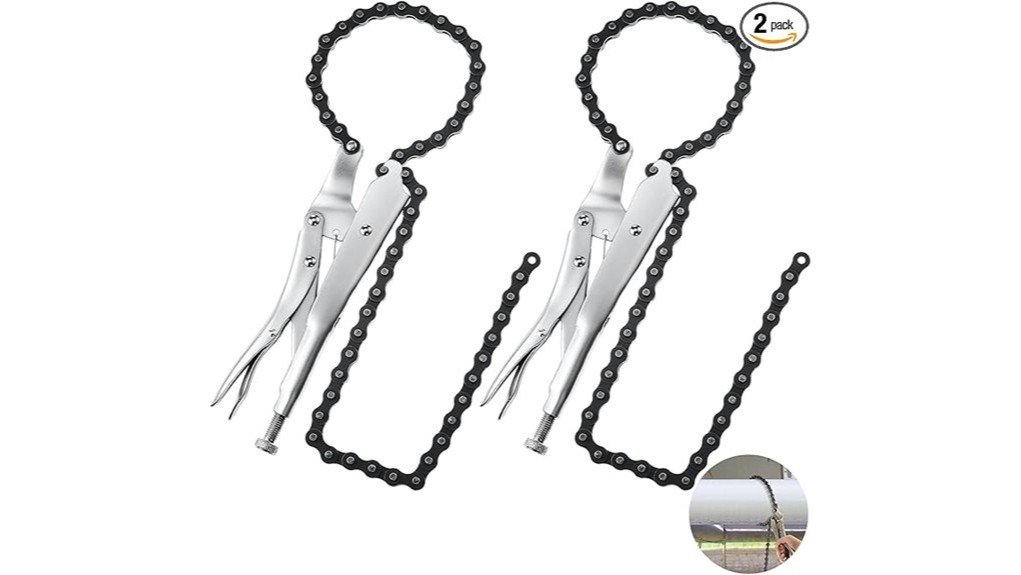
The Honoson Locking Chain Clamp is a chain-style gripping tool designed to hold round, curved, or uneven objects. Instead of using one fixed jaw against one flat surface, it wraps a steel chain around the workpiece and locks tension through the plier-style handle.
This design makes the tool useful when you need to secure pipe, tubing, muffler parts, metal frames, chair legs, or other pieces that do not sit well inside a standard clamp. The 2-piece pack also helps when you need to stabilize a longer piece from two points during cutting, fitting, or tack welding.
It is not a precision woodworking clamp for perfect square glue-ups. You buy this tool for reach, grip, and shape flexibility, not for fine parallel pressure on flat boards.
Who Should Buy It?
Best For
- You work with pipe, tubing, round stock, or uneven repair parts
- You need a clamp that can wrap around shapes a C-clamp cannot hold well
- You want two clamps for stabilizing longer workpieces at separate points
Skip If
- You mainly clamp flat boards, cabinet panels, or delicate trim
- You need exact squaring pressure for fine woodworking joints
- You want the fastest one-handed clamp for light household tasks
Key Features and Build Quality
Carbon Steel Construction
The clamp uses carbon steel, which gives it the stiffness needed for clamping rigid pipe, metal frames, and heavier shop pieces. That matters because a chain clamp has to hold tension across both the chain and the locking handle.
Carbon steel tools still need care, especially around moisture, plumbing work, and welding environments. Wipe the clamp clean after use and keep the chain lightly lubricated so the links move smoothly.
Long Chain Reach
The chain measures about 35.8 inches, giving you more wraparound reach than small locking pliers. This helps when you need to hold wider round parts, odd furniture frames, or a pipe that cannot fit between fixed clamp jaws.
Because seller pages can describe the diameter range differently, you should compare the listed capacity against your actual pipe or workpiece before ordering. Do not assume every large cylinder will fit just because the chain is long.
Locking Handle Design
The locking plier-style handle lets you set pressure and hold the workpiece without maintaining hand pressure the entire time. This is helpful during marking, cutting, welding preparation, or temporary alignment.
Like other locking pliers, it works best after you adjust the screw gradually. Over-tightening can mark softer materials, while under-tightening can let smooth pipe slip.
Two-Clamp Pack
The 2-piece pack gives you more control than a single clamp when you are working on long or unstable parts. You can secure one clamp near the cutting point and another farther down the pipe or frame to limit twisting.
This also adds value for small shops because you may not need to buy a second matching clamp right away. For repeated pipe fitting or frame repair, having two clamps available can save setup time.
Pro Tip: Test the chain position and locking pressure on a scrap piece first. A small adjustment at the screw can make the clamp hold more securely without crushing or scarring the work surface.
How It Performs in Real Use
For Plumbing and Pipe Fitting
For pipe work, the chain wrap helps you grip a rounded surface more naturally than a flat-jaw clamp. It can hold pipe steady while you mark, align, cut, or prepare fittings.
Smooth pipe can still slip if you do not set the chain evenly. Place the chain as squarely as possible around the workpiece and avoid clamping on oily or wet surfaces when you need maximum grip.
For Welding and Metalwork
In welding prep, the Honoson clamp can help stabilize tubing, exhaust-style parts, and round metal frames before tack welding. The wraparound chain gives you useful control when magnets or flat clamps do not contact enough surface area.
It should not replace a proper welding fixture when exact angles matter. Use it as a holding aid, then confirm alignment with your square, jig, or measuring tools before welding.
For Woodworking and Furniture Repair
This clamp makes sense for round chair legs, curved frames, or repair pieces where a bar clamp cannot sit correctly. The chain can wrap around unusual shapes and apply holding pressure while glue, fasteners, or brackets are positioned.
Use padding or scrap material when clamping finished wood. Bare steel chain can leave marks on softer wood or painted surfaces if you apply too much pressure.
For General Workshop Maintenance
For shop repairs, it works well as a problem-solving clamp. You can use it when holding brackets, round housings, small frames, and other odd parts that do not fit standard clamps.
The tradeoff is speed. A quick-grip clamp is faster for simple flat surfaces, but the Honoson chain clamp gives you more options when the shape is the hard part.
Before You Buy: Confirm the current Amazon listing’s diameter capacity and pack details before ordering. Seller descriptions for this ASIN can vary, and this tool is not the best choice for precision flat-surface alignment.
Setup Tips Before First Use
Check the Chain Movement
Before you clamp a real workpiece, open and close the tool a few times. Make sure the chain links move freely and that the locking mechanism releases without sticking.
Set Pressure Gradually
Start with light tension, then tighten the adjustment screw in small steps. This helps you avoid denting thin-wall tubing or marking softer surfaces.
Keep the Chain Square
Try to keep the chain centered and evenly wrapped around the object. A twisted or angled chain can reduce grip and may pull the workpiece out of alignment.
Use Surface Protection When Needed
For finished wood, painted metal, or polished pipe, place a shop rag, leather scrap, or soft spacer between the chain and the workpiece. This lowers the chance of cosmetic damage.
Compatibility and Safety Notes
The Honoson Locking Chain Clamp works best on round, curved, and irregular materials that can handle clamping pressure. It is not meant for fragile, brittle, hot, energized, or pressurized components unless you have the proper training and safety setup.
Wear eye protection when cutting, grinding, or welding near a clamped workpiece. Gloves can also help when handling the chain, but you should still keep fingers clear of pinch points while locking and releasing the tool.
For welding, remember that the clamp is a holding tool, not a substitute for safe fixturing, grounding, or heat control. Check your alignment after tightening because chain tension can shift lighter parts.
Pros and Cons
Pros
- Wraparound chain grips round and irregular shapes better than many standard clamps
- Carbon steel construction suits common pipe, welding, and repair jobs
- About 35.8 inches of chain gives useful reach for larger or awkward parts
- 2-piece pack helps stabilize longer workpieces from more than one point
- Useful across plumbing, metalwork, woodworking repair, and general shop maintenance