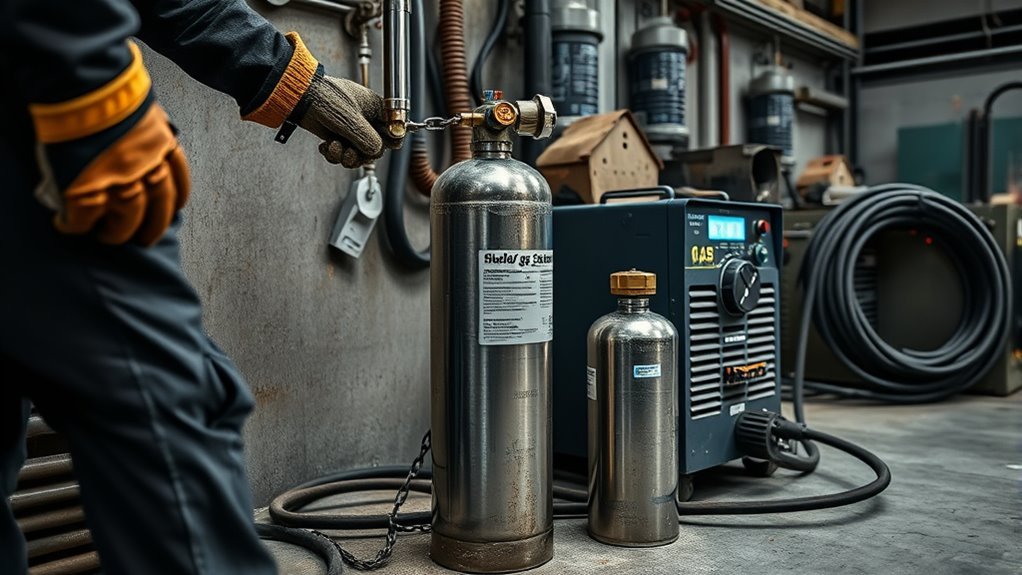
Changing a shielding gas cylinder on a welder is a simple job, but it is not a casual one. The bottle is heavy, the gas is under pressure, and a small leak can waste gas or create an oxygen-deficient space. The safest approach is to shut the system down, keep the cylinder secured, remove the regulator carefully, install the new bottle, then leak-test every connection before welding.
Quick Answer
To safely change a shielding gas cylinder, close the cylinder valve, relieve pressure from the regulator, turn off and unplug the welder, keep the bottle secured while removing the regulator, cap the empty cylinder, install the new cylinder upright, reconnect the regulator, open the valve slowly, and check every fitting with leak-detection solution.
Key Takeaways
- Keep the cylinder chained or strapped until the regulator is removed and the valve cap is installed.
- Check the label on the new bottle so you know you are connecting the correct shielding gas for your MIG or TIG setup.
- Thread the regulator by hand first, then snug it with the correct wrench. Do not force brass fittings.
- Use leak-detection solution or mild soapy water on the bottle, regulator, hose, and machine connections before welding.
- After the leak check, reset your gas flow in CFH or L/min for the welding process and joint conditions.
At a Glance
| Time Required | 10-20 minutes, including leak check |
| Difficulty | Easy, but safety-critical |
| Tools Needed | Safety glasses, gloves, correct wrench, cylinder cart, leak-detection solution or mild soapy water |
| Cost | Usually $0 beyond the cylinder exchange or refill cost |
Warning: Shielding gases such as argon and argon mixes can displace oxygen in poorly ventilated or confined spaces. OSHA defines an oxygen-deficient atmosphere as below 19.5% oxygen. Never enter a tank, pipe, trailer, or enclosed space that may contain shielding gas unless proper confined-space procedures and atmospheric testing are in place.
How to Prep the Welder for a Bottle Change
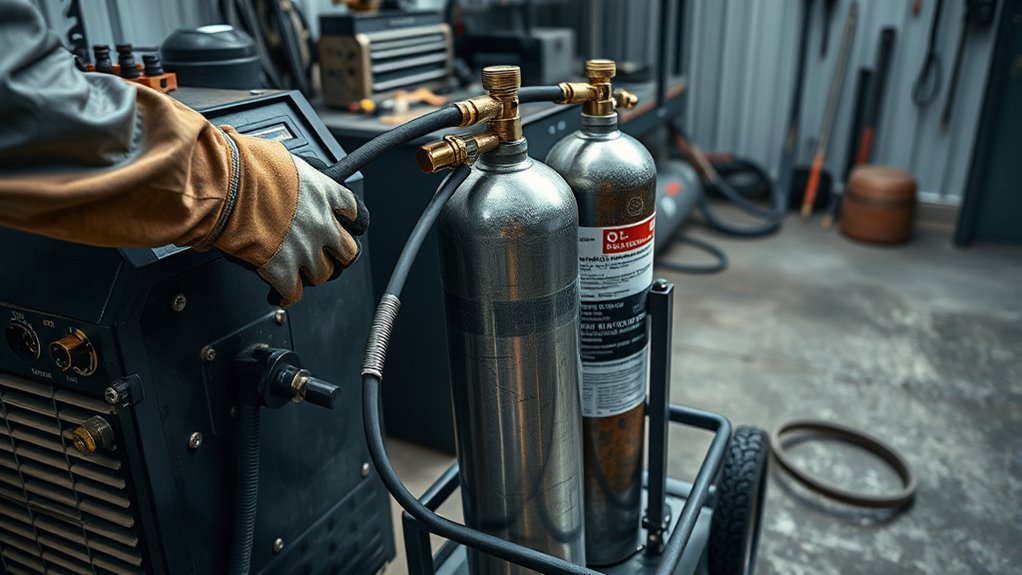
Start by putting on safety glasses and work gloves. Clear the floor around the welder so you are not stepping over leads, hoses, filler rods, or scrap while handling the cylinder.
Close the cylinder valve by turning the handwheel clockwise. If your machine has a gas purge button, use it briefly to bleed pressure from the hose and regulator after the valve is closed. If it does not, make sure the valve is closed, back the regulator adjustment out, and loosen fittings slowly while standing to the side.
Turn the welder off and disconnect the power before you remove the bottle. This prevents accidental wire feed, arc starts, or solenoid activation while your hands are near the regulator and hose.
Keep the cylinder secured with its chain or strap while you loosen the regulator. Do not unchain the bottle first. A full or empty cylinder can still fall, damage the valve, and become a serious high-pressure hazard.
Note: OSHA requires valve-protection caps to be secured when cylinders are moved and says regulators should be removed with caps in place before moving cylinders unless the cylinder is secured on a special carrier. You can review OSHA cylinder handling rules in 29 CFR 1926.350.
Products Worth Considering

Material: The gas cylinder holder is made of steel, which has a strong bearing capacity and is safer and more reliable to use.

Strong Weight Capacity: Our dual welding cylinder cart supports up to 440 lbs of static weight and 350 lbs of dynamic weight with ease. Whether transporting gas cylinders around the worksite or storing them, it provides stable support, suitable for home garages, workshops, repair shops, etc.

【Products】Gas Cylinder Regulator Protector Safety Cap Fine Thread 3-1/8 x 11
How to Remove the Empty Shielding Gas Cylinder
Confirm the cylinder valve is fully closed and the pressure has been relieved from the regulator. The high-pressure gauge should drop, or the flow should stop if you used the purge function.
Use the correct wrench to loosen the regulator nut. Keep one hand on the regulator body so it does not drop, twist the hose, or strike the machine. Leave the hose attached to the regulator unless you need to inspect or replace it.
Once the regulator is free, set it on a clean surface where dirt, grinding dust, and spatter cannot enter the inlet. Do not leave it hanging by the hose.
Install the protective valve cap on the empty cylinder before moving it. The cap protects the valve if the bottle bumps the cart, floor, bench, or another cylinder.
Now remove the safety chain or strap. For a small bottle, lift with your legs and keep the cylinder close to your body. For a full-size cylinder, use a cylinder cart. If you must move it a short distance by hand, tilt it slightly and roll it on the bottom edge with control. Do not drag, drop, strike, or carry a large cylinder by the valve cap.
How to Install the Regulator on the New Bottle
Set the new shielding gas cylinder upright in the welder cart or wall bracket before you connect anything. Secure it with the chain or strap so it cannot tip.
Read the cylinder label, not just the paint color. Make sure the bottle contains the correct gas for your process, such as 100% argon for many TIG jobs or an argon/CO2 mix for common MIG welding on mild steel. If the label, valve, or cylinder condition looks wrong, stop and call the gas supplier.
Inspect the regulator inlet and cylinder outlet. Look for damaged threads, dirt, oil, grease, cracked gauges, or a missing washer or O-ring if your regulator design uses one. Never use oily gloves or oily tools on oxygen equipment, and keep all compressed-gas fittings clean.
Line up the regulator squarely with the valve outlet. Start the regulator nut by hand so you can feel the threads engage. If it binds, backs out unevenly, or feels cross-threaded, stop and realign it.
Once it is hand-threaded, snug the connection with the correct wrench. Tighten it enough to seal, but do not muscle it down. Over-tightening can damage brass threads, distort seats, or make the next cylinder change harder than it needs to be.
Pro Tip: Keep a dedicated wrench, leak-check bottle, and spare regulator washer near the welder. Most bottle-change delays come from hunting for tools or trying to reuse a worn sealing washer.
Products Worth Considering

BEST WELDS 900-W1013 - Tank Wrenches, Steel, 8.5" for Regulators, Torches

Compatible with CGA-580 tanks: Easily attach this Gas Pressure Regulator/Flowmeter to your Argon, Helium, and CO2 tanks with its CGA-580 inlet connector

WIDE APPLICATION: It easily connects to Argon, Helium, and Argon/CO₂ mixed gas tanks via the CGA-580 inlet nut. No additional adapters are required. Featuring superior airtight and leak-proof performance, it achieves stable and sealed gas supply with minimal gas loss. This regulator is ideal for MIG/TIG welding, chemical processing, general industrial use, and electronics industry applications.
How to Check for Shielding Gas Leaks
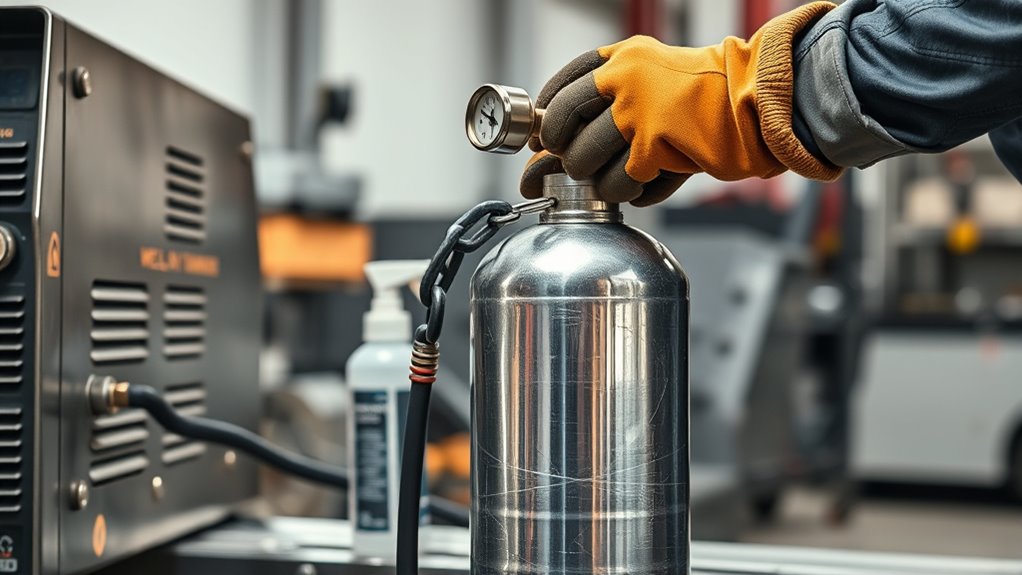
Stand to the side of the regulator, not directly in front of the gauge faces. Open the cylinder valve slowly. A slow opening helps protect the regulator from a sudden pressure shock.
Apply leak-detection solution or mild soapy water to each connection. Watch for growing bubbles. A few leftover foam bubbles from brushing do not always mean a leak, but bubbles that keep forming from one spot do.
| Check Point | What You Do | What It Means |
|---|---|---|
| Cylinder-to-regulator connection | Brush on leak solution and watch closely | Growing bubbles mean the connection is leaking |
| Regulator body and gauges | Listen for hissing and check for unstable gauge readings | Noise or pressure drop can point to a leak or bad regulator |
| Regulator-to-hose connection | Apply leak solution and gently move the hose | Bubbles or movement mean the fitting needs correction |
| Machine gas inlet | Check the connection where the hose enters the welder | Leaks here can cause porosity even when the cylinder is full |
If you find a leak, close the cylinder valve, relieve pressure, and tighten or reseat the fitting. Then open the valve slowly and test again. If the leak continues, do not weld. Tag the cylinder or regulator, remove it from service, and contact the gas supplier or a qualified repair shop.
Warning: Never use a flame to check for a gas leak. Use leak-detection solution or mild soapy water only, then wipe the fittings dry after the check.
What Final Safety Checks Should You Make?
Before you weld, confirm that the new cylinder is upright and secured with the safety chain or strap. Check that the valve cap is stored where you can find it for the next move, not left loose on the floor.
Look over the hose from the regulator to the machine. Replace it if it is cracked, burned, kinked, crushed, or loose at the fittings. OSHA requires hoses used with gases that may harm employees to be inspected at the start of each working shift, and defective hose must be removed from service.
Set your shielding gas flow after the leak check. For many MIG and TIG jobs, flow is commonly adjusted in cubic feet per hour (CFH) or liters per minute (L/min), but the right setting depends on the process, cup or nozzle size, draft, joint design, and manufacturer guidance. Too little gas can cause porosity. Too much gas can create turbulence and waste gas.
Run a short test weld on scrap if you changed gas type, regulator, hose, or flow setting. Watch for porosity, soot, unstable arc behavior, or unusual hissing. If anything seems wrong, stop and recheck the setup before working on the real part.
A careful cylinder change protects more than the weld. It protects the valve, regulator, hose, workspace, and everyone nearby.
Frequently Asked Questions
What is the first thing you should do when replacing a shielding gas cylinder?
Close the cylinder valve first. Then relieve pressure from the regulator and hose, turn off and unplug the welder, and keep the bottle secured while you remove the regulator. Do not unchain the cylinder until the valve cap is installed and you are ready to move it.
How do you change an argon gas cylinder on a welder?
Close the argon cylinder valve, bleed pressure from the system, turn off and unplug the welder, remove the regulator, cap the empty bottle, secure the new argon cylinder upright, hand-thread the regulator, snug it with the correct wrench, open the valve slowly, and leak-test every connection.
Can you use the same regulator on every shielding gas cylinder?
No. The regulator must match the gas type, cylinder valve connection, pressure rating, and flow range. Do not force mismatched fittings or use adapters unless they are approved for that exact gas service by the equipment or gas supplier.
How long will a 20 CF argon tank last?
Use this formula: cylinder size in cubic feet ÷ flow rate in CFH = approximate continuous flow time. A 20 CF argon tank at 15 CFH lasts about 1.3 hours of continuous gas flow. Intermittent tack welding may stretch the real shop time, but the gas math stays the same.
What should you do if bubbles appear during the leak check?
Close the cylinder valve, relieve pressure, reseat or tighten the leaking connection, and test again. If bubbles keep forming, stop using that cylinder, regulator, or hose until the problem is repaired or replaced.
Should you close the shielding gas cylinder when you are done welding?
Yes. Close the cylinder valve when work is finished, when the cylinder is empty, or before the bottle is moved. This protects the system, reduces gas loss, and makes leaks easier to catch.
Conclusion
Changing a shielding gas cylinder is easy when you follow the right order. Close the valve, relieve pressure, shut down the welder, keep the cylinder secured, remove the regulator, cap the empty bottle, and move it with control. Then secure the new cylinder upright, verify the gas label, connect the regulator without forcing the threads, open the valve slowly, and check for leaks. If a fitting bubbles, hisses, or will not seal, stop and fix it before you weld. A few careful minutes keep the gas system safe and your welds clean.
Sources
- OSHA 29 CFR 1926.350, Gas welding and cutting – cylinder caps, upright securing, moving cylinders, regulator removal, and valve handling.
- OSHA 29 CFR 1910.253, Oxygen-fuel gas welding and cutting – compressed gas cylinder marking, storage, valve caps, oil/grease precautions, and safe operating procedures.
- OSHA 29 CFR 1910.134, Respiratory protection – definition of oxygen-deficient atmosphere below 19.5% oxygen.
- CDC/NIOSH FACE Report 94AK012 – argon asphyxiation hazard in welding-related confined spaces.