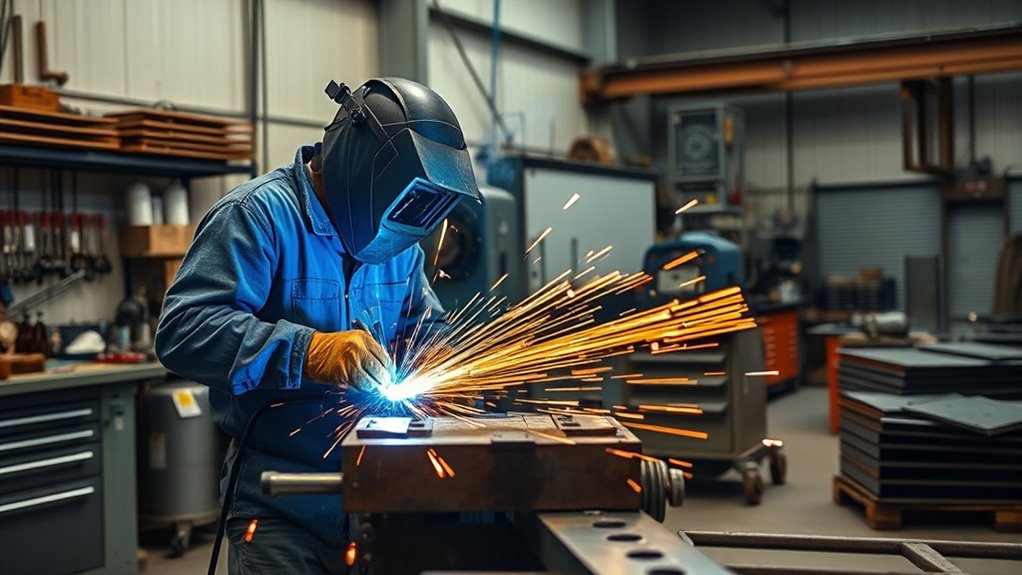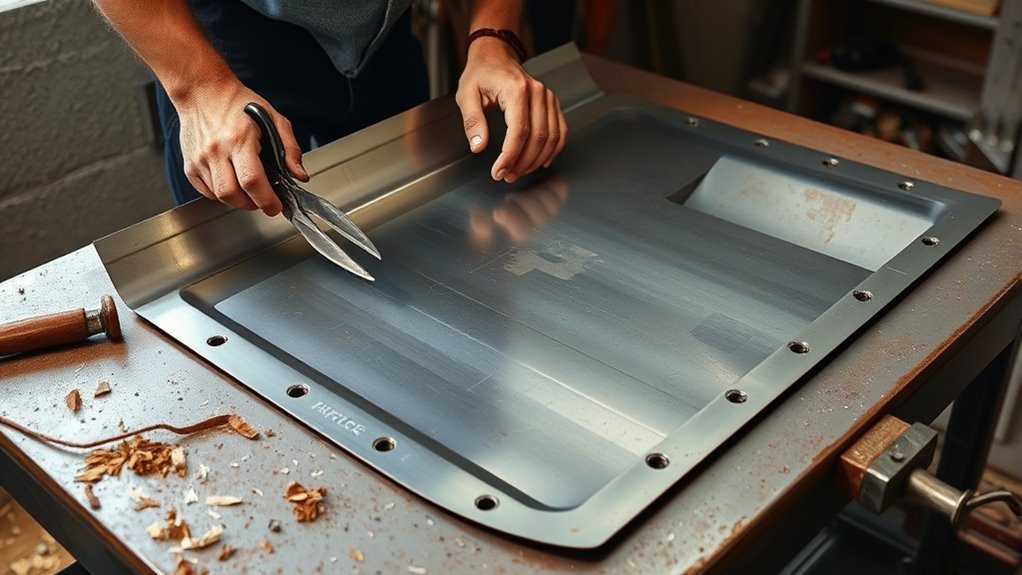
Making a sheet metal patch for a rusted floor pan starts with two checks: confirm that the damaged area is suitable for a patch, then cut back to clean, solid steel. A sound repair is not just metal placed over a hole. You must measure, shape, test-fit, join, seal, and protect the patch while preserving nearby braces, mounts, wiring, drains, and safety systems.
Quick Answer
Inspect both sides of the floor, confirm the area is nonstructural and patchable, remove all weak steel, make a cardboard template, transfer it to matching sheet steel, form the ribs or flanges, test-fit it, weld with short spaced tacks, then prime, seal, coat, and inspect both sides.
Key Takeaways
- Check vehicle-specific body repair information before cutting. Do not section seat mounts, body mounts, braces, multi-layer reinforcements, or high-strength steel unless the manufacturer allows it.
- Remove rust, paint, seam sealer, undercoating, insulation, and other contamination from the weld zone and from the opposite side.
- Match the patch to the original panel’s material and thickness instead of relying on one universal sheet-metal gauge.
- Use short, spaced tack welds, move around the seam, and let the panel cool naturally to limit burn-through and distortion.
- Prime, seam-seal, paint, and protect both sides without blocking drains, then maintain a fire watch for at least 30 minutes after hot work.
At a Glance
| Time Required | Roughly 4 to 10 hours for a small or medium patch, plus primer, sealer, and coating cure time |
| Difficulty | Intermediate to advanced DIY; structural, SRS-adjacent, hybrid, and EV repairs require trained professionals |
| Tools Needed | OEM repair information, MIG welder, grinder, cutoff tool, drill, clamps or Clecos, cardboard, marker, forming tools, calipers, PPE, fire-resistant blankets, and a suitable fire extinguisher |
| Cost | Estimated consumables: about $40 to $150 if you already own the main tools; vehicle-specific panels and professional labor cost more |
Warning: Floor-pan cutting and welding can ignite carpet, padding, seam sealer, undercoating, fuel vapor, brake fluid, wiring, and hidden debris. Follow the vehicle manufacturer’s battery and restraint-system shutdown procedure. A disconnected 12-volt battery does not automatically make a hybrid or EV high-voltage system safe. Remove or shield combustibles, use ventilation, keep an extinguisher ready, and arrange a fire watch. OSHA’s hot-work requirements call for fire precautions and, when a fire watch is needed, at least 30 minutes of monitoring after welding or cutting ends.
Inspect the Rusted Floor Area
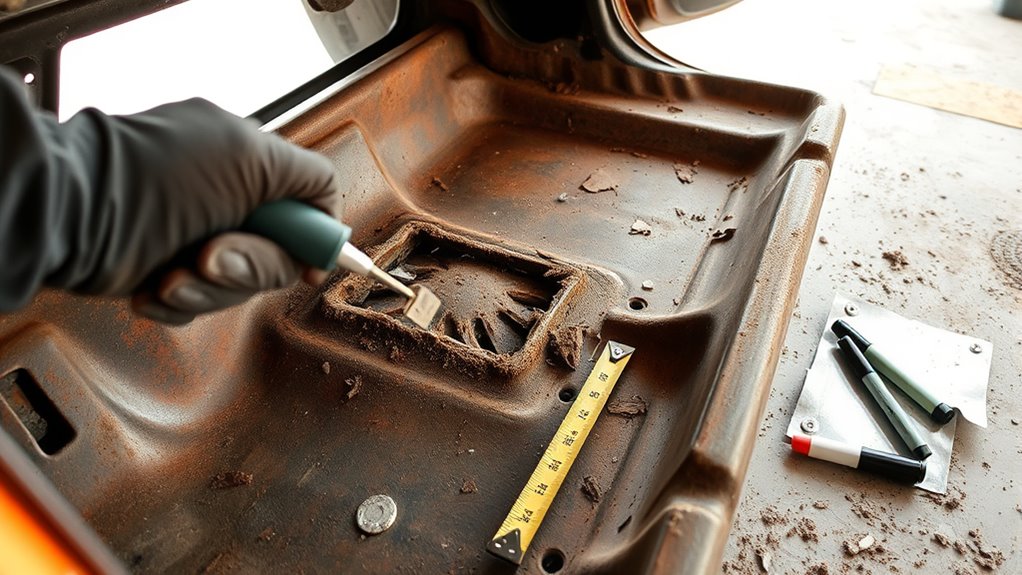
Before you cut anything, inspect the rusted floor area from above and below. Rust often spreads farther than the visible hole, especially under carpet padding, seam sealer, insulation, rocker-panel edges, seat mounts, body plugs, and floor braces.
Support the vehicle only at the lift points listed in its service information. Use a rated lift or properly placed jack stands on firm, level ground. Never work under a vehicle supported only by a jack.
Remove nearby carpet, sound deadener, loose seam sealer, undercoating, and paint from the repair zone. Use a scraper, wire wheel, grinder, or suitable blasting method to expose the real edge of the damage. If you find soft metal around a seat mount, seat-belt anchor, body mount, frame tie-in, battery enclosure, or structural brace, stop and check the vehicle’s body repair manual or consult a qualified collision technician.
The patch is only as dependable as the steel around it. If the surrounding metal flexes, flakes, tears, or hides a reinforcement, keep inspecting before you decide where to cut.
Mark every damaged edge with a paint marker. Then inspect nearby drain paths, cowl leaks, door seals, windshield leaks, heater or air-conditioning drains, trunk seams, and floor plugs. A patch will rust again if the moisture source remains.
Note: Galvanized, zinc-coated, lead-coated, or unknown materials can produce hazardous fumes when heated. Remove coatings only as the repair procedure allows, use local exhaust ventilation, and choose respiratory protection for the actual hazard. A welding helmet does not protect your lungs. OSHA provides specific guidance on welding fumes from zinc, lead, and other metals.
Decide Whether to Patch or Replace the Floor Section
A small patch can work on a single-layer area of ordinary floor steel when the surrounding metal is sound and the manufacturer permits sectioning there. A larger replacement panel or professional repair is safer when rust reaches structural joints, reinforcements, safety-system mounts, or several layers of metal.
| A Patch May Be Appropriate | Use a Replacement Panel or Professional Repair |
|---|---|
| Localized rust in a flat or lightly formed, single-layer floor area | Rust at a seat, seat-belt, body, suspension, powertrain, or battery mount |
| Clean steel surrounds the opening on every side | Damage continues into a brace, rocker, tunnel, frame rail, or multi-layer joint |
| The OEM procedure allows the proposed cut and joint | The steel grade, layer stack, or approved joining method is unknown |
| You can access and protect both sides of the repair | Fuel, brake, SRS, high-voltage, or other critical parts cannot be safely moved or shielded |
Modern vehicles can place mild steel, high-strength steel, ultra-high-strength steel, reinforcements, adhesives, and spot welds close together. For example, Honda body repair guidance warns against cutting multi-layer reinforcements and limits sectioning by steel strength and location. Treat the vehicle-specific manual, not a generic gauge recommendation, as the final authority.
Gather Tools and Materials
Set up everything before cutting the floor open. You will need:
- Vehicle-specific service and body repair information
- Cardboard or poster board for the template
- Marker, ruler, straight edge, tape measure, and calipers
- Automotive sheet steel that matches the original panel’s material, thickness, and repair requirements
- Cutoff wheel, aviation snips, nibbler, or plasma cutter suitable for the job
- Angle grinder with flap discs and appropriate grinding discs
- Hammer, dolly, wooden mallet, bead roller, brake, or simple forming blocks as needed
- MIG welder with wire, shielding gas, and settings suitable for the approved steel
- Clamps, magnets, Clecos, or temporary self-tapping screws for fit-up
- Drill and plug-weld hole tools if the repair replaces factory spot-welded flanges
- Weld-through primer only where the product and OEM repair method call for it
- Compatible primer, automotive seam sealer, topcoat, cavity wax, and underside coating
- Welding helmet, safety glasses, gloves, hearing protection, flame-resistant clothing, ventilation or fume extraction, and suitable respiratory protection
- Fire-resistant blankets, a suitable extinguisher, and a second person for fire watch when needed
Do not choose patch metal only by a broad gauge range. Remove paint and corrosion from a sound part of the original floor, measure its thickness, identify whether it is mild or higher-strength steel, and compare your findings with the OEM repair information. A patch that is much thicker than the surrounding floor can be harder to shape and may force extra heat into the original panel.
Products Worth Considering

Premium 20 Gauge Mild Steel Sheet Metal – Crafted from high-quality cold rolled steel, these sheets offer exceptional durability and a smooth, uniform surface. Ideal for precision-driven projects requiring reliable material performance without compromising on structural integrit

The diameter of the hole: 5mm.

【Widely Application】Air Hole Punch suitable for automotive body repair, also for sheet metal, iron plate, plastic, machinery, etc.
Make the Vehicle Safe Before Cutting or Welding
Hot work around a vehicle can affect more than the panel. Prepare the electrical system, interior, underside, fuel system, and work area before sparks start.
- Record any radio codes, memory settings, or service information required before battery disconnection.
- Follow the OEM shutdown procedure for the 12-volt battery and supplemental restraint system. Required wait times vary by vehicle.
- On a hybrid or EV, have a trained technician isolate and verify the high-voltage system before welding. Do not touch orange cables, battery enclosures, or high-voltage components.
- Remove seats, carpet, padding, insulation, wiring clips, modules, and trim far enough from the heat-affected area.
- Move or protect fuel lines, brake lines, vapor lines, wiring, and hoses on the underside. Do not weld if you cannot inspect and shield the opposite side.
- Place the welder’s work clamp on clean metal close to the repair, following the welder and vehicle manufacturer’s instructions.
- Remove nearby combustibles or shield them with welding blankets. Keep an extinguisher within reach.
Warning: Do not use brake cleaner, chlorinated solvent, gasoline, or another flammable or heat-reactive cleaner in the weld area. Use only a product approved for collision-repair surface preparation, allow it to evaporate fully, and follow its safety data sheet.
Products Worth Considering

【Fiberglass Welding Blanket】 : Made of 24.7 oz/yd² fiberglass fabric, the welding blanket provides excellent thermal protection and withstands up to 1,022℉ (550℃) working temperatures. Effectively protecting welders and property from heat, embers, sparks and spatter. NOTE: There are fiberglass on the surface of the welding blanket, please wear gloves when you check it.

✅【Fire-Resistant Carbon Felt Construction】The Matace welding blanket is made from 5mm thick carbon felt and has been tested in accordance with ASTM D6413 standards. Its dense, heavy-duty structure is designed to help manage sparks, hot slag, and radiant heat during welding and high-temperature work.

✅【Fire-Resistant Carbon Felt Construction】The Matace welding blanket is made from 5mm thick carbon felt and has been tested in accordance with ASTM D6413 standards. Its dense, heavy-duty structure is designed to help manage sparks, hot slag, and radiant heat during welding and high-temperature work.
Measure and Trace the Patch
Measure the damaged floor pan from several directions because rusted holes are rarely uniform. Mark the outer boundary where the steel is still solid. Do not use the jagged rust hole as your final patch shape.
Make a cardboard template before cutting sheet metal. The template should follow the shape of the planned opening and include any ribs, bends, flanges, plug-weld locations, or overlap required by the approved repair style. Leave enough extra material for final trimming, but do not make the patch so large that it covers weak metal you should remove.
- Check the repair area from the cabin and underside.
- Mark the clean cut line on the vehicle floor.
- Build a cardboard template that follows the floor contour.
- Label the top side, front edge, bend lines, drain holes, and plug locations.
- Test the cardboard against the floor before transferring it to steel.
Once the cardboard shape fits, trace it onto the sheet metal with a clear outline. Keep the marker line visible and add all bend or rib locations. For a lap or flanged repair, use the overlap specified by the OEM procedure or joining-product instructions instead of assuming one universal width. For a butt-welded patch, trim slowly and maintain the consistent fit-up required by the approved welding method.
Pro Tip: Make the first metal blank slightly oversized. It is easier to trim a patch several times than to rebuild an edge after cutting the blank too small.
Choose the Repair Joint Before Cutting
The joint changes how you size the patch, prepare the opening, weld it, and protect it from corrosion. Do not switch from a butt joint to a lap joint after cutting unless the revised method remains safe and approved.
| Joint | Advantages | Main Cautions |
|---|---|---|
| Butt weld | Flat joint with no moisture-trapping overlap | Needs accurate fit-up, good access, and careful heat control |
| Lap or flanged patch | Easier to hold and may suit a nonstructural floor repair | The overlap can trap moisture and must be protected and sealed on both sides |
| Plug weld at a factory flange | Can reproduce an approved spot-weld attachment where access is limited | Hole size, spacing, layer preparation, and weld count must follow the repair procedure |
| Adhesive or mechanical attachment | Avoids welding heat in locations approved for that method | Use only when the vehicle maker and adhesive manufacturer approve the exact panel and joint |
3M’s panel-bonding procedure also directs technicians to follow OEM recommendations. Adhesive is not a universal substitute for welding, especially near seat, restraint, body, suspension, or battery mounts.
Cut Out the Rusted Metal
Cut away the old floor pan only after you have planned the patch, selected the joint, and cleared the underside. Check for fuel lines, brake lines, wiring, heat shields, exhaust parts, high-voltage cables, battery enclosures, and interior insulation before using a cutoff wheel or plasma cutter.
Cut along the marked line and remove the rotten section. Then grind the opening back to clean steel. The edge should be bright, firm, and free of layered rust. If the metal keeps thinning or flaking, enlarge the opening until every planned weld or attachment lands on sound material.
- Cut slowly so you do not damage hidden parts under the floor.
- Keep sparks away from carpet, foam, wiring, fuel vapor, and glass.
- Deburr the opening with a flap disc or file.
- Clean enough space around the joint on both sides for the selected welding and coating system.
- Preserve factory drain holes, locating holes, beads, and flange shapes unless the repair procedure says otherwise.
- Vacuum metal chips, abrasive dust, and loose debris before welding.
If the repair crosses a floor brace, seat mount, seat-belt anchor, body mount, battery tray, or reinforced tunnel, avoid guessing. These sections can affect crash performance and occupant loads. Use vehicle-specific repair information or have a qualified shop complete the work.
Cut and Shape the Sheet Metal
Trace your template onto the sheet metal, then cut the blank with snips, a cutoff wheel, a nibbler, or a plasma cutter. Keep the cut controlled and stay just outside the line so you can fine-tune the shape.
Trace and Cut the Blank
Clamp the cardboard template so it does not move while you trace. Mark the outside edge, bend lines, ribs, holes, and orientation. Cut slowly, then smooth the edge with a file or flap disc.
- Clamp the template before tracing.
- Use a fine marker or scribe where appropriate for an accurate edge.
- Cut just outside the line.
- Grind only enough to remove burrs and improve fit.
Keep the blank flat while trimming. Compare it with the opening often, and remove small amounts at a time. The better the patch fits before welding, the less heat and filler you will need later.
Shape the Rib and Flange
Most floor pans are not flat. They often have ribs, shallow channels, raised beads, drain features, or flanged edges for stiffness. Shape these details before final welding.
Place the patch on a wooden dolly, sandbag, forming block, or suitable sheet-metal tool. Use a wooden mallet, body hammer, dolly, bead roller, or brake to form the shape gradually. Do not strike one spot too hard, or you can stretch the panel and create a high spot.
Form flanges where the approved patch design needs overlap or support. Keep bends crisp and consistent. After each forming pass, test-fit the patch and check edge contact, rib alignment, drain clearance, and underside space. Trim only where necessary.
Test-Fit the Floor Pan Patch
Set the patch into the opening and check the fit from every side. The patch should follow the original floor shape without rocking, forcing, or sitting high on one edge.
- Clamp the patch or hold it with Clecos or temporary self-tapping screws.
- Check that ribs, curves, holes, and flanges line up with the existing floor.
- Confirm that the underside clears lines, wiring, shields, exhaust parts, and brackets.
- Trim small areas, then refit until the patch sits naturally.
- Mark plug-weld holes if you are replacing a flange that was originally spot welded and the repair procedure allows plug welding.
- Remove temporary screws after final welding and close or seal their holes as required.
For a butt weld, maintain the consistent joint fit required by the repair procedure and your verified scrap test. For a lap patch, keep the overlap even and use weld-through primer only on hidden mating surfaces where both the product instructions and repair method allow it. Do not leave heavy primer, paint, seam sealer, or undercoating in the actual weld path.
Note: Butt welds create a cleaner, flatter repair but demand better fit-up and heat control. Lap patches are easier to hold in some nonstructural floor areas, but every overlap edge needs corrosion protection because trapped moisture can restart the rust.
Weld the Patch Without Warping
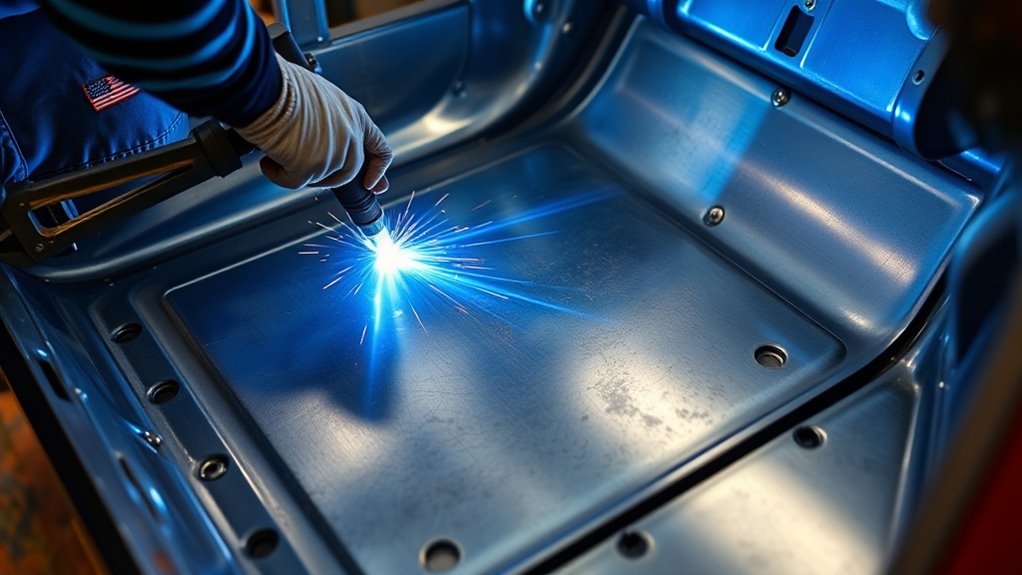
Use short tack welds or short stitch welds, then move to a different part of the seam so the panel can cool. Thin automotive sheet metal can warp or burn through quickly, and modern higher-strength steels may require a specific process or may not allow the proposed weld at all.
Start with your welder’s chart and the vehicle repair procedure for the metal type, thickness, wire, shielding gas, and joint. Miller’s sheet-metal welding guidance stresses limiting warping, burn-through, and excessive heat while still producing a sound joint. Small-diameter solid wire, such as 0.023- or 0.024-inch wire, is often useful on thin mild steel when the machine and procedure support it.
Before welding the vehicle, practice on scrap pieces made from the same patch metal and, when possible, a sample of similar original steel. Reproduce the same joint, position, backing, and access. Adjust until each tack is fused, controlled, and free from burn-through.
Stitch Weld in Short Bursts
Tack the patch in several places first so it cannot shift. Recheck the contour, then add short welds spaced apart around the seam. Avoid running one long bead on a thin floor-pan patch unless the OEM procedure specifically requires it.
- Clean the patch and surrounding panel to bare metal at the weld area.
- Place the work clamp on clean metal close to the repair.
- Make one short tack, then move several inches away.
- Let the panel cool naturally between tacks.
- If compressed air is permitted, use it gently and consistently; do not quench hot sheet metal with water.
- Fill small gaps gradually instead of trying to bridge them in one hot pass.
You are trying to build the required connected seam or approved weld pattern without overheating the floor. If the heat-affected area spreads widely, the panel oil-cans, or holes keep opening, stop. Let the metal cool, inspect the fit, and retune the welder on scrap.
Alternate Welds to Cool
Jump around the seam instead of welding in one direction. This spreads heat across the patch and gives each area time to cool before the next tack.
| Move | Purpose | Result |
|---|---|---|
| Tack opposite sides | Locks alignment | Patch stays positioned |
| Skip across the patch | Spreads heat | Less distortion |
| Pause between tacks | Limits heat buildup | Fewer burn-through holes |
| Test the full joint on scrap | Confirms settings and technique | More predictable welds on the vehicle |
Once the required seam or weld pattern is complete, inspect it with a light from the opposite side when possible. Fill pinholes with quick, controlled tacks. Do not pile weld over contaminated metal. Grind only enough to expose the defect, clean it, and retack it.
Grind and Check the Welds
Grind the welds only enough to remove sharp peaks, spatter, or interference with trim and coatings. A flap disc gives more control than an aggressive hard wheel. Keep the grinder moving so you do not thin the patch or the original floor pan.
- Remove sharp weld peaks and spatter.
- Check for pinholes with a bright light from the opposite side when safe and accessible.
- Retack leaks before applying primer or sealer.
- Check that plug welds have fused to the lower layer where the procedure requires them.
- Clean grinding dust and metal particles from both sides of the repair.
- Do not grind the seam so thin that it loses strength.
If the patch sits under carpet, it does not need an exterior-body finish. It needs correct attachment, safe edges, complete sealing, and durable corrosion protection.
Apply Seam Sealer and Rust Protection
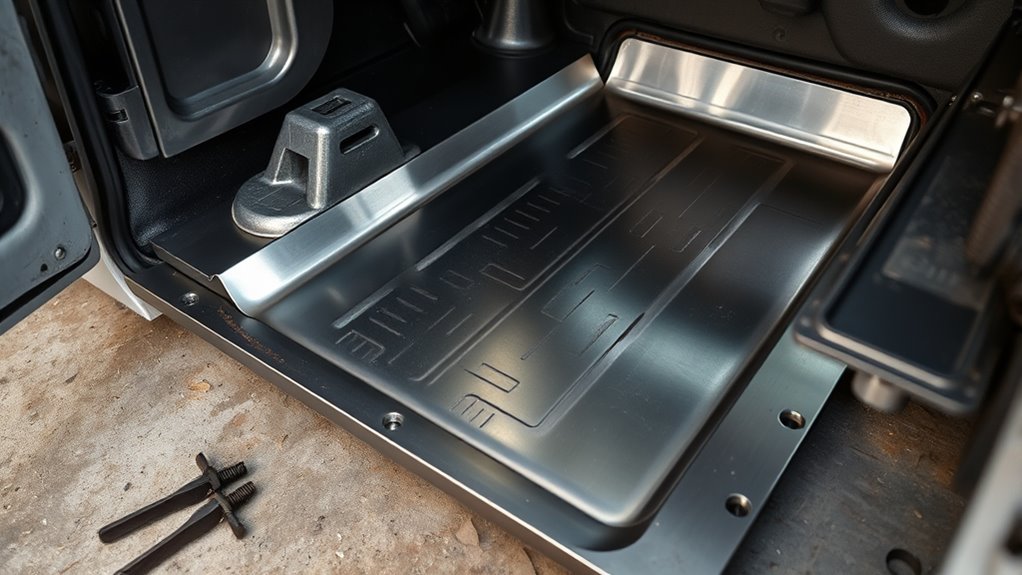
After welding and grinding, clean the repair and protect every exposed surface. A durable floor-pan repair normally needs a compatible primer, seam sealer, topcoat or rust-inhibiting coating, and underside protection. Hidden flanges or enclosed braces may also need cavity wax.
Follow one compatible product system from start to finish. 3M’s seam-sealer guidance says primed or OEM-coated surfaces are generally preferred, while bare-metal application requires a sealer designed and tested for bare metal. Do not assume every sealer can go directly over bare steel, etch primer, weld-through primer, or fresh paint.
- Remove welding residue and clean the area with an approved wax-and-grease remover.
- Apply compatible epoxy or urethane primer, or another coating required by the product system and OEM procedure.
- Tool automotive seam sealer into every joint, overlap edge, plug-weld flange, and pinhole-free seam that requires sealing.
- Seal the cabin side and underside when both sides are accessible.
- Keep sealer, primer, and undercoating out of drain holes, threaded mounts, electrical grounds, and fastener seats.
- Apply the specified topcoat, rust-inhibiting coating, or underbody coating after the sealer reaches the required cure stage.
- Apply cavity wax inside braces or hidden seams after paint and sealer cure, following the wax instructions.
This work keeps water and road splash away from the joint. After the coatings cure, inspect the repair after a controlled water test, rain, or wash. If you find moisture, trace and repair the leak before reinstalling absorbent carpet padding.
Complete the Final Inspection and Reassembly
Do not treat the last weld as the end of the repair. Check the vehicle while the interior and underside remain open.
- Inspect both sides for pinholes, missed coating, sharp edges, blocked drains, loose debris, and heat damage.
- Maintain the required fire watch. OSHA specifies at least 30 minutes after hot work when a fire watch is required, and hidden automotive insulation may justify longer checks.
- Confirm that fuel, brake, vapor, electrical, SRS, exhaust, and high-voltage parts remain correctly routed and undamaged.
- Reinstall body plugs, heat shields, wiring clips, insulation, and trim only after coatings cure.
- Install seats, seat belts, braces, and structural fasteners with the specified hardware and torque values.
- Reconnect electrical systems by the OEM procedure and check warning lights, fault codes, and affected functions before driving.
- Keep the carpet out until the leak source is fixed and the floor stays dry.
Pro Tip: Photograph the clean opening, patch fit, completed welds, primer, and sealed underside before reinstalling the interior. The photos create a useful repair record and show whether every hidden surface received protection.
Troubleshooting Common Patch Problems
| Problem | Likely Cause | Fix |
|---|---|---|
| Patch keeps burning through | Too much heat, poor fit-up, thin original metal, or the wrong wire and settings | Stop, let the panel cool, improve fit, retune on scrap, and use shorter tacks |
| Welds pop or look porous | Rust, paint, undercoating, poor ground, gas loss, wind, or a dirty nozzle | Clean to bare metal, move the work clamp closer, and check gas flow, nozzle, and drafts |
| Floor warps or oil-cans | Too much welding in one area or a patch forced into place | Stop welding, correct the fit, skip around the seam, and allow full cooling between tacks |
| Weld sits on top without fusion | Low heat, excessive wire speed, poor angle, contamination, or an unsuitable process | Do not cover it with more weld; grind the defect, clean the joint, and correct settings on scrap |
| Rust returns at the seam | Moisture trapped in an overlap, missed pinholes, poor coating coverage, or an unfixed leak | Remove failed coating, repair the leak, reseal both sides, and renew cavity protection |
| Seam sealer peels or stays soft | Incompatible primer, dirty surface, wrong mix, or incorrect cure conditions | Remove the failed material and rebuild the coating stack exactly as the product system directs |
Frequently Asked Questions
What thickness metal is used for floor pans?
There is no universal floor-pan thickness. Floor skins, braces, mounts, and reinforcements can use different steel grades and thicknesses, even in the same area. Measure a cleaned, sound part of the original panel and confirm the material and approved repair method in the vehicle’s body repair information.
Can you patch sheet metal without welding?
Some nonstructural panels can use an approved panel adhesive, rivets, or another mechanical method, but only when the vehicle maker and product manufacturer approve the exact location and joint. Do not substitute adhesive or rivets at seat, seat-belt, body, suspension, battery, or other load-bearing mounts without a documented repair procedure.
How do you patch a sheet metal hole in a floor pan?
Inspect both sides, confirm the area is patchable, remove all weak metal, make a cardboard template, transfer it to matching sheet steel, form the patch, test-fit it, attach it with the approved method, then inspect, prime, seam-seal, paint, and protect both sides.
Should a floor pan patch be butt welded or overlapped?
Use the joint allowed by the vehicle repair procedure. A butt weld gives a flat joint and avoids an overlap, but it needs precise fit-up and careful heat control. A lap or flanged patch can be easier to position, but the overlap must receive complete corrosion protection and sealing on both sides.
Can you weld over rust, paint, or undercoating?
No. Rust, paint, seam sealer, insulation, and undercoating can contaminate the weld and release hazardous smoke. Clean the weld zone to sound bare metal, inspect the opposite side, and remove or shield anything that heat or sparks could ignite.
Do you need seam sealer after welding a floor pan patch?
Yes, most welded floor-pan seams need automotive seam sealer to block water, road splash, dust, and fumes. Apply it only after the weld is clean and the surface has the primer or coating required by the sealer’s instructions. Seal the cabin side and underside when both are accessible.
When should you replace the full floor pan instead of making a small patch?
Use a larger replacement panel or professional repair when rust covers a broad area, reaches several seams, enters braces or multi-layer reinforcements, affects mounts, or leaves too little sound metal for the approved joint. A replacement panel can also reproduce factory beads, flanges, and attachment points more accurately.
Can you weld a floor pan on a hybrid or electric vehicle?
Only after a trained person follows the model-specific high-voltage shutdown, isolation, and verification procedure. Disconnecting the 12-volt battery is not enough. Welding near a battery enclosure, orange cable, or high-voltage component should be handled under the manufacturer’s repair instructions.
How much overlap should a lap patch have?
Use the overlap specified by the OEM repair plan or the approved joining system. A generic one-inch rule does not account for the steel, flange shape, weld pattern, adhesive, access, or structural role of the panel. Keep the overlap even and protect every hidden surface against corrosion.
Conclusion
A dependable rusted floor pan patch comes from careful inspection and a vehicle-appropriate repair plan, not speed. Confirm that the area can be sectioned, remove every weak edge, match the patch material, form it until it fits without force, and control welding heat with short, spaced tacks. Finish by inspecting both sides, restoring corrosion protection, keeping drains open, completing the fire watch, and fixing the leak that caused the rust. When damage reaches mounts, reinforcements, high-strength steel, or hybrid and EV components, use the OEM procedure or a qualified collision-repair shop.
Sources
- OSHA 29 CFR 1910.252: Welding, Cutting, and Brazing General Requirements: supports fire prevention, shielding combustibles, extinguisher readiness, ventilation, and post-work fire-watch guidance.
- OSHA: Welding Fumes and Respiratory Hazards: supports ventilation and special precautions for zinc-, lead-, and other metal-containing fumes.
- Miller: Successfully Welding Sheet Metal With MIG and TIG: supports thin-sheet heat control, clean metal, process setup, and distortion prevention.
- 3M Collision Repair: Seam Sealers and Coatings: supports surface preparation, compatible primer and sealer systems, and corrosion-resistant seam restoration.
- 3M Collision Repair: Panel Bonding Standard Operating Procedure: supports using panel adhesive only with the product instructions and OEM repair recommendations.
- Honda Body Repair News: Sectioning and Welding Guidelines and Honda Body Repair News: Hybrid High-Voltage Precautions: illustrate OEM restrictions for high-strength steel, reinforcements, restraint systems, and high-voltage isolation.