To perform a break test on a weld, prepare a clean test coupon, place it in a guarded test jig, apply force slowly with a controlled press or hydraulic jack, and inspect the fracture for fusion, penetration, porosity, cracks, slag, and other defects. Use this method for training, shop checks, and procedure development, but do not treat a homemade break test as code compliance unless it follows the exact standard, WPS, acceptance criteria, and test record required for the job.
Quick Answer
A weld break test is done by welding a prepared sample, securing it in a test jig, and applying controlled force until the weld fractures. After it breaks, inspect the exposed surface for root fusion, penetration, porosity, cracks, slag inclusions, and lack of fusion.
Key Takeaways
- A break test is a destructive test, so the sample will be damaged and should never be a part you need to use afterward.
- Clean metal, correct joint fit-up, and consistent sample size matter because poor preparation can create misleading results.
- Use guarding, PPE, slow force application, and a stable fixture because broken weld coupons can release sharp fragments.
- Inspect the fracture for fusion, penetration, porosity, slag, cracks, and the path of failure through the weld or base metal.
- For qualification or structural work, follow the governing code, such as AWS D1.1/D1.1M:2025, instead of relying on a homemade shop test.
At a Glance
| Time Required | 30 to 90 minutes for a basic shop coupon, plus cooling and documentation time |
| Difficulty | Intermediate; requires welding skill, safe fixturing, and careful inspection |
| Tools Needed | Prepared weld coupon, welding machine, grinder or wire brush, measuring tools, test jig, hydraulic jack or press, face shield, gloves, eye protection, and documentation sheet |
| Cost | Low for shop practice if you already own the tools; higher if code testing or a certified lab is required |
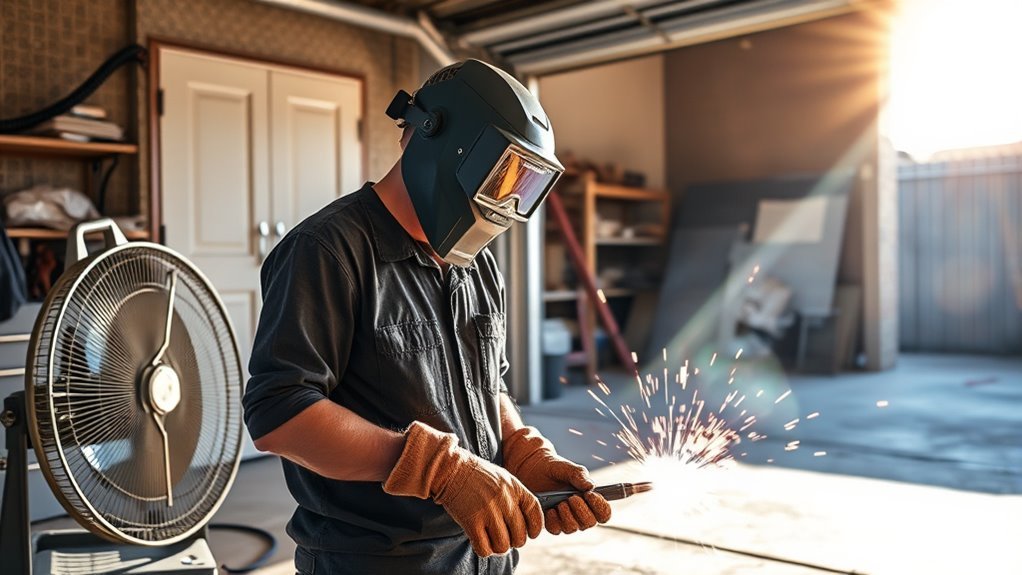
Warning: A weld break test stores force in the coupon and fixture. Wear eye and face protection, heavy gloves, and protective clothing. Keep bystanders away, shield the test area, control fire hazards, and use ventilation when welding. OSHA’s welding and cutting requirements cover fire prevention, eye protection, and ventilation for this type of work.
Weld Testing: Why It Matters
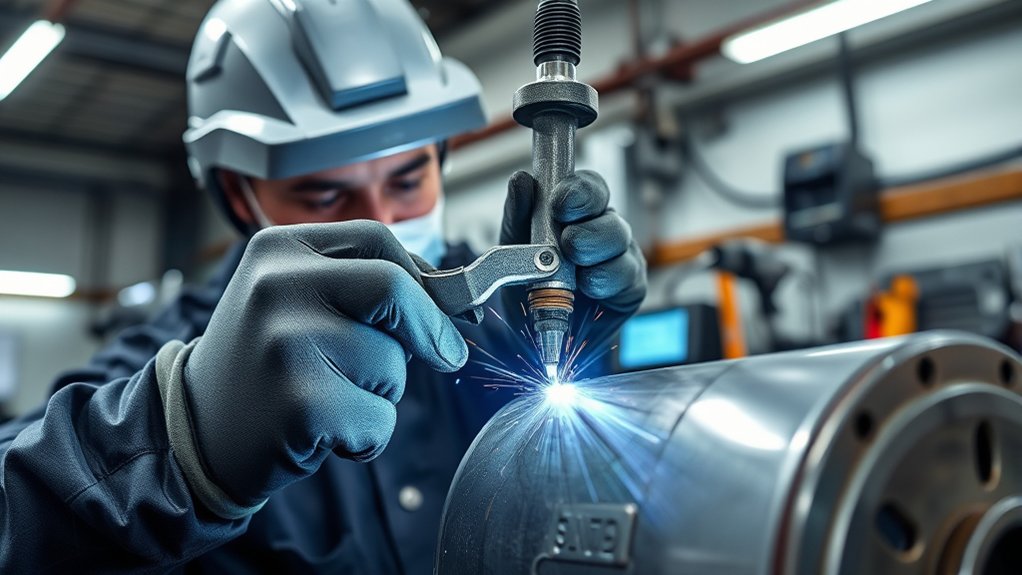
Weld testing helps you find problems that are hard to judge from the outside of the bead. A weld can look smooth on the surface and still have poor root fusion, trapped slag, porosity, cracking, or incomplete penetration inside the joint.
A break test is useful because it exposes the inside of the weld. When the sample fractures, you can see where the joint failed and whether the weld fused into the base metal. That makes it a practical training tool for fillet welds, groove weld practice, and basic shop quality checks.
For structural steel work, pressure work, pipeline work, or certification testing, use the applicable code and test procedure. The AWS D1.1/D1.1M:2025 Structural Welding Code-Steel covers welding requirements for many carbon and low-alloy steel structures, but the correct standard depends on your project, material, process, and industry.
A shop break test can reveal obvious weld defects, but only the governing code, approved WPS, and required acceptance criteria can determine whether a weld passes for a regulated job.
Shop Break Test vs. Code-Qualified Test
Before you start, decide what the test is meant to prove. A simple shop break test is good for learning and troubleshooting. A code-qualified test is different because it must follow exact coupon dimensions, welding variables, bending or fracture method, inspection rules, and documentation requirements.
| Test Type | Best For | Important Limit |
|---|---|---|
| Shop break test | Practice welds, quick troubleshooting, comparing settings, checking fusion problems | Does not automatically prove code compliance |
| Code-qualified destructive test | Welder qualification, procedure qualification, structural jobs, regulated fabrication | Must follow the exact governing standard and acceptance criteria |
| Nondestructive testing | Checking a part without breaking it, production inspection, critical components | Requires the right method, trained inspector, and acceptance standard |
Key Preparation Steps for Effective Weld Testing
Good test results start before you apply force. If the sample is dirty, poorly fitted, overheated, or cut unevenly, the break may tell you more about bad preparation than weld quality.
- Use a consistent sample size and thickness for every comparison. Many shop practice tests use mild steel coupons around 3/8 inch thick, but code tests may require different sizes.
- Remove paint, oil, heavy mill scale, rust, moisture, and slag from the weld area before welding.
- Prepare the joint consistently, including fit-up, root opening, bevel, tack welds, and edge condition.
- Let the coupon cool naturally unless your procedure requires a specific heat treatment or cooling method.
- Mark the sample with process, amperage or voltage, wire or electrode type, position, date, and welder initials.
- Inspect the weld visually before breaking it. Note undercut, overlap, cracks, poor bead shape, arc strikes, or other surface flaws.
Note: If the test is for a welding certificate, job procedure, or structural requirement, do not guess at coupon size or acceptance rules. Use the required WPS, test standard, and inspector or accredited testing facility.
Equipment Needed for a Weld Break Test
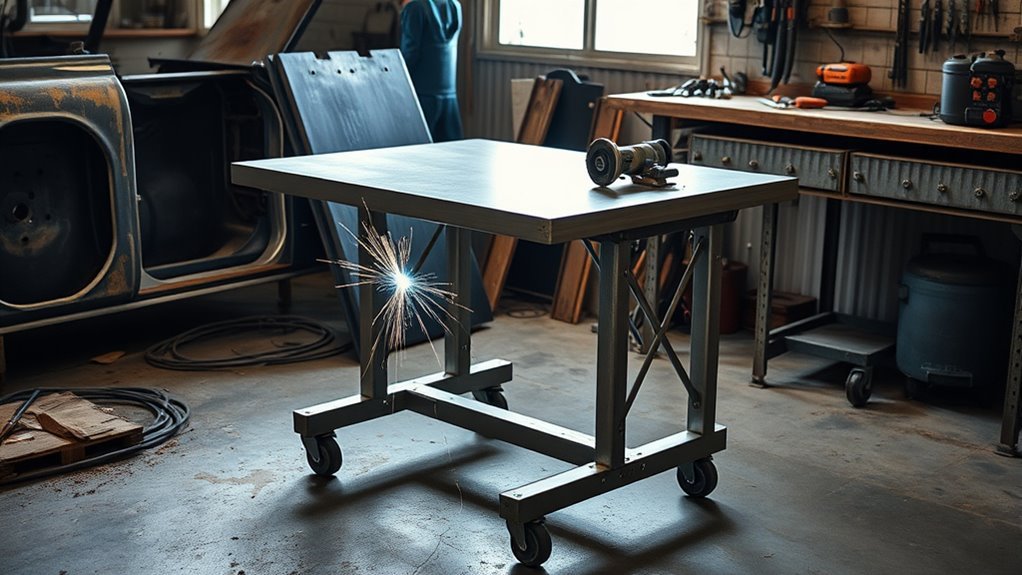
You need a setup that holds the sample firmly and applies force in a controlled direction. Do not use an unstable vise, loose blocks, or a makeshift fixture that can slip under load.
| Equipment | Purpose | What to Check |
|---|---|---|
| Testing jig or bend fixture | Holds the coupon and directs the load | Secure mounting, correct alignment, no cracks, no loose parts |
| Hydraulic jack or press | Applies controlled force until the sample breaks | Load capacity, smooth travel, stable contact point |
| Grinder, file, or wire brush | Prepares and cleans the sample | Clean edges without cutting into the weld area being evaluated |
| Measuring tools | Records sample size, leg length, thickness, and defect size | Readable scale, clean calipers, consistent measurement method |
| PPE and shielding | Protects against sparks, fragments, hot metal, and sharp edges | Face shield, safety glasses, gloves, jacket, screens, and clear work area |
Setting Up Your Testing Jig
Set the jig on a strong, level surface. Fasten it so it cannot twist or slide when force is applied. The welded sample should sit squarely in the loading area, with the weld positioned so the force opens the joint and exposes the fracture surface.
Check that the hydraulic jack or press contacts the sample evenly. Uneven loading can bend the coupon sideways, damage the jig, or make the break pattern harder to read. Keep your hands clear of pinch points and never place your face in line with the coupon.
Pro Tip: Take a clear photo of the weld before the break and another photo of the fracture after the break. Comparing both images makes it easier to connect surface appearance with internal weld quality.
Products Worth Considering

Durable: Made of high-quality 304 stainless steel, this gauge set has great rust resistance and wear resistance.

Trusted Quality: Backed by over a decade of professional expertise in automotive repair tools, our products are chosen by numerous technicians and DIY enthusiasts.

V-Wac Welding Gauge
How to Execute a Break Test
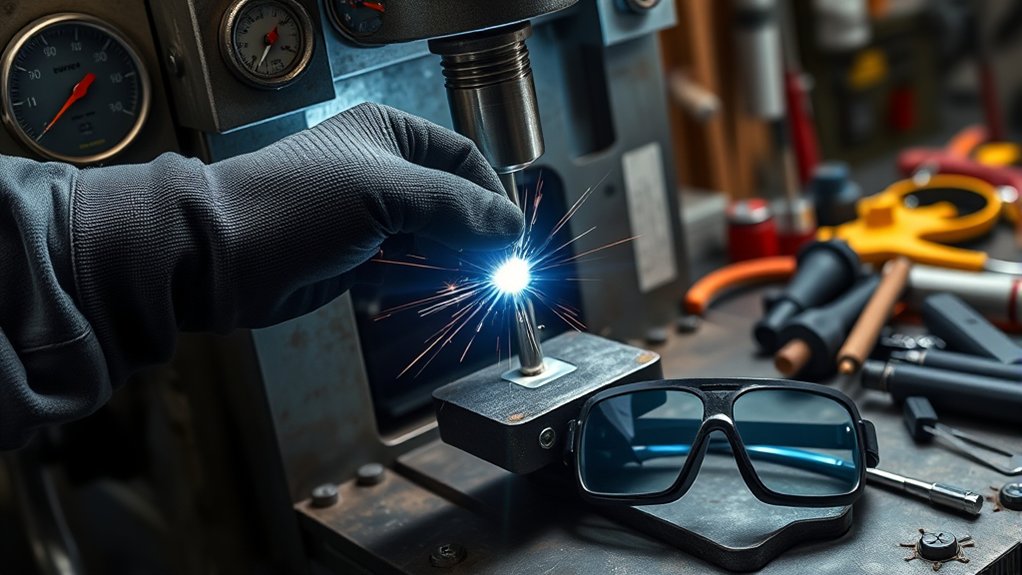
Once the sample is prepared and the jig is safe, run the test slowly. The goal is not to smash the coupon as fast as possible. The goal is to create a controlled fracture that reveals the weld’s internal quality.
Step 1: Inspect and Label the Sample
Check the weld before testing. Record the material thickness, process, filler metal, position, settings, number of passes, and visible flaws. Label the coupon so the broken sample can be matched to your notes.
Step 2: Place the Sample in the Jig
Set the coupon so the weld is centered in the loading area. Make sure the sample is not rocking or clamped at an angle. If you are testing a fillet weld, position the joint so the load tends to open the weld and expose the root area.
Step 3: Shield the Test Area
Place a guard, screen, or barrier around the test area if your setup allows it. Keep bystanders away. Wear safety glasses under a face shield because the sample may release sharp pieces when it fractures.
Step 4: Apply Force Slowly
Use the hydraulic jack or press to apply steady force. Watch the sample and fixture for slipping, twisting, or bending outside the intended area. Stop if anything shifts. Re-seat the coupon before continuing.
Step 5: Break the Weld and Let It Settle
Continue applying force until the weld fractures or bends enough to expose the area you need to inspect. After the break, release the pressure slowly. Let the coupon settle before touching it because the broken edges may be hot, sharp, and under slight spring tension.
Step 6: Clean and Examine the Fracture
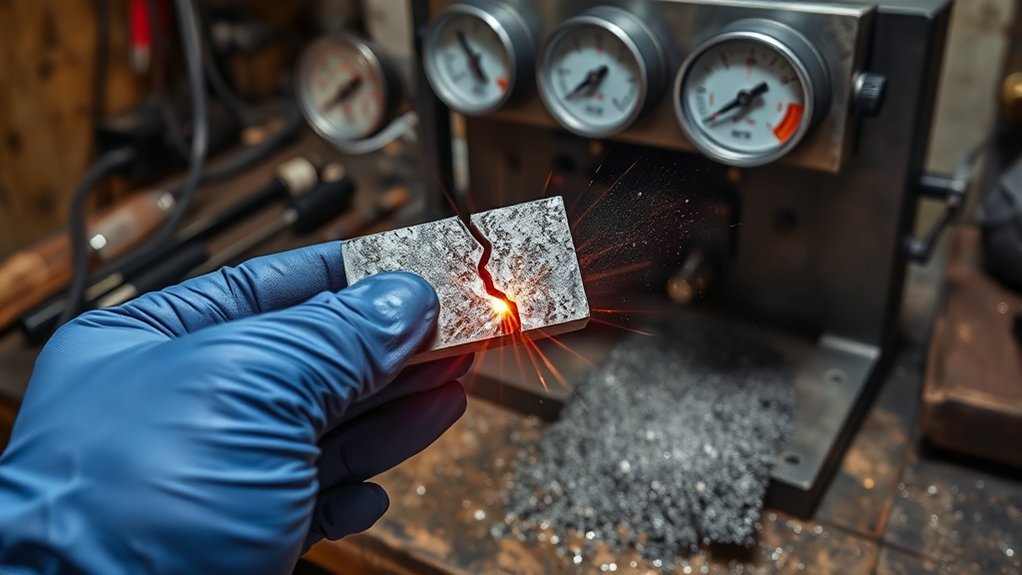
Brush loose debris from the fracture surface without grinding away evidence. Use good lighting and magnification if available. Look at the root, weld metal, fusion line, and base metal around the break.
What to Look for When Analyzing Weld Breaks
The broken surface tells you how the weld behaved under stress. A sound practice weld often shows good fusion into the base metal and a fracture path that does not simply peel along an unfused root. A weak weld may break along a lack-of-fusion line, through porous weld metal, or at a slag-filled area.
| What You See | What It May Mean | Likely Fix |
|---|---|---|
| Smooth line where weld pulled away from base metal | Lack of fusion | Adjust travel speed, heat input, angle, cleaning, or joint access |
| Small round holes or clustered cavities | Porosity from gas, contamination, moisture, or shielding problems | Clean the metal, check shielding gas, dry electrodes, and reduce drafts |
| Dark lines, slag pockets, or trapped material between passes | Slag inclusion or poor interpass cleaning | Clean each pass thoroughly and improve bead placement |
| Cracks crossing the weld or heat-affected zone | Cracking from restraint, hydrogen, wrong filler, or poor procedure | Review filler selection, preheat, cooling rate, joint design, and procedure |
| Break follows the root with little torn metal | Incomplete root fusion or poor root penetration | Improve root opening, heat input, electrode angle, or travel speed |
Root Penetration Quality
Root quality is one of the most important details in a weld break test. Look for evidence that the weld fused into the root instead of sitting on the surface. In a fillet weld, compare both legs, the fusion line, the root area, and the fracture path. Do not judge the result by bead appearance alone.
If the weld separates cleanly at the root with little torn metal, the weld may have lacked fusion. If the fracture tears through weld metal and base metal instead of peeling along a boundary, fusion is usually better. For any official pass/fail decision, use the required acceptance criteria for your job.
Presence of Porosity
Porosity looks like small holes, rounded pockets, or clusters inside the broken weld. A few tiny pores in a practice coupon may help you diagnose technique problems, but porosity can reduce strength and may fail code acceptance depending on size, location, and amount.
Common causes include dirty base metal, paint, oil, moisture, long arc length, poor shielding gas coverage, wind around the weld, or damp electrodes. If you see porosity, correct the cleaning and shielding problem before changing random machine settings.
Documenting the Results
Good notes make the test useful. Without notes, you may not remember which setting or technique caused the result. Record enough detail that you can repeat the weld or correct it later.
- Material type and thickness
- Joint type and coupon size
- Welding process and filler metal
- Polarity, amperage, voltage, wire speed, or electrode size
- Welding position and number of passes
- Pre-cleaning and interpass cleaning method
- Visible flaws before breaking
- Fracture appearance after breaking
- Photos of the unbroken weld and fracture surface
- Changes you will make on the next sample
Troubleshooting Common Weld Testing Problems
If your test results are inconsistent, check the setup before blaming the weld. A loose jig, crooked sample, or uneven force can create a misleading break.
- The sample twists during testing: Re-center the coupon and check that the jig supports both sides evenly.
- The break happens away from the weld: The base metal or fixture setup may be controlling the failure. Review sample geometry and loading direction.
- The weld peels off the plate: Check for lack of fusion, low heat input, fast travel speed, poor angle, or dirty metal.
- The fracture is full of holes: Look for porosity causes such as contamination, moisture, gas flow issues, drafts, or poor arc length control.
- The result does not match the visual appearance: Remember that a smooth bead can still hide internal defects. Test another coupon and compare settings.
- You need an official pass/fail result: Stop using a homemade method and follow the governing code or send the coupon to a qualified test facility.
When Not to Use a Break Test
A break test is destructive, so it is not the right choice when the welded part must stay in service. It is also not enough for critical work unless the governing procedure specifically allows it.
- Do not break a finished part that must be installed or used.
- Do not use a shop break test as a substitute for required certification testing.
- Do not test pressure vessels, lifting equipment, structural members, or life-safety parts without the proper code, inspector, and procedure.
- Do not test in an unsafe fixture or in an area where broken fragments can strike people.
- Do not weld or test near combustible material unless the area has been made fire safe.
Frequently Asked Questions
How do you perform a destructive test on a weld?
Prepare a test coupon, weld it using the procedure you want to evaluate, secure it in a safe test fixture, and apply controlled force until the weld fractures or bends enough to inspect. Then examine the fracture for fusion, penetration, cracks, porosity, slag, and other defects.
How do you do a nick break test in welding?
A nick break test uses notches cut into a welded specimen to encourage the sample to fracture through the weld area. After breaking it, inspect the exposed weld metal for porosity, slag inclusions, lack of fusion, cracks, and other internal flaws. Use the notch size and test method required by your standard if the result is for qualification.
What is the hardest welding test to pass?
The hardest welding test depends on the process, material, position, thickness, and code. Many welders find 6G pipe tests, restricted-access tests, and strict structural or pressure-code qualification tests difficult because they require strong control of root pass, fusion, heat input, and body position.
What are four methods of testing after welding?
Four common post-weld testing methods are visual inspection, destructive testing, liquid penetrant testing, and ultrasonic testing. Other methods include magnetic particle testing, radiographic testing, macro-etch testing, and guided bend testing. The right method depends on the material, weld type, code, and risk level.
Can a weld pass visually but fail a break test?
Yes. A weld can look acceptable on the surface and still have poor fusion, trapped slag, porosity, or incomplete root penetration inside the joint. That is why destructive tests and nondestructive tests are used when visual inspection alone is not enough.
Is a homemade weld break test good enough for certification?
Usually no. A homemade break test can help you practice and troubleshoot, but certification or procedure qualification must follow the governing code, approved test coupon design, required equipment, inspector requirements, and acceptance criteria.
Conclusion
A weld break test is a simple but powerful way to see what is happening inside a weld. Clean the sample, use a stable and guarded jig, apply force slowly, and study the fracture surface for fusion, penetration, porosity, cracks, slag, and other flaws. The best results come from careful documentation because each broken coupon should teach you what to adjust on the next weld. For practice and shop troubleshooting, this test is useful. For structural, pressure, pipeline, or certification work, always follow the required welding code and test procedure.
Sources
- AWS D1.1/D1.1M:2025 Structural Welding Code-Steel — code context for structural steel welding requirements.
- OSHA 1910.252 General Requirements for Welding, Cutting, and Brazing — fire prevention, PPE, ventilation, and welding safety requirements.
- American Welding Society Testing Publications — welding inspection and testing reference category.