To reinforce a weak weld joint on your car, start by treating the repair as a safety job, not just a metal patch. Inspect the joint, confirm whether the part can be repaired, follow the vehicle maker’s repair procedure, clean to bare metal, remove weak weld material, and reinforce only with the correct welding method, fit-up, and corrosion protection.
Quick Answer
You can reinforce a weak weld joint on a car by inspecting the damage, checking OEM repair procedures, disconnecting vehicle electronics safely, grinding out failed weld material, cleaning to bare metal, adding an approved backing or reinforcement plate when allowed, re-welding with the correct process, then sealing and coating the repair against corrosion.
Key Takeaways
- Do not weld on structural, restraint, suspension, or high-strength steel areas until you confirm the OEM repair procedure for that vehicle.
- Weak weld signs include cracks, gaps, rust, porosity, undercut, movement, burn-through, poor penetration, or metal distortion near the joint.
- Surface prep matters as much as welding skill. Paint, rust, seam sealer, oil, and mill scale can weaken the new weld.
- Disconnect battery cables, protect electronics, and follow hybrid or EV disable steps before welding on modern vehicles.
- After welding, inspect the joint, seal seams, prime bare metal, apply corrosion protection, and recheck the repair after road use.
At a Glance
| Time Required | 1 to 4 hours for a small non-structural repair; longer for fitting, inspection, coating, or professional structural work. |
| Difficulty | Moderate to advanced. Structural and safety-system areas should be handled by a qualified collision repair or welding technician. |
| Tools Needed | OEM repair information, PPE, fire extinguisher, battery tools, wire brush, degreaser, grinder, clamps, welder, matching filler wire or rod, reinforcement plate if approved, primer, seam sealer, and corrosion coating. |
| Cost | About $25 to $150 for prep and coating supplies if you already own welding equipment; professional structural repair can cost much more. |
Why Reinforcing Welds Is Crucial for Vehicle Safety
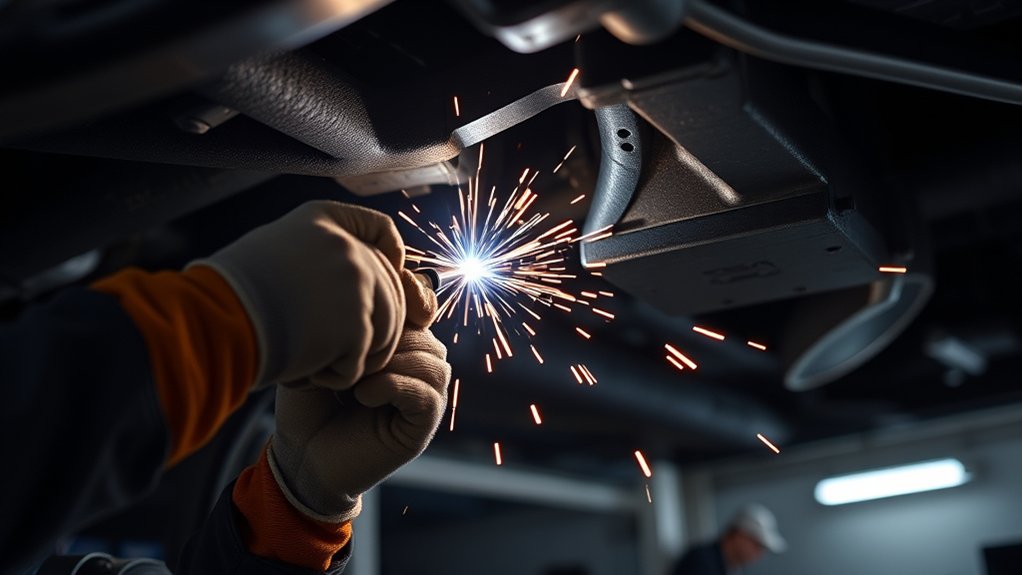
Weak welds can reduce a vehicle’s strength, especially around brackets, body mounts, panels, frame sections, crossmembers, and repaired collision areas. A weld that cracks, flexes, or fails under vibration can allow the surrounding metal to move, spread damage, or create a new stress point.
For a car repair, the most important rule is simple: the vehicle maker’s repair procedure comes first. The OEM collision repair position statement says post-collision repairs must follow the repair procedures for that vehicle’s year, make, and model. That matters because modern vehicles use different grades of steel, aluminum, adhesives, coatings, sensors, and restraint systems.
Warning: Do not reinforce a structural weld by guessing. If the weld is on a frame rail, rocker, pillar, suspension mount, seat mount, bumper reinforcement, airbag-related area, or high-strength steel part, stop and check the OEM repair procedure or use a qualified collision repair technician.
Identify Weak Welds Before You Repair
Before grinding or welding, inspect the joint from both sides if you can reach them. A weld can look acceptable on the outside while hiding poor penetration, trapped rust, or a weak heat-affected area behind the bead.
| Sign | What It Means | Action Needed |
|---|---|---|
| Visible cracks or gaps | The joint may already be separating. | Do not cover it. Grind, inspect, and repair correctly. |
| Rust or corrosion | The base metal may be thin or contaminated. | Clean, measure, and replace metal if it is too thin. |
| Porosity or pinholes | Gas, moisture, oil, paint, or rust may have contaminated the weld. | Remove the defective weld and correct the cause. |
| Undercut | The weld edge has eaten into the base metal. | Repair the groove and avoid excess heat or travel speed. |
| Movement or flexing | The joint is not carrying load correctly. | Stop using the vehicle until the joint is inspected. |
| Warping or burn-through | The area may have overheated or lost strength. | Check the metal thickness and repair procedure. |
Do not weld over rust, paint, undercoating, seam sealer, or oil. Contamination can cause porosity, poor fusion, and a weak joint even if the bead looks clean on top.
Decide If the Joint Should Be Reinforced or Replaced
Reinforcing is not always the right repair. If the surrounding metal is thin, cracked, stretched, torn, kinked, or rusted through, adding more weld may only hide the problem. In those cases, the safer repair is often to replace the damaged section or part according to OEM instructions.
- Reinforce when the base metal is sound, the repair is allowed, and an approved plate, plug weld, or seam repair will restore the joint.
- Replace when the metal is rusted thin, the part is heat-sensitive, the OEM procedure forbids repair, or the joint is part of a crash-energy or restraint path.
- Call a professional when the weld affects steering, suspension, seat belts, airbags, frame structure, battery areas, or crash performance.
Note: If no vehicle-specific procedure is available, I-CAR Best Practices can help guide repair decisions, but vehicle-maker repair information still takes priority when it exists.
Safety Steps Before Welding on a Car
Welding on a vehicle creates fire, electrical, eye, fume, and heat hazards. It can also damage modules, sensors, wiring, and restraint systems if the current path is poor or the repair area is not prepared.
- Check OEM service information. Confirm whether the part can be welded, sectioned, reinforced, or must be replaced.
- Disconnect and isolate the battery. Remove the negative cable first, then follow the vehicle maker’s procedure for the positive cable and module sleep time.
- Disable high-voltage systems when applicable. Hybrids and EVs require special procedures and PPE. Do not improvise around orange HV cables or battery packs.
- Protect computers and sensors. Place the work clamp close to the weld on the same panel, keep the current path short, and route welding cables away from wiring and modules. I-CAR’s battery disconnect guidance gives the same core precautions.
- Remove fire hazards. Move trim, carpet, insulation, fuel vapors, paper, solvents, and undercoating away from the weld zone.
- Keep a fire extinguisher nearby. Watch the area during and after welding because sparks can hide behind panels.
- Wear proper PPE. Use a welding helmet with the correct shade, gloves, jacket or sleeves, eye protection for grinding, and hearing protection.
- Ventilate the work area. Grinding and welding through coatings can create harmful fumes. Remove coatings before welding instead of burning through them.
OSHA’s welding rules require basic fire-prevention precautions, including moving fire hazards when possible and using guards when they cannot be moved. OSHA also requires suitable eye and face protection for hazards such as molten metal, flying particles, and injurious light radiation. You can review the official OSHA pages for welding fire prevention and eye and face protection.
Tools You Need for Reinforcing Welds
After identifying the weak weld and confirming the repair is allowed, gather the right tools before you cut, grind, or weld. A rushed setup leads to poor fit-up and repeat failure.
- OEM repair information: Use the vehicle maker’s sectioning, welding, and corrosion protection instructions.
- Welder: MIG/GMAW is common for steel automotive repairs, while TIG can be useful for precise work. Aluminum and advanced steels may require specific equipment and procedures.
- Wire brush, Scotch-Brite belt, scraper, and angle grinder: Use these to remove paint, rust, undercoating, seam sealer, old weld metal, and debris.
- Degreaser and clean towels: Remove oil and residue before welding.
- Clamps, magnets, and measuring tools: Hold the joint in the correct position and prevent gaps.
- Reinforcement or backing plate: Use only when allowed, and match material type and thickness as closely as the repair procedure requires.
- Plug weld hole punch or drill: Useful when replacing spot welds with approved plug welds.
- PPE and fire protection: Helmet, gloves, jacket, safety glasses, hearing protection, extinguisher, and a fire-resistant blanket.
- Coatings: Epoxy primer, weld-through primer where approved, seam sealer, topcoat, undercoating, and cavity wax.
Pro Tip: Practice on scrap metal of the same thickness before touching the car. Cut and bend a test coupon if possible. If the test weld cracks, tears poorly, or lacks penetration, fix your settings and technique first.
Products Worth Considering

220W Rapid Heating:The plastic welding machine has a power of 220 watts and a 110V-US plug, which has higher output current and faster heating speed. Using heat to embed nails or plastic rods into plastic will not cause damage to the car or plastic surface, and is very sturdy. Not only are there two repair methods to choose from: welding rods and hot nails, but there is also an overheat protection device to ensure your safety

Highly Durable Design: The shell of stud welder kit is made of high-quality ABS body, has good stability under high temperature conditions, withstand temperature of 93-118℃, and the movement is pure copper electrode. This welder stud kit is wear-resistant, strong and sturdy.

New Brand Design:New design, Hot Stapler Plastic Repair Kit can meet your different needs, easily weld cracked and damaged plastic parts, support more professional DIY making and save cost.
Cleaning Steps for Stronger Bonds
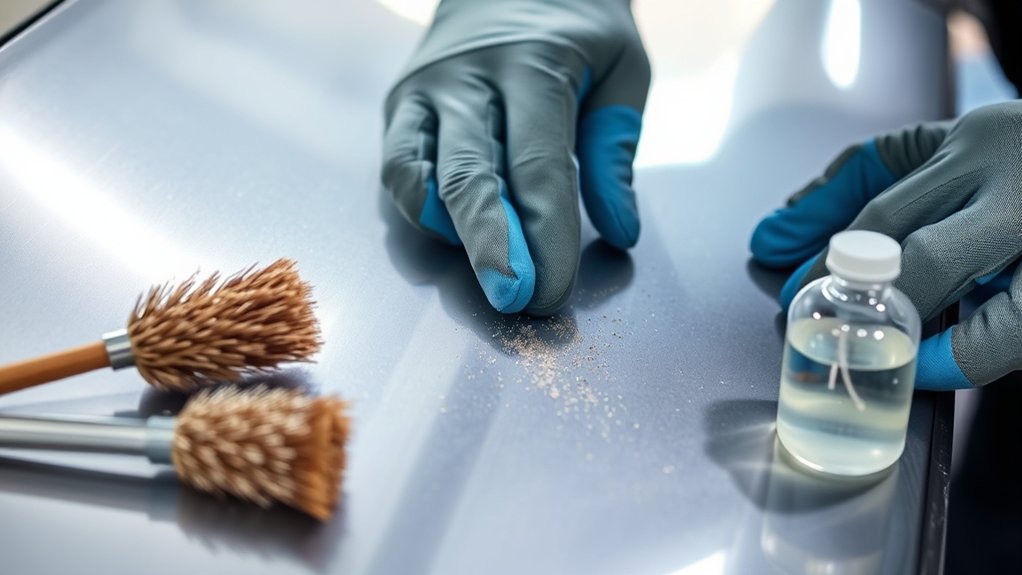
Clean metal is the foundation of a strong weld. Paint, zinc coating, rust, oil, seam sealer, adhesive, and road grime can contaminate the weld pool and cause porosity or lack of fusion.
Essential Cleaning Tools
- Scotch-Brite belt or conditioning disc: Good for removing surface coatings without gouging the metal.
- Wire brush: Useful for rust and scale, but use a stainless brush only for aluminum or stainless work.
- Angle grinder: Needed for removing failed weld material, heavy rust, and uneven beads.
- Scraper or seam-sealer tool: Helps remove seam sealer before grinding.
- Wax and grease remover: Cleans oil and residue before final fit-up.
Effective Surface Preparation
Expose clean bare metal at the weld zone. Clean both sides of the joint when possible, not just the side you can see. If you plan to plug weld through an upper panel, clean the mating surface underneath before clamping the parts together.
Leave no paint or primer directly in the weld path unless the OEM procedure specifically calls for an approved weld-through product. Even then, many repairs still require bare metal at the exact weld location for proper fusion.
Contamination Prevention Techniques
- Mark the weld area before grinding so you do not remove more metal than needed.
- Keep grinding dust, oil, and solvent away from the cleaned joint.
- Use clean gloves after degreasing so you do not transfer oil back onto the metal.
- Clamp the parts tightly to prevent gaps that can cause burn-through or poor penetration.
- Do not weld over active rust. Cut out metal that is too thin to hold a weld.
Grinding Techniques to Reinforce Weak Welds
Grinding is not just cosmetic. You use it to remove failed weld metal, taper stress points, expose cracks, and prepare the joint for a sound repair. Avoid grinding so aggressively that you thin the parent metal.
| Step | Description |
|---|---|
| 1. Assess the joint | Inspect for cracks, gaps, porosity, poor penetration, and surrounding rust. |
| 2. Remove bad weld metal | Grind until you reach sound metal. Do not leave cracked bead under a new weld. |
| 3. Taper sharp edges | Smooth abrupt edges so the repair does not create a new stress riser. |
| 4. Test fit parts | Clamp panels or plates tightly and check alignment before welding. |
| 5. Clean again | Remove grinding dust and oil before striking an arc. |
If the weld was cracked, grind slightly beyond the visible crack ends and inspect again. Tiny cracks can continue under paint, seam sealer, or old weld bead.
How to Choose Between MIG, TIG, and Stick Welding
The best welding process depends on the vehicle material, metal thickness, location, access, and OEM procedure. Do not choose a process only because it is convenient.
Products Worth Considering
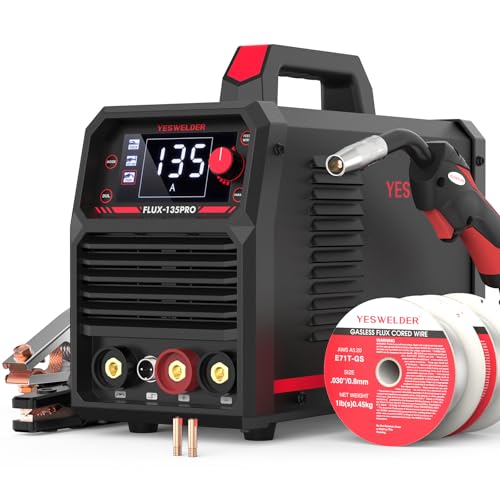
READY OUT OF THE BOX: Start welding immediately! It masterfully handles Gasless Flux Core MIG, Stick, and Lift TIG (Extra Lift TIG torch required). This budget-friendly 3-in-1 machine includes extra E71T-GS .030''&.035'' flux core wires, known for its smooth arc and high feedability. Say goodbye to heavy shielding gas cylinders—perfect for outdoor, windy, or all-position welding.


PREMIUM MATERIALS. Durability with high grade of US split leather available on the market. Got the CE EN388 and EN407 Certificates. Full cow split leather back till the cuff. Unlike other stiff welding gloves, these gloves are softer. Heat and flame resistant for all types of welding.
MIG/GMAW for Common Steel Repairs
MIG welding is common for automotive steel because it is fast, practical, and works well on many sheet-metal and bracket repairs when settings are correct. It is often used for plug welds where a repair procedure allows plug welds to replace factory spot welds.
TIG for Precision and Thinner Work
TIG welding gives more heat control and can produce clean welds on thin or visible parts, but it is slower and requires more skill. It can be useful for stainless, aluminum, and small precision repairs, but modern aluminum vehicle repairs may require special training and equipment.
Stick Welding Limits in Automotive Repair
Stick welding can work on thicker steel, but it is usually a poor choice for thin automotive sheet metal because it adds more heat and is harder to control. Use it only when the material thickness, access, and repair procedure make it suitable.
How to Reinforce a Weak Weld Joint Step by Step
Use this sequence only after confirming the repair is safe and allowed for the specific vehicle part.
- Inspect the damage. Look for cracks, movement, rust, warping, and failed weld bead.
- Confirm the repair method. Check the OEM procedure for welding method, sectioning location, plug weld size, adhesive use, corrosion protection, and required inspections.
- Prepare the vehicle safely. Disconnect battery cables, protect modules, disable HV systems if applicable, remove trim, and clear fire hazards.
- Remove weak weld material. Grind out cracked, porous, cold, or contaminated weld metal until only sound base metal remains.
- Clean the joint. Remove coatings, degrease, and dry the area completely.
- Fit the reinforcement. If a reinforcement plate is allowed, use compatible metal and avoid sharp square ends. A tapered or rounded plate spreads stress better than a blunt patch.
- Clamp tightly. Poor fit-up causes gaps, burn-through, and weak penetration.
- Weld in controlled passes. Use short welds, correct heat, and cooling time to reduce distortion.
- Inspect the weld. Check bead shape, penetration, fusion at the toes, backside condition when visible, and any signs of cracking.
- Protect the repair. Apply primer, seam sealer, topcoat, undercoating, and cavity wax as needed after the weld cools and passes inspection.
Reinforcing Lap Joints and Plates
Lap joints are common in automotive panels and brackets, but they can trap moisture if they are not sealed correctly. When reinforcing a lap joint, the goal is to spread load without creating a hard edge that starts a new crack.
- Use plug welds when approved. Plug welds can replace spot welds only where the repair procedure allows them.
- Avoid over-welding. A long continuous weld can add too much heat and distortion on thin panels.
- Taper or round reinforcement ends. Sharp plate ends can concentrate stress.
- Seal all seams after welding. Lap joints collect moisture, so seam sealer and cavity wax are important.
- Match the material. Do not weld random scrap steel onto advanced high-strength steel or aluminum parts.
A reinforcement plate should spread stress, not simply add mass. If it creates a stiff edge beside thin or cracked metal, the next failure can start right beside the repair.
How to Inspect Your Weld and Add Protective Coatings
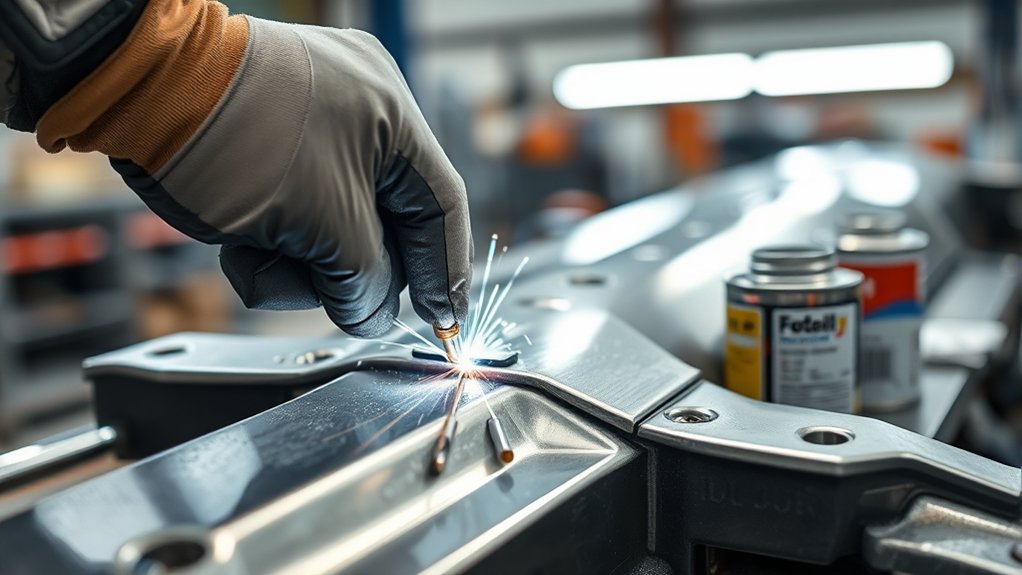
After welding, let the joint cool naturally. Do not quench it with water unless the repair procedure specifically calls for it. Then inspect the weld before hiding it under primer or seam sealer.
Post-Weld Inspection Checklist
- Look for cracks, pinholes, undercut, overlap, burn-through, and missed areas.
- Check that the weld tied into both pieces of metal.
- Check the backside when accessible for penetration and heat marks.
- Make sure the joint did not move out of alignment during welding.
- Confirm nearby wiring, trim, fuel lines, brake lines, and coatings were not damaged by heat.
- For safety-critical areas, use a qualified inspection method or a certified collision repair technician.
Protective Coatings After Welding
Once the weld passes inspection, remove residue and protect all bare metal. Apply epoxy primer or another approved primer, then seam sealer where panels overlap. Finish with paint, undercoating, or cavity wax as needed for the location.
Do not leave the backside of the repair bare. Many automotive weld repairs fail later because the visible side was painted while the hidden side rusted from moisture and road salt.
Troubleshooting Common Weld Reinforcement Problems
| Problem | Likely Cause | Fix |
|---|---|---|
| Porosity | Contamination, poor gas coverage, wind, moisture, or paint. | Grind out the defect, clean better, and correct shielding gas flow. |
| Burn-through | Too much heat, metal too thin, or gaps between parts. | Lower heat, improve fit-up, replace thin metal, or use backing if approved. |
| Cracking | Stress, poor filler choice, heat-sensitive metal, or bad joint design. | Stop, identify the cause, and verify the repair procedure before re-welding. |
| Warping | Too much continuous heat. | Use shorter welds, skip around, clamp better, and allow cooling time. |
| Weak fusion | Low heat, wrong angle, fast travel, dirty metal, or poor access. | Remove the bad weld and adjust settings, angle, cleaning, and fit-up. |
When Not to Reinforce a Car Weld Yourself
Some weld repairs are not good DIY jobs. A weak weld in the wrong place can affect crash behavior, steering, braking, seat belt loads, or battery safety.
- Frame rails, pillars, rockers, roof rails, and crash structures
- Suspension mounts, control arm brackets, steering brackets, or axle mounts
- Seat mounts, seat belt anchors, airbag sensor areas, or restraint-system parts
- Fuel tanks, fuel lines, brake lines, or sealed containers
- Hybrid or EV battery trays, orange HV cable areas, and high-voltage structures
- Aluminum-intensive or advanced high-strength steel structures without proper training
If your repair falls into one of these areas, check for open recalls or safety-related defects through NHTSA’s recall lookup and use a qualified repair facility when needed.
Frequently Asked Questions
How do you strengthen welded joints on a car?
Strengthen a welded joint by removing defective weld metal, cleaning to bare metal, improving fit-up, welding with the correct process and settings, and adding an approved reinforcement plate or plug weld pattern only when the vehicle maker’s procedure allows it.
Can a bad weld still be strong?
A poor-looking weld may hold some load for a short time, but it should not be trusted on a vehicle. Cracks, porosity, undercut, poor penetration, and contaminated welds can fail under vibration, impact, or repeated stress. Remove and repair the weld correctly.
What can be done to reinforce welds on a lap joint?
For a lap joint, clean both mating surfaces, clamp the panels tightly, use approved plug welds or seam welds, and seal the overlap after welding. If a reinforcement plate is allowed, taper or round its ends so it does not create a new stress point.
Can you stick weld on a car?
You can stick weld some thicker automotive steel parts, but it is usually not ideal for thin sheet metal. MIG/GMAW is more common for steel body and bracket repairs, while TIG may be better for precision work. Always match the process to the metal and repair procedure.
Do you need to disconnect the battery before welding on a car?
Yes. Follow the vehicle maker’s procedure, disconnect and isolate the battery cables, and use the correct HV disable procedure on hybrids and EVs. Keep the work clamp close to the weld and route cables away from computers, wiring, and sensors.
Should you weld over a cracked car weld?
No. Do not weld over a crack. Grind out the cracked weld until you reach sound metal, inspect the crack ends, clean the area, correct the cause, and then re-weld according to the proper repair method.
Conclusion
Reinforcing a weak weld joint on your car starts with inspection, but the safest repair depends on the part, metal type, vehicle design, and OEM procedure. Clean the area fully, remove weak weld material, use the correct welding process, control heat, inspect the finished weld, and seal every bare-metal surface against corrosion. If the weld affects crash structure, suspension, restraints, electronics, or high-voltage systems, do not guess. Use professional repair information or a qualified technician so the vehicle remains safe to drive.
Sources
- OEM1Stop, Statement on Use of OEM Repair Procedures — supports the need to follow vehicle-specific OEM repair procedures.
- I-CAR, Battery Disconnect Prior to Welding — supports battery, module, airbag, and HV precautions before welding.
- I-CAR, Welding Training & Certification — supports the role of welding skill and certification in structural collision repair.
- OSHA 1910.252, Welding Fire Prevention and Protection — supports fire-hazard controls during welding.
- OSHA 1910.133, Eye and Face Protection — supports welding eye and face protection requirements.
- NHTSA Recalls — supports recall lookup and safety-defect context.