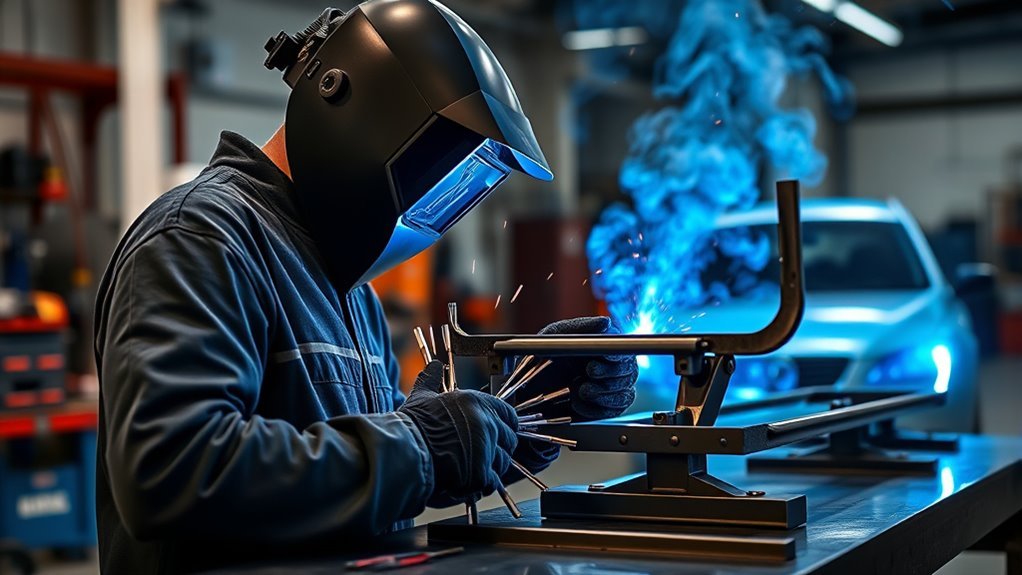
Removing spot welds is a controlled cutting job. Your goal is to release the fused weld nugget while preserving any flange, lip, backing panel, locating hole, or body line needed for the replacement part. Plan the repair before cutting, inspect both sides of the joint, and stop as soon as each weld releases.
Quick Answer
To remove spot welds, identify and clean each weld, inspect behind the panel, center-punch the mark, and cut only through the layer being removed. Use a spot-weld cutter, controlled drill, carbide burr, or belt sander. Check depth often and separate the panels gently instead of forcing the flange apart.
Key Takeaways
- Decide which panel must be saved before choosing the cutting side or tool.
- Inspect both sides of the joint and protect wiring, fuel lines, glass, sensors, trim, airbags, and high-voltage components.
- Cut the weld nugget rather than the entire flange, and stop when the layers begin to separate.
- Use sharp tooling, controlled pressure, dust extraction, and frequent depth checks.
- Follow the vehicle maker’s repair procedure for structural parts, AHSS, UHSS, aluminum, adhesives, rivets, and mixed-material joints.
- Dress, flatten, protect, and test-fit the retained flange before attaching the replacement panel.
At a Glance
| Time Required | About 15 minutes for a few exposed welds to several hours for long seams, restricted access, adhesive-bonded joints, or structural panels |
| Difficulty | Moderate for accessible cosmetic panels; advanced for pillars, rails, rockers, reinforcements, UHSS, aluminum, and mixed-material structures |
| Tools Needed | Spot-weld cutter or drill, center punch, marker, scraper, abrasive pad, clamps, task-approved cutting fluid, seam buster, chisel, carbide burr or belt sander, dust control, and PPE |
| Cost | Varies by cutter design and tool quality. Basic replaceable-tooth cutters cost less than professional carbide drills, depth-control tools, and pneumatic body-shop equipment. |
Warning: Drilling, grinding, and sanding can throw sharp chips, abrasive fragments, sparks, and hazardous coating dust. Wear impact-rated eye protection with side protection and add a face shield over your safety glasses when grinding. Use hearing protection and keep tool guards installed. Wear snug, task-appropriate gloves when handling sharp panels, but keep gloves, sleeves, hair, and jewelry clear of rotating tooling. Identify coatings before disturbing them, use local dust extraction, and select any required respirator for the actual hazard under applicable respiratory-protection requirements. Remove combustibles, keep extinguishing equipment nearby, and do not cut until fuel, SRS, wiring, glass, and high-voltage hazards have been made safe.
Plan the Repair Before Cutting
Before choosing a cutter, decide which layer will be discarded and which layer must remain usable. If the outer panel is being replaced, you can normally cut through that panel while stopping before the backing flange. If both panels must be preserved, the job requires tighter depth control and may need access from the less visible side.
For vehicle repairs, locate the body repair procedure for the exact year, make, model, body configuration, and material involved. OEM collision-repair guidance can specify where a panel may be sectioned, which welds must be removed, how the vehicle is depowered, and whether the replacement joint uses resistance spot welds, plug welds, rivets, adhesive, brazing, or a combined attachment method.
- Confirm which panel must be saved.
- Identify the material and whether the part is cosmetic or structural.
- Inspect both sides of the joint with trim and liners removed as needed.
- Locate wiring, fuel and brake lines, sensors, airbags, glass, insulation, adhesives, and high-voltage parts.
- Follow the OEM procedure for battery, SRS, and high-voltage depowering.
- Support the work so the panel cannot vibrate or collapse under the cutter.
Note: Disconnecting a battery is not a universal substitute for the vehicle maker’s depowering procedure. Some vehicles require waiting periods, service disconnects, diagnostic steps, memory procedures, or additional precautions for SRS and high-voltage systems.
Identify More Than Spot Welds
A flange may contain more than resistance spot welds. Look for factory adhesive, seam sealer, rivets, plug welds, laser-brazed seams, MIG-brazed joints, and reinforcement layers. Adhesive can continue holding the panels after every visible weld has been cut, while a hidden reinforcement may contain a second row of welds.
Do not force a seam that remains uniformly tight. Recheck the repair procedure, inspect for hidden attachment points, and determine whether an approved adhesive-separation method is required.
Choose the Right Spot Weld Tools

To remove spot welds cleanly, match the tool to the panel material, weld size, available access, and layer you need to preserve. A dedicated spot-weld cutter is often the cleanest choice for mild-steel outer panels because it cuts around the weld nugget while limiting damage to the lower sheet.
Replaceable-tooth annular cutters, spring-loaded cutters, and solid carbide spot-weld drills do not all work the same way. Follow the tool maker’s instructions for speed, pilot or center-pin setup, lubricant, feed pressure, and maximum material thickness. Do not drill a pilot hole unless the cutter design calls for one.
For tight areas, a small carbide burr, power file, or narrow belt sander may provide better control than a large drill. A seam buster or spot-weld chisel should normally be used only after most of the weld has been cut.
| Tool | Best Use | Main Risk |
|---|---|---|
| Annular spot-weld cutter | Cutting around a visible weld while preserving the backing panel | Walking, broken pilot pins, or cutting a wider ring than necessary |
| Solid carbide spot-weld drill | Harder steels when permitted by the OEM procedure and tool specification | Chipping, overheating, or penetrating both layers |
| Regular drill bit | Removing a sacrificial top panel where a full hole is acceptable | Drilling through the retained flange or removing excess metal |
| Carbide burr or belt sander | Tight spots, uneven welds, or a small remaining part of the nugget | Heat buildup, loss of visibility, and flange thinning |
| Seam buster or spot-weld chisel | Testing and separating a joint after the weld is mostly released | Stretching, tearing, or folding the retained flange |
Select a cutter that covers the weld nugget without making an unnecessarily large hole. Common cutter diameters may work for many body-panel welds, but the visible dimple is not always the exact nugget size. Start conservatively and inspect the cut rather than assuming every weld is identical.
Pro Tip: If you must save the lower panel, use a depth-control tool where practical and stop when you see a complete cut ring, feel the top sheet relax, or detect slight movement between the layers. Continuing to drill after release only increases the chance of damaging the flange.
Products Worth Considering

High-Quality Material: Spot Weld Cutter Tool is made from premium HSS (High-Speed Steel) for superior durability and heat resistance. The sturdy construction ensures long-lasting performance, even in tough metalworking tasks.

Durable HSS Construction: Our spot weld cutter set is made of HSS for better durability and wear resistance. The double-sided blades ensure long-term use and consistent performance, making it the ideal tool of choice for metal cutting

Spot Weld Cutter Kit: It is easy to replace when the cutter blades begin to dull. The spot weld removal tool kit includes 2 complete spot weld cutters, 11 replacement 3/8" double-sided cutter blades, 2 replacement center pins, and a storage case
Mark and Clean Every Weld
Before drilling or grinding, clean the area around each spot weld. Remove enough paint, seam sealer, undercoating, rust scale, and e-coat to reveal the weld locations. Use a scraper, abrasive pad, wire brush, or compatible cleaner without gouging or thinning the flange.
Mark every weld with a fine paint marker or scribe. Place the mark at the center of the weld rather than beside it. A consistent marking pattern makes missed welds easier to spot after chips and dust cover the seam.
- Expose the weld dimples, rings, or heat marks.
- Mark the center of each visible weld.
- Compare the entire seam with the repair procedure and the opposite side of the vehicle when useful.
- Look for a second row of welds, reinforcements, rivets, or adhesive.
- Use a light center-punch mark only when the selected cutter requires it.
- Count and record the welds before cutting.
Preserve reference holes, tabs, locating slots, body lines, and edges that will be used to position the replacement panel. If a weld is hidden beneath adhesive or sealer, remove only enough material to expose the attachment point.
Note: If the panel is part of a pillar, rocker, frame rail, apron, roof rail, bumper reinforcement, battery enclosure, or other structural area, obtain the vehicle-specific procedure before cutting. Sectioning locations, steel grades, removal methods, and replacement attachments can differ between model years and body configurations.
Drill Spot Welds Without Damaging Panels
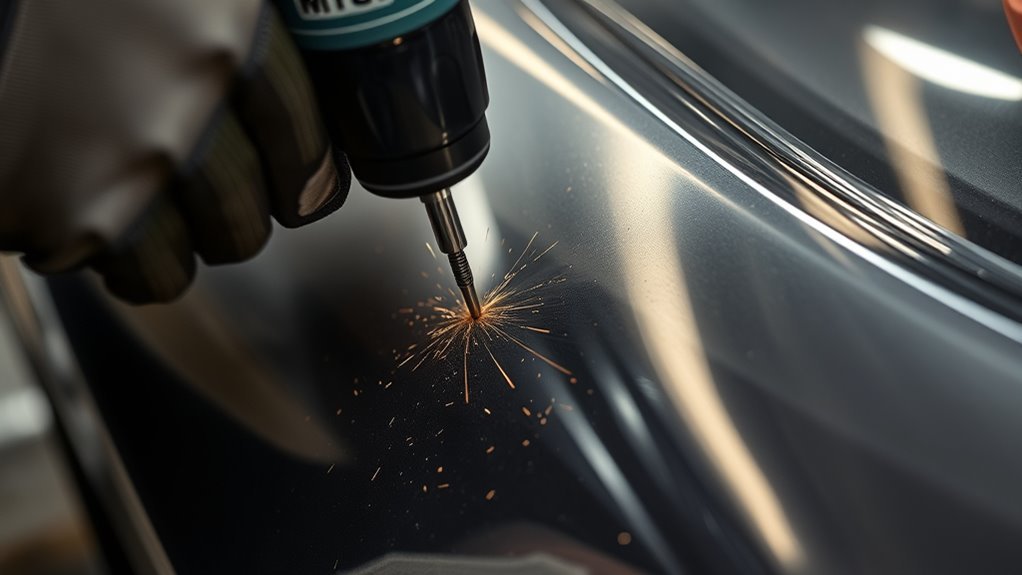
Clamp or support flexible sheet metal so the cutter stays square. Set the tool on the marked center and confirm that the area behind the weld is clear. Use the speed, cutting fluid, center-pin arrangement, and feed pressure specified for your cutter and material.
Do not use impact mode. Keep the drill perpendicular to the local panel surface, not simply vertical to the floor. An angled cutter loads one side of the teeth, enlarges the hole, and may walk into the surrounding flange.
Products Worth Considering

Durable Material : The preferred material used was top-quality steel which has excellent thermal resistance.The cutting blade has a diameter of 3/8 inches, and the arbor is of standard 1/4 inch size.

Product Content: You will receive 3 pieces of spot weld drill bits, a set to easily handle common automotive and metalworking needs.

PREMIUM HSS STEEL: For those who want to move on from brittle double-sided cutters that dull or break after a few uses, use these thick-walled 5/16” spot weld cutters made of super hard M2AL High Speed Steel (HRC 66) that deliver up to 150+ welds; built for wear resistance and superior performance
Step-by-Step Spot-Weld Drilling
- Inspect the back of the joint and move or shield vulnerable components.
- Support the panel so it does not flex under drilling pressure.
- Place the cutter on the marked weld center.
- Start the tool under control and keep it square to the panel.
- Apply steady feed pressure without forcing the cutter.
- Pause frequently to clear chips and inspect the cut depth.
- Stop when the removable panel loosens or a complete cut ring appears.
- Test the joint gently before cutting any deeper.
| Checkpoint | What to Confirm |
|---|---|
| Before starting | The cutter is sharp, secure, suitable for the material, and centered on the weld |
| During the cut | The tool remains square and the panel is not flexing or vibrating |
| At each pause | The cut has not entered the retained panel and heat is not building excessively |
| Before separation | All nearby welds and mechanical fasteners have been released |
Healthy cutting usually produces consistent chips and a smooth cutting sound. Stop if the tool squeals, chatters, smokes, changes color rapidly, or stops producing chips. Check for a dull or damaged cutter, incorrect speed, inadequate support, improper lubricant, excessive pressure, or harder material than expected.
After each cut, test the seam with a thin seam buster or controlled hand pressure. If the panel flexes but the joint does not release, do not pry harder. Recheck the center and finish the remaining edge with the same cutter, a small burr, or a narrow belt sander.
How to Tell When the Weld Has Released
- The top sheet moves slightly without pulling the backing flange.
- A complete cut ring is visible around the nugget.
- The seam opens with light tool pressure.
- The panel no longer springs back tightly at that point.
- The joint releases without tearing or stretching the edge.
Do not depend on sound alone. Adhesive, sealer, corrosion, or a nearby hidden weld can make a released weld feel as though it is still attached.
Use a Grinder on Stubborn Spot Welds
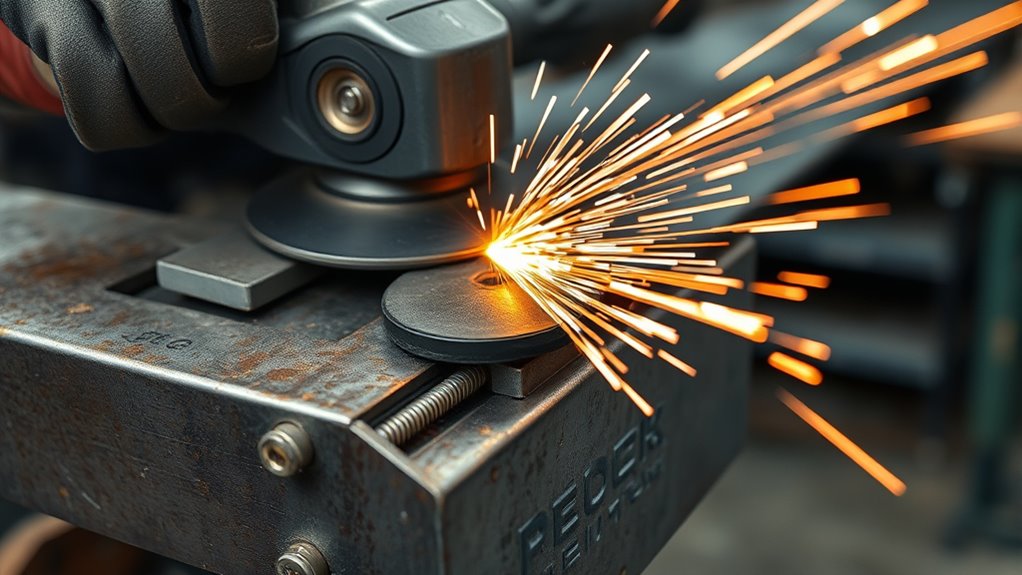
For stubborn spot welds, use a carbide burr, narrow belt sander, power file, or grinder only where drilling cannot finish the job cleanly. Keep the abrasive centered on the nugget and remove material in short stages. The goal is to thin the remaining weld until the layers separate, not to grind the entire flange flat.
Grinding Stubborn Welds
Use the smallest abrasive that provides safe control and keep the tool guard installed where the tool is designed to use one. Make short passes, clear chips, and inspect the metal after each pass. Stop if the panel discolors, softens, distorts, or becomes too hot to monitor safely.
Once most of the weld is gone, place a seam buster at the joint and apply light pressure. If the weld still holds, remove another small amount from the center. Do not twist the tool hard enough to stretch the panel edge.
Protecting Surrounding Metal
Painter’s tape can reduce light cosmetic scuffs on a nearby visible edge, but it cannot stop a cutter, burr, or abrasive wheel. Maintain two-hand control where the tool design allows it, keep the abrasive aligned with the weld, and position your body outside the likely path of fragments or kickback.
After the weld breaks, switch to a narrow belt sander, file, or power file to level only the remaining high spots. Preserving flange thickness now reduces later fitting, metal finishing, and filler work.
Separate Panels With a Seam Buster
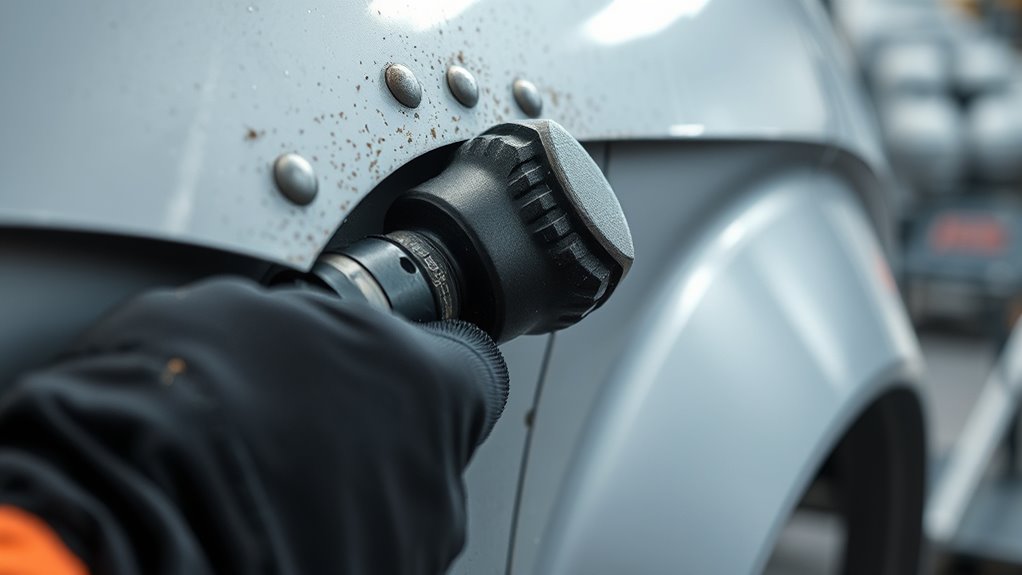
A seam buster helps separate welded panels after the attachment points have been released. Position the blade between the layers and advance it in small, controlled steps. Keep the blade as flat as practical so it separates the seam instead of digging into the retained flange.
Before moving along the joint, confirm that each visible weld, rivet, plug weld, and mechanical attachment has been removed. If the joint contains adhesive, follow the vehicle maker’s approved separation process. Do not use excessive hammer force to break cured structural adhesive.
Work from an accessible end of the seam and watch both panel layers. If the flange starts to curl, stretch, or tear, stop and locate the remaining attachment rather than driving the blade farther.
Chisel Spot Welds Free When Needed
A spot-weld chisel can finish the separation when the weld has been almost completely drilled or ground. Use a thin, sharp blade and approach the weld at a shallow angle from the supported edge.
- Place the chisel at the edge of the cut weld rather than in unsupported sheet metal.
- Apply hand pressure first to test the joint.
- Tap lightly only when the remaining weld edge is thin.
- Watch the retained flange while the seam opens.
- Stop immediately if the flange bends or the metal begins to tear.
Handle the separated edge as though it were a blade. Wear appropriate hand protection when moving the panel, deburr sharp edges promptly, and keep your free hand out of the chisel’s travel path.
Handle Ultra-High-Strength Steel Carefully
Ultra-high-strength steel (UHSS) and advanced high-strength steel (AHSS) require vehicle-specific repair decisions. Hardness, tensile strength, coating, layer count, and permitted joining methods can vary within the same body structure. A technique suitable for a mild-steel outer skin may be prohibited on a pillar, rocker, roof rail, reinforcement, or battery-protection structure.
Use the exact body repair procedure to identify the steel grade and approved removal method. Current Honda and Acura UHSS guidance, for example, emphasizes matching repair methods to tensile strength and warns against prohibited heat or straightening operations on applicable UHSS components.
- Confirm the material grade before drilling, grinding, straightening, or sectioning.
- Use sharp tooling approved for the material and operation.
- Keep cutting heat as low as practical and stop if the tool is no longer cutting cleanly.
- Do not heat, cold-straighten, thin, or relocate a joint unless the OEM procedure permits it.
- Confirm whether replacement requires resistance spot welds, plug welds, rivets, adhesive, brazing, or a combined method.
- Refer structural work to a qualified collision-repair facility when the procedure requires specialized measuring, welding, riveting, bonding, or high-voltage equipment.
If you cannot confirm whether a part is structural, treat it as structural until the vehicle-specific repair information establishes otherwise.
Aluminum and Mixed-Material Joints
Do not assume a steel spot-weld removal method is suitable for aluminum. Aluminum body construction commonly uses rivets, adhesive, welds, or mixed attachment methods, and steel contamination can create corrosion problems. Use dedicated tools and separation procedures where the manufacturer requires them.
Mixed-material joints may combine steel, aluminum, composite parts, adhesive, rivets, and insulating layers. Identify every attachment before cutting and preserve any isolation materials required to prevent galvanic corrosion during reassembly.
Coated and Galvanized Panels
Paint, e-coat, galvanized coatings, seam sealer, undercoating, and repair materials can create dust or fumes when heated or abraded. Identify the coating, review its safety information when available, use effective dust capture, and avoid spreading residue through the vehicle interior.
Do not grind away more coating than needed. The retained flange will require the corrosion-protection system specified by the repair procedure after the joint is prepared.
Protect Quarter Panel Lips and Edges
Quarter-panel lips, wheel openings, door jambs, roof gutters, and trunk openings are easy to damage because the metal is narrow, curved, and often visible after refinishing. Mark each weld location precisely, support the flange, and use the smallest controllable tool.
Mark Welds Carefully
Label the complete seam before cutting and preserve body lines, reference holes, hem edges, and locating tabs. Recheck your marks as chips and dust accumulate.
- Mark every weld and fastener before starting.
- Record any hidden or second-row welds shown in the repair procedure.
- Protect nearby finished surfaces from light scuffs.
- Recount the attachment points before using a separation tool.
Grind With Control
A narrow belt sander or small carbide burr may provide more control than a large grinder near a wheel lip or tight body line. Support the edge from behind when possible and remove only the weld material.
If the tool begins to drift toward the visible edge, stop. Remark the center, improve the support or access, and restart with a smaller tool rather than chasing the weld into the body line.
Save Panel Edges
Separate the layers only after the weld is nearly released. When access and the repair procedure allow it, working from the discarded or hidden side can reduce damage to the visible edge.
- Cut from the side that best protects the retained surface.
- Use controlled pressure and frequent visual checks.
- Support narrow lips during separation.
- Correct small bends with careful hammer-and-dolly work before test-fitting.
A straight, full-thickness edge makes the replacement panel easier to align and reduces the amount of metal finishing and filler required after attachment.
Troubleshoot Common Spot Weld Removal Problems
Spot welds do not always release on the first pass. Correct the cause before applying more pressure.
| Problem | Likely Cause | Fix |
|---|---|---|
| Cutter walks off the weld | Poor centering, dull teeth, flexible panel, or angled drill | Stop, support the panel, remark the center, square the tool, and replace damaged tooling |
| Weld will not release | Remaining nugget, hidden weld, reinforcement, rivet, adhesive, or sealer | Inspect the full joint, compare it with the repair procedure, and remove only the remaining attachment |
| Panel starts to warp | Excessive heat, feed pressure, prying force, or poor support | Stop, allow controlled cooling, improve support, and continue with sharper or smaller tooling |
| Flange becomes thin | Grinding beyond the nugget or trying to flatten the joint before separation | Stop removing metal and assess whether the flange can be repaired under the approved procedure |
| Cutter tooth or pilot breaks | Side loading, excessive pressure, incorrect speed, or worn tooling | Disconnect the tool, remove loose fragments safely, inspect the holder, and install the correct replacement part |
| Drill penetrates the retained panel | Too much depth, pressure, or an unsuitable cutter | Stop and determine the OEM-approved repair for the hole before dressing or enlarging it |
| All welds are cut but the seam stays closed | Structural adhesive, seam sealer, corrosion, or a concealed mechanical attachment | Use the approved adhesive-separation method and inspect for hidden fasteners before applying force |
| Tool will not cut the material | Dull cutter, incorrect cutter type, hard steel, or unsupported tool angle | Verify the material and repair procedure, then use approved sharp tooling rather than increasing force |
Dress the Metal for Reassembly
After the panels separate, remove only the remaining weld high spots, burrs, adhesive residue, and sharp edges. Do not automatically grind every cut area completely flat. The next attachment method may rely on an existing hole, a specified plug-weld diameter, a rivet location, or a defined bonding surface.
Check the retained flange for:
- Full usable thickness
- Tears, cracks, and elongated holes
- Heat distortion or severe discoloration
- Raised weld remnants and sharp burrs
- Adhesive or sealer contamination
- Damage to locating holes and body lines
- Corrosion or coating loss on both sides
Correct small bends with controlled hammer-and-dolly work only where the repair procedure permits it. A torn, overheated, cracked, or excessively thinned structural flange may require an approved repair or replacement rather than additional grinding.
A spot-weld removal job is complete only when the retained flange is structurally sound, correctly shaped, protected from corrosion, and ready to locate the replacement panel.
Test-fit the replacement panel before welding, riveting, or bonding. Check panel gaps, reveal lines, body contours, reference holes, flange contact, and panel height. Confirm that every required attachment point remains accessible.
Clean the mating surfaces with products approved for the repair system. Apply weld-through primer, epoxy primer, adhesive, seam sealer, cavity wax, or other corrosion protection only where the vehicle and product procedures specify it. Keep coatings away from locations that must remain bare for welding or bonding.
Frequently Asked Questions
What is the easiest way to remove spot welds?
For an accessible mild-steel body panel, clean and mark the weld, inspect behind it, center the cutter as directed by its manufacturer, and use a sharp spot-weld cutter with controlled depth. Test the seam as soon as a complete cut ring appears instead of drilling deeper.
How do you remove spot welds without damaging the lower panel?
Cut from the panel being discarded, keep the tool square, support the sheet metal, and check the depth frequently. Stop when the top sheet loosens. Finish a small remaining edge with a burr or narrow belt sander rather than forcing the seam open.
What is the best tool for removing automotive spot welds?
A dedicated spot-weld cutter or approved carbide spot-weld drill is usually the best starting tool. The correct choice depends on the steel grade, weld size, access, cutter design, and whether the backing panel must be preserved.
What size cutter should I use for spot welds?
Use a cutter large enough to surround the actual weld nugget without removing unnecessary flange material. Although 5/16-inch and 3/8-inch cutters are common commercial sizes, the correct diameter depends on the joint and repair procedure.
Can I remove spot welds with a regular drill bit?
Yes, especially when the top panel is scrap and a complete hole is acceptable. A regular bit is more likely to remove excess metal or penetrate the retained panel, so use controlled depth and confirm that the resulting hole is compatible with the replacement attachment method.
Should I grind or drill spot welds?
Drill or cut first when access and material allow precise depth control. Use a burr, power file, or belt sander for tight areas, uneven welds, or a small remaining part of the nugget. Grinding creates more heat and can thin the flange quickly.
Why are the panels still stuck after I drilled every spot weld?
The joint may contain adhesive, seam sealer, a hidden weld, a second reinforcement layer, a rivet, or a plug weld. Compare the seam with the vehicle repair procedure and inspect both sides before using more force.
Can I remove spot welds from UHSS or structural panels myself?
Only when you have the exact OEM procedure, approved tooling, required training, and equipment for the complete repair. Structural UHSS work may involve restricted sectioning locations, specialized joining, measuring, corrosion protection, scanning, and high-voltage or SRS precautions.
What should I do if I drill through the backing panel?
Stop and inspect the damage before enlarging, filling, or grinding the hole. The correct repair depends on the panel material, location, thickness, and future attachment method. Use the vehicle maker’s approved procedure, especially on structural parts.
Conclusion
Clean spot-weld removal depends on repair planning, sharp tools, controlled depth, and frequent inspection. Identify every attachment, inspect both sides of the seam, protect nearby components, and cut from the side that preserves the required panel. If a joint resists, look for a remaining weld, fastener, reinforcement, or adhesive instead of forcing it apart.
Once the old panel is removed, preserve the retained flange’s thickness and shape, restore the specified corrosion protection, and test-fit the replacement before final attachment. For structural steel, UHSS, aluminum, mixed-material construction, SRS areas, or high-voltage vehicles, follow the exact OEM repair procedure and use a qualified collision-repair facility when specialized equipment or training is required.
Sources
- OSHA 1910.133 Eye and Face Protection — supports eye protection and side-protection guidance for flying-particle hazards.
- OSHA 1910.243 Guarding of Portable Powered Tools — supports safe control and guarding requirements for drills, grinders, and related portable tools.
- OSHA 1910.252 Welding, Cutting, and Brazing General Requirements — supports combustible control, spark containment, and fire-protection precautions.
- OSHA 1910.134 Respiratory Protection — supports hazard-based respirator selection and workplace respiratory-protection requirements.
- OEM1Stop Statement on OEM Repair Procedures — supports using vehicle-specific automaker procedures for post-collision repairs.
- Honda/Acura Ultra-High-Strength Steel Guidance — supports material identification, tensile-strength-specific repair methods, and restrictions on UHSS repair.