Moisture can ruin abrasive discs before you ever put them to work. A disc that looks fine at first glance may cup, shed grains, or cut poorly after damp storage. To prevent moisture damage to abrasive discs, store them in a cool, dry place with 40-50% relative humidity and temperatures between 60-80°F (15-29°C). Elevate discs at least four inches off concrete floors, keep them in original packaging, and inspect discs before each use.
Quick Answer
Keep abrasive discs dry, covered, and off concrete floors. Store them at 40-50% relative humidity and 60-80°F (15-29°C), then inspect them for warping, cracks, loose grains, or discoloration before use. Discard any disc that shows clear damage.
Key Takeaways
- Store abrasive discs in a cool, dry area with stable humidity and temperature.
- Keep discs at least four inches above concrete floors to reduce moisture transfer.
- Use original packaging or covered containers to block dust, light, and damp air.
- Inspect every disc before use and discard damaged or cupped discs.
- Rotate stock with a first-in, first-out system so older discs get used first.
How Moisture Affects Abrasive Discs
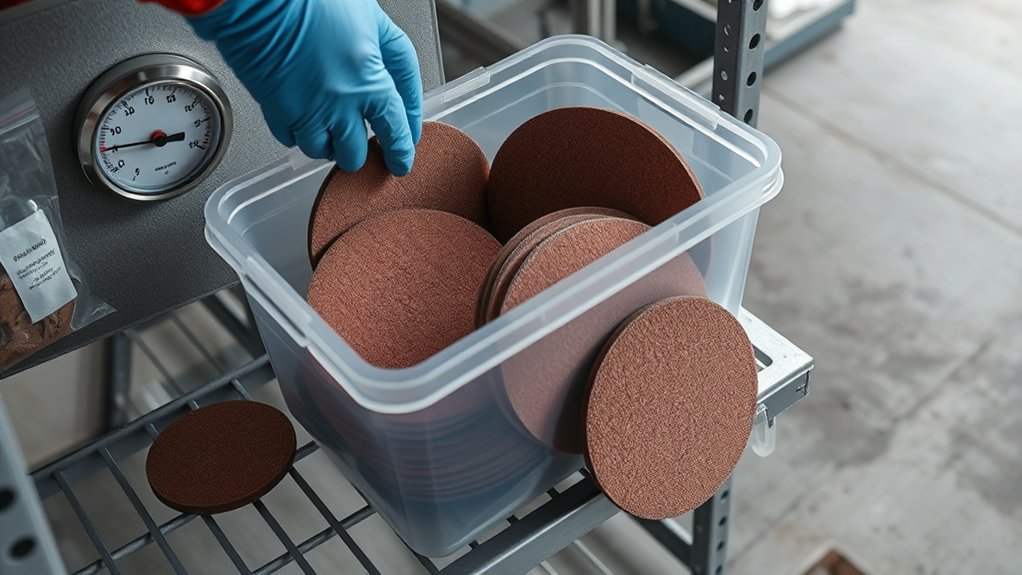
Moisture can weaken abrasive discs and create serious performance problems. Excess moisture can make the fiber backing absorb water, which may cause cupping. A cupped disc can snag on a workpiece and break during use.
High humidity can also weaken adhesive bonds. When that happens, abrasive grains may loosen and reduce cutting or grinding efficiency. Even short moisture exposure can speed up wear and shorten the useful life of your discs.
Check your abrasive discs often for cracks and signs of deterioration, including bent shapes or discolored surfaces. Store them in their original packaging whenever possible. A clean, dry environment helps your discs stay stable and safer to use.
Ideal Storage Conditions for Abrasive Discs
Use five basic storage conditions to help your discs last longer. First, keep discs in a cool, dry place with relative humidity around 40-50%. This helps reduce moisture absorption and lowers the risk of cupping.
Next, store them within a temperature range of 60-80°F (15-29°C). Stable temperatures help protect adhesive bonds and reduce the chance of brittleness or warping.
- Keep discs at least four inches above concrete floors.
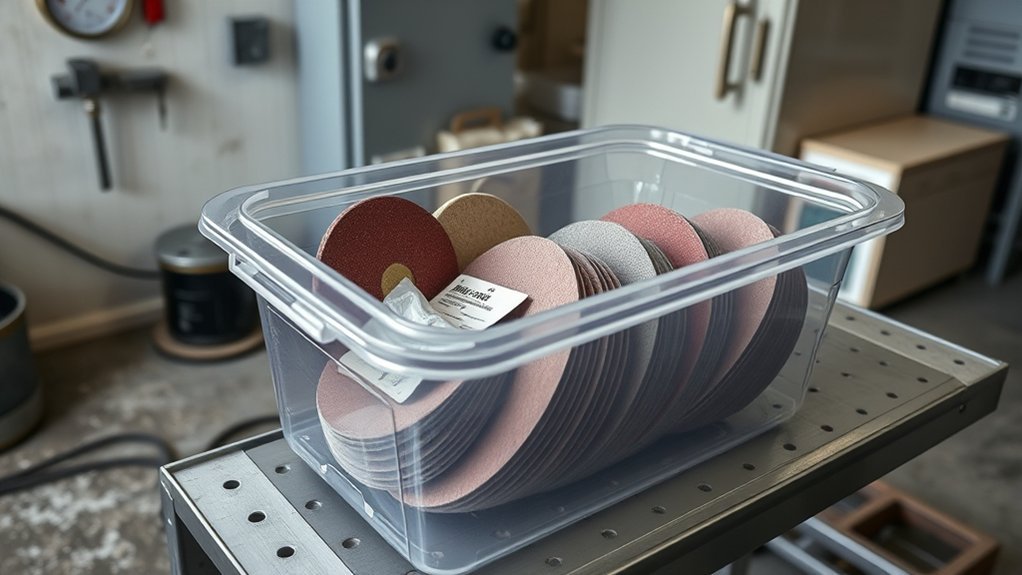
- Store discs in their original packaging when possible.
- Use light-resistant containers if the original packaging is damaged.
- Keep discs away from direct sunlight, damp air, and dust.
- Rotate stock with a first-in, first-out method.
These simple habits reduce storage damage and help your abrasive discs perform more consistently.
Warning: Never use an abrasive disc that looks cracked, warped, damp, or badly discolored.
How to Properly Store Abrasive Discs
Good storage starts before the disc reaches your grinder or sander. Use the steps below to protect discs from damp air, dust, and rough handling.
- Choose a dry storage area. Keep the area near 40-50% relative humidity and 60-80°F (15-29°C).
- Raise discs off the floor. Place them at least four inches above concrete to reduce moisture transfer.
- Protect discs from light and dust. Use original packaging or clean, labeled containers.
- Keep discs away from heat. Avoid direct sunlight, heaters, wet benches, and damp walls.
- Rotate your stock. Use older discs first so they do not sit unused for too long.
- Inspect discs before use. Look for warping, cracks, discoloration, loose grains, or dampness.
- Retire damaged discs. Discard any disc that shows clear damage before it reaches the tool.
Products Worth Considering

Efficient Organization: Store 5-inch sanding discs, grinding discs, and accessories in a set of 10 individual connectable boxes. Each box can hold up to 60 pcs sanding discs.

✅【Perfect Fit for 115mm Discs】Specifically designed to hold angle grinder cutting and grinding discs up to 115mm Outer Diameter, Center Hole Diameter 7/8" for secure storage.

PERFECT FIT: Specially designed to store and organize 4.5-inch grinding discs and cut-off wheels for angle grinders with secure compartments
Best Practices for Daily Handling of Abrasive Discs
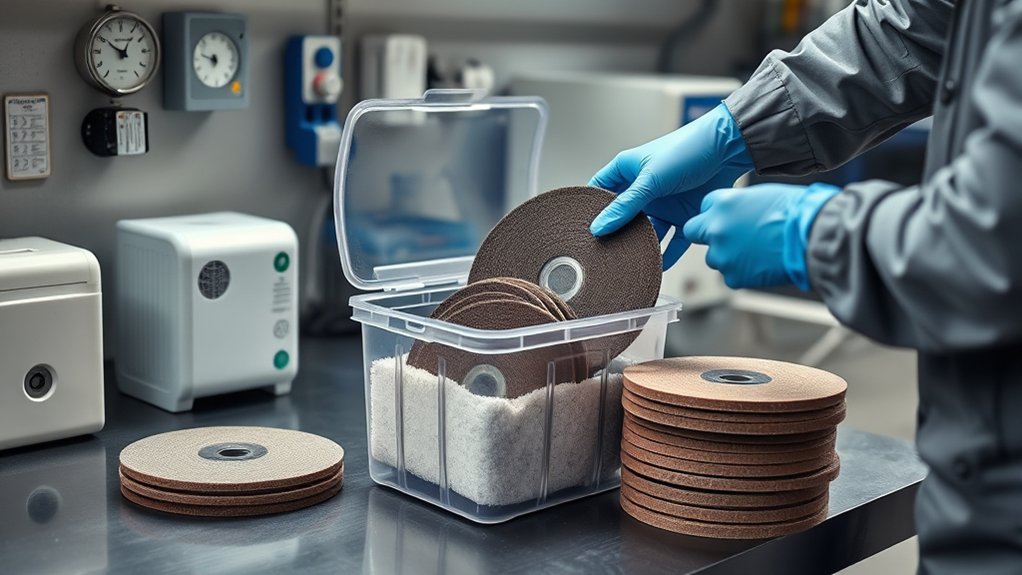
Careful handling helps protect abrasive discs from damage between storage and use. Always inspect your discs for bends, cracks, or dampness before use. Confirm that each disc looks dry, flat, and clean.
Avoid placing abrasive products on wet surfaces or in humid spaces. Humidity can cause moisture absorption, which may weaken the disc. Remove discs from storage only when you need them.
Use older discs first to keep your stock fresh. When you pick up a disc, gently hold the support ring or edge area. This lowers the chance of cracks from drops, pressure, or rough handling.
Pro tip: Keep a small inspection checklist near your disc storage area so you check every disc the same way.
Good handling helps you avoid compromised grinding discs. It also supports safer work and more predictable cutting or grinding results.
Products Worth Considering

Achieve Professional Results: Elevate your woodworking, metalworking, or automotive projects with SIGNI top-selling Surface Conditioning Discs,Popular for welding and...
Identifying and Addressing Moisture Damage in Abrasive Discs
You can spot many moisture problems with a careful visual check. Look for warping, discoloration, soft spots, loose abrasive grains, or uneven edges. These signs can point to moisture damage and lower cutting efficiency.
Pay close attention to cupped discs. A cupped disc can snag on the workpiece and create a breakage hazard. Weak adhesive bonds from moisture exposure may also let abrasive grains detach during use.
If you find damage, do not try to dry the disc and use it later. Remove it from service right away. Safer disc handling protects both your workpiece and your hands.
Common Storage Mistakes to Avoid
Many disc problems start with small storage mistakes. Avoid leaving discs on concrete, near open doors, beside water sources, or in areas with large temperature swings. These places can expose discs to damp air and surface moisture.
Do not stack loose discs where weight or sharp edges can deform them. Keep each disc flat, covered, and protected from impact. Good storage costs little, but it can prevent wasted discs and unsafe tool use.
Frequently Asked Questions
How Should an Abrasive Wheel Be Stored?
Store abrasive wheels in protective packaging at 60-80°F with humidity around 40-50%. Keep them dry, raised off concrete, and protected from impact. Inspect them before use to confirm they remain flat and undamaged.
What Are the Safety Precautions for Abrasive Cleaners?
Wear proper safety gear, follow the product label, and work with enough ventilation. Avoid skin and eye contact when a cleaner contains chemicals. Wash your hands after use and keep cleaners away from discs unless the manufacturer allows it.
When Storing Abrasive Wheels, How Should Cylinders and Dish Wheels Be Stored?
Store cylinders upright and protect them from tipping, impact, and moisture. Stack dish wheels carefully with covers or barriers that prevent rubbing. Keep both types in a dry, stable, and clean storage area.
What Can Cause Damage to an Abrasive Wheel While in Storage?
Humidity, temperature swings, direct sunlight, dust, impact, and improper stacking can damage abrasive wheels. Long storage in poor conditions can also weaken backing and bonds. Regular inspection helps you catch these problems before use.
Can You Use an Abrasive Disc After It Gets Damp?
You should not use a disc that feels damp or shows signs of moisture damage. Drying it may not restore weakened backing or adhesive bonds. Replace the disc if you see warping, loose grains, cracks, or discoloration.
Conclusion
Moisture control matters because a dry, stable disc works better and helps you work safer. Store your discs in a cool, dry place, keep them off concrete, and inspect them before every use. Remove any damaged disc from service instead of taking a risk. With steady storage habits, your abrasive discs can stay reliable for longer.