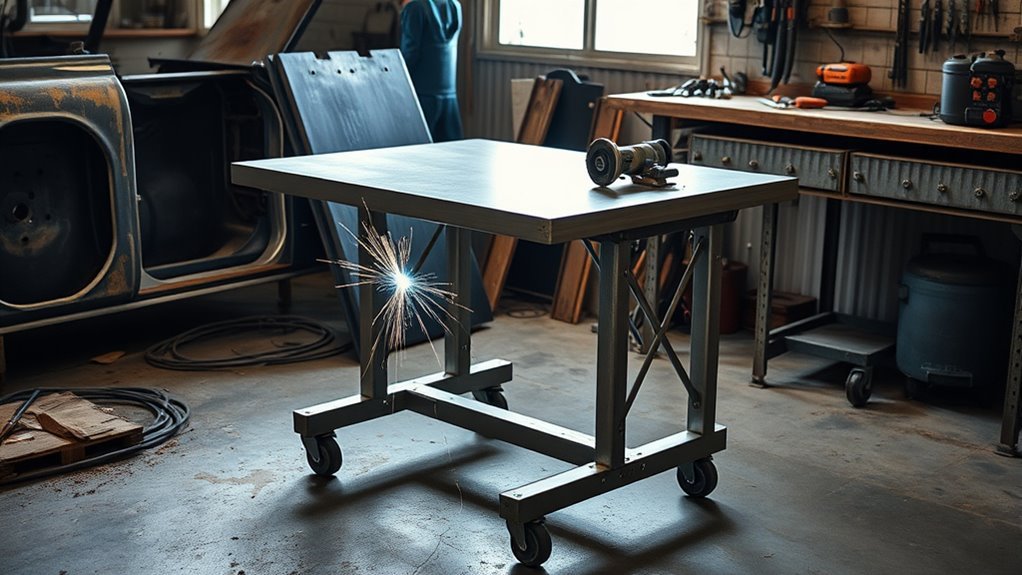
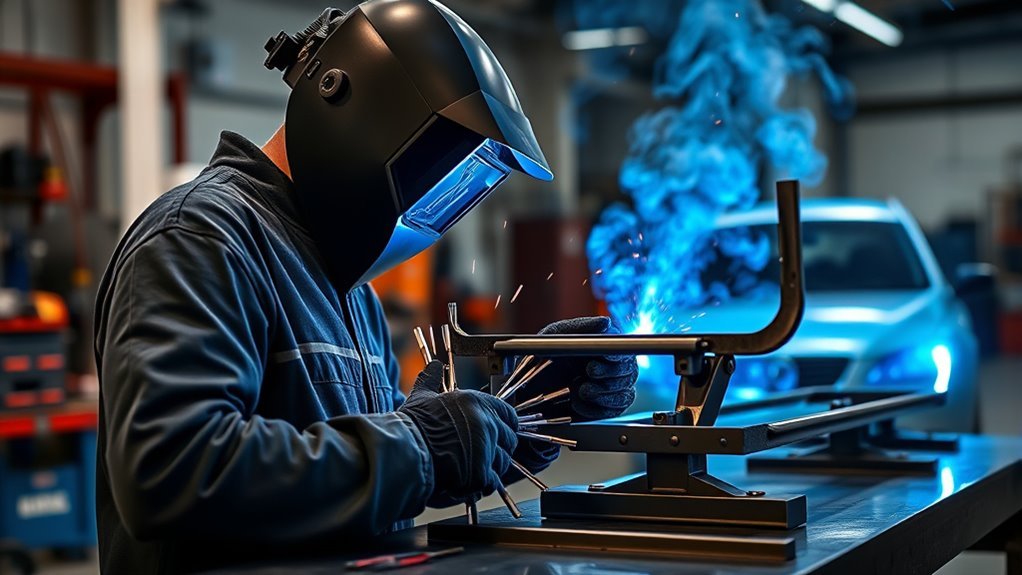
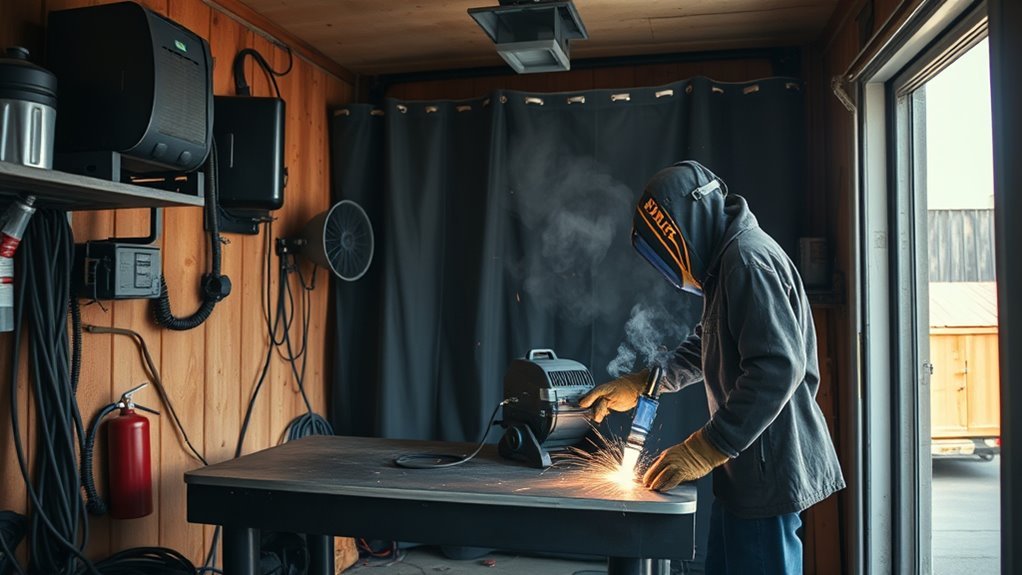
Welding can weaken a car frame if the repair adds too much heat, uses the wrong joint design, or ignores the vehicle maker’s repair procedure. A good weld can restore load paths in a damaged section, but the surrounding heat-affected zone may lose strength, crack sooner, or corrode faster if the repair is not controlled.
Quick Answer
Yes, welding can weaken a car frame when heat changes the metal around the weld, especially in high-strength steel or aluminum. It can also restore strength when the damage is local, the metal is sound, and the repair follows the OEM procedure, correct weld type, proper heat control, and post-repair inspection.
Key Takeaways
- Welding affects more than the bead. The heat-affected zone beside the weld can lose strength or become more crack-prone.
- MIG, TIG, plug welds, and spot welds each have a place, but the approved OEM repair procedure matters more than a general process preference.
- Heavy rust, multiple weak points, crushed rails, and unknown high-strength steel usually push the repair toward replacement instead of welding.
- Commercial truck frame repairs in the United States must follow manufacturer recommendations under federal frame rules.
- A welded frame should be measured, inspected, sealed, and corrosion-protected before the vehicle returns to road use.
At a Glance
| Time Required | Inspection can take less than an hour; structural repair time depends on damage, measuring, welding, refinishing, and reassembly. |
| Difficulty | Advanced. Frame welding is structural safety work, not a beginner welding project. |
| Tools Needed | OEM repair information, frame measuring equipment, approved welder, clamps, PPE, ventilation, inspection tools, primer, seam sealer, and corrosion protection. |
| Cost | Varies by vehicle, frame type, material, damage size, shop labor, inspection rules, and whether a section must be replaced. |
Warning: Do not treat frame welding as a cosmetic repair. Welding near fuel lines, batteries, airbags, sensors, coatings, or enclosed cavities can create fire, fume, electrical, and crash-safety risks. For road-going vehicles, use a qualified structural repair technician and follow the vehicle manufacturer’s repair procedure.
How Welding Affects Car Frame Strength
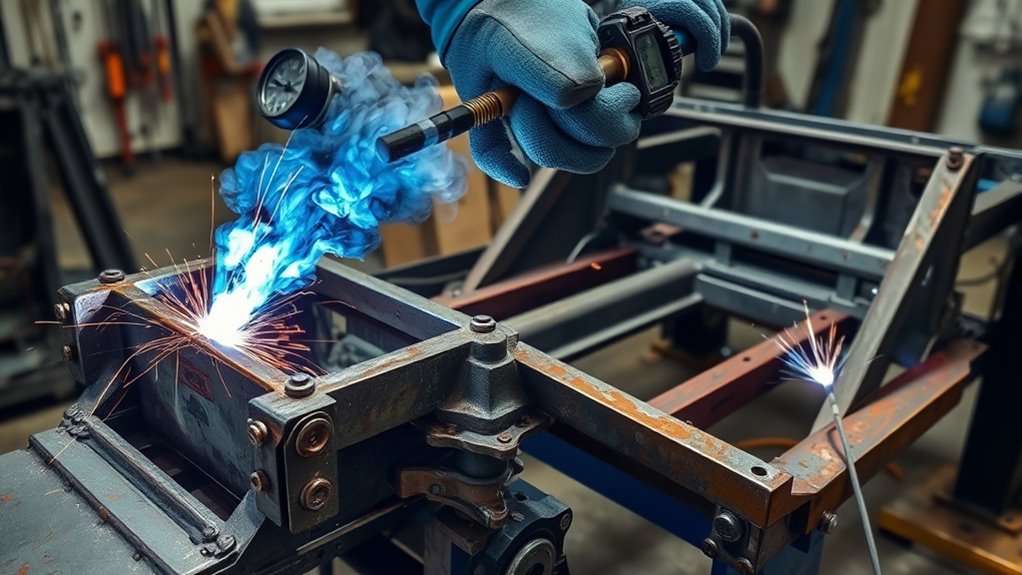
When you weld a car frame, the weld bead is only part of the repair. The surrounding parent metal also heats and cools, forming the heat-affected zone, or HAZ. That zone may look unchanged, but its grain structure, hardness, toughness, and fatigue resistance can change.
The effect depends on the frame material. Mild steel is more forgiving than many high-strength steels. Aluminum is more heat-sensitive because welding can reduce the strength gained from heat treatment. In one study of 6061-T6 aluminum resistance spot welds, the fusion zone showed major strength reductions compared with the parent material, which shows why aluminum repairs need tight procedure control.
You should also think about the frame as a load path. A weld placed in the wrong spot can move stress into a thinner, weaker, or already damaged area. A weld placed correctly can help transfer force more evenly through the structure.
| Factor | How It Can Weaken the Frame | What Helps |
|---|---|---|
| Too much heat | Softens or hardens nearby metal and increases distortion. | Use approved settings, stitch patterns, cooling control, and OEM heat limits. |
| Poor weld placement | Creates stress peaks at weld ends, toes, holes, bends, or thin sections. | Follow approved sectioning points and load-path design. |
| Rust or coatings | Causes porosity, lack of fusion, toxic fumes, and poor corrosion protection. | Clean to sound metal and remove unsafe coatings before welding. |
| Wrong process | Can produce poor penetration, excess heat, or an unapproved joint. | Use the weld type named in the OEM repair information. |
A frame weld is only as strong as the metal around it, the joint design, and the repair procedure behind it.
Where Car Frame Welds Usually Fail
Car frame weld failures often start where stress is highest, not always where the weld looks worst. The most common trouble spots are the weld toe, weld end, heat-affected zone, rusted edges, and areas with poor penetration.
Weld Toe and Weld Edge Cracks
Weld edge cracks usually start at the boundary where the weld bead meets the base metal. This transition area is called the weld toe. It can act like a notch if the bead shape is too sharp, the weld is undercut, or the repair is placed in a high-stress area.
Look for these warning signs:
- Fine lines starting at the edge of the weld
- Rust staining along the bead or seam
- Separation at the end of a weld
- Shiny or granular fracture surfaces after a break
- New handling changes, pulling, vibration, or uneven tire wear
Good weld shape, full fusion, smooth transitions, and correct placement reduce this risk. Grinding a weld flat without approval is not automatically better because removing weld metal can also reduce strength.
Heat-Affected Zone Failure
The HAZ is often the weak link because it sits beside the weld and carries load after its properties have changed. In some steels, rapid cooling can create harder, more brittle areas. In aluminum, heat can reduce the strength created by heat treatment.
| Condition | Risk | Best Response |
|---|---|---|
| Overheated HAZ | Softening, distortion, or reduced fatigue life | Control heat input and follow OEM limits |
| Rapid cooling | Hard, brittle cracking in some steels | Use approved preheat, interpass, and cooling controls |
| Poor inspection | Hidden cracks or incomplete fusion remain in service | Measure, inspect, and document the repair |
Porosity, Poor Penetration, and Contamination
A frame weld can also fail from defects inside the bead. Porosity leaves small voids. Lack of fusion leaves areas that never joined. Poor penetration leaves the joint attached only near the surface. Dirt, paint, undercoating, galvanized coating, oil, and rust all make these defects more likely.
Pro Tip: Before judging a frame weld, inspect the metal beside the weld, not just the bead. Cracks, rust, distortion, and heat marks around the bead often tell you more than bead appearance alone.
How Weld Heat Weakens Frame Metal
Weld heat weakens frame metal by changing how the metal was originally made to carry load. Automakers use specific steels, aluminum alloys, heat treatments, coatings, and section shapes to meet crash and durability goals. Welding can disturb those properties if the repair is not planned.
Three heat-related problems matter most:
- Microstructure change: The metal beside the weld can become softer or harder depending on alloy and cooling rate.
- Residual stress: Heating and cooling cause expansion and contraction, which can trap stress in the rail or crossmember.
- Distortion: A frame that moves during welding may no longer match the vehicle’s alignment points.
Aluminum and high-strength steel need extra caution. Some aluminum frame sections may require replacement instead of welding. Some ultra-high-strength steel areas may not allow heat straightening or sectioning except at specific factory-approved locations.
Note: A clean-looking weld is not proof of a safe frame repair. Structural safety depends on metal type, location, heat input, penetration, alignment, corrosion protection, and inspection results.
MIG, TIG, and Spot Welding on Car Frames
MIG and TIG welds perform differently because they deliver heat and filler metal in different ways. Still, the best welding process for a frame is the one the vehicle maker approves for that exact location and material.
Products Worth Considering

【Designed For Automotive Repair Work】Spot weld panel chisel Designed for automotive body repair work, precisely removes auto body spot welds and easily separates metal panels. It is suitable for a wide range of bodywork, include accident repairs, vehicle dismantling, door and fender replacement, and the separation of welds on frames and chassis, ensuring efficient performance to meet your needs.

Professional Dent Removal: VEVOR Stud Welder Dent Puller offers a fast and efficient solution for removing dents from steel car body panels, all while providing precise dent pulling and controlled force for a professional-grade dent repair every time.

Highly Durable Design: The shell of stud welder kit is made of high-quality ABS body, has good stability under high temperature conditions, withstand temperature of 93-118℃, and the movement is pure copper electrode. This welder stud kit is wear-resistant, strong and sturdy.
MIG Welding for Frame Repair
MIG welding, also called GMAW, uses a continuously fed wire electrode and shielding gas. It is common in collision repair because it is fast, practical, and effective on many steel repairs when settings and technique are correct.
MIG can also add too much heat if travel speed is slow, voltage and wire feed are wrong, or the joint is over-welded. Poor MIG technique can cause undercut, porosity, excessive spatter, or lack of fusion.
TIG Welding for Frame Repair
TIG welding, also called GTAW, uses a non-consumable tungsten electrode and separate filler when needed. It gives fine puddle control and a clean bead, which can help on thinner or more sensitive materials.
TIG is slower, so it is not automatically lower heat overall. It can be excellent for certain aluminum or precision repairs, but it is not a universal answer for every frame. The repair manual still controls the decision.
Spot Welds, Plug Welds, and Sectioning
Many unibody vehicles use resistance spot welds from the factory. During repair, a shop may use squeeze-type resistance spot welding, plug welds, or other approved methods depending on access and OEM instructions. These are common on body structure, rails, reinforcements, and panels, but the allowed method changes by vehicle.
How Weld Design Improves Frame Strength
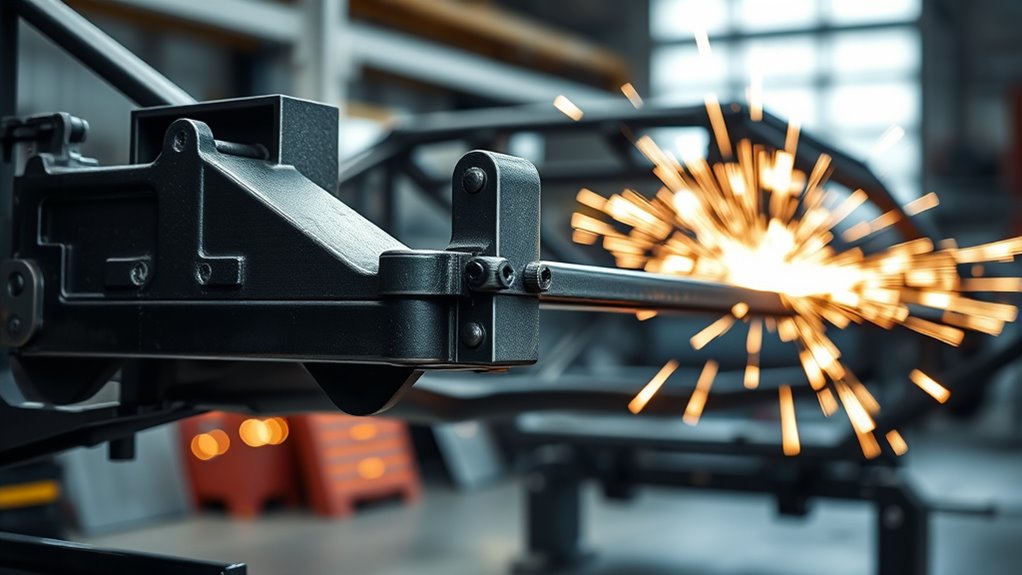
You improve frame strength when the weld design moves force smoothly through the repaired area. The goal is not simply to add more weld. The goal is to restore the original load path with the least unnecessary heat and the fewest new stress risers.
Weld Placement Strategy
Weld placement strategy matters because a strong bead in the wrong location can still weaken a frame. You should avoid placing weld ends in high-stress zones unless the OEM procedure calls for it. You should also avoid welding across flanges, holes, bends, or crush zones that the manufacturer says not to alter.
Good placement usually focuses on:
- Approved sectioning locations
- Sound metal with no heavy rust
- Proper overlap or backing when required
- Controlled bead length and spacing
- Full fusion without excessive reinforcement
Heat-Affected Zone Control
Heat-affected zone control comes from disciplined welding, not guesswork. Stitch welds, skip sequences, correct amperage, proper travel speed, and interpass cooling can reduce heat buildup. For some repairs, the manual may require specific weld length, spacing, plug weld size, or squeeze-type spot weld settings.
Do not add extra beads just because the joint “looks stronger.” Extra weld metal can add heat, increase shrinkage, and move stress into nearby metal.
Joint Fit-Up and Corrosion Protection
Fit-up matters before the arc starts. Gaps, misalignment, poor clamping, and dirty metal make weak welds more likely. After welding, the repair also needs primer, seam sealer, cavity wax, or other approved corrosion protection so moisture does not attack the new seam from the inside out.
Warning: Do not weld over rust, paint, undercoating, solvent residue, or unknown coatings. OSHA warns that welding surfaces should be cleaned of coatings that could create toxic exposure, and poor cleaning can also weaken the weld.
Signs A Welded Frame Needs Repair
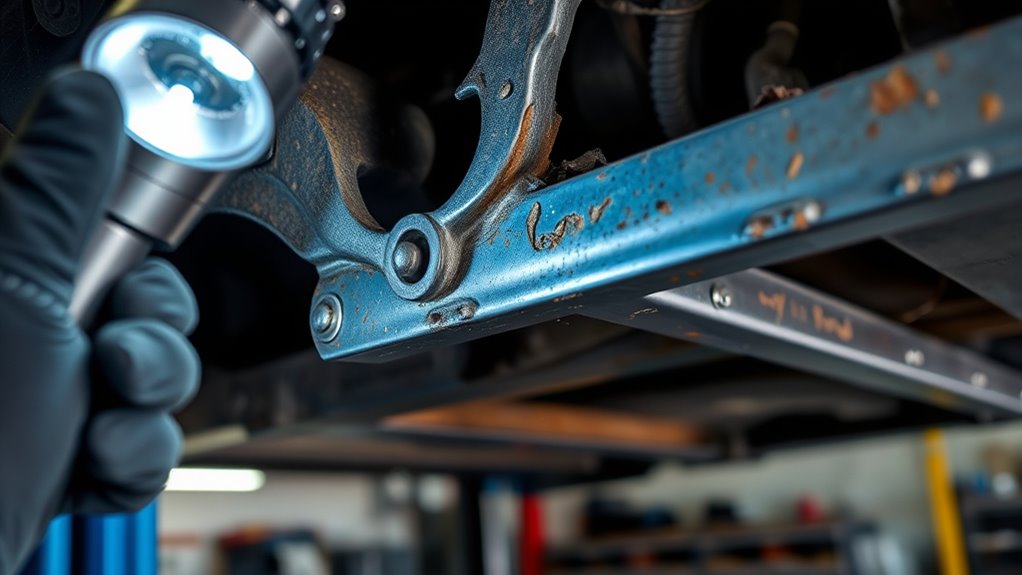
Cracks, visible gaps, rust trails, or separating lines near a welded frame joint are immediate warning signs. You should inspect early because a small weld defect can grow under braking, cornering, towing, pothole impacts, and normal road vibration.
Watch for these signs:
- Cracks at the weld toe: Fine lines at the bead edge can grow into fatigue cracks.
- Rust bleeding from a seam: Rust stains may show trapped moisture or a crack opening.
- Flaking undercoating near the repair: Heat, corrosion, or movement may have broken the coating bond.
- Uneven ride height: A sagging frame or rail may indicate structural movement.
- Pulling, dog-tracking, or steering drift: Alignment changes can point to hidden distortion.
- New noises over bumps: Popping or creaking near a repair deserves inspection.
- Visible deformation: Buckles, ripples, or crushed sections near the weld are serious.
If any of these signs appear, stop treating the weld as a cosmetic issue. Have the structure measured and inspected before the damage spreads.
When To Weld And When To Replace
You can often weld a frame when the damage is local, the surrounding metal is sound, and the OEM procedure allows the repair. Replacement is usually safer when the structure has heavy rust, multiple damage points, unknown previous repairs, or material that should not be welded in that location.
| Condition | Likely Action | Reason |
|---|---|---|
| Small local crack in sound steel | Possible weld repair | May be repairable if the procedure allows it. |
| Minor bend with no tearing | Measure first, then repair if approved | Alignment must be verified before welding. |
| Heavy rust or thin metal | Replace section or frame | Welding weak metal does not restore lost thickness. |
| Multiple cracks or prior bad repairs | Replace or perform engineered repair | The load path may already be compromised. |
| Ultra-high-strength steel in a no-heat zone | Follow OEM replacement procedure | Heat may destroy the designed strength. |
| Aluminum rail with major heat damage | Often replace or section by procedure | Aluminum strength can drop around welded areas. |
Products Worth Considering

EXACT FIT COMPATIBILITY: Designed for 2nd Gen Chevy Silverado & 3rd Gen GMC Sierra 1500 (2007-2014)Extended and Crew Cab – this mid rear frame rust repair kit matches OEM mounting dimensions for a precise, weld-ready fit.

Boost your Bull-Work Efficiency: The VEVOR porta power kit with a 4-ton hydraulic pump is the ultimate heavy-lifter you need for all your repair needs. The automatic overload system prevents any damage to the equipment or rams, while the hydraulic spreader with a 1/2 ton capacity makes all your repairs a breeze. Get your hands on this powerhouse today!

EXACT FIT: Designed fit for 2007-2014 Chevy Silverado 1500 and GMC Sierra 1500 Extended Cab and Crew Cab models, this mid-rear frame repair kit fits both 2WD and 4WD trucks and helps you confirm fitment before ordering
What To Check Before Welding A Frame
Before welding a car frame, inspect more than the obvious crack. A safe repair starts with information, measurement, and material identification.
- Find the OEM repair procedure: Check whether welding, sectioning, heat straightening, or replacement is allowed.
- Identify the structure: A body-on-frame truck, unibody rail, aluminum frame, and high-strength steel reinforcement do not repair the same way.
- Measure the vehicle: Use frame or body measuring equipment to confirm the structure is not twisted or short.
- Inspect nearby metal: Look for rust, thinning, tears, buckles, old welds, and hidden collision damage.
- Protect electronics and safety systems: Follow manufacturer steps for batteries, modules, airbags, sensors, and grounding.
- Clean the area safely: Remove coatings, oils, seam sealer, and corrosion from the weld zone while controlling fumes and fire risk.
- Plan corrosion protection: Know how the inside and outside of the repair will be sealed after welding.
Note: If you cannot identify the frame material or find the manufacturer’s repair procedure, do not guess. That is the point where a professional structural repair shop is the safer choice.
Is Welding A Car Frame Legal?
Frame welding is not covered by one simple rule for every vehicle, every state, and every use. Passenger vehicle rules can depend on state inspection laws, insurance requirements, salvage or rebuilt-title rules, and whether the repair affects required safety systems.
For commercial motor vehicles in the United States, federal frame rules are more direct. 49 CFR 393.201 says the frame or chassis must not be cracked, loose, sagging, or broken, and welded repairs must follow the vehicle manufacturer’s recommendations.
Repair businesses also need to avoid making safety devices or design elements inoperative. 49 U.S.C. 30122 addresses that duty for manufacturers, distributors, dealers, rental companies, and motor vehicle repair businesses.
This means the practical answer is simple: welding may be legal only if the repair is allowed, documented, inspected where required, and safe for the vehicle’s intended use.
How Auto Frame Repair Welding Restores Strength
Auto frame repair welding restores strength by reconnecting damaged members so the structure can carry load again. The repair does not work because the weld bead is big. It works because the damage is measured, the metal is sound, the joint is placed correctly, and the heat is controlled.
Basic Professional Repair Sequence
- Inspect and measure: Confirm the frame dimensions, damage path, and nearby structural condition.
- Confirm the procedure: Use OEM repair information for sectioning points, weld type, corrosion protection, and limits.
- Prepare the metal: Remove damaged material, rust, coatings, and contamination from the repair area.
- Fit and clamp: Align the parts, maintain gaps or overlaps as specified, and prevent movement.
- Weld with approved settings: Use the correct process, filler, plug welds, stitch welds, or spot welds as required.
- Inspect the weld: Check penetration, fusion, bead shape, cracks, porosity, and distortion.
- Recheck alignment: Measure again after welding and cooling.
- Seal and protect: Apply primer, seam sealer, cavity wax, and coatings as required.
That sequence helps restore stiffness and crash performance without adding unnecessary heat or hidden corrosion points.
After Welding: Inspection and Corrosion Protection
A welded frame should not go back on the road just because the bead looks neat. Post-weld inspection confirms that the repair is strong, straight, and protected.
Use this checklist after frame welding:
- Inspect the weld bead, weld toe, and HAZ for cracks, undercut, porosity, and missed fusion.
- Confirm frame dimensions and suspension mounting points with measuring equipment.
- Check nearby brackets, body mounts, crossmembers, and holes for distortion.
- Use dye penetrant or other inspection methods where appropriate for the material and repair type.
- Restore corrosion protection inside cavities and on exposed surfaces.
- Road test only after alignment, suspension, brake, and safety-system checks are complete.
Welding fumes and gases also need respect during the job. OSHA’s welding fume guidance recommends ventilation, cleaning hazardous coatings from weld surfaces, and respiratory protection when work practices and ventilation are not enough.
Frequently Asked Questions
Is it okay to weld a car frame?
Yes, it can be okay to weld a car frame when the damage is local, the metal is sound, and the vehicle manufacturer’s repair procedure allows welding in that location. It is not okay to weld over heavy rust, guess on high-strength steel, or repair a crash structure without inspection and measurement.
What type of welding is best for car frames?
There is no single best process for every frame. MIG is common for many steel repairs, TIG can help with certain precision or aluminum work, and spot or plug welds are common in unibody repair. The best process is the one approved for the specific vehicle, material, and repair location.
Does steel lose strength when welded?
Steel can lose strength or toughness around a weld if heat input, cooling rate, or filler choice is wrong. Mild steel is usually more forgiving, while high-strength and ultra-high-strength steels may have strict heat limits. Always check the repair procedure before heating or welding structural steel on a vehicle.
Is it illegal to weld a truck frame?
It is not always illegal, but it can be illegal or fail inspection if the repair does not meet the rules for that vehicle and use. For U.S. commercial motor vehicles, federal rules require welded frame repairs to follow the vehicle manufacturer’s recommendations. State inspection rules, insurance rules, and title status may add more requirements.
Can a welded frame pass inspection?
A welded frame may pass inspection if the repair is allowed, structurally sound, corrosion-protected, and compliant with local rules. It may fail if the weld is cracked, poorly executed, placed in a prohibited area, hiding rust, or not supported by documentation where required.
Should I weld my own car frame?
You should not DIY a structural frame weld unless you have the correct repair information, equipment, material knowledge, welding skill, inspection method, and legal clearance. A poor frame weld can affect crash safety, alignment, tire wear, resale value, and liability.
Conclusion
Welding can weaken a car frame when it overheats the metal, creates a brittle or softened heat-affected zone, traps stress, or places the weld in a bad load path. It can also restore strength when the damage is suitable for welding and the repair follows the correct OEM procedure.
The safest answer is not “weld everything” or “never weld a frame.” The safest answer is to identify the frame material, measure the damage, follow the manufacturer’s repair instructions, control heat, inspect the weld, and protect the repaired area from corrosion. If the metal is rusty, crushed, thin, or outside an approved repair zone, replacement is usually the stronger choice.
Sources
- eCFR, 49 CFR 393.201 Frames — backs U.S. commercial motor vehicle frame requirements and manufacturer-recommendation language for welded repairs.
- Legal Information Institute, 49 U.S.C. 30122 — backs the “make inoperative” duty for repair businesses and other covered parties.
- OSHA, Controlling Hazardous Fume and Gases during Welding — backs welding fume, coating removal, ventilation, and respiratory-protection guidance.
- Turnage et al., Quantifying structure-property relationships during resistance spot welding of an aluminum 6061-T6 joint — backs the material-specific warning that welded aluminum zones can show major strength loss.