Disclosure: As an Amazon Associate, we earn from qualifying purchases. If you click a link on this page and make a purchase, we may receive a small commission at no extra cost to you.
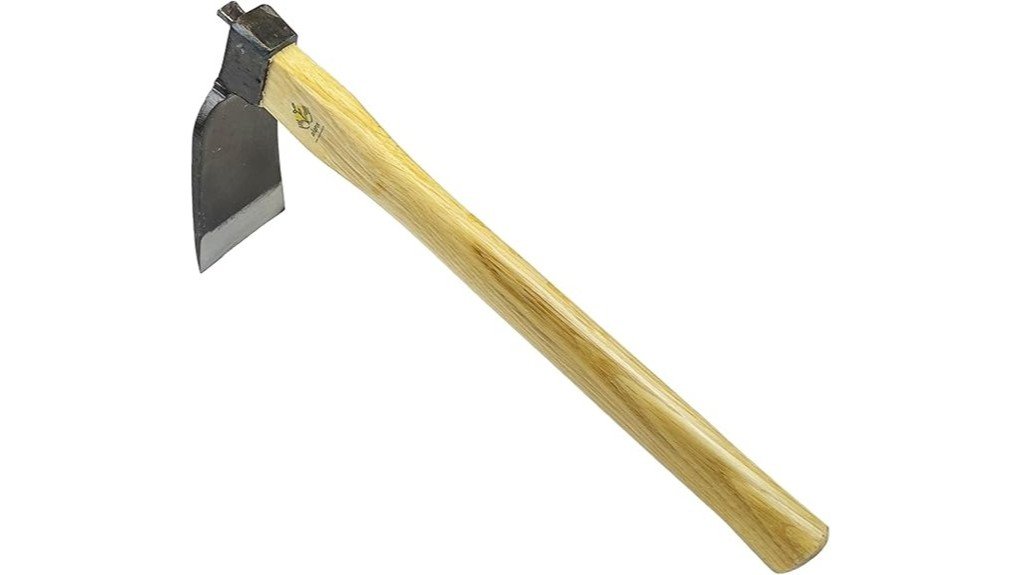
Working close to seedlings, bed edges, and tight rows calls for more control than a full-length hoe can provide. The alanx JH1421 14 Inch Heavy Duty Curved Hoe combines a compact 14.2-inch design with a forged carbon steel blade, a solid oak handle, and a weldless head secured by a long pin. This review explains how those details affect weeding, shallow digging, planting prep, and trench shaping. Its sturdy, close-control design is useful in small garden spaces, but the short handle requires you to kneel, squat, sit, or bend near the soil.
Quick Verdict
Rating: 8.1/10, recommended with caveats
Best For: Gardeners who want a compact, sturdy hand hoe for raised beds, close weeding, shallow digging, and small trenching jobs.
Bottom Line: The alanx JH1421 offers a forged carbon steel blade, solid oak handle, and weldless pin-connected head in a compact tool. Its main tradeoff is reach, since it is not designed for upright hoeing across large beds or long rows.
At a Glance: Key Specifications
| Specification | Detail |
|---|---|
| Brand | alanx |
| Model | JH1421 |
| Product type | Heavy-duty curved garden hoe |
| Head design | Weldless curved hoe head with long pin assembly |
| Dimensions | 14.2 x 3 x 6.3 inches |
| Weight | 1.3 pounds |
| Blade material | Forged carbon steel |
| Handle material | Solid oak wood |
| Grip | Wood grip with a curved handle end |
| Color | Black and natural wood |
| Unit count | 1 hoe |
| Best use | Weeding, cultivating, aerating, shallow digging, planting, and shaping small trenches |
| Safety note | The blade is sharp. Use with care and keep the tool away from children. |
| Care note | Remove soil, dry the blade, inspect the head connection, and store the tool under cover. |
Key Takeaways
- The forged carbon steel blade is made for controlled weeding, cultivating, aerating, and shallow digging.
- The weldless hoe head is secured to the oak handle with a long pin rather than a welded joint.
- At 1.3 pounds, the tool has useful working weight without becoming oversized for close garden tasks.
- The 14.2-inch overall size suits raised beds, tight rows, bed borders, and small trench or drainage-channel work.
- The short handle improves precision but does not provide the upright reach of a full-length garden hoe.
What Is the alanx JH1421 Heavy Duty Curved Hoe?
The alanx JH1421 is a compact Japanese-style curved hoe for hands-on garden work. Its forged carbon steel blade is shaped for pulling, scraping, chopping, cultivating, aerating, and loosening soil. The manufacturer also describes the broad, right-angled head as useful for small trenches and drainage channels.
The tool measures 14.2 x 3 x 6.3 inches and weighs 1.3 pounds. A solid oak handle with a curved end gives you a defined gripping point, while a long pin connects the handle to the weldless head. This combination is intended for gardeners who value close control more than long reach.
Before You Buy: This is a short-handled hoe. You will need to work close to the ground, so choose a long-handled draw hoe or stirrup hoe if you want to stand upright while covering wide beds or long rows.
Who Should Buy It?
Best For
- Gardeners maintaining raised beds, borders, containers, or tight vegetable rows.
- Buyers who want a compact carbon steel hoe with a traditional solid oak handle.
- Anyone who needs one hand tool for surface weeding, soil loosening, planting prep, and small trenches.
Skip If
- You need upright reach for large plots, long rows, or repeated wide-area hoeing.
- You need a mattock, pick, or digging bar for rocks, roots, or deeply compacted ground.
- You require confirmed replacement-handle or manufacturer-warranty terms before purchase.
Product Features and Specifications
Forged Carbon Steel Blade
The main working part is a forged carbon steel blade. The 3-inch listed width keeps the head compact enough for close work, while the curved shape supports short pulling and chopping strokes. It can cut shallow weeds, break the surface crust, aerate prepared soil, and move small amounts of soil toward you.
Carbon steel needs basic care because moisture and soil residue can promote rust. The blade is better suited to routine garden maintenance than to striking large stones or forcing through dense roots. For very hard ground, loosen the area with a heavier digging tool first.
Weldless Head and Long Pin Assembly
The JH1421 uses a weldless hoe head. According to the product listing, the head is joined to the oak handle with a long pin designed to keep the connection firm. That design removes a welded seam from the head and gives you a visible connection point to inspect during maintenance.
Check the head before each use. If the connection develops movement, stop using the tool until the pin and handle joint are secure. The listing mentions carefully seating the pin with a hammer when needed, but you should support the tool on a stable surface, protect your hands and eyes, and avoid striking the blade edge.
Solid Oak Handle and Curved Grip
The handle is solid oak with a natural wood grip and a curve near the end. That curve can help your hand locate the end of the short handle during pulling strokes. Wood also feels less cold than bare metal, but it should not be left in wet soil, rain, or direct weather for long periods.
The handle’s short length is both the advantage and the limitation. It improves control around stems, roots, and bed edges, but it also puts your body closer to the ground. A kneeling pad, garden seat, or raised-bed edge can make longer sessions more comfortable.
Balanced 1.3-Pound Design
At 1.3 pounds, the hoe has enough mass to help the blade enter workable soil without becoming a large two-handed tool. You can guide it with short movements instead of wide swings. That is useful around established plants, where an uncontrolled stroke could damage a stem or shallow root.
The compact 14.2-inch size also simplifies storage. It can fit on a potting bench, wall hook, garden tote, or small shed shelf. Cover the blade or position it so the cutting edge cannot catch clothing or hands.
How It Performs in Real Use
For Raised Beds and Tight Rows
Raised beds are a strong match because the soil is usually within easy reach and plants may be closely spaced. The short handle lets you scrape the surface, pull loose soil, and work near bed walls without swinging a full-length handle through nearby foliage.
For Weeding Around Established Plants
The curved blade supports shallow slicing and pulling motions around small weeds. Work with the edge just below the soil surface and keep the blade moving away from plant crowns and stems. Deep taproots may still require a hand weeder or trowel after you loosen the surrounding soil.
For Planting Prep and Soil Aeration
The tool can loosen the top layer of prepared soil before you set small flowers, herbs, or vegetable starts. It also works for mixing a small amount of amendment into a bed. A trowel or shovel remains more efficient for deep holes, large transplants, or moving loose soil in volume.
For Small Trenches and Drainage Channels
The broad, right-angled curved head can pull soil from a narrow line, which helps when forming a short planting furrow or shallow drainage channel. It is not a substitute for a trenching shovel on deep or long runs, but its compact shape gives you more control for small corrections.
How to Use It Correctly
Start in workable soil and use short, controlled strokes. For surface weeds, angle the blade just below the soil line and pull toward you without swinging near your legs. For cultivating or aerating, break the top layer in small sections rather than forcing the blade deeply in one motion.
For a shallow furrow, mark the line first and pull loosened soil in repeated passes. Keep both hands and feet outside the blade’s path. Stop if you feel a loose head, cracked handle, bent pin, or damaged blade edge.
Common Mistakes to Avoid
- Using wide, forceful swings when the tool is designed for close control.
- Striking large rocks, thick roots, concrete edges, or frozen soil.
- Working directly toward your knees, feet, or free hand.
- Storing the carbon steel blade while it is wet or coated with soil.
- Continuing to use the hoe when the head or pin connection feels loose.
Pro Tip: Let very dry soil soften after light watering or rain before you cultivate it. Workable soil requires less force, gives you better blade control, and reduces unnecessary stress on the handle connection.
Maintenance and Storage
Brush or rinse soil from the blade after use, then dry the carbon steel completely. A light coat of tool oil can help limit surface rust during storage, especially in a humid shed or garage. Keep oil away from the gripping area so the handle does not become slippery.
Wipe the oak handle clean and inspect it for splinters, cracks, or swelling. If the surface becomes rough, smooth it lightly with fine sandpaper and use a wood treatment intended for tool handles. Store the hoe indoors or under cover with the blade positioned safely.
Inspect the long pin and head connection before each session. Any movement at the joint should be corrected before the tool returns to use. Do not improvise with a damaged handle or a substitute fastener that changes how the head is secured.
Safety and Material Notes
The blade is sharp enough to cut weeds and enter soil, so treat it like any edged garden tool. Wear closed-toe footwear, keep children and pets outside the work area, and avoid working when another person is within your swing or pulling path. Eye protection is sensible when soil contains gravel or when you are adjusting the connection pin.
Carbon steel can develop surface rust, and oak can weather or split when repeatedly left wet. Regular inspection matters more than appearance. Stop using the hoe if the blade is badly bent, the handle is cracked, or the head cannot be secured firmly.
Pros and Cons
Pros
- Forged carbon steel blade supports weeding, cultivating, aerating, and shallow digging.
- Weldless head removes a welded seam from the blade assembly.
- Long pin connection gives you a visible joint that can be inspected during maintenance.
- Solid oak handle has a curved end for a defined hand position.
- Compact 14.2-inch size works well in raised beds, borders, and tight rows.
Cons
- Short handle requires close-to-ground work and may be uncomfortable for some users.
- Carbon steel needs cleaning and dry storage to limit rust.
- Replacement-handle availability and specific manufacturer-warranty terms are not clearly stated.
Is It Worth the Price?
The alanx JH1421 is worth considering when you want one compact tool for several small-bed jobs. Its value comes from the forged carbon steel blade, weldless head, oak handle, and pin-connected construction rather than from extra accessories or an adjustable handle.
You will get the most value if you garden in raised beds, containers, border plantings, or short rows where precision matters. It is less compelling if you already own a long-handled hoe and mostly maintain open ground, or if kneeling and bending are difficult for you.
Compare the current price with other forged hand hoes, then factor in the maintenance that carbon steel and wood require. The JH1421 makes the strongest case as a controlled detail tool, not as your only tool for every digging and weeding job.
How It Compares to Alternatives
A hand trowel is better for scooping loose soil and forming neat planting holes, but it does not scrape or pull weeds as efficiently as a curved hoe. A stirrup hoe covers loose surface weeds faster in open rows, while a full-length draw hoe gives you upright reach and broader coverage.
The alanx JH1421 makes more sense when you want a compact tool that can weed, cultivate, aerate, pull soil, and shape a short furrow. Choose a mattock, grub hoe, or digging bar instead for rocky ground, thick roots, or hard-packed soil that needs heavy impact.
Frequently Asked Questions
Is the alanx JH1421 good for raised beds?
Yes. Its 14.2-inch compact size gives you close control around plants, bed walls, and tight rows. It works best when you can comfortably reach the soil from a kneeling pad, seat, or raised-bed edge.
Does the hoe head use a welded joint?
No. The product is listed with a weldless curved head and a long pin assembly that connects it to the oak handle. Inspect that connection before use and stop if the head feels loose.
Can this hoe handle every soil type?
It is best for prepared, loose, or moderately firm garden soil. Use a heavier digging tool first in rocky, frozen, root-filled, or deeply compacted ground, then switch to this hoe for controlled surface work.
Can it dig planting holes and trenches?
It can loosen small planting areas and shape shallow furrows or drainage channels. A trowel is better for neat holes, while a shovel or trenching tool is more efficient for deep holes and long channels.
How should I maintain the carbon steel blade?
Remove soil after each use, dry the blade fully, and store it under cover. A light coating of tool oil can help limit surface rust, but keep oil off the wooden gripping area.
Is the oak handle replaceable?
The listing identifies a solid oak handle and model JH1421, but it does not clearly name a matching replacement handle. Contact the seller before purchase if guaranteed replacement-part availability is important to you.
What is included with the purchase?
The listing shows a unit count of one, meaning one assembled curved hoe. No extra blade, replacement handle, sheath, or accessory kit is clearly listed as included.
Who should skip this curved hoe?
Skip it if you need to work upright, clear long open rows, break rocky ground, or dig deeply. A long-handled hoe, mattock, shovel, or spade will fit those tasks better.
The Bottom Line
The alanx JH1421 14 Inch Heavy Duty Curved Hoe is a solid choice for gardeners who want close control in raised beds, borders, containers, and tight rows. Its forged carbon steel blade, weldless pin-connected head, and oak handle are the main strengths, while the short reach and required maintenance are the main tradeoffs. Buy it for detail work and small soil-shaping jobs, but choose a longer or heavier tool for broad coverage and hard ground.
Ready to Buy?
Check the latest price and product details before you decide.