To manage heat when welding auto body panels, use small weld deposits, tight fit-up, clean metal, and patient cooling. A thin panel can warp quickly if you run a long bead or keep returning to the same hot area. Use 0.023 in. wire when your MIG welder supports it, test your settings on scrap, make short tack or stitch welds, skip around the seam, and planish the weld line to control shrinkage before it turns into oil canning.
Quick Answer
The best way to control heat on auto body panels is to MIG weld with small wire, short tacks, tight gaps, clean bare metal, and long cooling pauses. Do not run a continuous bead. Tack in a spread-out pattern, let each area cool to the touch, use copper backing when needed, then planish the weld to relieve shrinkage.
Key Takeaways
- Use 0.023 in. wire, low voltage, and matching wire speed for thin body steel when your welder supports that setup.
- Clean both sides of the joint to bare metal and keep the panel gap tight so you do not chase holes with extra heat.
- Make short tacks or stitch welds, then skip around the seam instead of welding in one straight line.
- Let the panel cool to the touch between welds; do not quench hot sheet metal with water.
- Use copper backing and light planishing to limit burn-through, shrinkage, and oil canning.
At a Glance
| Time Required | 30 minutes to several hours, depending on seam length and cooling time |
| Difficulty | Moderate to advanced for thin exterior panels |
| Tools Needed | MIG welder, 0.023 in. wire, shielding gas, clamps, copper backing, grinder, hammer and dolly, PPE, ventilation |
| Cost | Low if you already own welding gear; higher if you need shielding gas, PPE, or panel-holding tools |
Warning: Welding can expose you to fumes, ultraviolet radiation, sparks, burns, fire, and electrical hazards. Work in a ventilated area, remove flammable materials, wear proper eye, face, hand, body, and respiratory protection when required, and follow your welder manual, product safety data sheets, and vehicle maker repair procedures.
Prevent Warping in Auto Body Welding
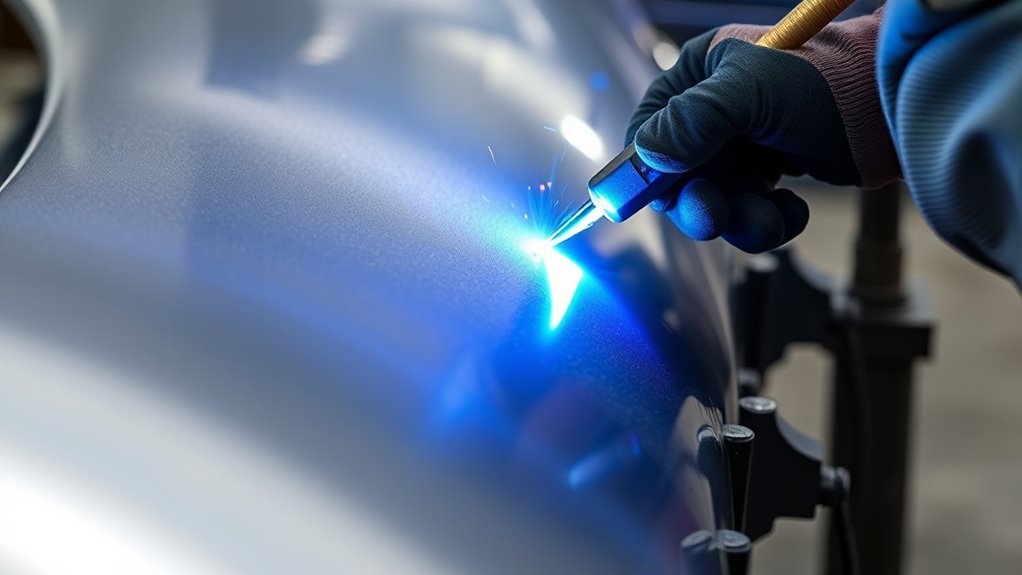
To prevent warping in auto body welding, keep each weld small and spread the heat across the panel. Thin sheet metal does not need a long bead to move out of shape. It can distort from a short burst of excess heat, a loose gap, or a tack pattern that keeps heating the same area.
Use short tacks or stitch welds instead of a continuous bead. Place one tack, move to another part of the seam, and let the first area cool before you return. This skip pattern keeps thermal buildup low and reduces the size of the heat-affected zone.
Set your welder to the lowest output that still gives sound fusion. Too little heat gives cold lap or weak fusion. Too much heat burns holes, pulls the panel, and makes the seam harder to finish. The right setting is the one that fuses both edges on scrap that matches the panel thickness.
Keep your stickout steady, hold a consistent torch angle, and avoid leaning on the trigger too long. A smooth rhythm gives you cleaner tacks, less grinding, and less risk of oil canning.
Safety Before Welding Auto Body Panels
Before you strike an arc, set up the work area for welding safety. Remove flammable trim, sound deadener, seam sealer, carpet, fuel vapors, oily rags, and loose paper from both sides of the panel. Keep a fire extinguisher nearby and check the back side of the panel during and after welding.
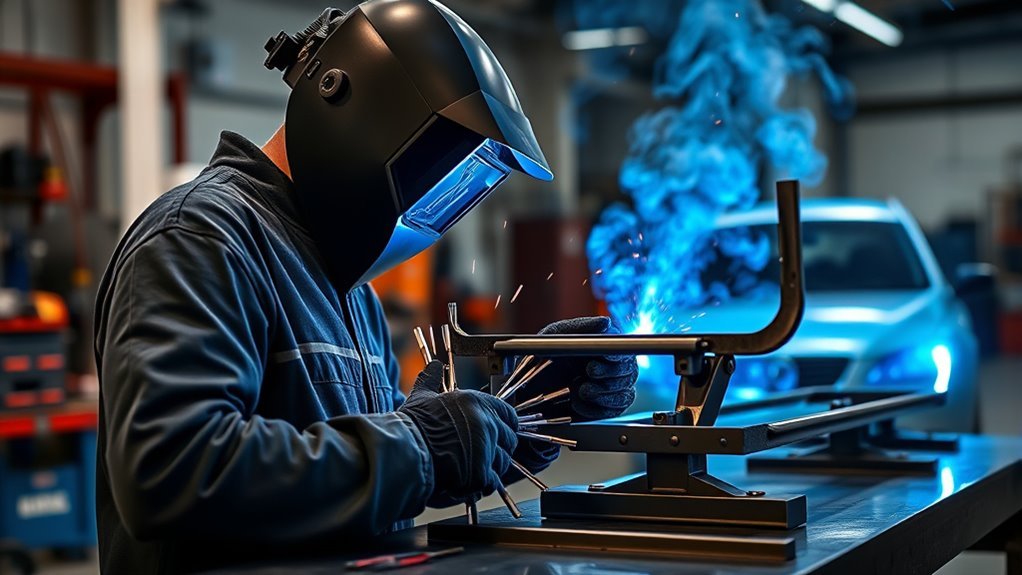
Wear a welding helmet with the correct shade, safety glasses, welding gloves, hearing protection when grinding, and flame-resistant clothing. Avoid synthetic fabrics because sparks can melt them. Use local exhaust or strong ventilation to move fumes away from your breathing zone, especially when working near coatings, old paint, galvanized steel, or enclosed cavities.
OSHA identifies welding hazards such as metal fumes, ultraviolet radiation, burns, eye damage, electrical shock, and mechanical injuries. The CDC/NIOSH welding fume guidance also notes that welding fumes can include metals such as manganese, and exposure can vary by filler wire, base metal, flux, coating, and work location.
Modern vehicles may contain high-strength steel, ultra-high-strength steel, boron steel, aluminum, adhesives, foams, coatings, and structural parts that require specific repair procedures. Always check the vehicle maker’s repair information before welding a structural section or a newer body panel.
Note: Disconnecting batteries, protecting electronics, and removing interior trim may be required before welding. Follow the vehicle service information for the exact model instead of using one rule for every car.
Choose the Right Wire and Settings
Choose 0.023 in. MIG wire for most thin steel body panels when your welder supports it. This wire is about 0.6 mm, and it usually gives better control on thin sheet than larger 0.030 or 0.035 in. wire. Larger wire can work on thicker patches, brackets, and practice coupons, but it often adds more heat than you need on exterior panels.
Start at the low end of the welder chart for the metal thickness, then adjust on scrap. Do not tune the machine on the actual panel first. Use scrap from the same panel or the same gauge of steel, clean it the same way, clamp it the same way, and test your weld pattern there.
Listen for a steady arc and check the back side of the test weld. You want fusion at both edges without a wide blue heat mark, burn-through, or a tall cold bead sitting on top of the metal.
Products Worth Considering
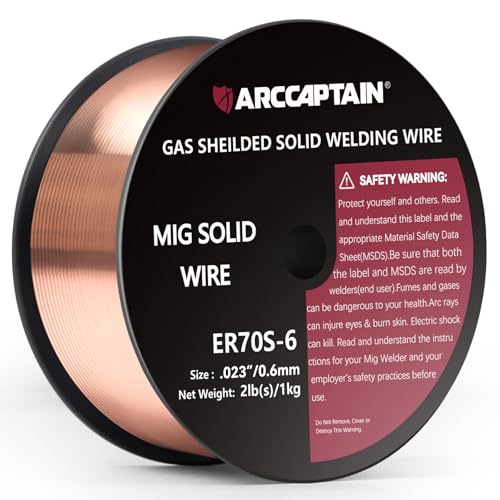
High-quality: ARCCAPTAIN's ER70S-6 mig welding wire .023" meets industry standards(Net Weight: 2lbs), ensuring consistent performance, superior strength. With its smooth feeding and stable welding parameters, you can achieve optimal penetration, high deposition rates, and exceptional overall welding performance.
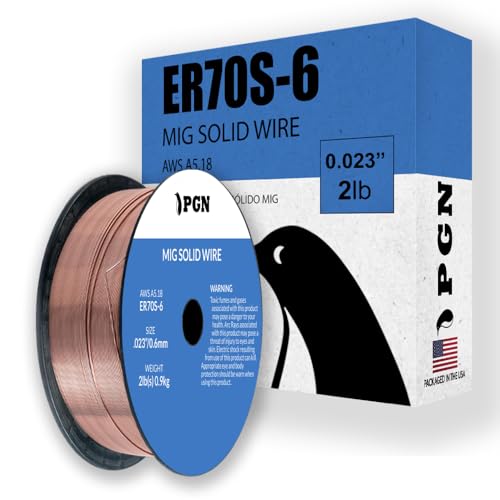
Consistent Welding Performance ... ER70S-6 solid MIG welding wire is designed to provide stable arc characteristics and reduced spatter during single-pass and multi-pass welding applications. Suitable for T-joints, butt joints, and lap joints.

ER70S-6 PERFORMANCE: This .023 MIG welding wire supports precise arc control and low spatter for single-pass and multi-pass welding.
Wire Size Matters
Wire size affects heat control, bead size, and how easy it is to make quick tacks. For thin sheet metal, 0.023 in. wire lets you make smaller deposits and gives you more room to correct the panel before too much heat builds up.
Use the contact tip that matches the wire and keep the wire liner clean. A poor wire feed can make the arc surge, which adds heat in uneven bursts and increases the chance of burn-through.
For common mild steel body-panel work, ER70S-6 or ER70S-7 wire is often used because these wires tolerate light surface variation better than a plain wire, but the panel still needs to be cleaned to bright metal. Do not use filler choice as an excuse to weld over paint, seam sealer, rust, oil, or zinc coating.
Set Heat Low
Start with low voltage and matching wire speed, then increase only enough to get full fusion. A tack that sits high and breaks off is too cold. A tack that drops through, spits hard, or leaves a growing hole is too hot or held too long.
| Setting | What It Changes | Thin-Panel Goal |
|---|---|---|
| Voltage | Arc length and puddle behavior | Low but stable |
| Wire speed | Feed rate and amperage response on most MIG machines | Matched to voltage |
| Stickout | Arc consistency and heat input | Short and steady |
| Trigger time | How much heat enters the panel | Quick tacks only |
Tune Wire Speed
Tune wire speed after setting a safe starting voltage. If the wire speed is too slow, the wire may burn back and the arc can dig into the edge. If it is too fast, the wire can stub into the panel, crowd the puddle, and make the weld rough.
Do not think of wire speed as the same thing as travel speed. Wire speed feeds the electrode. Travel speed and trigger time control how long you dwell in one spot. For body-panel heat control, your best friend is a short trigger pull, a small tack, and a long enough pause before the next weld.
- Use test coupons before welding the actual panel.
- Keep the stickout and torch angle consistent.
- Change one setting at a time so you know what fixed the problem.
Clean and Fit Panels Before Welding
Before you weld, clean both panels to bare metal. Remove paint, primer, undercoating, rust, oil, seam sealer, adhesive, and zinc coating from the weld zone. Clean the back side too, because trapped coating can smoke, contaminate the puddle, and weaken the weld.
Fit-up matters as much as machine settings. A large gap forces you to bridge open air with molten metal, which adds heat and increases burn-through. A tight seam lets the arc fuse both edges quickly and keeps the patch from moving out of line.
Use clamps, panel-holding magnets, clecos, sheet-metal screws in sacrificial areas, or tack strips to hold the panel flush. Check the crown of the panel before welding. If you force a crowned panel flat, it may oil-can after the weld cools.
Pro Tip: Make a few practice tacks on scrap with the same gap you have on the car. If your test joint burns through or pulls hard, fix the gap and settings before you touch the real panel.
Use Hot Tacks for Auto Body Welding
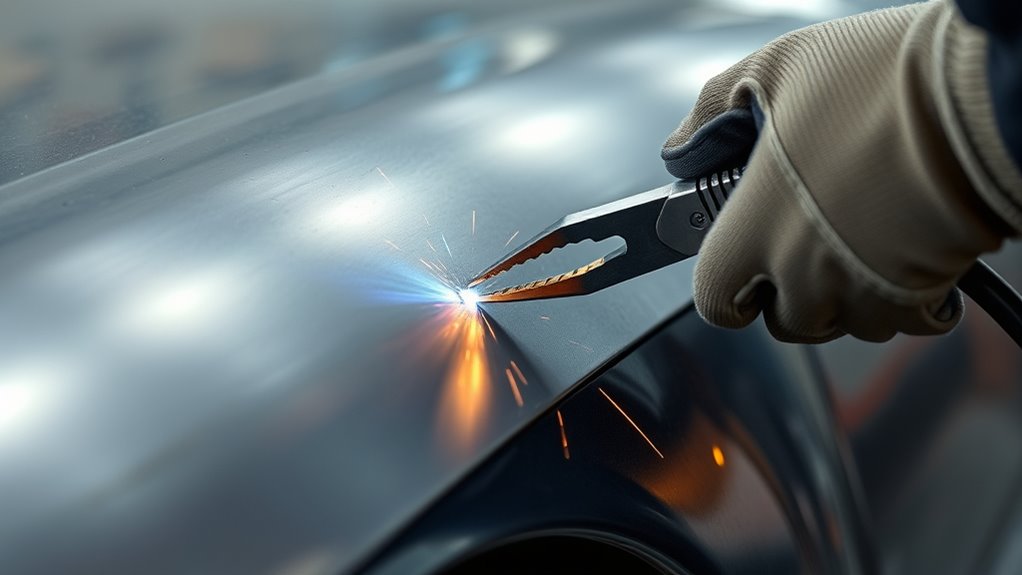
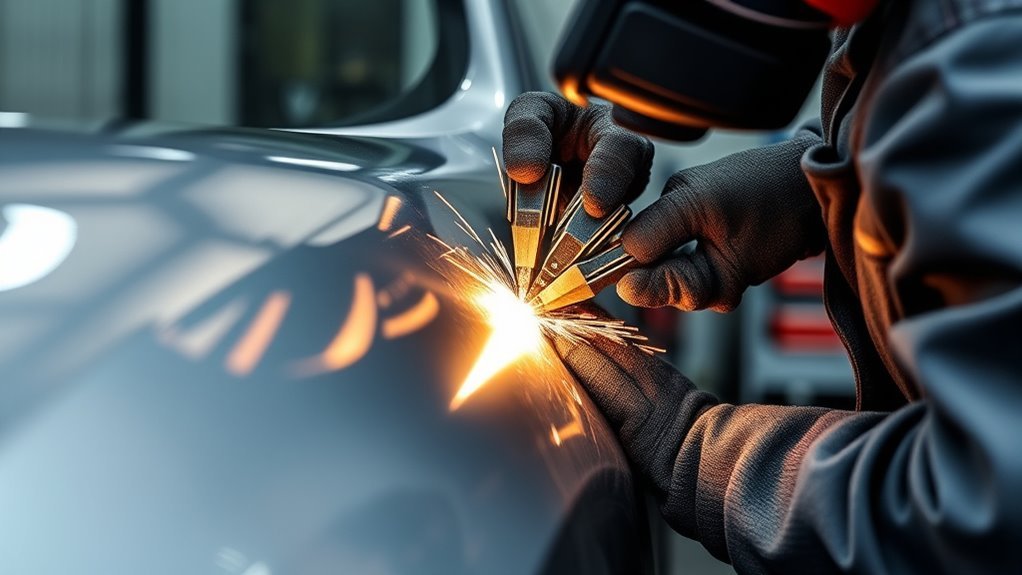
Use hot, quick tacks to fuse the panel without holding heat in one place. A hot tack is not a long weld. It is a short, controlled burst that melts both edges and stops before the panel overheats.
Keep the panel gap tight and make one tack at a time. Let the tack cool, then place the next tack away from it. Once the seam is stabilized, you can return and fill the spaces in a controlled pattern.
- Keep each tack small and deliberate.
- Do not stack several hot tacks beside each other without cooling time.
- Hammer-on-dolly planish only after the tack is solid enough and cool enough to work.
As the seam fills, overlap each tack slightly into the edge of the previous tack. A small overlap helps tie the seam together, but too much overlap in one area adds heat and shrinkage.
Stitch Weld to Control Heat
Stitch welding controls heat by using short welds with cooling pauses instead of a continuous bead. On auto body panels, that pause is not wasted time. It is what keeps the panel from pulling into a wave.
Make short welds, leave space, and come back after the area has cooled. Keep each stitch short enough that you can still touch the nearby metal after a cooling pause. If the panel stays too hot to touch, slow down and spread the pattern wider.
Small welds, wide spacing, and cooling pauses give thin sheet metal time to relax before heat turns into distortion.
If your welder has a stitch mode, test it on scrap first. Automatic timing can help, but it does not replace fit-up, panel support, or good judgment.
Skip Around as You Weld
Skip around as you weld so heat does not build in one line. Instead of moving from left to right, tack distant points and return later. Think of the seam like a clock face: tack at 12, then 6, then 3, then 9, then fill between those points after cooling.
- Place tacks at wide intervals first.
- Let each tack cool until the panel is comfortable to touch near the weld.
- Alternate your direction so the panel does not pull one way.
This pattern helps keep the joint stable. It also gives you time to watch for early signs of movement, such as a rising edge, a low spot, or a panel that begins to pop in and out.
If you see the panel moving, stop welding. Let it cool, planish the shrink area lightly, and check the fit before you continue.
Back up Thin Metal With Copper
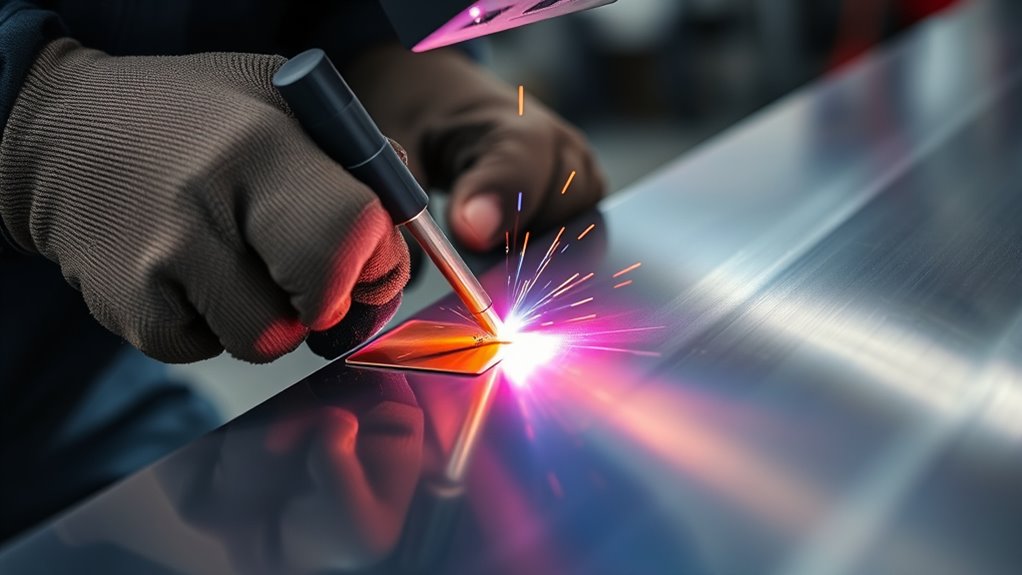
Back up thin metal with copper when you need extra control. A copper backer acts as a heat sink and gives the puddle a temporary stop behind the seam. Weld metal will not normally fuse to clean copper the way it fuses to steel, so it can help you close small openings without blowing through as easily.
The copper must sit tight against the back side of the joint. If there is an air gap behind the seam, the panel can still overheat and the puddle can drop through. Hold the copper with a clamp, magnet fixture, or handle that keeps your hands away from heat.
Copper backing is especially useful for plug-weld practice, small pinholes, and butt-weld seams where the back side is accessible. It is not a fix for poor fit-up. Make the gap as tight as you can first, then use copper as support.
Products Worth Considering
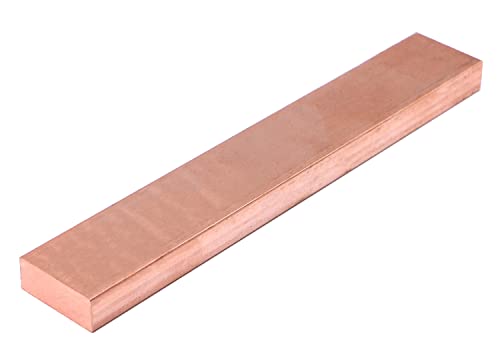
Material:Copper Flat BAR

Dual Safety Assurance Structure:Features stainless steel dual-bolt fastening, enhancing structural stability during high-temperature welding operations.
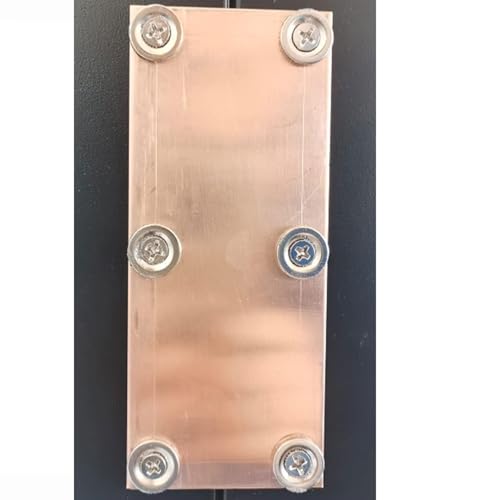
Boost your welding efficiency with the Magnetic Backing Copper Welding Spoon! Designed for butt-welding sheet metal panels, this essential tool ensures seamless welds without damaging the material. With its detachable magnet design, you can easily replace the magnet to continue welding, saving you money in the long run.
Keep Gaps Tight for Better Fusion
A tight gap gives you better fusion with less heat. On thin auto body sheet metal, aim for a near-flush fit with the smallest practical gap. A slight gap can help expansion in some butt welds, but a wide gap makes the weld harder to control and increases burn-through.
Use clamps, backing bars, and careful trimming to keep the seam aligned. If one edge sits higher than the other, the weld will shrink unevenly and the finished panel will need more grinding and filler.
Check alignment before the first tack, after the first few tacks, and again before filling the seam. Thin panels can shift as they heat and cool, so fit-up is not a one-time step.
Tight Fit-Up Matters
Tight fit-up helps the arc bridge both panel edges quickly. That reduces the time you spend on the trigger and lowers heat input. Loose fit-up does the opposite: it makes you add more filler, more time, and more heat.
If the gap is too wide, stop and correct it. Trim a new patch edge, add a small filler strip where appropriate, or remake the patch. Trying to fill a poor seam with extra weld often creates more distortion than starting over.
- Tight contact improves fusion.
- Stable support limits distortion.
- Repeated fit checks keep the seam true.
Gap Control For Fusion
Good gap control starts before welding. Cut the patch slowly, sneak up on the final line, and deburr the edges. A clean, square edge makes it easier to tack without overheating one side.
For butt welds, keep the opening consistent along the seam. For lap welds or plug welds, make sure both layers sit tight together. Any hidden space between layers can trap contamination and reduce weld quality.
Let Welds Cool Between Passes
Let welds cool to the touch between passes. This is one of the simplest ways to manage heat on thin auto body panels. If the panel is too hot to touch near the seam, it is too hot for another tack in that area.
Do not quench the weld with water. Rapid quenching can lock stress into the panel and may create cracking or hard spots in some steels. Gentle air movement can help clear fumes and cool the work area, but the safer default for panel control is patience, spacing, and natural cooling.
- Start with tacks far apart.
- Fill the spaces only after the first tacks have cooled.
- Stop and planish if the seam starts to shrink and pull.
The more patient you are during welding, the less aggressive you need to be during grinding, hammering, and filler work.
Planish Welds to Prevent Oil Canning
Planishing helps control shrinkage after the weld cools enough to work. When a tack cools, it shrinks and can pull the surrounding panel inward. Light hammer-on-dolly work stretches the weld area slightly and helps restore the original crown.
Use a body hammer and dolly that fit the panel shape. Strike lightly and keep the dolly under the weld. Do not beat the panel. Heavy blows can stretch the surrounding sheet and create a new problem.
This step can flatten the weld, reduce oil canning, and lower the amount of grinding needed before finishing.
Planish Along Weld Pattern
Planish in the same general order that you welded. Work along the tack pattern, not randomly across the panel. This helps you spread stress evenly and correct shrinkage before it gathers into a low spot.
- Planish only after the tack is cool enough and solid.
- Use controlled, light blows.
- Stop often and check the panel crown by hand and with a straightedge.
If the panel starts to wave, stop planishing and reassess. You may need to shrink a high spot, stretch a low weld area, or let the panel fully cool before continuing.
Control Shrinkage Distortion
Control shrinkage by combining tight fit-up, short tacks, cooling pauses, and planishing. No single step solves distortion by itself. The panel stays flatter when every step limits heat and movement.
Watch the heat-affected zone. A narrow discoloration around the weld is easier to manage than a wide overheated band. If the heat mark keeps growing, widen your tack spacing and slow down.
Grind only after the seam is stable. Aggressive grinding adds heat too, and it can thin the panel. Use light pressure, move around, and let the metal cool during grinding just as you did during welding.
Restore Panel Crown
Restore the panel crown by checking the original shape before, during, and after welding. A door skin, quarter panel, roof skin, or fender usually has a subtle curve. If you flatten that curve during repair, the panel may pop in and out when pressed.
Use your hand, a flexible sanding block, a contour gauge, or a straightedge to compare the repair area with the surrounding panel. Light planishing along the weld line can bring the crown back before filler or primer hides the problem.
- Keep the weld bead as low as practical without grinding into the parent metal.
- Planish before heavy grinding.
- Check the crown from several angles under good light.
Troubleshooting Heat Problems
When the panel starts acting wrong, stop and fix the cause before adding more weld. Most heat problems get worse when you keep welding.
| Problem | Likely Cause | Fix |
|---|---|---|
| Burn-through | Too much heat, long trigger time, wide gap, or thin edge | Shorten tacks, tighten the gap, lower settings slightly, and use copper backing |
| Warping | Too many welds in one area | Skip around, let the panel cool, and planish shrinkage early |
| Porosity | Contamination, poor gas coverage, wind, or coating on the back side | Clean both sides, check gas flow, block drafts, and remove coatings |
| Tall cold bead | Too cold, poor ground, or fast movement away from the puddle | Improve ground, retest settings on scrap, and confirm fusion |
| Oil canning | Shrinkage pulled the panel crown out of shape | Planish the weld line, check crown, and avoid adding more heat |
Finish and Inspect the Weld
After welding, inspect the seam before grinding it flat. Look for pinholes, missed spots, cracks, undercut, and poor fusion. Check the back side when you can. A weld that looks smooth on the front but has no fusion on the back may fail later.
Grind slowly and lightly. Keep the grinder moving and stop often so the panel does not heat up again. Grind the weld only as much as needed for finishing. Do not thin the surrounding parent metal.
After grinding, clean the area and protect it from corrosion. Bare welded steel needs proper primer, seam sealer where required, and back-side protection so the repair does not rust from inside the panel.
Frequently Asked Questions
How do you reduce heat when welding auto body panels?
Use short tacks, skip around the seam, keep the fit-up tight, and let each area cool to the touch before welding near it again. Use 0.023 in. wire when suitable, test your settings on scrap, and avoid continuous beads on thin panels.
Is it better to TIG or MIG weld car panels?
MIG is usually faster and easier for common steel body-panel repairs. TIG can make precise, clean welds with excellent control, but it is slower and requires more skill. The best choice depends on the panel material, access, repair procedure, and your experience.
Why do auto body panels warp when welded?
Panels warp because welding heats a small area and that area shrinks as it cools. Long beads, wide gaps, poor clamping, and repeated welding in one spot make shrinkage worse. Short tacks, cooling pauses, skip-welding, and planishing help control that movement.
What is the golden rule for welding thin sheet metal?
Use the least heat that still gives full fusion. That means correct settings, clean metal, a tight gap, short trigger pulls, and enough cooling time. A cold weld is weak, but an overheated panel can warp, burn through, and become much harder to finish.
Can welding fumes shorten a welder’s working life?
Welding can create harmful fumes, gases, UV radiation, heat, noise, and ergonomic strain. Risk depends on exposure, materials, ventilation, PPE, and work habits. Use ventilation, keep your head out of the plume, wear required protection, and follow OSHA, NIOSH, AWS, employer, and product safety guidance.
Conclusion
When you weld auto body panels, heat control is the repair. Use small wire, low but effective settings, clean metal, tight gaps, short tacks, and a skip pattern that lets the panel cool. Back up thin areas with copper when you can, planish the weld line to relieve shrinkage, and grind slowly so you do not add heat after the welding is done. If you stay patient and check the panel shape as you go, you can keep warping down and leave the metal smooth, stable, and ready for finishing.
Sources
- OSHA: Welding, Cutting, and Brazing Hazards and Solutions — welding hazards, PPE, and work-practice safety context.
- OSHA Fact Sheet: Controlling Hazardous Fume and Gases during Welding — fume sources, coatings, ventilation, and exposure reduction.
- CDC/NIOSH: Welding Fumes and Manganese — welding fume health risks and exposure factors.
- American Welding Society: Free Welding Safety Resources — AWS/ANSI Z49.1 and safety fact sheets for welding and cutting.