
Disclosure: As an Amazon Associate, we earn from qualifying purchases. If you click a link on this page and make a purchase, we may receive a small commission at no extra cost to you.
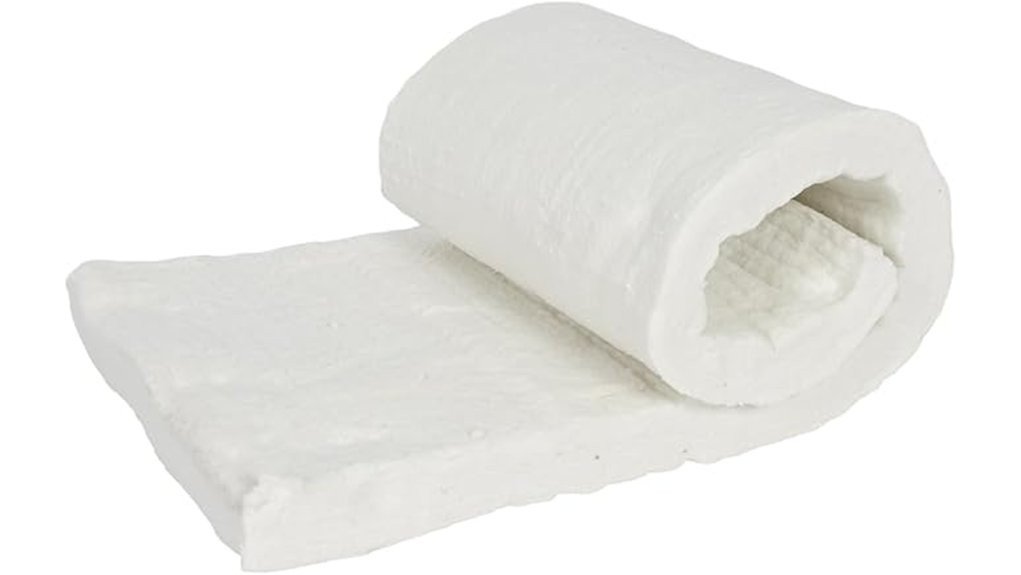
High-temperature insulation only works well when the material matches the heat level, available space, and safety requirements of your project. The BACLAUGH Kaowool Ceramic Fiber Insulation Blanket, model YM30563, is a 2-inch-thick, 16-by-48-inch flexible ceramic-fiber blanket sold for furnaces, kilns, stoves, fireplaces, forging, brazing, soldering, and welding-related heat protection. Its main strengths are its thick profile and seller-rated 2200°F continuous-use capability, while its main limitation is the care required when cutting and handling refractory ceramic fiber. This review helps you decide whether those tradeoffs fit your setup.
Quick Verdict
Rating: 8.0/10, Recommended with caveats
Best For: kiln, forge, stove, fireplace, and shop projects that need a thick, flexible high-temperature insulation layer
Bottom Line: You get a useful 2-inch blanket with a seller-rated 2200°F continuous-use limit and a compact 16-by-48-inch sheet that is easy to cut to shape. You should skip it if you cannot control fiber dust during installation or need a weatherproof, rigid, or food-contact surface.
| Specification | Detail |
|---|---|
| Brand | BACLAUGH |
| Model | YM30563 |
| Product type | Ceramic fiber insulation blanket |
| Dimensions | 48 in. long × 16 in. wide × 2 in. thick |
| Material | Ceramic fiber |
| Chemical composition | Seller states 46% alumina and 54% silica |
| Density | Seller describes it as “8 lb density”; the visible listing does not state the unit |
| Continuous-use rating | 2200°F, seller claim |
| Intermittent-use rating | 2400°F, seller claim |
| Included components | 1 fiber insulation blanket and 1 knife |
| Suggested uses | Furnaces, kilns, stoves, fireplaces, forging, brazing, soldering, and welding-related heat insulation |
| Safety note | Avoid creating airborne ceramic-fiber dust and follow appropriate PPE and handling guidance |
What Is the BACLAUGH Kaowool Ceramic Fiber Insulation Blanket?
This product is a flexible refractory ceramic-fiber blanket sold by BACLAUGH under model YM30563. The selected Amazon variant measures 16 inches wide by 48 inches long and is 2 inches thick, giving you a compact sheet that can be cut for smaller insulation jobs rather than a full industrial roll.
The listing positions it as a high-temperature insulation material rather than ordinary building insulation. It is intended for equipment and shop applications where you need a soft, conformable thermal barrier around hot surfaces, cavities, doors, baffles, or similar areas. Because it is fibrous rather than rigid, you can trim and shape it more easily than refractory board, but you also need to manage dust and exposed fibers during installation.
Key Takeaways
- The verified Amazon variant is 2 inches thick, 16 inches wide, and 48 inches long.
- BACLAUGH lists 2200°F for continuous use and 2400°F for intermittent use, so 2400°F should not be treated as the normal continuous operating limit.
- The seller states a composition of 46% alumina and 54% silica.
- The package listing includes one blanket and one knife, which helps with basic cutting and fitting.
- The main buyer concern is refractory ceramic fiber exposure, especially when cutting, fitting, removing, or disturbing the material.
Who Should Buy It?
Best For
- You need a thick, flexible insulation layer for a kiln, forge, stove, fireplace, furnace, or similar high-heat enclosure.
- You want a small 16-by-48-inch sheet instead of buying a much larger roll.
- You can cut, install, and contain the material using suitable dust-control and personal-protection practices.
Skip If
- You need insulation that can remain exposed to frequent touching, airflow, abrasion, or weather.
- You need a rigid structural panel rather than a compressible blanket.
- You cannot safely manage ceramic-fiber dust during cutting, installation, maintenance, or removal.
Before You Buy: Do not choose this blanket only because the listing says 2400°F. BACLAUGH states 2200°F for continuous use and 2400°F for intermittent use, and the material requires careful fiber-dust control during handling.
Key Features of the BACLAUGH Ceramic Fiber Blanket
2-Inch Thickness and Flexible Fit
The 2-inch thickness is one of the most important buying details. A thicker blanket can fill deeper gaps and provide more insulating material than a thinner sheet, but it also takes up more space. Before ordering, measure the cavity or lining depth so you know the full 2 inches can fit without interfering with doors, burners, moving parts, vents, or required clearances.
The 16-by-48-inch footprint is better suited to small repairs, hobby equipment, and targeted lining work than to large furnaces that would require many square feet of material. Because the blanket is flexible, you can form it around curves and irregular shapes more easily than a rigid board.
High-Temperature Rating
BACLAUGH lists the blanket for 2200°F continuous use and 2400°F intermittent use. That distinction matters. A buyer who expects repeated operation near 2400°F should not read the maximum intermittent figure as the normal service temperature.
The seller also states that the material can shrink and become brittle above 2400°F. For equipment that regularly operates near the upper limit, confirm the actual hot-face temperature, lining design, and material suitability before installation.
Alumina-Silica Ceramic Fiber Composition
The listing states 46% alumina and 54% silica. This is consistent with the general chemistry used in refractory ceramic-fiber insulation, a material class designed for high-temperature thermal applications. The practical benefit is low-mass, flexible insulation that can be fitted where rigid refractory products are less convenient.
The original article described the blanket as 8 lb/ft², but the visible Amazon listing only says “8 lb density” without displaying a unit. This revised review keeps the verified seller wording rather than converting it to a unit the listing does not explicitly provide.
Included Cutting Knife
The Amazon product details list one fiber insulation blanket and one knife in the package. That makes basic trimming more convenient, but the included tool does not remove the need for safe cutting practices. Work slowly, avoid tearing the blanket unnecessarily, and minimize actions that send loose fibers into the air.
Pro Tip: Measure and mark every piece before cutting. Fewer cuts mean less waste and less disturbance of the fiber blanket, which can make installation cleaner and easier to control.
Applications and Benefits
The seller lists fireplaces, baffle blankets, wood stoves, kilns, blacksmith forging, pizza ovens, brazing, soldering, and welding among the intended uses. Those examples show why the product is appealing: one flexible insulation sheet can be trimmed for several different heat-management jobs.
The biggest benefit is not simply “fireproofing.” It is the ability to slow heat transfer in a high-temperature assembly when the blanket is installed in a suitable location. In many projects, that can help keep more heat inside a furnace, kiln, stove, or forge while protecting surrounding components from direct heat exposure.
For welding or brazing work, use the blanket only in a role that matches the seller’s instructions and your shop’s fire-safety plan. It should not replace welding PPE, hot-work controls, fire-resistant clothing, or other required safety measures.
How It Performs in Real Use
For Kilns and Small Furnaces
The 2-inch profile can be useful when you need a substantial insulation layer in a compact chamber or access panel. The flexible sheet can be cut to fit corners and curves, but you should plan how the blanket will be retained or enclosed so fibers are not repeatedly disturbed during normal operation or maintenance.
For Forges and Blacksmithing Setups
A flexible ceramic blanket is convenient for curved forge shells because it can follow the interior shape better than a rigid panel. The BACLAUGH sheet is only 16 by 48 inches, so check the internal circumference and length of your forge before ordering. Larger shells may need more than one piece.
For Wood Stoves and Fireplace Repairs
The product can make sense for an insulation or baffle application that specifically calls for high-temperature ceramic fiber. Do not assume it is a universal replacement for every factory baffle, gasket, refractory panel, or fireplace liner. Match thickness, placement, clearance, and material type to the appliance manufacturer’s requirements.
For Welding, Brazing, and Soldering Areas
The seller includes welding, brazing, and soldering among the use cases. In a shop, the blanket may be useful as a heat-insulation layer or localized barrier where appropriate, but hot-work safety still depends on removing combustibles, controlling sparks, using correct PPE, and following your equipment and workplace procedures.
Safety Considerations and Usage Tips
Safety is the biggest limitation of this product. The Amazon listing warns that prolonged and repeated exposure to ceramic-fiber dust may pose serious health risks and recommends protective gloves, safety glasses, long sleeves, and dust-minimizing work methods. Refractory ceramic fibers are also treated by occupational-health authorities as a material requiring exposure control.
When you cut or fit the blanket, avoid ripping, sanding, grinding, sweeping it dry, or using compressed air around loose fibers. Follow the product label or safety data sheet when available, keep other people away from the work area, and use suitable respiratory protection when the task or exposure conditions call for it.
After installation, consider whether the material will be left where routine contact, airflow, vibration, or abrasion can disturb it. A good insulation material can still be the wrong choice for an exposed location if the installation allows fibers to shed into occupied space.
Setup Tips Before First Use
- Measure the cavity first: confirm that 2 inches of blanket thickness will fit without blocking required openings or clearances.
- Plan your cuts: make templates or measurements before opening and trimming more material than necessary.
- Keep the work area controlled: reduce unnecessary movement and avoid actions that create airborne dust.
- Check operating temperature: compare your expected continuous temperature with the seller’s 2200°F continuous-use claim, not only the 2400°F intermittent figure.
- Follow equipment guidance: for stoves, fireplaces, kilns, furnaces, and forges, follow the equipment maker’s lining, clearance, and material requirements.
Common Mistakes to Avoid
- Buying by maximum temperature alone without checking the continuous-use limit.
- Assuming a 2-inch blanket will fit a cavity designed for a thinner liner.
- Cutting or tearing the material without controlling dust.
- Using bare ceramic fiber as an exposed food-contact surface.
- Assuming the blanket is weatherproof when the listing does not state an outdoor weather-resistance rating.
Pros and Cons
Pros
- Verified 2-inch-thick, 16-by-48-inch size is useful for compact high-heat insulation jobs.
- Seller rates it for 2200°F continuous use and 2400°F intermittent use.
- Flexible blanket format is easier to shape around curves than rigid refractory board.
- Seller states 46% alumina and 54% silica ceramic-fiber composition.
- Package listing includes a knife for basic trimming.
Cons
- Cutting and handling can release ceramic-fiber dust, so exposure control matters.
- The listing’s “8 lb density” wording does not show a unit in the visible product details.
- The 16-by-48-inch sheet may be too small for larger furnaces, kilns, or full-size lining projects.
Is It Worth the Price?
This is a specialty insulation purchase, so value depends on whether you actually need the combination of 2-inch thickness, a 16-by-48-inch sheet, and a seller-rated 2200°F continuous-use limit. If those details match your project, the blanket can be a practical way to buy a smaller amount of high-temperature insulation without stepping up to a large industrial roll.
It is less compelling if you need a rigid liner, a much larger surface area, or a material that can remain exposed in occupied or weather-exposed spaces. Compare the current price with other blankets of the same thickness, dimensions, temperature class, and density description rather than comparing it with ordinary fiberglass or mineral-wool building insulation.
How It Compares to Alternatives
A thinner ceramic-fiber blanket can be easier to fit in shallow cavities, but it gives you less material thickness in a single layer. Rigid refractory board is easier to use where you need a flat, self-supporting panel, while this BACLAUGH blanket is better suited to curves and irregular surfaces. Low-biopersistence high-temperature fiber blankets are another category worth comparing when fiber exposure characteristics are a major buying concern, but their temperature limits and installation requirements vary by product.
The BACLAUGH blanket makes the most sense when you specifically want a thick, cut-to-fit flexible sheet and the verified dimensions match the area you need to insulate.
Frequently Asked Questions
What size is this BACLAUGH ceramic fiber blanket?
The verified Amazon variant is 48 inches long, 16 inches wide, and 2 inches thick. Measure your cavity or surface before buying because the 2-inch thickness may be too bulky for spaces designed around thinner insulation.
Can it really handle 2400°F?
BACLAUGH lists 2400°F as an intermittent-use figure and 2200°F as the continuous-use figure. If your equipment regularly operates near the upper limit, verify the actual hot-face temperature and confirm that the material is suitable for that duty cycle.
How should you cut the blanket?
The package listing includes a knife, and the seller says the blanket can be cut with a sharp blade. Mark the piece first, make as few cuts as practical, wear appropriate protection, and avoid tearing or disturbing the material more than necessary.
Is ceramic fiber dust a safety concern?
Yes. The seller warns about repeated exposure to ceramic-fiber dust and recommends gloves, safety glasses, long sleeves, and work methods that reduce airborne dust. Follow the product’s safety information and use additional exposure controls or respiratory protection when the task requires them.
Can you use it outdoors?
The visible listing does not state a weatherproof or UV-resistance rating. For exposed outdoor installations, use a material or enclosure system specifically designed for moisture, wind, and weather rather than assuming bare ceramic fiber can remain exposed.
Is it suitable for pizza ovens or food-contact areas?
The seller lists pizza ovens as one possible application, but the visible listing does not provide a food-contact certification. Do not use bare ceramic fiber as a food-contact surface, and follow the oven design, enclosure, and material-safety requirements for any cooking appliance.
Who should skip this insulation blanket?
Skip it if you need rigid structural insulation, a weather-exposed product, or a material that will be touched or abraded regularly. It is also a poor fit when you cannot safely control ceramic-fiber dust during installation and future maintenance.
The Bottom Line
The BACLAUGH Kaowool Ceramic Fiber Insulation Blanket is worth considering when you need a 2-inch-thick, 16-by-48-inch flexible sheet for a kiln, forge, stove, fireplace, furnace, or similar high-heat project. Its strongest points are the verified size and seller-rated 2200°F continuous-use capability, while the main limitation is the safety discipline required around refractory ceramic-fiber dust. Choose it when those specifications match your design, and skip it when you need rigid, weatherproof, frequently exposed, or low-dust insulation.


