
Disclosure: As an Amazon Associate, we earn from qualifying purchases. If you click a link on this page and make a purchase, we may receive a small commission at no extra cost to you.
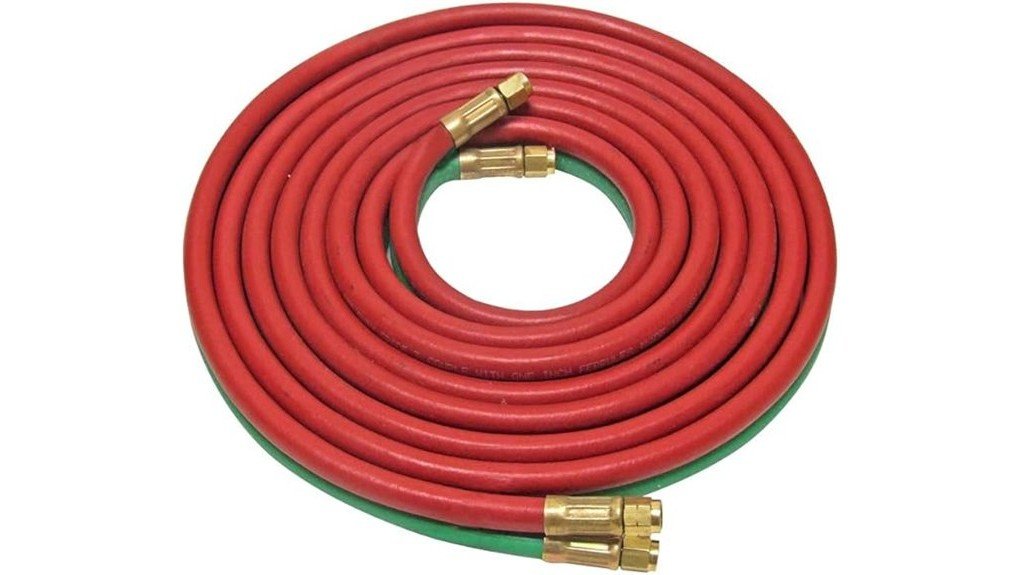
A welding hose is easy to overlook until its length, fitting size, or fuel compatibility does not match your torch setup. The Uniweld H32A Oxyacetylene Twin Welding Hose is a compact Grade R hose designed around a 3/16-inch inside diameter, A-style connections, and a 200 PSI maximum hose working-pressure rating. Its short length can be convenient for portable oxyacetylene equipment, but it is not the right hose for every fuel or every workspace. This review explains the specifications, compatibility limits, safety considerations, and buying situations that matter before you connect it to your equipment.
Quick Verdict
Rating: 8/10
Best For: Compact oxyacetylene welding, brazing, and cutting setups that use A-style hose connections.
Bottom Line: The H32A combines a manageable 3/16-inch twin-hose design with color coding, crimped ferrules, and a 200 PSI hose rating. Its main limitation is compatibility: it is a Grade R hose, so buyers using propane or MAP//Pro should compare it carefully with Uniweld’s Grade T H32AT.
| Specification | Detail |
|---|---|
| Brand | Uniweld |
| Model | H32A |
| Product Type | Oxyacetylene twin welding hose |
| Hose Grade | Grade R |
| Current Manufacturer-Listed Length | 12 ft |
| Inside Diameter | 3/16 in |
| Connection | A-style connection, commonly listed as 3/8-24 |
| Maximum Hose Working Pressure | 200 PSI |
| Identification | Green oxygen hose and red fuel-gas hose |
| Ferrules | 8-sided crimp ferrules |
| Best Use | Compact oxyacetylene equipment using compatible A-style connections |
What Is the Uniweld H32A?
The Uniweld H32A is a twin hose that carries oxygen and acetylene between compatible regulators and torch equipment. Uniweld’s current product information identifies H32A as a 12-foot, 3/16-inch I.D. oxyacetylene twin hose with A connections and a maximum working-pressure rating of 200 PSI.
The two hoses are joined as a twin assembly so you can route both gas lines together instead of managing two loose hoses. Green identifies the oxygen side and red identifies the acetylene fuel-gas side. Uniweld also uses 8-sided crimp ferrules at the hose ends.
The compact length is one of the H32A’s main buying points. It makes more sense around portable or closely arranged equipment than in a shop where the cylinders must remain far from the work area.
Key Takeaways
- H32A is a Grade R oxyacetylene twin hose, so fuel compatibility matters before you buy.
- Uniweld’s current specification lists a 12-foot length and 3/16-inch inside diameter.
- The hose uses A-style connections, so verify your regulator and torch fittings rather than assuming universal compatibility.
- The 200 PSI figure is the hose rating. It is not an instruction to operate acetylene at 200 PSI.
- Green and red hose identification makes the oxygen and fuel-gas lines easier to distinguish.
- Buyers using propane or MAP//Pro should compare the Grade T H32AT before choosing H32A.
Before You Buy: Check both fuel type and connection size. H32A is a Grade R hose with A-style connections. Uniweld recommends its Grade T H32AT for propane or MAP//Pro. Also note that Uniweld’s current product table lists H32A at 12 ft, while some retailer titles still describe it as 12.5 ft. Confirm the packaged length if those extra inches matter in your setup.
Who Should Buy It?
Best For
- Oxyacetylene setups that specifically use A-style hose connections.
- Portable or compact work areas where a short twin hose is easier to manage.
- Buyers who want a 3/16-inch twin hose with clear oxygen and fuel-gas identification.
Skip If
- Your regulator or torch requires B-style rather than A-style hose connections.
- You need substantially more reach than a roughly 12-foot hose provides.
- You primarily use propane or MAP//Pro and want the Grade T hose Uniweld recommends for those fuels.
Fit and Compatibility
Connection type should be the first specification you check. H32A uses A-style connections. Uniweld describes A-style hose fittings as 3/8-inch thread connections, while current H32A retailer specifications commonly identify the fitting as 3/8-24.
If your torch handle or regulator uses B connections, choosing H32A can leave you with a hose that does not directly match the equipment. Uniweld offers H32B as the corresponding 12-foot, 3/16-inch oxyacetylene hose with B connections.
Do not choose a welding hose from length and diameter alone. Verify the equipment manual, connection type, fuel gas, and required gas flow before installation.
Materials and Build
The H32A uses a flexible Grade R twin-hose design. Keeping the oxygen and fuel lines together makes routing simpler around a compact torch setup while still giving you separate, color-coded gas paths.
Uniweld specifies 8-sided crimp ferrules on its oxyfuel hoses. These secure the hose ends to the fitting assemblies and are one of the identifiable construction details of the H32A.
The green oxygen line and red acetylene line also provide a practical visual reference. Color coding does not replace correct connection and leak-check procedures, but it helps you identify each side quickly during setup and inspection.
Performance and Durability
The H32A carries a maximum working-pressure rating of 200 PSI. That figure describes the hose assembly’s rating. It should not be interpreted as the operating pressure you should set for every gas or torch tip.
For acetylene specifically, Uniweld states that delivery pressure should not exceed 15 PSIG under flow conditions. Actual torch settings should follow the regulator, torch, and tip instructions for your equipment.
The roughly 12-foot length is useful when your cylinders and work are relatively close. It reduces the amount of spare hose you need to coil or route. The tradeoff is obvious in a larger work area: a 12-foot hose gives you less movement than a 25-foot or 50-foot alternative.
Pro Tip: Route the hose where it will not be pulled tight, pinched, dragged across sharp edges, or exposed to hot metal. If you need more reach, use a correctly sized longer hose instead of stretching the H32A between the cylinders and work area.
How It Performs in Real Use
For Portable Oxyacetylene Setups
A shorter twin hose can be easier to manage when the torch, cylinders, and workpiece stay reasonably close together. You have less excess hose to coil, and the joined oxygen and acetylene lines move as one assembly.
For Brazing and Light Welding Work
The 3/16-inch I.D. hose suits the compact oxyacetylene equipment for which H32A is intended. Your actual gas pressure and flow still depend on the torch tip and process, so use the equipment manufacturer’s pressure chart rather than setting pressure from the hose’s 200 PSI rating.
For Shop Work
The H32A can work well when you have a defined work area near the gas supply. In a larger shop, the short length can become restrictive. Uniweld’s H33A provides a 25-foot, 3/16-inch oxyacetylene twin hose with A connections when extra reach is needed.
For Outdoor Work
The original article described the hose as weather resistant, but a specific weatherproof rating was not verified. You can use oxyfuel equipment outdoors when the working conditions and equipment instructions allow it, but protect the hose from hot metal, sparks, sharp edges, physical damage, and other hazards.
How to Use It Correctly
Before connecting or operating the H32A, confirm that the oxygen and fuel-gas sides are connected to the correct compatible fittings. Follow the instructions supplied with your regulators, torch, tips, and gas cylinders.
Uniweld’s oxyfuel safety guidance says to purge the oxygen and fuel-gas passages separately before use, venting gases safely. It also advises users to release pressure from the equipment during proper shutdown rather than leaving the hoses pressurized while the system is unattended.
Do not kink or pinch the hose to stop gas flow. Do not drag it over hot metal or sharp edges, and do not cover damaged hose with tape as a temporary repair. Damaged oxyfuel equipment should be repaired correctly or replaced before further use.
Compatibility and Safety
H32A is identified by Uniweld as a Grade R hose. That distinction matters if you plan to use a fuel other than acetylene. Uniweld recommends Grade T hose, specifically H32AT in this size and connection family, when using propane or MAP//Pro.
Uniweld provides special guidance for cases where Grade R hose is used with propane or MAP//Pro. Its documentation warns against using Grade R hose with those fuels in temperatures below -10°F and says remaining fuel gas should be bled from the hose after use. Choosing the Grade T version instead is the simpler option when those fuels are part of your normal setup.
Keep oil and grease away from oxyfuel equipment and hose connections. Never use damaged or leaking equipment. A hose is only one part of a complete oxyfuel system, so safe operation also depends on the cylinders, regulators, valves, torch, check valves or flashback protection where applicable, tips, and the operator’s procedures.
Pros and Cons
Pros
- Compact 3/16-inch twin-hose format for oxyacetylene equipment.
- Green oxygen and red fuel-gas lines simplify identification.
- 200 PSI maximum hose working-pressure rating.
- 8-sided crimp ferrules are specified by Uniweld.
- A-style version fits compatible compact welding and brazing equipment.
Cons
- The short length may be restrictive in larger work areas.
- A-style fittings will not directly suit equipment requiring B-style connections.
- Grade R is not Uniweld’s preferred hose for propane or MAP//Pro use.
Is It Worth the Price?
The H32A is worth considering when its specifications match your existing oxyacetylene equipment. You are buying a purpose-built Uniweld twin hose with a known model number, A-style fittings, color-coded gas lines, a 3/16-inch I.D., crimp ferrules, and a published maximum hose working-pressure rating.
Its value drops quickly if you need a different fitting, longer reach, or a hose intended primarily for propane or MAP//Pro. In those cases, buying the correct Uniweld variant from the start makes more sense than choosing H32A only because the basic hose dimensions look close.
How It Compares to Alternatives
Uniweld H32B is the closest alternative if you want roughly the same hose size but need B connections instead of A connections. If you use propane or MAP//Pro, Uniweld H32AT is the more relevant comparison because it is the Grade T version with A connections.
If connection type and fuel compatibility are correct but you need more movement around the work area, Uniweld H33A increases the length to 25 feet while retaining a 3/16-inch I.D. and A connection. The H32A makes the most sense when compact reach is an advantage rather than a restriction.
Frequently Asked Questions
How long is the Uniweld H32A hose?
Uniweld’s current oxyfuel-hose product table lists H32A at 12 feet. Some retailer listings still call it 12.5 feet, so confirm the current packaged specification if exact reach is important for your setup.
What size connections does the H32A use?
H32A uses A-style connections. Uniweld identifies A-style hose fittings as 3/8-inch thread connections, and current retailer specifications commonly list the H32A fitting as 3/8-24.
Can the H32A be used with propane or MAP//Pro?
H32A is a Grade R hose. Uniweld recommends Grade T H32AT for propane or MAP//Pro and provides additional restrictions for Grade R hose when those fuels are used, so H32AT is the better comparison for a setup primarily using those gases.
Does the 200 PSI rating mean acetylene can be set to 200 PSI?
No. The 200 PSI figure is the H32A hose’s maximum working-pressure rating. Uniweld states that acetylene delivery pressure should not exceed 15 PSIG under flow conditions, and your actual settings should follow the torch and tip instructions.
Can the Uniweld H32A be used outdoors?
The verified specifications do not provide a specific weatherproof rating. If you use oxyfuel equipment outdoors, protect the hose from hot metal, sparks, sharp edges, damage, and unsuitable conditions, and follow the equipment manufacturer’s operating instructions.
How should the H32A be stored after use?
Follow the complete oxyfuel shutdown procedure for your equipment. Uniweld advises closing the cylinders, safely releasing pressure from the system, and not leaving hoses pressurized while equipment is unattended or stored.
Who should skip the H32A?
Skip it if your equipment requires B connections, if approximately 12 feet does not give you enough reach, or if you primarily need a Grade T hose for propane or MAP//Pro. Matching the hose to the complete torch system is more important than choosing by length alone.
The Bottom Line
The Uniweld H32A is a solid choice for a compact oxyacetylene setup that specifically needs a 3/16-inch Grade R twin hose with A-style connections. Its color coding, 8-sided crimp ferrules, and 200 PSI hose rating are useful concrete features, but the short reach and Grade R fuel limitations mean it is not the right choice for every torch system.
Buy it when the fittings, fuel type, and length match your equipment. Choose a different Uniweld hose if you need B connections, substantially more reach, or Grade T construction for regular propane or MAP//Pro use.
Ready to Buy?
Check the latest product details and confirm the connection type before you decide.


