Disclosure: As an Amazon Associate, we earn from qualifying purchases. If you click a link on this page and make a purchase, we may receive a small commission at no extra cost to you.
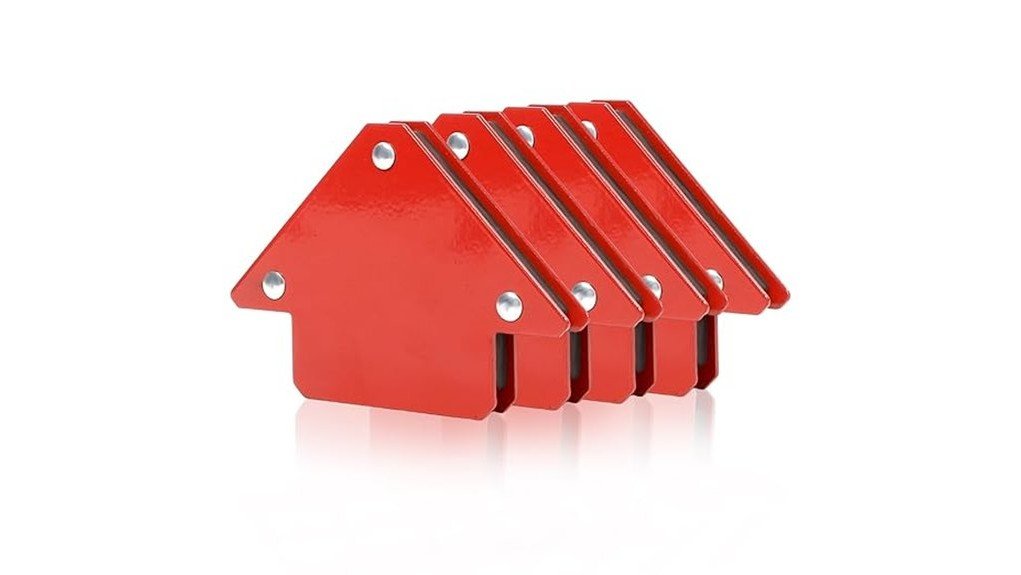
Holding small metal parts steady can slow you down when you are welding, tacking, marking, or assembling a frame. The 25LBS Welding Magnets Pack of 4 is made to help you position ferrous metal at common working angles without needing an extra hand. This review looks at its 25-pound holding capacity, 4-pack value, triple-angle design, and material limits so you can decide if it fits your shop. It is a practical helper for iron and steel work, but it is not the right choice for aluminum, copper, or many stainless steel projects.
Quick Verdict
Rating: 8/10
Best For: DIY welders, metalworkers, and fabricators who need simple angle holding for ferrous metal parts.
Bottom Line: The 25LBS Welding Magnets Pack of 4 is a useful, budget-friendly support tool for 45°, 90°, and 135° positioning. Its main tradeoff is material compatibility, since magnetic holders work best on iron and steel and are not effective on non-magnetic metals.
| Specification | Detail |
|---|---|
| Product type | Welding magnets / magnetic welding holders |
| Count | Pack of 4 |
| Holding capacity | 25 pounds per magnet, based on the article source |
| Angle options | 45°, 90°, and 135° |
| Material | Thick iron plate housing |
| Best use | Welding, soldering, metal marking, assembly, and pipe installation support |
| Compatibility | Best for iron and other ferrous metals |
| Limitations | Not ideal for aluminum, copper, or non-magnetic stainless steel |
| Safety note | Keep strong magnets away from sensitive electronics and check workpiece stability before welding. |
What Is the 25LBS Welding Magnets Pack of 4?
The 25LBS Welding Magnets Pack of 4 is a set of magnetic welding holders for keeping ferrous metal pieces in position during layout, tack welding, soldering, marking, and assembly work. Each magnet is described as having a 25-pound holding capacity, which makes the set useful for small to medium metalworking tasks where a clamp may be awkward.
The main feature is the triple-angle design. You can use the magnets to help position workpieces at 45°, 90°, or 135°, which covers many common frame, corner, bracket, and support layouts. The iron plate housing adds durability for shop use, although you still need to use the magnets within their limits and avoid treating them like heavy-duty structural clamps.
Before You Buy: These magnets are made for magnetic metals. They will not hold aluminum or copper, and they may not work well on some stainless steel because many stainless grades are weakly magnetic or non-magnetic.
Who Should Buy It?
Best For
- DIY welders who need affordable holders for small steel projects.
- Metalworkers who often set parts at 45°, 90°, or 135° angles.
- Shops that want multiple magnets for layout, tack welding, and assembly stations.
Skip If
- You mainly work with aluminum, copper, or non-magnetic stainless steel.
- You need a heavy-duty clamp for large or load-bearing assemblies.
- You need verified dimensions, weight, or brand-specific warranty details before buying.
Features and Benefits of 25LBS Welding Magnets
25-Pound Holding Capacity
The 25-pound rating refers to the holding capacity of each magnet, not the physical weight of the magnet. For a small welding holder, that capacity can help you keep steel parts steady during setup, layout, and light assembly tasks. As with any magnetic holder, the real grip depends on the thickness, cleanliness, shape, and surface contact of the workpiece.
This capacity is most helpful when you need a hands-free way to hold pieces before tack welding. It can reduce the need to balance parts by hand, which helps you focus on alignment and safer torch or electrode control.
Triple-Angle Design
The triple-angle design supports 45°, 90°, and 135° positioning. That makes the magnets useful for common fabrication jobs, including square corners, angled supports, frames, small brackets, and repeat layout tasks. You do not need to measure every basic angle from scratch if the magnet gives you the position you need.
The fixed-angle design is also simple. There are no moving jaws, switches, or fine adjustments to learn. The tradeoff is that you are limited to the built-in angles, so more complex layouts may still require clamps, squares, or a fixture table.
Thick Iron Plate Housing
The article source describes the magnets as using a thick iron plate housing. That kind of outer body is meant to handle routine shop use, heat exposure around welding work, and repeated placement on metal surfaces. It also gives the magnets a rugged feel compared with lighter plastic or thin-shell accessories.
You should still keep the holders clean and dry. Metal dust, weld spatter, slag, and moisture can reduce contact quality over time, and rough buildup may make it harder to seat the magnet flat against your workpiece.
Performance and Durability in Various Applications
For basic welding and assembly work, the biggest benefit is controlled positioning. The magnets can hold two ferrous metal pieces together while you check the angle, adjust the fit, and place initial tacks. That support can make small projects feel less frustrating, especially when you are working alone.
The magnets can also help with non-welding tasks such as metal marking and pipe installation support. They are not a replacement for clamps when a part must resist heavy force, vibration, or movement. Think of them as positioning aids first and holding tools second.
How It Performs in Real Use
For Tack Welding
These magnets make the most sense during tack welding, where you need short-term positioning before the final weld. You can set the pieces at the required angle, make a small tack, then remove or reposition the magnet before heat buildup or spatter becomes a problem.
For Metal Frame Assembly
For small frames, shelves, stands, and brackets, the 90° and 45° angles are especially useful. The 4-pack gives you enough holders to support more than one corner at a time, which helps when you are checking squareness across a full assembly.
For Layout and Marking
The magnets can also act as temporary layout helpers before cutting, drilling, or marking. Because they attach directly to ferrous metal, they can keep a reference edge in place while you check fit or repeat a common angle.
For Pipe and Small Repair Work
For pipe installation or repair support, the magnets may help steady small ferrous pieces while you align them. Round surfaces can reduce contact area, so you should test the grip before relying on the magnet during setup.
Compatibility and Safety
Magnetic welding holders work best on ferrous metals, including iron and many carbon steels. They are not designed for non-magnetic materials such as aluminum and copper. Stainless steel compatibility can vary by grade, so you should test the magnet before starting the job.
Keep these magnets away from phones, hard drives, magnetic strips, watches, and sensitive electronics. Strong magnetic fields can interfere with some devices or stored data. You should also avoid placing fingers between the magnet and a steel surface because the sudden snap can pinch skin.
Pro Tip: Clean the contact area before using the magnet. Rust, paint, oil, scale, and metal dust can weaken the hold and make your angle less reliable.
How to Use It Correctly
Start by checking that your workpiece is magnetic and clean. Place the magnet flat against the surface so it gets as much contact as possible. Then position the second piece against the correct angle face and check alignment with a square or measuring tool before welding.
Use the magnets to help with setup, not as your only safety support. If the workpiece is heavy, unstable, or under stress, add clamps or another fixture before you weld. Remove the magnet when needed to avoid excessive heat exposure, spatter buildup, or interference with your weld path.
Pros and Cons
Pros
- Pack of 4 gives you multiple holders for corners, frames, and repeat setups.
- 25-pound holding capacity is useful for small to medium ferrous metal positioning.
- Supports 45°, 90°, and 135° angles for common fabrication tasks.
- Thick iron plate housing is built for regular shop and welding use.
- Hands-free positioning can make solo welding and assembly easier.
Cons
- Limited to magnetic metals, so it will not help with aluminum or copper work.
- Not a replacement for clamps on heavy, load-bearing, or high-stress assemblies.
- Performance depends on clean, flat contact with the workpiece.
Is It Worth the Price?
The 25LBS Welding Magnets Pack of 4 offers strong value for the price if you often work with small steel parts, brackets, frames, or angle layouts. Since you get four holders, you can support multiple corners or keep extra magnets nearby for marking and assembly tasks.
It is worth considering if you want a simple tool that improves positioning without adding complicated setup steps. The main limitation is compatibility. You get the best value only if most of your work involves iron or ferrous steel.
How It Compares to Alternatives
Compared with larger 50-pound or 75-pound welding magnets, this 25-pound set is better for lighter positioning and smaller projects. Larger magnets may be better when you need more holding force, but they can feel bulky when you are working with small parts or tight corners.
Compared with adjustable welding clamps or fixture tables, these magnets are faster to place but less precise for complex assemblies. The 25LBS Welding Magnets Pack of 4 makes the most sense when you want quick angle support for common ferrous metal layouts.
Frequently Asked Questions
Does 25 pounds mean each magnet weighs 25 pounds?
No. In this review, 25 pounds refers to the stated holding capacity of each magnet, not the actual product weight. The physical weight was not verified from the source article.
What angles can these welding magnets hold?
They are described as supporting 45°, 90°, and 135° angles. Those angles cover many common welding, layout, and assembly tasks, including corners, frames, brackets, and angled supports.
Can I use these magnets on stainless steel?
It depends on the stainless steel grade. Some stainless steel is weakly magnetic, and some is not magnetic enough for reliable holding. Test the magnet on your material before you start the project.
Will these work on aluminum or copper?
No. Aluminum and copper are not magnetic in the way these holders require, so the magnets will not grip them for welding or assembly. Use clamps or another fixture method for those materials.
Are these magnets safe to use around electronics?
You should keep them away from sensitive electronics, magnetic strips, watches, phones, and drives. Strong magnets can interfere with some devices or stored data, so store them away from electronics when not in use.
Can these magnets replace welding clamps?
They can replace clamps for some light positioning tasks, but they are not a full clamp replacement. Use clamps or a fixture when the workpiece is heavy, unstable, or under pressure.
How do I clean and maintain welding magnets?
Wipe away metal dust, slag, and dirt after use. A dry cloth or lightly damp cloth can help, but avoid leaving moisture on the iron housing because stored moisture can lead to surface corrosion over time.
Who should skip this 4-pack?
Skip it if you mostly work with aluminum, copper, or non-magnetic stainless steel. You should also choose a heavier-duty clamp or fixture if your project needs strong mechanical holding force, not just temporary positioning.
The Bottom Line
The 25LBS Welding Magnets Pack of 4 is a smart buy for everyday ferrous metal positioning, especially if you want simple support for 45°, 90°, and 135° layouts. It is best for DIY welders and light fabrication tasks, while buyers working with non-magnetic metals or heavy assemblies should choose another holding method. The main strength is fast hands-free setup, and the main limitation is material compatibility.