Disclosure: As an Amazon Associate, we earn from qualifying purchases. If you click a link on this page and make a purchase, we may receive a small commission at no extra cost to you.
A basic soldering iron can make small electronics work easier, but only if it heats quickly, stays controllable, and includes the right tips for the job. The LDK 60W Soldering Iron Kit is aimed at students, hobbyists, and DIY users who want an adjustable plug-in iron without buying a full soldering station. Its biggest strengths are the 60W output, five interchangeable tips, and a stated temperature range of 392°F to 842°F (200°C to 450°C). The tradeoff is that it is still a compact entry-level kit, so heavy daily bench work may call for a more advanced station.
Quick Verdict
Rating: 8.3/10
Best For: beginners, students, and hobby users who need a portable soldering iron for small repairs and practice projects.
Bottom Line: The LDK 60W kit is a strong value for the price if you want fast heat-up, adjustable temperature, and multiple tips in one compact package. Skip it if you need a professional temperature-controlled station for long, demanding repair sessions.
| Specification | Detail |
|---|---|
| Brand | LDK |
| Product type | 60W soldering iron kit |
| Power | 60 watts |
| Temperature range | 392°F to 842°F (200°C to 450°C) |
| Heating element | Ceramic heating element |
| Stated heat-up time | About 30 seconds |
| Included tips | Five interchangeable soldering tips |
| Included accessories | Heavy-duty stand and cleaning sponge |
| Dimensions | 9.88 x 3.27 x 2.01 inches |
| Weight | 9.9 ounces |
| Controls | Adjustable temperature control and ON/OFF switch |
| Best use | Electronics practice, DIY repairs, hobby projects, jewelry work, and small game console repairs |
What Is the LDK 60W Soldering Iron Kit?
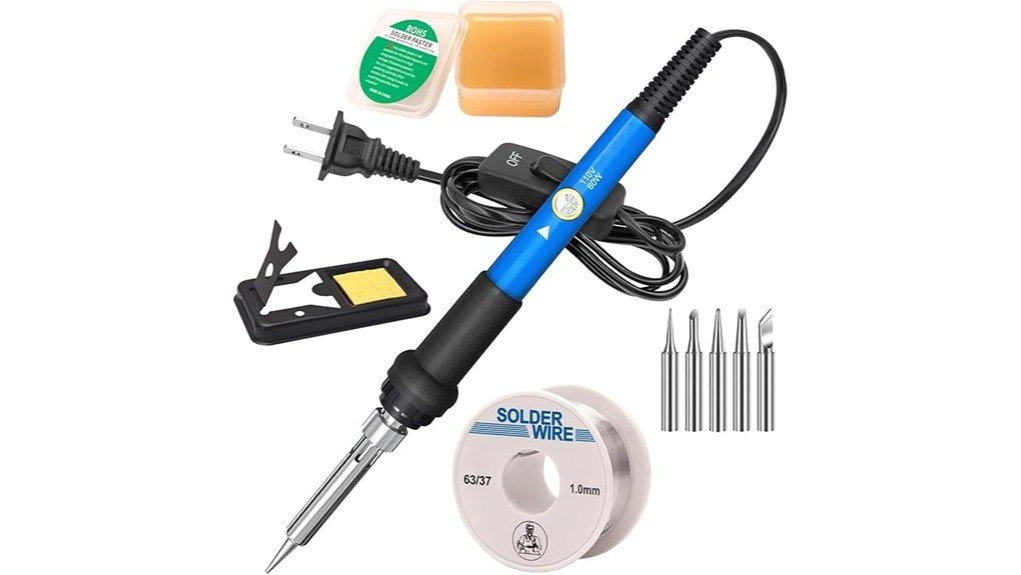
The LDK 60W Soldering Iron Kit is a compact plug-in soldering kit made for small repair and hobby work. It combines a 60W iron, adjustable temperature control, five tip options, a stand, and a cleaning sponge, so you can start basic soldering tasks without building a large bench setup.
The kit is best for people who want one portable tool for electronics learning, wire repair, simple circuit board work, and craft projects. The 9.9-ounce weight and narrow package size make it easier to store in a drawer, carry in a toolkit, or bring to a classroom or maker space.
Key Features of the LDK 60W Soldering Iron Kit
The main feature is the adjustable 392°F to 842°F temperature range. That range gives you more control than a fixed-temperature iron because you can use lower heat for delicate parts and higher heat for larger joints or thicker wire.
The five interchangeable tips add useful flexibility. A fine tip helps with small electronic pads, while wider tips can transfer heat better for larger terminals or wire connections. The included stand keeps the hot iron off your work surface, and the sponge helps clean oxidation and leftover solder from the tip during use.
The ON/OFF switch is a small but useful safety and convenience detail. Instead of unplugging the iron every time you pause, you can turn it off from the handle or cord area, depending on the kit design shown by the seller.
Before You Buy: This is a compact soldering iron kit, not a full soldering station with a separate base, digital calibration, or advanced tip storage. If you solder for hours each day or repair expensive electronics professionally, compare it with a dedicated station before buying.
Performance and Heating Efficiency
The ceramic heating element is the part that makes this kit practical for quick projects. The source specs list a heat-up time of about 30 seconds, which is helpful when you need to make a few joints, fix a wire, or practice in short sessions.
The 60W output gives the iron more headroom than many low-power beginner irons. That matters because weak irons can struggle to recover heat after touching a joint, especially when the workpiece pulls heat away from the tip. You still need to match the tip size, temperature setting, solder type, and contact time to the job.
For best results, use enough heat to make the solder flow smoothly without holding the iron on the joint too long. Too little heat can create dull, weak joints, while too much heat can damage pads, melt insulation, or overheat small components.
Design, Portability, and Storage
The kit measures 9.88 x 3.27 x 2.01 inches and weighs 9.9 ounces, so it is easy to store in a small toolbox or backpack. That makes it a useful choice for students, apartment users, and hobbyists who do not have a permanent workbench.
The compact size also helps if you only solder occasionally. You can keep the iron, tips, stand, and sponge together instead of buying separate accessories. The main limitation is that small kits can be easier to misplace, so keep the tips in one pouch or container when not in use.
Setup Tips Before First Use
Choose the tip before the iron is hot, then confirm it is seated correctly. Place the stand on a flat, heat-safe surface with good ventilation and keep the cord away from the hot tip.
Start with a moderate temperature setting and raise it only if the solder does not flow well. After the tip heats, tin it with a small amount of solder before touching your workpiece. Tinning helps transfer heat and protects the tip surface.
Pro Tip: Clean and re-tin the tip every few joints. A shiny, lightly tinned tip transfers heat better than a dry or blackened tip, which can make soldering feel harder than it needs to be.
Compatibility and Safety
This kit can be used for lead-free soldering because the 842°F upper range gives you enough heat for many lead-free solder blends. Lead-free work often needs a higher setting than tin-lead solder, but you should still use the lowest temperature that gives a clean joint.
Soldering involves heat, fumes, molten metal, and electrical parts, so use eye protection, work in a ventilated area, and keep the hot iron away from children, pets, flammable materials, and loose cords. Let the iron cool fully before storage, and follow the product instructions for tip changes and cleaning.
For electronics repair, disconnect power before soldering. For battery-powered devices, avoid soldering directly on lithium battery cells unless you have the right training and tools.
How It Performs in Real Use
For Student Electronics Practice
The LDK kit makes sense for basic learning projects because it includes multiple tips and an adjustable range in one package. Students can practice soldering wires, simple circuit kits, and small components without needing a larger station.
For Small Home Repairs
For loose wires, broken toy connections, simple audio leads, and small household electronics, the 60W output and quick heat-up time are convenient. The kit is best when the repair area is accessible and the job does not require highly precise temperature calibration.
For Hobby and Craft Projects
Hobbyists can use the different tips for jewelry repairs, craft wiring, LED strips, or small metal joins that fit within a soldering iron’s limits. It is not a torch, welding tool, or heavy metal repair tool, so it should be used only for suitable soldering tasks.
For Travel or Shared Workspaces
The low weight and small package size make the kit easier to carry than a bench station. It is useful for maker spaces, classrooms, and occasional on-site fixes, as long as you have a safe outlet, stable stand placement, and a heat-safe surface.
Who Should Buy It?
Best For
- Students learning basic soldering on simple electronics kits.
- DIY users who need a portable iron for occasional wire and connector repairs.
- Hobbyists who want multiple tip styles without buying accessories one by one.
Skip If
- You need a full soldering station with a separate base and more precise controls.
- You work on high-value electronics where calibration and ESD-safe gear matter.
- You need a tool for heavy metal work, welding, brazing, or large terminals.
Pros and Cons
Pros
- 60W output gives more heat headroom than many basic low-power irons.
- 392°F to 842°F range supports different soldering materials and project sizes.
- Five interchangeable tips make the kit more flexible for small and medium joints.
- 9.9-ounce weight and compact size are convenient for storage and travel.
- Included stand and sponge cover two useful accessories beginners often need.
Cons
- Not as controlled or comfortable for long sessions as a dedicated soldering station.
- Replacement tip fit should be confirmed before buying extra tips from other brands.
- Small kits still require a safe work surface, ventilation, and careful storage.
Customer Feedback and Support Options
The original product information describes the LDK kit as consistently well-reviewed by Amazon buyers, especially for ease of use and value. Because Amazon ratings, review counts, stock, and seller details can change, check the live listing before you make your final decision.
The article-supported return detail is a 30-day Amazon return guarantee. Treat that as a return window rather than a long manufacturer warranty, and confirm the current terms on the product page before purchase.
Is It Worth the Price?
The LDK 60W Soldering Iron Kit looks like a budget-friendly choice for occasional soldering and learning work. You get the core parts most beginners need: the iron, five tips, a stand, a sponge, adjustable heat, and a portable form factor.
It offers strong value for the price if you want a simple tool for everyday small repairs. It is not the best fit if your work depends on advanced thermal stability, digital controls, or long professional sessions.
How It Compares to Alternatives
Compared with a basic fixed-temperature pencil iron, the LDK kit gives you more control because the temperature is adjustable and the kit includes several tips. Compared with larger stations from brands such as Weller or Hakko, it is easier to store and usually more beginner-friendly, but it does not offer the same bench setup or professional feel.
If you want maximum portability, compact USB-C soldering irons such as Pinecil-style tools are worth comparing. The LDK kit makes the most sense if you prefer a straightforward plug-in iron with included accessories and no separate power setup to manage.
Frequently Asked Questions
Can the LDK 60W soldering iron be used for lead-free solder?
Yes, the listed 392°F to 842°F range can support many lead-free soldering tasks. Lead-free solder often needs more heat than tin-lead solder, so start moderate and increase only as needed.
Is this kit suitable for beginners?
Yes, it is a practical beginner kit because it includes multiple tips, a stand, a sponge, and adjustable heat. New users should still practice on scrap wire or simple kits before working on valuable electronics.
What types of projects is it best for?
It is best for small electronics practice, wire repairs, connector work, LED strips, craft wiring, and similar hobby tasks. It is not meant for welding, brazing, or heavy metal repair.
How should you clean the soldering tips?
Use the included damp sponge during work to remove residue, then re-tin the tip with a small amount of solder. Avoid scraping the tip with hard tools because that can damage the coating.
Are replacement soldering tips available?
Replacement tips may be available, but you should confirm the correct size and compatibility before buying extras. Tip fit can vary across soldering iron brands and models.
Is the LDK 60W kit good for professional repair work?
It can handle light repair tasks, but professionals may prefer a full soldering station with more precise control, better ergonomics, and a broader tip system. For occasional work, the LDK kit is more than enough for many users.
What common mistake should you avoid?
Do not hold the iron on a joint too long to force solder to melt. If solder will not flow, clean and tin the tip, check the temperature, and make sure the parts are clean before trying again.
The Bottom Line
The LDK 60W Soldering Iron Kit is recommended with caveats for beginners, students, and hobby users who want adjustable heat, five tips, and a compact kit for small projects. Its main strength is quick, flexible everyday use, while its main limitation is that it is not a full professional soldering station.