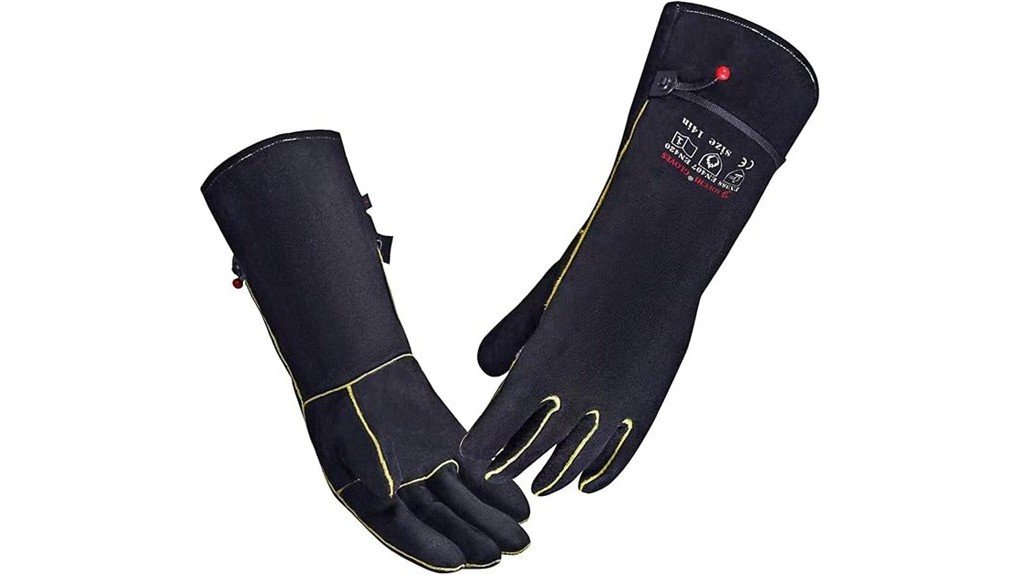
The 932°F Leather Welding Gloves are made for high-heat jobs such as welding, grilling, stove work, and campfire handling. The listing details a thick cowhide shell, soft cotton lining, Kevlar stitching, and a 14-inch length for extra wrist and forearm coverage. These details come from the product listing, so confirm sizing and any warranty on the current Amazon page before buying.
Verdict
These leather welding gloves are a practical choice if you need long, insulated gloves for welding, grilling, fire handling, and other hot-work tasks. The strongest points are the cowhide construction, cotton lining, Kevlar stitching, and long cuff. They are not a substitute for certified electrical gloves or task-specific safety gear.
Key Specs
| Specification | Detail |
|---|---|
| Product | 932°F Leather Welding Gloves |
| ASIN | B091FVK1F4 |
| Outer Material | Thick cowhide leather, per the listing |
| Lining | Soft cotton lining for insulation and comfort |
| Stitching | Kevlar thread, per the listing |
| Claimed Heat Resistance | Up to 932°F / 500°C, per the listing |
| Length | 14 inches, per the listing |
| Sizes Listed | S: 35 x 11.5 cm, M: 35 x 13 cm, L: 40 x 14.5 cm |
| Common Uses | Welding, grilling, cooking, campfire handling, and some gardening tasks |
What Are the 932°F Leather Welding Gloves?
The 932°F Leather Welding Gloves are long leather safety gloves designed to protect the hands, wrists, and part of the forearms from heat, sparks, and rough surfaces. The listing describes them as thick cowhide gloves with a cotton lining and Kevlar stitching.
The 14-inch length is useful for jobs where short gloves may leave the wrist exposed. That includes welding, barbecue work, handling firewood around a campfire, and moving hot cookware.
Who It Is For
These gloves are best for users who need heat-resistant hand protection for welding, grilling, cooking, and outdoor fire tasks. They also make sense for hobby welders and DIY users who want longer coverage than a basic work glove provides.
They may also help with gardening tasks where thick leather protection is useful, such as trimming, handling rough tools, or moving thorny branches.
Who Should Skip It
Skip these gloves if you need certified electrical protection. The listing does not list any electrical insulation certification, so they should not be used as electrical safety gloves.
You may also want a different glove if breathability is a top priority. The cotton lining helps with comfort, but a thick leather glove can feel warm during long use in hot weather.
Key Features
Thick Cowhide Construction
The listing describes the gloves as being made from thick cowhide. Cowhide is commonly used in work gloves because it balances toughness, flexibility, and abrasion resistance. For welding and grilling, the main value is protection from sparks, heat contact, and rough handling.
Soft Cotton Lining
The cotton lining adds a comfort layer between the hand and the leather shell. It also adds insulation, which helps when handling hot tools, cookware, or grill parts for short periods.
Kevlar Stitching
The listing says the gloves use Kevlar thread. This is an important detail for heat-focused gloves because seams are often a weak point. Strong stitching helps the glove hold up better against heat, abrasion, and repeated bending.
Long Forearm Coverage
The 14-inch length helps protect more than the hand. It gives added wrist and forearm coverage against sparks, flying debris, hot grill edges, and campfire heat.
Multiple Size Options
The listing lists three sizes: S, M, and L. The listed dimensions are S at 35 x 11.5 cm, M at 35 x 13 cm, and L at 40 x 14.5 cm. Check the current Amazon listing and size chart before ordering, especially if you are between sizes.
Real-World Use
For welding, the long cuff can help reduce wrist and forearm exposure to sparks and heat. The cowhide shell and Kevlar stitching make the gloves more suitable for high-heat work than light-duty fabric gloves.
For grilling, they can help with moving grates, adjusting hot charcoal tools, and handling cookware near open heat. For cooking, they may work for oven and stove tasks where longer coverage is useful, but they are bulkier than most kitchen mitts.
For camping, these gloves can help when handling firewood, moving cookware, or working near a campfire. Always limit direct contact with very hot surfaces and follow the safety guidance on the product listing or manual.
Pros and Cons
Pros
- Thick cowhide construction gives useful protection for welding, grilling, and fire handling
- 14-inch length helps cover the wrists and part of the forearms
- Cotton lining adds comfort and insulation
- Kevlar stitching supports durability in high-heat tasks
Cons
- Not recommended for electrical work because no electrical insulation certification is provided in the listing
- Thick leather may feel warm during long use
- The listing does not confirm warranty terms, ratings, review count, or included accessories
Is It Worth the Price?
These gloves are worth considering if you need one pair of long leather gloves for several heat-related jobs. The value comes from the combination of cowhide, cotton lining, Kevlar stitching, and forearm coverage.
They are less ideal if you need a specialized glove for electrical work, fine TIG dexterity, or very breathable summer use. For those needs, choose task-specific safety gloves instead.
Alternatives to Consider
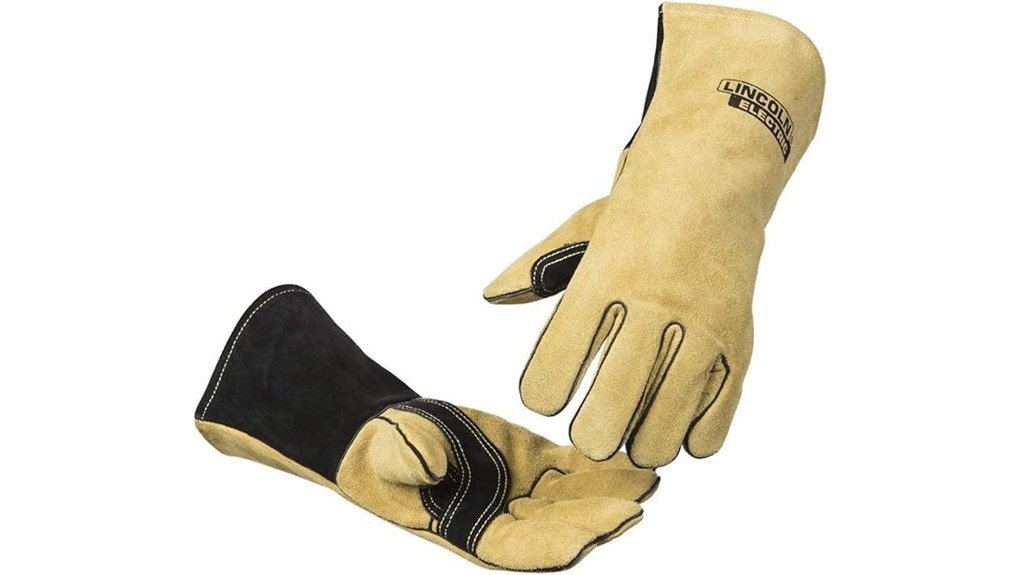
If you want to compare options before buying, look at similar products such as RAPICCA Leather Forge Welding Gloves, Lincoln Electric Traditional MIG/Stick Welding Gloves, and WZQH Leather Forge Welding Gloves. These are mentioned for context only, without affiliate links.
Related reading: OZERO 932℉ Grill BBQ Gloves Review · WZQH 16 Inches Leather Welding Gloves Review · 7 Best Welding Gloves to Keep Your Hands Safe and Warm
Frequently Asked Questions
How Do I Clean and Maintain These Gloves?
Use mild soap and water for light cleaning. Avoid soaking the leather. Let the gloves air dry away from direct heat. Check the seams and leather before each use, and apply leather conditioner when needed to help prevent drying and cracking.
Are These Gloves Suitable for Left-Handed Users?
The listing describes the gloves as a universal fit. That means they should work for left-handed and right-handed users unless the current listing states otherwise.
What Is the Warranty Period for These Gloves?
Warranty terms are not confirmed here. Check the current Amazon page or seller information before relying on any warranty period.
Can I Use These Gloves for Electrical Work?
No. The listing does not list certified electrical insulation. Use properly rated electrical gloves for electrical work.
Do the Gloves Have a Breathable Design for Comfort?
The listing does not list a specific breathable design. The cotton lining may improve comfort, but thick leather gloves can still feel warm during long tasks or hot-weather use.
Can I Use These Gloves for Grilling?
Yes, the listing lists grilling as one of the intended uses. They can help protect your hands from hot grill parts, cookware, and heat exposure. Avoid prolonged direct contact with very hot metal.
Final Verdict
The 932°F Leather Welding Gloves are a strong fit for users who want long, insulated leather gloves for welding, grilling, campfire work, and general heat protection. The main strengths are the cowhide shell, cotton lining, Kevlar stitching, and 14-inch coverage.
They are not the right choice for electrical work, and the current Amazon listing should be checked for updated sizing, warranty, rating, and product details before purchase.