Disclosure: As an Amazon Associate, we earn from qualifying purchases. If you click a link on this page and make a purchase, we may receive a small commission at no extra cost to you.
Heat-resistant gloves can look protective while still giving you little time to react once heat reaches the lining. The Welding/BBQ Leather Gloves reviewed here use 1.5 mm shoulder-split cowhide, reinforced padding, and a 16-inch design to protect your hands and lower forearms during dry, high-heat work. They are a practical option for welding, grilling, smoker maintenance, and fire-pit tasks, but the stated 932°F maximum should not be treated as a safe holding temperature. This review helps you decide whether the coverage and leather build fit your work, or whether you need a waterproof, certified, or more dexterous alternative.
Quick Verdict
Rating: Recommended with caveats
Best For: Buyers who want long leather gloves for dry welding, grilling, smoker, fireplace, or fire-pit tasks
Bottom Line: The thick cowhide, reinforced contact areas, and long cuffs offer useful coverage for brief contact with hot tools and surfaces. The tradeoff is reduced dexterity, careful leather maintenance, and no verified proof that the maximum temperature claim equals a safe contact time.
| Specification | Detail |
|---|---|
| Product type | Long-cuff leather heat-protection gloves |
| Primary material | 1.5 mm shoulder-split natural cowhide leather |
| Reinforcement | Double-reinforced Kevlar padding on the fingers and palms |
| Inner construction | High-temperature-resistant composite layer with a soft cotton lining |
| Overall length | 16 inches |
| Cuff or sleeve length | 7.5 inches |
| Heat claim | Up to 932°F for brief exposure, as stated in the source article |
| Best uses | Welding, grilling, smoker work, fireplaces, fire pits, and other dry high-heat tasks |
| Care | Wipe with a damp cloth and air-dry in a ventilated area |
| Not verified for | Chemical handling, solvent protection, waterproof use, energized electrical work, or direct food contact |
What Are the Welding/BBQ Leather Gloves?
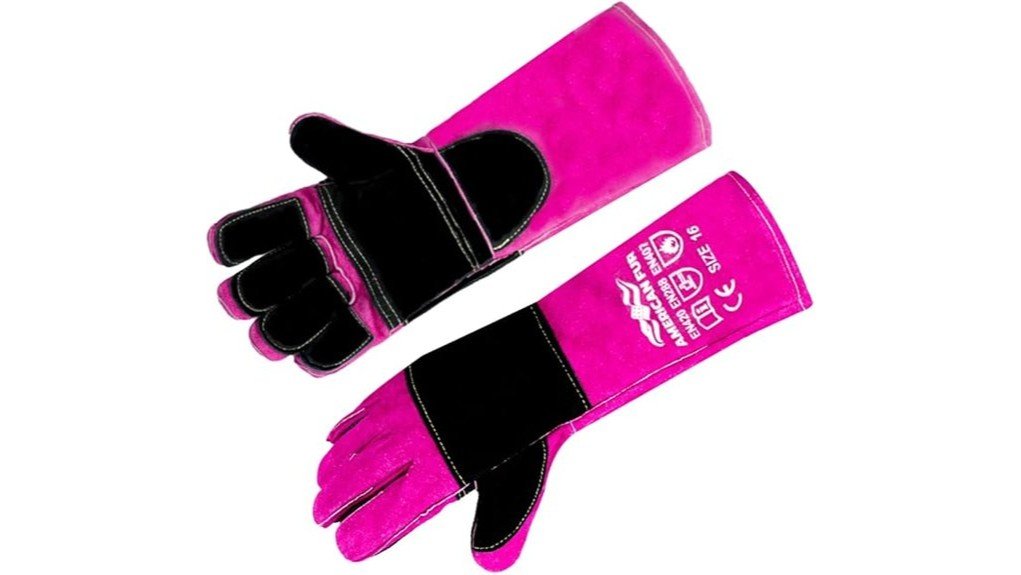
These are 16-inch leather gloves designed to create a protective barrier between your hands, lower forearms, sparks, radiant heat, and briefly handled hot surfaces. The exterior uses 1.5 mm shoulder-split cowhide, while the fingers and palms include double-reinforced Kevlar padding in the areas that receive the most contact and wear.
A high-temperature-resistant composite layer and soft cotton lining add insulation and comfort. The 7.5-inch cuffs extend beyond the wrist, which is useful when sparks, embers, or grill heat can reach the lower arm. The design favors coverage and durability over fine finger control, so it is better for moving grates, handling tools, or managing hot materials than for detailed work with small parts.
Before You Buy: A maximum heat-resistance number is not a safe holding-time guarantee. Heat transfer changes with the surface material, pressure, moisture, glove condition, and contact area, so release any object as soon as you feel warmth building inside the glove.
Who Should Buy It?
Best For
- You want long cuffs for extra wrist and lower-forearm coverage.
- You handle welding tools, grill grates, smoker parts, firewood, or fireplace accessories.
- You prefer durable leather and reinforced palms over a thin, highly flexible glove.
Skip If
- You need waterproof gloves for steam, boiling liquids, greasy food, or wet heat.
- You need a documented welding, electrical, cut, or chemical safety certification.
- You need close finger control for small fasteners, switches, or delicate tools.
Design and Material Composition
1.5 mm Shoulder-Split Cowhide
The 1.5 mm cowhide exterior gives you a thicker barrier than a light fabric grilling glove. Split leather is commonly chosen for welding-style gloves because it resists abrasion and handles sparks well, but thickness also makes the fingers feel less precise. The leather may soften with use, yet it should never feel cracked, burned through, stiff from heat damage, or thin at the contact points.
Reinforced Fingers and Palms
The fingers and palms use double-reinforced Kevlar padding, according to the source article. These are the areas most likely to contact handles, grates, tools, and rough material, so added reinforcement can slow wear and provide another layer between your skin and the hot object. It does not make the gloves cut-proof or puncture-proof, and no formal cut rating was verified.
Composite Insulation and Cotton Lining
The inner composite layer is intended to slow heat transfer, while the cotton lining makes the gloves more comfortable against your hands. Cotton can also absorb sweat, which helps during short jobs but means the gloves need time to dry fully. Damp insulation can behave differently around heat, so do not use the gloves while wet.
Heat Resistance Performance
The article states a maximum resistance of up to 932°F for brief exposure. That figure should be viewed as a material limit under specific conditions, not permission to hold a 932°F object. A thin metal handle can transfer heat much faster than a larger object that mainly gives off radiant heat, and firm pressure can speed heat transfer through the palm.
| Heat Situation | What to Expect | Safer Approach |
|---|---|---|
| Sparks and radiant heat | The long leather shell helps cover exposed skin during brief work. | Keep cuffs over sleeves and inspect seams before use. |
| Hot grill grates or tools | Heat can move through the contact area quickly. | Plan the move first, keep contact brief, and have a safe landing place ready. |
| Open flame | Leather resists brief flame exposure better than many light fabrics, but it can still scorch. | Do not hold your hand in a flame or use the glove as a fire shield. |
| Wet or greasy heat | Moisture, steam, and hot grease may pass heat quickly and can damage leather. | Use a glove specifically rated for waterproof or liquid-heat tasks. |
Forearm Coverage and Dexterity
The 16-inch overall length and 7.5-inch cuffs are major reasons to choose this design. The extended cuffs cover the wrist and part of the forearm when you reach toward a grill, fireplace, smoker, or welding area. That coverage is more protective than a short oven mitt when sparks or radiant heat are part of the task.
The drawback is bulk. Thick leather, reinforced palms, and insulated layers can make it harder to operate narrow tongs, small knobs, latches, or precise welding controls. Before starting work, check that you can grip the tool securely and release it without the glove catching.
Comfort and Fit
The soft cotton lining should feel less abrasive than bare split leather. A proper fit leaves enough room to flex your fingers without letting the glove rotate around your hand. A glove that is too loose can weaken your grip, while one that is too tight can compress the insulation and make it harder to remove quickly.
The available size range could not be verified. Check the current Amazon listing for its size chart and return terms before ordering, especially if you have small hands, wide palms, or long fingers.
Pro Tip: Put both gloves on before the first hot task and practice gripping, carrying, and releasing a cold tool. This reveals loose fingertips, poor grip, or cuff interference without exposing you to heat.
How It Performs in Real Use
For Welding and Metalwork
The leather shell, reinforced contact areas, and long cuffs suit brief welding and fabrication tasks where sparks, rough surfaces, and hot tools are expected. The gloves should be part of a complete protective setup that also includes suitable eye, face, body, and respiratory protection. Because no specific welding standard or process rating was verified, confirm that the gloves meet your shop, employer, or training requirements before relying on them.
For Grilling and Smoker Maintenance
The long cuffs help when lifting a grate, adjusting a smoker component, moving a chimney starter, or reaching near radiant heat. Use separate food-safe utensils for cooked food because the leather and reinforcement are not verified for direct food contact. These gloves are also not stated to be waterproof, so they are a poor choice for hot grease, steam, or boiling liquid.
For Fireplaces and Fire Pits
The gloves can protect your hands and lower forearms when adding dry logs, moving a fire screen, or handling fireplace tools. Use tools instead of grabbing burning logs or coals directly. Embers can enter a loose cuff, so keep your sleeves covered and avoid turning the cuff upward where debris can collect.
For Workshop and Outdoor Tasks
The cowhide and reinforced palms can also help with rough, warm materials around a workshop or outdoor cooking area. They are not general-purpose chemical gloves, electrical gloves, or waterproof work gloves. Match the glove to the hazard instead of using the same pair for every task.
How to Use the Gloves Correctly
- Inspect before every use. Check the palms, fingertips, seams, lining, and cuffs for thinning, holes, hard spots, or heat damage.
- Keep the gloves dry. Do not use them if rain, sweat, washing, or spills have left the leather or lining damp.
- Plan the movement. Know where you will place the hot object before picking it up, and clear the path first.
- Limit contact time. Release the object as soon as warmth begins to build. Do not test the heat limit with your hand.
- Use proper tools. Tongs, pliers, hooks, and handles reduce the need for direct contact and improve control.
- Remove damaged gloves from service. Repairs may not restore the original heat barrier, especially near the palm or fingertips.
Material Safety and Limitations
These gloves are designed for dry heat and mechanical coverage, not every workplace hazard. The source article does not provide a verified electrical rating, chemical-resistance rating, food-contact approval, waterproof claim, or formal cut-resistance level. Do not use them for energized electrical work, corrosive chemicals, solvents, hot liquids, or tasks that require a specific certified glove.
Leather can shrink, stiffen, or weaken after soaking, harsh detergent, direct high heat, or improper drying. If you use the gloves for welding, do not also use the same dirty pair for cooking. Metal particles, soot, grease, and other residue can transfer between tasks.
Care and Maintenance Tips
For routine cleaning, wipe the exterior with a lightly damp cloth. Avoid machine washing, soaking, bleach, strong cleaners, and tumble drying because they can damage the leather, padding, and lining. Hang the gloves in a shaded, well-ventilated area until they are fully dry.
Store them away from rain, direct sun, open flame, oil, and sharp objects. Keep the cuffs open enough for airflow, but do not fold or crush the gloves under heavy tools. Replace the pair when the leather cracks, seams open, reinforcement wears thin, or heat reaches your hand faster than before.
Pros and Cons
Pros
- 1.5 mm shoulder-split cowhide provides a durable outer layer.
- Reinforced fingers and palms add protection at common contact points.
- 16-inch length gives useful wrist and lower-forearm coverage.
- Soft cotton lining improves comfort during short work sessions.
- Useful for several dry-heat tasks, including welding, grilling, smokers, and fireplaces.
Cons
- The 932°F claim does not provide a verified safe contact time.
- Thick leather and padding reduce dexterity for small controls and tools.
- Size options, warranty, certifications, waterproofing, and chemical protection were not verified.
Is It Worth the Price?
The current price could not be verified, so it would be misleading to label these gloves as budget, mid-range, or premium. They offer the strongest value when the price is close to other long-cuff cowhide gloves and you specifically need reinforced palms plus 16-inch coverage.
They are worth considering for dry welding, grill maintenance, and fire-pit work where durability matters more than fine dexterity. They are not the best value if your main task involves hot liquids, direct food handling, certified industrial protection, or precise finger control, because you may need a more specialized pair.
How It Compares to Alternatives
For wet grilling or direct handling of greasy food, compare this leather design with a waterproof neoprene grill glove such as the RAPICCA BBQ Oven Gloves. For pizza-oven work, Ooni Pizza Gloves are another leather option worth comparing. For professional welding, a process-specific glove from an established welding-safety brand may be a better choice when documented standards, sizing, and workplace approval matter more than general-purpose use.
The Welding/BBQ Leather Gloves make the most sense when your priority is long coverage, thick cowhide, and reinforced contact areas in one multipurpose pair.
Frequently Asked Questions
Can these gloves safely hold objects at 932°F?
No fixed holding time was verified. The 932°F figure is a maximum brief-exposure claim, and a metal handle may transfer dangerous heat in seconds. Keep contact short and release the object when you first feel heat building.
Are these gloves suitable for both welding and BBQ grilling?
They can suit dry welding and grilling tasks because the cowhide, reinforced palms, and long cuffs help with sparks and brief hot contact. Confirm any workplace welding requirements, and use food-safe tools instead of touching cooked food with the leather.
Are the gloves waterproof?
Waterproof performance was not verified, and split leather should be kept dry. Do not use the gloves for steam, boiling water, hot grease, or other wet-heat tasks unless the current product instructions specifically approve that use.
Can you use them to pick up hot food?
Direct food-contact approval was not verified. Use tongs, forks, grill tools, or a glove made for food handling, especially with greasy meat or hot liquids.
How should the gloves fit?
Your fingers should flex without the glove twisting around your hand, and you should be able to remove it quickly. Check the current size chart because the available sizes and exact hand measurements were not verified.
How do you clean leather welding and BBQ gloves?
Wipe the surface with a lightly damp cloth and let the gloves air-dry in a ventilated, shaded place. Do not machine wash, soak, bleach, or dry them with direct heat.
Are they safe for chemicals, solvents, or electrical work?
No chemical, solvent, or electrical protection rating was verified. Use gloves specifically approved for those hazards and follow your workplace safety rules.
When should you replace the gloves?
Replace them when you see holes, split seams, cracked leather, burned areas, loose lining, or thin reinforcement. Also replace them if heat reaches your hand faster than it did when the gloves were new.
The Bottom Line
The Welding/BBQ Leather Gloves are a reasonable choice when you want thick cowhide, reinforced palms, and 16-inch coverage for dry welding, grilling, smoker, or fire-pit tasks. Skip them if you need waterproof protection, verified industrial certifications, direct food handling, or high dexterity, and treat the 932°F figure as a brief material claim rather than a safe hold temperature.
Ready to Buy?
Check the latest price, size options, product details, and safety information before you decide.