Disclosure: As an Amazon Associate, we earn from qualifying purchases. If you click a link on this page and make a purchase, we may receive a small commission at no extra cost to you.
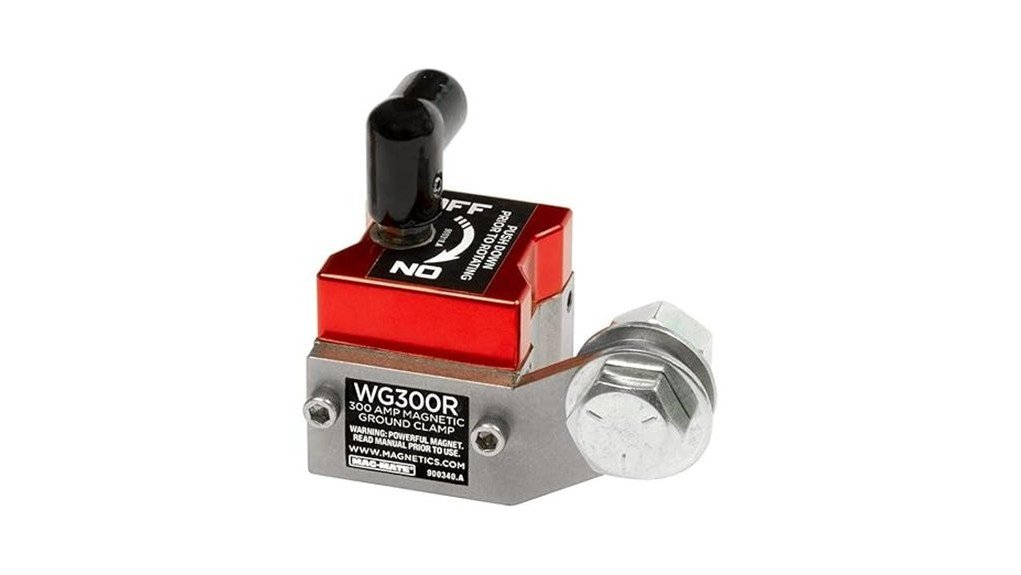
A poor welding ground can slow your setup, create unstable arc behavior, and make pipe or frame work more frustrating. The MAG-Mate WG300R is built for welders who want a faster magnetic ground connection on clean steel. It supports up to 300 AMP applications and uses a 150 lbs magnetic holding force. This review explains where it performs well, where it struggles, and who should keep using a traditional clamp.
Quick Verdict
Rating: 8/10, Recommended with caveats
Best For: Welders who need quick magnetic grounding on pipes, tubes, and flat steel surfaces
Bottom Line: The MAG-Mate WG300R offers fast placement, strong magnetic hold, and useful V-groove contact for steel work. Its main tradeoff is that performance depends on clean, bare, magnetic metal and correct placement near the weld area.
Key Specifications
| Specification | Detail |
|---|---|
| Brand | MAG-Mate |
| Model | WG300R |
| Product Type | On/off magnetic welding ground tool |
| Holding Capacity | 150 lbs magnetic holding force |
| Current Support | Up to 300 AMP applications |
| Design | Three-sided V-groove magnetic body |
| Control | On/off magnetic engagement system |
| Best Use | Pipe welding, shop fabrication, field repairs, and repetitive steel work on clean magnetic steel |
What Is the MAG-Mate WG300R?
The MAG-Mate WG300R is a magnetic welding ground tool made to replace or supplement a standard clamp-style ground in many steel welding setups. Instead of biting onto an edge, it attaches to magnetic steel surfaces with a 150 lbs holding force.
The WG300R is most useful when you need to reposition your ground often. Its three-sided V-groove design helps it sit on round pipe, tube, and flat plate surfaces, including 90-degree contact points. That shape gives you more placement options than a flat magnet when your workpiece is not perfectly square.
This is not a universal replacement for every ground clamp. It needs clean steel contact, and it does not work the same way on painted, heavily rusted, coated, or non-magnetic surfaces.
Who Should Buy It?
Best For
- Welders working on pipes, tubes, angle steel, and flat magnetic steel
- Fabrication shops that need faster setup changes between weld points
- Field users who want a ground that can attach quickly to structural steel
Skip If
- You often weld on dirty, painted, rusty, or coated surfaces
- You need grounding support beyond the stated 300 AMP application range
- Your work involves aluminum or other non-magnetic metals
Before You Buy: This tool depends on magnetic contact. If your work surface is painted, rust-heavy, coated, oily, or non-magnetic, a standard clamp-style ground may give you more reliable contact.
Key Features That Matter in Real Use
150 lbs Magnetic Holding Strength
The 150 lbs holding capacity helps the WG300R stay in place on clean steel while you work. This matters most on vertical pieces, curved pipe, and awkward areas where a regular clamp can be hard to attach.
Magnetic force still depends on surface condition. Clean bare steel gives the magnet the best chance to hold firm, while rust, paint, weld spatter, heavy mill scale, and gaps can weaken the connection.
Up to 300 AMP Support
The stated 300 AMP support makes this tool suitable for many light to medium-heavy welding jobs. It fits common fabrication, maintenance, pipe, and field-repair tasks when your welding setup stays within that range.
You should still match the ground tool to your welder, process, cable setup, and amperage. If your work regularly exceeds 300 AMP, choose a higher-rated grounding solution instead.
Three-Sided V-Groove Design
The V-groove design is the main reason this magnetic ground stands out from basic flat magnetic grounds. The grooves help the body nest against round pipe, tube, and angled steel surfaces.
That design saves time when you move between different workpieces. It also helps you keep the ground closer to the weld area without awkward cable routing.
On/Off Magnetic Control
The on/off control lets you place the tool before fully engaging the magnet. That makes positioning easier when you need to line it up on a pipe or tight contact area.
It also makes removal cleaner than always-on magnetic designs. You can disengage the magnet when you need to move the ground, which reduces dragging and helps protect the contact face.
Pro Tip: Place the magnetic ground as close to the weld area as practical, then clean that spot down to bare steel before attaching it. Better contact helps reduce resistance and supports steadier grounding.
Compatibility and Safety Notes
The MAG-Mate WG300R works best on magnetic steel. It is not the right choice for surfaces that will not attract a magnet, and it may not grip well on curved or uneven areas unless the V-groove can sit securely.
Before welding, check that the magnet sits flat or firmly nested and that the cable connection is tight. Stop and reposition the ground if you notice weak attachment, unstable arc behavior, heat buildup at the contact point, or visible contamination.
Always follow your welder manual, shop safety rules, and proper grounding practices. A magnetic ground is a convenience tool, not a shortcut around safe setup, cable inspection, or surface preparation.
Placement Tips for Better Results
- Clean the contact area first: Remove paint, rust, oil, heavy mill scale, and spatter before attaching the magnet.
- Stay close to the weld: Shorter current paths can help reduce resistance and cable clutter.
- Use the V-groove on round stock: Let the groove seat on pipe or tube instead of balancing the magnet on a small contact point.
- Check the hold before striking an arc: Tug lightly on the cable and confirm the magnet does not shift.
- Keep it away from heavy heat exposure: Do not place the ground where heat, slag, or direct arc exposure can damage the tool.
Pros and Cons
Pros
- 150 lbs magnetic hold helps it stay steady on clean steel
- Supports up to 300 AMP applications for many shop and field tasks
- Three-sided V-groove improves fit on pipes, tubes, and flat steel
- On/off magnetic control makes placement and removal easier
- Can reduce setup time compared with constantly moving a clamp
Cons
- Needs clean, bare, magnetic steel for the best hold
- Not ideal for aluminum, coated workpieces, or heavy rust
- Not the right choice for welding setups beyond 300 AMP applications
How It Performs in Real Use
For Shop Fabrication
In a fabrication shop, the WG300R can speed up repeated fit-up and welding steps. You can move the ground from one steel workpiece to another without searching for a clampable edge each time.
For Pipe Welding
The V-groove design helps the tool sit on round pipe more securely than a flat contact face. Seat the groove firmly, keep the cable from pulling sideways, and recheck the contact after rotating the workpiece.
For Field Repairs
On job sites, a magnetic ground can save time when you attach to clean structural steel or large metal assemblies. Dirt, paint, moisture, scale, and uneven steel can reduce grip, so keep a traditional clamp available as a backup.
For Repetitive Production Work
For repeated welding tasks, the WG300R can reduce clamping and unclamping time. It is less useful when parts vary widely in shape or surface condition because you may spend more time cleaning and testing the contact.
Common Mistakes to Avoid
- Attaching it over paint: Paint can reduce both magnetic hold and electrical contact.
- Using it too far from the weld: A distant ground can create a less efficient current path.
- Ignoring cable pull: A heavy cable can shift the magnet if it pulls sideways on the tool.
- Using it on non-magnetic metals: The magnet needs a suitable steel surface to work correctly.
- Assuming it replaces all clamps: Keep a standard clamp for surfaces where the magnet cannot grip or conduct well.
Is It Worth the Price?
The MAG-Mate WG300R makes the most sense as a mid-range convenience upgrade for welders who often work on steel. Its value comes from faster placement, useful pipe contact, and less time spent searching for clamp points.
It is worth considering if your work includes clean steel fabrication, pipe, tube, or field-repair tasks within the stated 300 AMP application range. It is not the best fit if your workpieces are usually rusty, painted, coated, or non-magnetic.
How It Compares to Alternatives
Compared with a standard clamp-style ground, the MAG-Mate WG300R is faster to place on many steel surfaces and easier to reposition on pipe or angled work. A clamp can still be more reliable on dirty, uneven, or coated metal because it can bite into the workpiece.
Compared with lower-strength magnetic grounds, the WG300R offers stronger stated holding force and 300 AMP support. It makes the most sense if you want a magnetic ground for regular light to medium-heavy steel fabrication rather than occasional light-duty use.
Frequently Asked Questions
Can the MAG-Mate WG300R replace a traditional ground clamp?
It can replace a clamp in many clean steel shop and field applications. Keep a traditional clamp available for dirty, coated, uneven, or non-magnetic surfaces where the magnet may not hold well.
Is 300 AMP enough for professional welding?
The stated 300 AMP support is enough for many fabrication, repair, and maintenance jobs. If your work regularly exceeds that range, use a grounding system rated for your actual setup.
What surfaces work best with this magnetic ground?
Clean, bare, magnetic steel gives the best result. Painted, rusty, oily, coated, or uneven surfaces can reduce holding force and contact quality.
Does it work on aluminum or stainless steel?
It is designed around magnetic contact, so aluminum is not a good match. Some stainless steels have weak or no magnetic response, so test the surface before relying on this tool.
Why does the V-groove design matter?
The V-groove helps the tool sit on pipes, tubes, corners, and flat steel. That shape gives you more contact options than a simple flat magnet.
How should you prepare the surface before using it?
Clean the contact point down to bare steel when possible. Remove loose rust, paint, oil, spatter, and heavy scale before attaching the magnet.
Can you use it for field welding?
Yes, it can work well for field welding on clean structural steel and similar magnetic surfaces. Field work often has more dirt, coatings, and uneven steel, so inspect the contact carefully before welding.
Who should skip the MAG-Mate WG300R?
Skip it if you mainly weld aluminum, coated metal, rusty material, or setups beyond 300 AMP applications. A traditional clamp or higher-rated ground may suit those jobs better.
The Bottom Line
The MAG-Mate WG300R is a strong choice for welders who want faster grounding on clean steel, especially on pipes, tubes, flat plate, and structural steel. Its 150 lbs magnetic hold, 300 AMP support, V-groove design, and on/off control make it more flexible than many basic grounding options.
Skip it if your work usually involves coated, rusty, non-magnetic, or higher-amperage setups. For the right steel work, it is recommended with caveats because it can save time while still demanding proper surface prep and safe placement.