Disclosure: As an Amazon Associate, we earn from qualifying purchases. If you click a link on this page and make a purchase, we may receive a small commission at no extra cost to you.
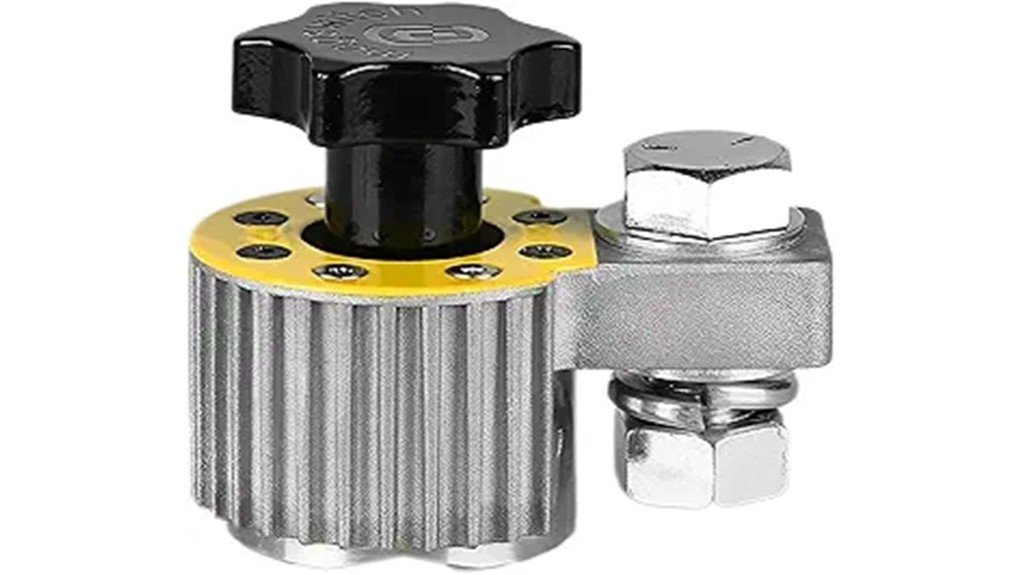
Good welding ground contact matters when you want cleaner work, fewer interruptions, and less time wasted hunting for a clamp point. The Magswitch 300 Amp Magnetic Welding Ground Clamp – 8100746 gives you a switchable magnetic grounding base that attaches to clean flat or round steel surfaces. It is a compact 300 amp ground clamp with ON/OFF control, a 90 lb max breakaway rating, and a finned design made to reduce heat buildup. This review explains where it performs well, what limits you should know, and who should choose it over a traditional spring-style ground clamp.
Quick Verdict
Rating: 8.8/10
Best For: Welders who need fast magnetic grounding on clean steel, pipe work, sheet-weld jobs, and repeat shop setups.
Bottom Line: The Magswitch 300 Amp Magnetic Welding Ground Clamp is a strong pick if you want quick grounding without tacking on tabs or searching for a clamping edge. It is not the right tool for non-ferrous metals, painted surfaces, dirty steel, or jobs that need more than a 300 amp ground connection.
| Specification | Detail |
|---|---|
| Brand | Magswitch |
| Model | 8100746 |
| Product type | 300 amp magnetic welding ground clamp |
| Grounding style | Switchable magnetic grounding base |
| Max breakaway | 90 lb / 40 kg |
| Product weight | 0.9 lb / 0.4 kg |
| Dimensions | 2.9 x 1.9 x 2.3 in / 73.1 x 49 x 57.3 mm |
| Magnetic pole footprint | 40 mm diameter |
| Surface compatibility | Clean flat or round steel surfaces |
| Best use | Welding ground setup, sheet-weld jobs, pipe jobs, and repeat shop work |
| Safety note | Use only within the tool’s 300 amp rating and on suitable steel contact surfaces. |
What Is the Magswitch 300 Amp Magnetic Welding Ground Clamp?
The Magswitch 300 Amp Magnetic Welding Ground Clamp is a compact magnetic grounding tool for welding work on steel. Instead of relying on a traditional clamp jaw, it uses a switchable magnetic base that you place on a clean steel surface, turn on, and use as the grounding point.
The main benefit is speed. You do not have to search for a thin edge, grind a temporary tab, or tack on a grounding point for large sheet-weld or pipe work. The ON/OFF function also helps with cleanup because you can turn the magnet off and wipe away debris instead of fighting stuck metal shavings.
Its 300 amp rating makes it suitable for many light to medium welding setups, but it is not a universal replacement for every ground clamp. You still need the right surface, clean contact, and a welding setup that stays within the clamp’s rating.
Who Should Buy It?
Best For
- Welders who work on clean steel and want faster grounding setup.
- Shop users who move between flat plate, pipe, and other steel surfaces.
- Fabricators who want a reusable grounding option for sheet-weld or pipe jobs.
Skip If
- You need to ground to aluminum, stainless that is not magnetic, or other non-ferrous metals.
- Your workpiece is painted, dirty, heavily scaled, or too small for a solid magnetic footprint.
- Your welding setup requires a ground clamp above the 300 amp rating.
Before You Buy: This clamp needs clean steel contact to work properly. It is not made for aluminum, wood, plastic, painted surfaces, or surfaces where the magnetic base cannot sit securely.
Key Features of the Magswitch 300 Amp Ground Clamp
Switchable Magnetic Grounding
The biggest reason to choose this clamp is the true ON/OFF magnetic control. You can position the clamp while it is off, place it where you want the ground connection, then turn it on when the surface contact looks right.
This design helps when you work on larger steel pieces where a standard clamp may not have a convenient edge. It also helps when you need to move quickly from one weld area to the next without changing your whole setup.
Flat and Round Steel Surface Use
Magswitch lists this clamp for easy attachment to flat or round surfaces. That makes it more flexible than a clamp that only works well on exposed edges. For pipe work, the magnetic base can save time because you do not need to create a temporary tab just to get a ground point.
The limitation is surface quality. Rust, paint, mill scale, oil, or spatter can reduce contact quality. For best results, use the clamp on clean steel with enough area for the 40 mm magnetic pole footprint.
Finned Design for Heat Control
The clamp uses an optimized fin design that lowers temperature by almost 27%. That matters because grounding tools can heat up during welding, especially when they see repeated use across long sessions.
Better heat control can help protect the tool during routine work, but it does not mean you should ignore duty cycle, cable condition, or the clamp’s amp rating. Use it as part of a properly matched welding setup.
Cleanup and Maintenance
Traditional magnetic tools can collect chips and shavings. This Magswitch design helps with cleanup because you can turn the magnet off, then wipe away debris from the base.
That makes maintenance simple. Keep the contact area clean, inspect the cable connection, and avoid using the clamp on surfaces that can damage the magnetic face. Small habits like these help the tool stay reliable over time.
Pro Tip: Before welding, clean a small steel contact patch where the magnet will sit. A quick grind or wipe can improve contact and reduce grounding problems caused by paint, oil, scale, or debris.
How It Performs in Real Use
For Shop Welding
In a shop setting, the Magswitch 300 Amp Ground Clamp makes the most sense when you repeat similar grounding tasks throughout the day. The ON/OFF control lets you place the base, lock it down, weld, then move it without prying it loose.
The 0.9 lb weight also keeps it easy to handle. It feels more portable than a bulky grounding accessory, which helps when you move between benches, fixtures, and workpieces.
For Pipe Jobs
Pipe work is one of the better use cases because the clamp can attach to round steel surfaces. That can reduce setup time when a standard clamp does not have a clean edge to grab.
You still need a stable contact point. If the pipe surface is coated, rusty, oily, or too curved for secure contact, clean the surface first and check that the ground remains firm before striking an arc.
For Large Sheet-Weld Work
Large sheet-weld jobs can make grounding awkward because the best electrical contact point is not always near an edge. This clamp helps because you can place the magnetic base closer to the work area on suitable steel.
That can reduce the need to tack on tabs for grounding. It also helps keep your workflow cleaner when you need to reposition the ground during a project.
For Field or Outdoor Work
The clamp can be useful outside the shop when you work on steel and need a fast ground point. The simple ON/OFF design is easier to manage than a clamp that slips around while you position it.
Outdoor use still needs caution. Moisture, dirt, coatings, and uneven steel can affect contact. Keep the base clean, protect the tool when not in use, and follow your welder and clamp instructions.
How to Use It Correctly
Start by checking that your welding setup fits the clamp’s 300 amp rating. Then choose a clean steel surface that gives the magnetic base full contact. Avoid painted, coated, oily, or heavily scaled areas unless you clean the contact patch first.
Place the clamp while the magnet is off, confirm the position, then turn it on. Keep the cable routed so it does not pull the clamp sideways during welding. After use, turn the magnet off before removing it, then wipe away metal chips or dust from the base.
Do not use the clamp as a lifting magnet, fixturing substitute, or general-purpose safety restraint. It is a welding ground clamp, so treat it as part of your electrical setup and inspect it before use.
Compatibility and Safety Notes
The Magswitch 300 Amp Ground Clamp is designed for steel surfaces that can hold a magnet. It will not attach properly to aluminum, copper, plastic, wood, or non-magnetic stainless steel. It may also perform poorly on painted, dirty, rusty, or uneven steel.
The 90 lb max breakaway rating describes magnetic holding force under suitable conditions, not a lifting or safety rating. Do not use this tool to suspend parts or secure loads. For welding safety, follow your welder manual, wear proper protective gear, and keep cables and contact points in good condition.
Pros and Cons
Pros
- Switchable magnetic base makes setup and repositioning faster.
- 300 amp rating fits many light to medium welding tasks.
- Attaches to clean flat or round steel surfaces.
- Finned design helps reduce heat buildup during use.
- Turns off for easier chip and debris cleanup.
Cons
- Only works properly on magnetic steel surfaces.
- Needs clean contact, so coated or dirty metal may require prep.
- Not suitable for welding setups that exceed the 300 amp rating.
Is It Worth the Price?
The Magswitch 300 Amp Ground Clamp is best viewed as a convenience and workflow upgrade, not just a basic replacement for a standard clamp. If you often weld on clean steel, pipe, sheet, or large workpieces, the faster setup can justify the cost.
It offers strong value for buyers who care about speed, clean repositioning, and reusable magnetic grounding. The biggest limitation is compatibility. If most of your work involves aluminum, painted steel, or high-amp welding beyond this clamp’s rating, a different ground solution may make more sense.
How It Compares to Alternatives
Compared with a traditional spring-style ground clamp, the Magswitch 300 Amp Ground Clamp is faster to place on suitable steel and easier to reposition. A standard clamp may still be better when you have a reliable exposed edge, rough work surfaces, or materials that do not hold a magnet.
Within the Magswitch lineup, the 600 Amp and 800 Amp magnetic welding ground clamps are worth comparing if your welding setup needs a higher amp rating. The 300 Amp model makes the most sense if you want a lighter, compact magnetic grounding tool for routine steel welding tasks.
Frequently Asked Questions
What materials can the Magswitch 300 Amp Ground Clamp be used with?
It is made for magnetic steel surfaces. It can attach to clean flat or round steel, but it is not a good fit for aluminum, copper, plastic, wood, or non-magnetic stainless steel.
What is the weight of the Magswitch 300 Amp Ground Clamp?
The verified product weight is 0.9 lb / 0.4 kg. That compact weight makes it easy to move around a shop or jobsite.
Does it work on round pipe?
Yes, Magswitch lists the clamp as suitable for flat or round surfaces. For pipe work, clean the contact area first and make sure the magnetic base sits securely before welding.
Can it replace a regular welding ground clamp?
It can replace a regular ground clamp in many steel welding setups within its 300 amp rating. It is not a universal replacement for non-magnetic materials, dirty surfaces, or higher-amp jobs.
Why does the ON/OFF switch matter?
The switch lets you position the clamp before locking it to the steel. It also makes cleanup easier because chips and shavings release when the magnet is turned off.
What common mistake should you avoid?
Do not place it on paint, heavy rust, oil, or loose scale and expect the best contact. Clean the steel first so the magnetic base and grounding connection can work as intended.
Who should skip this clamp?
Skip it if you mostly weld non-magnetic materials or need a ground clamp rated above 300 amps. It may also frustrate you if your work surfaces are often coated, dirty, or too uneven for a secure magnetic hold.
The Bottom Line
The Magswitch 300 Amp Magnetic Welding Ground Clamp is a strong choice for welders who want fast, reusable grounding on clean steel. Its ON/OFF magnetic base, 90 lb max breakaway rating, compact 0.9 lb weight, and flat or round surface compatibility make it practical for shop work, pipe jobs, and sheet-weld projects.
Skip it if your work involves non-magnetic materials, dirty surfaces, or welding setups above its 300 amp rating. For the right steel welding workflow, it is a recommended upgrade with clear time-saving benefits and a few important surface-prep limits.