
Disclosure: As an Amazon Associate, we earn from qualifying purchases. If you click a link on this page and make a purchase, we may receive a small commission at no extra cost to you.
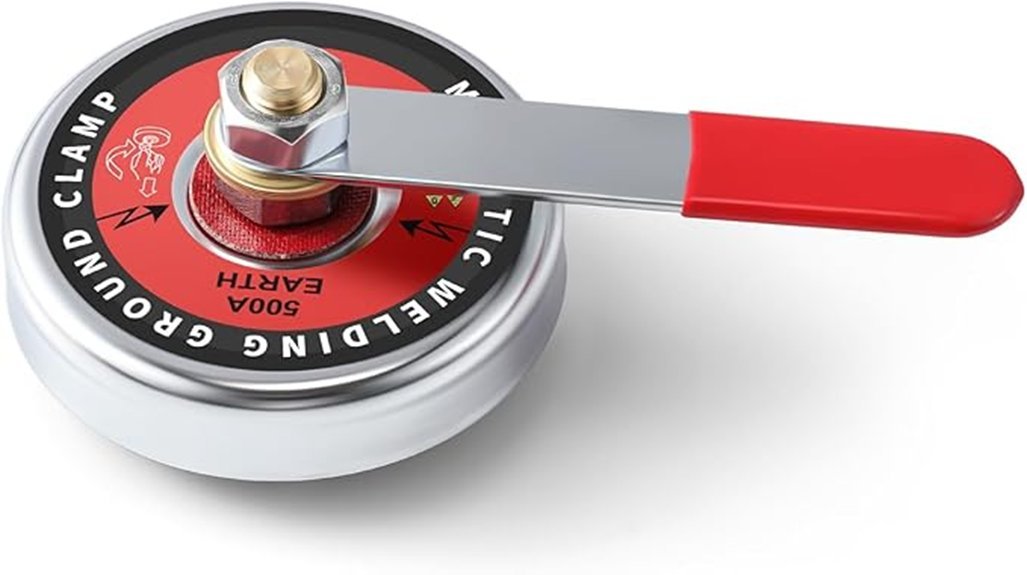
Getting a solid work connection can be frustrating when a traditional clamp has nowhere convenient to bite. The 500 Amp Magnetic Welding Ground Clamp is designed to solve that problem by attaching magnetically to ferrous steel and giving you a faster way to position your work lead. Its main advantages are the strong magnetic base, quick-release design, and 500-amp current rating. The tradeoff is important: magnetic attachment only works on suitable ferrous surfaces, and good electrical contact still depends on clean metal.
Quick Verdict
Rating: Recommended with caveats
Best For: Welders who regularly work on steel plate, pipe, angle iron, welding tables, and other magnetic work surfaces.
Bottom Line: The magnetic base can make positioning a work connection faster when a jaw-style clamp is awkward to place. It is less versatile on non-ferrous metals and still requires a clean contact area for dependable current flow.
| Specification | Detail |
|---|---|
| Product type | Magnetic welding work/ground clamp |
| Current rating | 500 amps |
| Magnetic base | Approximately 3.4 inches in diameter |
| Construction | Aluminum alloy and copper components |
| Release design | Quick-release magnetic mechanism |
| Surface compatibility | Ferrous steel surfaces that the magnet can grip |
| Typical workpieces | Steel plate, pipe, angle iron, fabrication tables, and similar steel parts |
| Primary benefit | Fast placement where a conventional jaw clamp is inconvenient |
What Is the 500 Amp Magnetic Welding Ground Clamp?
This tool is a magnetic alternative to the spring-jaw work clamp commonly supplied with welding equipment. Although these accessories are often called grounding clamps, their job during welding is to help complete the electrical circuit between your welding power source and the workpiece.
Instead of relying on jaws that must grip an edge, the clamp uses a magnetic base that can attach to a suitable steel surface. The quick-release mechanism helps you detach and reposition it without fighting the magnetic force by hand. That design can be useful on large plate, round pipe, angle iron, fabrication tables, and workpieces where an edge is difficult to reach.
Before You Buy: The 500-amp figure describes electrical current capacity, not magnetic pulling force. You also need a ferrous metal surface for magnetic attachment, so this is not a universal replacement for a conventional clamp.
Key Takeaways
- 500-amp current rating: Designed for welding applications that require a high-capacity work connection, subject to the ratings of your cable, machine, connectors, and complete setup.
- Magnetic mounting: Lets you position the work connection on suitable steel surfaces without searching for an exposed edge for clamp jaws.
- Quick release: Helps you remove and reposition the magnetic base more easily between weld locations.
- Ferrous surfaces only: The magnet will not attach effectively to aluminum, copper, austenitic stainless grades, or other non-magnetic materials.
- Contact quality still matters: Paint, heavy rust, mill scale, dirt, and poor surface contact can interfere with the electrical connection even when the magnet stays in place.
Who Should Buy It?
Best For
- Fabricators working mainly with magnetic steel plate, pipe, or structural sections.
- Welders who frequently reposition their work clamp during a project.
- Shops where conventional clamp jaws cannot easily reach a clean exposed edge.
Skip If
- You regularly weld aluminum, copper, or other non-magnetic workpieces.
- You need a clamp that can mechanically bite through awkward edges or irregular surfaces.
- Your work lead, connector, or welding machine is not rated for the current you plan to use.
Magnetic Features and Stability
The strongest reason to choose this style of clamp is positioning flexibility. A conventional spring clamp usually needs an exposed edge or enough room for its jaws. A magnetic base can instead sit directly on a suitable steel plate, pipe, table, or structural section.
The product is designed to hold on smooth, rough, curved, and flat ferrous surfaces. In practice, the quality of that connection will depend on how much of the magnetic face actually contacts the steel. Flat, clean surfaces normally give the magnet the largest contact area, while heavy scale, debris, sharp curvature, or uneven surfaces can reduce both magnetic holding area and electrical contact.
The roughly 3.4-inch magnetic base gives the clamp a broad footprint for this type of accessory. That can help keep it stable when the work lead is moved, although you should still route your cable so it does not pull unnecessarily against the clamp.
Pro Tip: Put the clamp on clean, bare steel as close to the welding area as practical. Removing paint, heavy rust, and scale from the contact spot can improve electrical continuity and reduce connection problems.
Materials, Heat Resistance, and Durability
The clamp uses aluminum alloy and copper components, materials that help balance weight, conductivity, and durability. Its product description also presents the assembly as resistant to the elevated temperatures encountered around welding work.
That does not mean the magnet should be treated as a heat sink or placed directly against a freshly welded joint. Excessive heat can affect magnets and surrounding components. Position the work connection away from the hottest part of the joint whenever your setup allows, and follow the welding machine and accessory instructions.
The magnetic format also eliminates the spring jaws found on a conventional work clamp. That reduces one common mechanical component, but the magnetic face and electrical contact surfaces still need reasonable care. Metal dust, grinding debris, and spatter can collect around magnets, so cleaning the base before storage can help maintain good surface contact.
Ease of Use and Efficiency
The quick-release mechanism is one of the most practical features. A strong magnet can be awkward to pull straight off steel, especially when you are wearing welding gloves. The release mechanism gives you leverage for faster removal and repositioning.
This can save time when you move between several parts on a fabrication table or need to change the location of your work connection as a weld progresses. It also avoids searching for an edge thick enough for traditional clamp jaws.
Setup is still more than simply sticking the magnet anywhere on the workpiece. A reliable welding circuit requires suitable cable connections and good metal-to-metal contact. Treat the magnetic clamp as a convenient work-connection tool, not as a shortcut around proper setup.
How It Performs in Real Use
On Flat Steel Plate
Flat plate is one of the most natural uses for a magnetic clamp because the base can make broad contact with the surface. This is especially helpful when the plate is large and the nearest exposed edge is far from the welding area. Clean a contact spot first so the clamp is connecting to bare conductive steel rather than paint or heavy scale.
On Pipe and Curved Steel
The magnetic base can also be useful on ferrous pipe and other curved parts. The main limitation is contact area. A sharply curved surface touches less of the magnet than a flat plate, so you should confirm that the clamp feels secure and that the electrical connection is stable before welding.
On a Welding Table
If your workpiece has a reliable conductive path through a steel welding table, the magnetic base can provide a convenient connection point. Direct connection to the actual workpiece is generally preferable when there is any doubt about continuity through fixtures, coatings, rust, or separate components.
During Repetitive Fabrication
The quick-release feature becomes more useful when you repeatedly reposition material. Instead of opening spring jaws each time, you can release the magnet, move it to a clean spot, and establish the next connection. This is where the design offers its clearest workflow advantage.
How to Use It Correctly
- Confirm compatibility first. Check the ratings and instructions for your welder, work lead, cable, connectors, and clamp.
- Choose a ferrous surface. Test that the magnet grips the workpiece firmly before relying on it.
- Expose clean metal. Remove paint, rust, scale, grease, or debris from the intended contact area when necessary.
- Position the clamp near the work. Keep the electrical path practical and avoid placing the clamp where it will interfere with your welding movement.
- Secure the work lead correctly. Make sure the cable connection to the clamp’s stud or terminal is tight according to the accessory design.
- Check the connection before welding. Do not continue if the clamp shifts, the cable connection becomes hot, or the arc behaves inconsistently.
- Use the quick release for removal. Avoid dragging the magnetic face across hot or dirty metal when repositioning it.
Compatibility and Safety
A magnetic work clamp does not automatically make every welding setup compatible. The complete electrical path matters, including your power source, work lead, connector, cable gauge, clamp connection, and workpiece. Follow your welding machine manual when choosing and connecting replacement work-clamp components.
The magnet also limits the materials on which the clamp can physically attach. Mild steel and many other ferrous steels are suitable magnetic surfaces. Aluminum, copper, and many stainless-steel alloys are not. For those materials, a conventional mechanical work clamp is usually the more practical option.
Always inspect the work lead and clamp before use. Loose cable connections, damaged insulation, excessive heating, or contaminated contact areas need attention before you continue welding. Use appropriate welding PPE and follow the safety instructions supplied with your welding equipment.
Pros and Cons
Pros
- 500-amp current rating suits demanding welding setups when the rest of the circuit is properly rated.
- Magnetic attachment can eliminate the need to find an exposed edge for clamp jaws.
- Quick-release design makes frequent repositioning easier.
- Works on flat and curved ferrous workpieces when adequate magnetic contact is available.
- Aluminum alloy and copper construction is appropriate for a compact welding accessory.
Cons
- Magnetic mounting does not work properly on non-ferrous metals such as aluminum and copper.
- Paint, rust, mill scale, and debris can reduce electrical contact even if the magnet appears secure.
- A conventional jaw clamp may be more versatile when you work with mixed materials or irregular surfaces.
Is It Worth the Price?
This clamp makes the most sense for you when convenience and fast repositioning matter more than universal material compatibility. If much of your fabrication work involves steel plate, pipe, angle iron, or a steel welding table, the magnetic format can remove one small but repetitive setup hassle.
Its value is less compelling if you regularly work with aluminum or other non-magnetic metals. In that situation, you would still need a traditional mechanical work clamp, so the magnetic model becomes an additional accessory rather than a complete replacement.
Because online pricing can change, judge the current listing against other 500-amp work clamps based on connection method, cable attachment design, magnetic base size, return policy, and the type of metal you normally weld.
How It Compares to Alternatives
Compared with a traditional spring-jaw work clamp, this magnetic design is easier to place on the middle of a broad steel surface because it does not require an exposed edge. A jaw clamp has the advantage when you need to grip non-magnetic conductive metal or mechanically bite onto a suitable edge.
Compared with other magnetic welding clamps, the main buying factors are current rating, magnet size, release mechanism, terminal design, and build quality. The 500 Amp Magnetic Welding Ground Clamp is most appealing when you specifically want a high-capacity magnetic connection with a quick-release base.
Frequently Asked Questions
What does the 500-amp rating mean?
The 500-amp figure is an electrical current rating, not a measurement of magnetic pulling strength. Your welding machine, work cable, connectors, and complete circuit also need to be suitable for the current you intend to use.
Can it be used with MIG, TIG, and stick welders?
A work clamp is part of the welding circuit rather than a process-specific torch accessory. Compatibility depends on your welding machine, work-lead connection, cable rating, and the way the clamp attaches to that lead, so check your welder manual before replacing the original clamp.
Will the magnet hold on curved pipe?
It is designed for both flat and curved ferrous surfaces. A sharply curved pipe gives the magnetic face less contact area than a flat plate, so confirm that the clamp is secure before starting your weld.
Can it attach to aluminum or copper?
No. Aluminum and copper are non-ferrous and do not provide the magnetic attraction this clamp needs for mounting. Use a suitable mechanical work clamp when welding non-magnetic materials.
Can I put the clamp over paint or rust?
The magnet may still hold through some coatings or surface contamination, but that does not guarantee a good electrical connection. For dependable welding performance, use a clean, bare-metal contact location whenever possible.
Is it better than a traditional ground clamp?
It is better for certain steel setups because you can place it on a broad magnetic surface without finding an edge for jaws. A traditional clamp is more versatile when you work with non-magnetic metals or need a mechanical grip on an irregular part.
What warranty does this welding ground clamp include?
A reliable warranty period could not be confirmed for the exact linked product. Check the current Amazon listing and seller terms before ordering because warranty and return coverage can change.
The Bottom Line
The 500 Amp Magnetic Welding Ground Clamp is worth considering when you mainly weld ferrous steel and want a work connection that is fast to position and release. Its main advantage is convenience on steel plate, pipe, and similar surfaces, while its biggest limitation is that magnetic mounting cannot replace a mechanical clamp for every metal or workpiece.
If those limitations fit your workflow and your welding lead is compatible, the magnetic design can be a useful addition to your fabrication setup.
Ready to Buy?
Check the latest product details, compatibility information, and seller terms before you decide.


