Disclosure: As an Amazon Associate, we earn from qualifying purchases. If you click a link on this page and make a purchase, we may receive a small commission at no extra cost to you.
A weak ground connection can cause unstable arcs, extra heat, and frustrating weld quality problems. The 260/500A Welding Ground Clamp is built for welders who want a compact brass clamp with a stated maximum current capacity of 260A. This review helps you decide whether its brass construction, portable size, and basic support for common welding techniques fit your setup. It looks useful for everyday shop and mobile work, but you should confirm the current rating against your welder before using it on higher-output jobs.
Quick Verdict
Rating: Recommended with caveats, 7.5/10
Best For: Welders who need a compact brass ground clamp for light to moderate welding setups within a 260A supported range.
Bottom Line: The clamp’s brass construction and compact design make it a practical replacement or backup ground clamp for many welding tasks. The main tradeoff is that the article supports a 260A maximum current claim, so you should not assume it is right for heavier current work without checking your equipment requirements.
| Specification | Detail |
|---|---|
| Product Name | 260/500A Welding Ground Clamp |
| Product Type | Welding ground clamp |
| ASIN From Product Link | B0D1V7SJHR |
| Supported Current | Article-supported maximum current capacity of 260A |
| Material | Brass construction |
| Design | Compact, ergonomic clamp design |
| Weight | Described as only a few pounds |
| Welding Technique Examples | Article mentions argon arc welding and submerged arc welding |
| Best Use | Portable welding setups, shop work, repair jobs, and backup clamp use within the supported rating |
| Care Note | Clean with mild soap and water, dry it well, and inspect the jaw contact area regularly |
What Is the 260/500A Welding Ground Clamp?
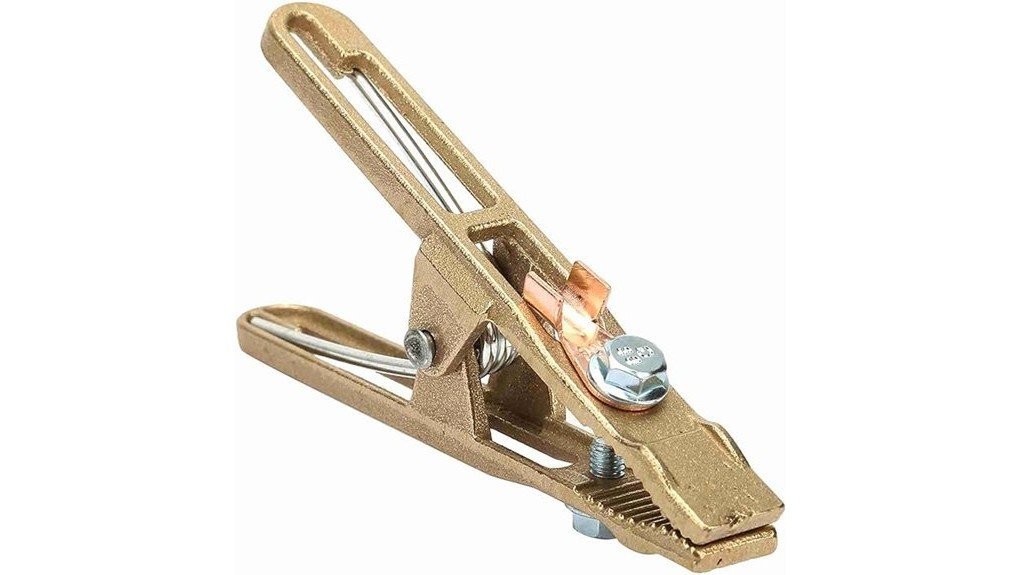
The 260/500A Welding Ground Clamp is a work clamp designed to help complete the electrical circuit between your welding machine and the workpiece. The article describes it as a brass clamp with a compact form, ergonomic handling, and a stated maximum current capacity of 260A.
Its main job is simple but important: hold firm contact on clean metal so your welder can maintain stable electrical flow. That matters because poor ground contact can lead to arc instability, extra spatter, weak starts, and inconsistent weld results.
This clamp makes the most sense if you need a portable replacement clamp, a backup for a smaller shop setup, or a more compact option for mobile repair work. It is not the right product to choose blindly for high-amperage industrial welding unless you verify the current rating, cable size, and machine requirements first.
Before You Buy: The product name includes “260/500A,” but the article supports a maximum current capacity of 260A. Do not assume it can handle 500A continuous welding work unless the seller or manufacturer documentation confirms that rating for your setup.
Who Should Buy It?
Best For
- Welders who need a compact ground clamp for light to moderate work within a 260A supported range.
- Mobile repair users who value a clamp that is described as lightweight and easy to store.
- Shop users who want brass construction for good electrical contact and better corrosion resistance than plain steel.
Skip If
- Your welder or job requires a verified current rating above 260A.
- You need a complete cable assembly, connector kit, or machine-specific replacement part.
- You want fully verified brand, dimension, warranty, and package details before buying.
Design and Build Quality
The strongest article-supported detail is the clamp’s brass construction. Brass is commonly valued in electrical contact parts because it conducts current well and resists corrosion better than many plain steel parts. For a welding ground clamp, that material choice can help maintain cleaner contact when the clamp is cared for properly.
The clamp is also described as compact and ergonomic. That matters when you move between work areas, store tools in a small welding cart, or need to reposition the clamp several times during a project. A bulky clamp can get in the way on small workpieces, while a compact one can be easier to place.
The tradeoff is that the source article does not provide exact jaw opening, dimensions, spring strength, cable size, or connector details. Those missing details matter if you need the clamp to fit thick workpieces, a specific welding lead, or a machine-specific cable setup.
Electrical Contact and Welding Performance
A ground clamp affects how well your welder completes the circuit through the workpiece. When the clamp grips clean metal firmly, you are more likely to get a stable arc, smoother starts, and more consistent weld behavior.
The article states that this clamp supports welding techniques such as argon arc welding and submerged arc welding. For practical buying purposes, the key point is still the same: your clamp should match the current output, cable size, and workpiece contact needs of your welding setup.
Its stated maximum current capacity of 260A puts it in a useful range for many light and moderate welding tasks. However, you should treat that number as a buying limit, not a suggestion to push beyond the rating.
Fit, Compatibility, and Setup
This clamp may work with different welding machines when the cable connection, current rating, and workpiece contact needs match your equipment. It should not be treated as a universal fit for every machine because welding leads and connector setups can vary.
Before installing it, compare the clamp’s supported rating with your welder’s output and your cable size. Also check how the cable attaches to the clamp, especially if you are replacing a damaged factory clamp or building your own welding lead.
Pro Tip: For better contact, clamp onto clean bare metal instead of painted, rusty, oily, or heavily scaled surfaces. A small amount of prep can make the ground connection more stable.
Portability and Storage
The article describes the clamp as weighing only a few pounds, with a compact design that supports easy transport and storage. That can help if you carry tools between job sites, keep a backup clamp in a truck, or work from a small welding cart.
Portability also matters when you need to reposition your ground connection during a project. A lighter clamp is easier to move, but you still need enough jaw pressure and contact area for stable performance.
How It Performs in Real Use
For Shop Welding
In a small shop, this clamp should work best when attached to a clean metal table, workpiece, or fixture within its supported current range. Its brass construction helps with electrical contact, while the compact body can make it easier to place around smaller projects.
For Mobile Repair Work
For mobile repair, the lightweight and compact design is the main advantage. You can store it with your leads and move it between work areas without adding much bulk. The limitation is that you must still confirm the clamp, cable, and welder output match the repair task.
For Higher-Current Jobs
This is where buyers should be careful. The article supports a maximum current capacity of 260A, so it may not be the best choice for heavy industrial welding or jobs that require a verified higher amperage clamp. Choose a heavier-rated clamp when your machine or duty cycle calls for it.
For Long-Term Use
Long-term performance depends on how well the clamp maintains clean contact and firm jaw pressure. Brass construction can help with durability, but you should still inspect the jaw contact points, spring action, and cable connection before important welds.
Cleaning and Maintenance Tips
Good maintenance keeps the clamp safer and more reliable. Wipe away dirt, dust, oil, and metal residue after use. If the clamp needs cleaning, use mild soap and water, dry it fully, and avoid harsh chemicals that may leave residue on the contact surfaces.
Inspect the jaws for wear, corrosion, looseness, or poor contact. Also check that the cable connection remains tight. A clamp can look fine on the outside but still perform poorly if the cable connection is loose or the contact area is dirty.
Compatibility and Safety Notes
A welding ground clamp is part of an electrical system, so you should match it to your machine and follow your welder’s manual. Do not use the clamp above its supported current rating, and do not keep welding if the clamp, cable, or connection becomes hot, loose, damaged, or unstable.
Place the clamp where it can make direct contact with the workpiece or a properly connected welding table. Avoid clamping over paint, rust, heavy mill scale, or loose material when possible because those surfaces can reduce conductivity.
This clamp is not a replacement for proper protective gear, safe welding technique, or equipment inspection. Use appropriate welding gloves, eye protection, ventilation, and safety procedures for your project.
Pros and Cons
Pros
- Brass construction supports strong electrical contact and good durability.
- Stated 260A maximum current capacity fits many light to moderate welding tasks.
- Compact design helps with storage, transport, and tight work areas.
- Ergonomic handling can make repeated clamp placement easier during projects.
- Article mentions use across welding techniques such as argon arc and submerged arc welding.
Cons
- Not ideal if your setup needs a verified rating above 260A.
- Exact dimensions, jaw opening, cable size, and warranty details are not provided in the source article.
- You must install and place it correctly because poor contact can still cause unstable welding.
Is It Worth the Price?
The 260/500A Welding Ground Clamp is worth considering if you need a compact brass clamp for everyday welding support and your setup falls within the stated 260A maximum current range. Its value comes from the combination of brass construction, manageable size, and practical portability.
It is a smart buy for everyday use if you need a replacement or backup clamp and do not require a full welding lead assembly. You will get the most value if you already know your machine requirements and only need the clamp itself.
It is not the best fit if you need fully verified industrial specifications, a higher current rating, or a complete machine-specific kit. In that case, compare it with heavier-duty clamps that list exact jaw opening, cable compatibility, and rating details.
How It Compares to Alternatives
Compared with basic steel ground clamps, this brass clamp may appeal to buyers who care more about electrical contact and corrosion resistance. Compared with magnetic ground clamps, it gives you a traditional mechanical grip, which can be better when you need firm jaw pressure on a suitable edge or work surface.
Compared with larger 300A or 500A clamp assemblies, this model makes more sense for lighter and moderate work where compact handling matters. Choose a heavier verified clamp if your welder output, duty cycle, or workpiece size demands more capacity.
Frequently Asked Questions
Is the 260/500A Welding Ground Clamp really rated for 500A?
The source article supports a maximum current capacity of 260A. Because the name includes “260/500A,” you should verify the seller or manufacturer details before treating it as suitable for 500A welding work.
Can this clamp be used with inverter welding machines?
It may work with an inverter welder if the current rating, cable connection, and clamp setup match your machine. Check your welder manual and cable requirements before replacing or installing any ground clamp.
What welding techniques does it support?
The article mentions argon arc welding and submerged arc welding as example uses. For any process, the important check is whether the clamp’s 260A supported rating and cable setup match your welder.
How do you get the best contact from this clamp?
Clamp it to clean bare metal whenever possible. Paint, rust, oil, scale, and loose debris can weaken the ground path and make the arc less stable.
Is brass better than steel for a welding ground clamp?
Brass is often valued for electrical contact parts because it conducts well and resists corrosion better than plain steel. That does not make the clamp maintenance-free, so you should still keep the contact areas clean.
How should you clean and maintain the clamp?
Use mild soap and water when needed, then dry the clamp fully before storage. Inspect the jaws, spring action, and cable connection regularly for looseness, wear, or corrosion.
Who should skip this welding ground clamp?
Skip it if your welding setup needs a verified rating above 260A or a machine-specific clamp and cable assembly. You may also want another option if you need exact published details for jaw opening, dimensions, cable size, and warranty terms.
What is the most common mistake when using a ground clamp?
A common mistake is clamping to a dirty, painted, rusty, or poorly connected surface. That can reduce conductivity and make welding performance less consistent.
The Bottom Line
The 260/500A Welding Ground Clamp is a good fit if you want a compact brass ground clamp for portable, shop, or repair work within a 260A supported range. Its main strengths are brass construction, manageable size, and practical handling, while its biggest limitation is the lack of fully verified external specs for higher-current or machine-specific use. Skip it if your welding setup requires a confirmed higher amp rating, exact jaw dimensions, or a complete cable assembly.