Disclosure: As an Amazon Associate, we earn from qualifying purchases. If you click a link on this page and make a purchase, we may receive a small commission at no extra cost to you.
Fine-pitch pins, tiny PCB pads, and hidden BGA joints leave little room for excess flux or poor heat control. The MECHANIC M35 solder flux paste is a transparent, syringe-dispensed flux sold for precision electronics repair, including SMD, BGA, and mobile-device board work. This review explains where its controlled application and no-clean, low-residue formula can help, what technique it still demands, and who should choose a different flux. It is a focused micro-soldering product, not a universal option for plumbing, large cables, or heavy metalwork.
Quick Verdict
Rating: 8/10, recommended with caveats
Best For: PCB repair, SMD soldering, BGA rework, fine-pitch pins, and targeted micro-soldering
Bottom Line: MECHANIC M35 gives you a clear, tacky flux that is easier to place precisely than a thin liquid flux. Its 10CC syringe and low-residue formula suit compact electronics, but the product still requires careful dosing, ventilation, heat control, and post-work inspection.
| Specification | Detail |
|---|---|
| Product Name | MECHANIC M35 Nano Flux Paste |
| Model | M35 |
| Product Type | No-clean soldering flux paste for electronics |
| Package Format | 10CC syringe |
| Appearance | Transparent paste |
| Formula Claims | Marketed as lead-free, halogen-free, no-clean, and ultra-low residue |
| Application Design | Syringe dispensing for small, controlled deposits |
| Best Use | BGA, SMD, PCB repair, fine-pitch soldering, and mobile-device motherboard work |
| Not Best For | Plumbing, stained glass, large terminals, battery cables, or heavy industrial soldering |
| Storage Note | Keep the syringe capped and follow the package directions for storage and shelf life |
What Is the MECHANIC M35 Solder Flux Paste?
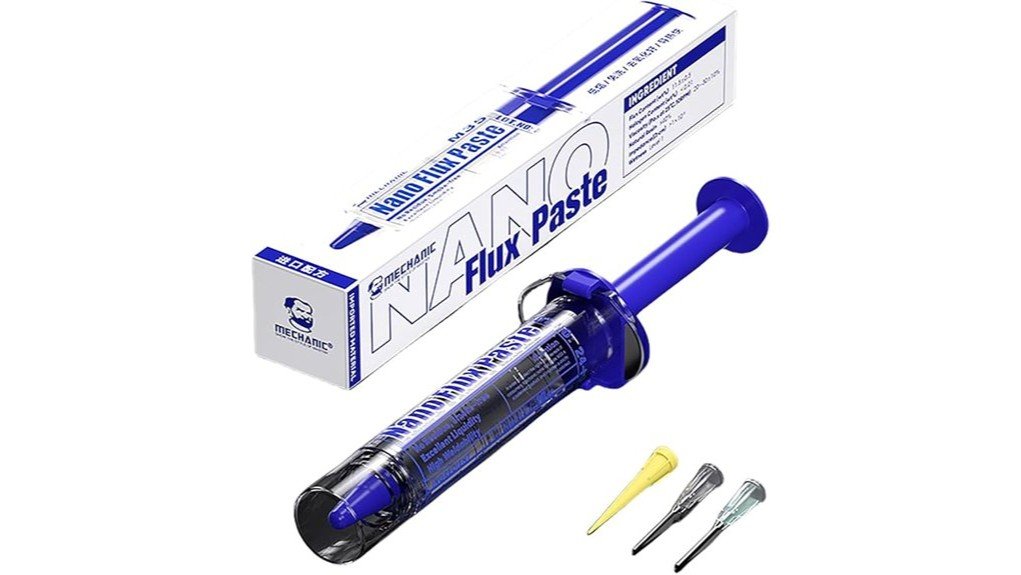
MECHANIC M35 is a transparent flux paste packaged in a 10CC syringe for precision electronics work. Flux helps remove surface oxidation and improves solder wetting while a joint is heated, but it does not replace solder, proper tip selection, or correct temperature control.
The product is marketed for high-density electronics, including SMD parts, BGA packages, fine-pitch pins, and small motherboard repairs. Its syringe format lets you place a dot or narrow bead near the target instead of coating a wide section of the board.
The main selling point is control. The paste stays near the work area better than a very thin liquid flux, while its transparent appearance makes it easier to see pads, pins, and solder movement during repair.
Key Features That Affect Real Soldering Work
No-Clean, Low-Residue Formula
M35 is sold as a no-clean, ultra-low-residue flux. That can make inspection and cleanup easier on dense boards because you are less likely to cover nearby components with a thick, dark residue.
No-clean does not mean residue is always harmless or that cleaning is never needed. On high-impedance, high-voltage, high-frequency, moisture-sensitive, or valuable electronics, follow the device maker’s process and clean the area when residue could affect inspection or reliability.
Transparent Paste for Better Visibility
The clear paste lets you watch solder wet a pad or move along fine-pitch pins without a dark flux layer hiding the joint. That visibility is useful during drag soldering, connector touch-ups, and chip-edge work where bridges can form quickly.
Transparency does not make defects easier to fix by itself. You still need magnification, good lighting, and a close inspection after the board cools.
Syringe Dispensing for Precise Placement
The 10CC syringe is more controlled than brushing paste from a jar across a large area. You can place a small dot on a pad, add a narrow line along IC pins, or apply flux at the edge of a BGA package before rework.
The tradeoff is pressure control. Thick flux can continue to move from the nozzle after you stop pressing, so cap the syringe promptly and wipe the tip before storage.
Tacky Body for Component and Solder Control
A paste-style flux tends to remain where you put it, which helps when you need a stable deposit around tiny pads or solder balls. It can also help keep small components from sliding before heat is applied.
Too much paste can hide bridges, collect debris, or spread under nearby parts. A small amount is usually easier to heat, inspect, and clean than a large blob.
Before You Buy: MECHANIC M35 is a specialized electronics flux. Do not use it as a substitute for plumbing flux, and do not assume the “no-clean” label removes the need for inspection or cleanup on sensitive boards.
Compatibility and Safety
MECHANIC M35 makes the most sense for copper pads, component leads, solder balls, and other surfaces found in PCB rework. It is not presented as a universal flux for every alloy, metal, coating, or production process.
Work with local fume extraction or strong ventilation. Avoid breathing soldering fumes, keep the paste away from your eyes and skin, wash your hands after use, and keep the syringe away from children and food-preparation areas.
For expensive devices or boards with hidden joints, follow the manufacturer’s repair guidance or use a qualified technician. Excess heat, repeated rework, physical pressure, and too much flux can damage pads, solder mask, connectors, and nearby components.
The listing markets M35 as lead-free and halogen-free, but buyers who need a documented IPC flux classification, safety data sheet, lot traceability, or production approval should obtain current technical documents before using it in controlled manufacturing.
Who Should Buy It?
Best For
- Repair technicians working on SMD parts, BGA packages, connectors, and compact PCBs
- Experienced hobbyists who want a clear, tacky flux for controlled micro-soldering
- Users who prefer a syringe for spot repairs instead of brushing flux over a wide area
Skip If
- You need flux for plumbing, stained glass, large lugs, battery cables, or heavy metalwork
- You are learning basic through-hole soldering and want a thinner, more forgiving starter flux
- Your workplace requires a verified technical data sheet, IPC classification, or lot-specific documentation
How It Performs in Real Use
For PCB Pad and Trace Repair
For pad touch-ups and small trace repairs, M35 lets you apply flux directly to the exposed copper and nearby solder. The paste stays close to the target, which helps you avoid flooding connectors or components beside the repair.
Flux cannot restore a torn pad or damaged trace on its own. You still need proper surface preparation, suitable wire or copper repair material, controlled heat, and strain relief when the repair requires it.
For Fine-Pitch SMD Pins
A thin line of M35 along IC pins can support drag soldering by helping molten solder wet the leads and pads. Its transparent appearance also makes it easier to spot solder bridges than an opaque, heavily colored paste.
Use very little. Fine-pitch pins can bridge when the tip carries too much solder, the flux deposit is excessive, or the iron remains on the joint too long.
For BGA and Reballing Work
M35 is marketed for BGA soldering and other dense, miniaturized packages. A controlled flux layer can help solder balls wet their pads during reballing or chip replacement when the board, stencil, balls, and temperature profile are correct.
BGA joints are hidden, so successful rework depends on more than visible solder flow. Board preheating, even support, controlled hot-air temperature, alignment, and post-rework inspection are essential.
For Phone and Console Motherboard Repair
The syringe format fits phone, handheld-console, and compact motherboard repairs where shields, connectors, and tiny passive components sit close together. You can apply flux near the target without brushing across the full board.
These boards often use heat-sensitive connectors, underfill, multilayer traces, and tightly packed components. Practice on scrap hardware before using M35 on a device you cannot afford to damage.
How to Use It Correctly
Start with a powered-off, disconnected board and a clean work surface. Remove loose dirt and old residue as appropriate, then inspect the pads, pins, and surrounding components under magnification.
Apply a small dot or thin line of M35 only where solder needs to flow. Use the correct tip or hot-air nozzle, add heat for the shortest practical time, and stop if nearby plastic parts, pads, or solder mask begin to show heat stress.
Let the board cool before inspection. Check for bridges, dull or incomplete joints, shifted components, solder balls, and residue trapped around connectors or under nearby parts. Clean the area when the product instructions, board requirements, or repair standard calls for it.
Cap the syringe after use and store it according to the package directions. Replace it if the paste separates, becomes contaminated, develops an unusual odor, or no longer dispenses consistently.
Pro Tip: For fine-pitch pins, place a very thin bead of flux, load only a small amount of solder on the tip, and inspect the entire pin row before applying more. Extra flux cannot correct excessive solder or poor tip control.
Common Mistakes to Avoid
Applying Too Much Flux
A large deposit can spread beyond the joint, hide bridges, and make cleanup harder. Begin with less than you think you need and add another small amount only when solder stops wetting the target properly.
Using Heat to Compensate for Dirty Surfaces
Flux helps with oxidation, but it cannot correct severe contamination, damaged plating, or poor surface preparation. Clean and inspect the joint before increasing temperature or dwell time.
Skipping Post-Repair Inspection
A shiny joint can still have a bridge, insufficient wetting, or hidden damage. Use magnification and, when appropriate, electrical testing before reconnecting power.
Treating No-Clean Residue as Universally Safe
No-clean residue may be acceptable in some repairs, but process requirements vary. Clean or document the residue whenever the device maker, board environment, or workplace standard requires it.
Pros and Cons
Pros
- Transparent paste keeps pads and pins visible during precision work
- 10CC syringe supports small, controlled deposits and spot repairs
- No-clean, low-residue formula can reduce routine cleanup on suitable boards
- Tacky consistency stays near fine-pitch pins, BGA edges, and compact components
- Designed around SMD, BGA, PCB, phone, and micro-soldering use cases
Cons
- Thick paste can ooze from the syringe or become messy when over-applied
- No-clean labeling does not remove the need for inspection or cleaning in every circuit
- Publicly available listing information does not replace formal process documentation for industrial use
Need a Precision Electronics Flux?
Check the current package details and seller information before ordering.
Is It Worth the Price?
MECHANIC M35 sits in the budget-to-mid-range part of the electronics flux market. It is worth considering when you regularly work on small boards and value clear visibility, controlled syringe placement, and a paste that stays close to the joint.
You get the most value from it when you repair SMD parts, drag-solder fine-pitch pins, rework BGA packages, or handle compact phone and console boards. A casual user who mainly solders large wires or through-hole kits may get similar practical results from a simpler electronics flux pen or general-purpose rosin flux.
The main value limitation is documentation. If your process requires verified chemistry, a safety data sheet, an IPC classification, lot traceability, or a formal shelf-life statement, confirm those documents with the seller or manufacturer before purchase.
How It Compares to Alternatives
Compared with a liquid flux pen, M35 is thicker and easier to keep on a small pad or pin row, but a pen can be cleaner and simpler for light through-hole work. Compared with basic rosin paste, M35 offers a transparent, syringe-based format aimed more directly at dense electronics and micro-soldering.
Professional options such as Chip Quik or MG Chemicals fluxes may offer clearer technical documentation and established part-number data. MECHANIC M35 makes the most sense when you want an affordable, visible, tacky flux for repair-bench use and do not need a production-qualified material.
Frequently Asked Questions
Is MECHANIC M35 solder paste or flux?
It is flux paste, not solder paste. You still need solder wire, solder balls, or another solder source because M35 does not supply the metal that forms the joint.
Is MECHANIC M35 suitable for electronics?
It is marketed for PCB, SMD, BGA, and mobile-device motherboard work. Use a small amount, control the heat, provide ventilation, and follow the board maker’s repair instructions when available.
Does no-clean flux need to be removed?
Not in every repair, but no-clean is not a universal instruction to leave all residue in place. Clean it when residue affects inspection or when the board, device maker, workplace process, or operating environment requires removal.
Can beginners use MECHANIC M35?
A beginner can use it, but the thick paste and precision applications demand good control. Practice on scrap boards before attempting fine-pitch connectors, BGA chips, or valuable electronics.
How much M35 flux should you apply?
Start with a small dot for a single joint or a thin bead for a short pin row. Add more only when needed, because excess paste can spread, hide bridges, trap debris, and increase cleanup.
Can you use M35 for plumbing or large battery cables?
No. M35 is aimed at compact electronics, not plumbing joints, stained glass, large lugs, or heavy cable work. Those jobs need a flux and process matched to the metal, solder alloy, joint size, and service conditions.
How should you store the syringe?
Wipe the nozzle, replace the cap, and follow the temperature and shelf-life directions printed on the package. Do not use contaminated, separated, hardened, or inconsistently dispensing flux on an important repair.
Who should skip MECHANIC M35?
Skip it if you need a heavy-duty flux, a beginner-focused liquid pen, or a material approved under a documented production process. It is also a poor match when you cannot provide ventilation or inspect the finished work under magnification.
The Bottom Line
MECHANIC M35 earns an 8/10 for experienced hobbyists and repair technicians who need a transparent, tacky flux for SMD, BGA, PCB, and fine-pitch work. Its strongest features are controlled 10CC syringe dispensing and low-residue visibility, while its main limitations are technique sensitivity and limited public process documentation.
Buy it for targeted electronics rework when you can control heat and inspect the finished joint. Skip it for plumbing, heavy cable work, basic beginner practice, or manufacturing that requires fully verified technical documentation.
Ready to Buy?
Check the latest seller, package, and product details before you decide.