Metabo HPT THE TANK EC914S Review
A standard 6-gallon pancake compressor is easy to store, but many models struggle when you move beyond occasional trim work. The Metabo HPT THE TANK EC914S aims to solve that problem with a 200 PSI maximum, 4.0 CFM at 90 PSI, and enough output to support multiple nailers. This review explains where that extra capacity helps, what the 76 dB sound rating and roughly 42-pound weight mean in daily use, and which air tools still need a larger compressor. The main tradeoff is simple: you get stronger jobsite-style performance in a compact footprint, but not quiet operation or continuous high-CFM output.
Quick Verdict
Rating: 8.8/10, recommended with caveats
Best For: Homeowners, remodelers, and small crews using framing, roofing, siding, finish, or brad nailers.
Bottom Line: The EC914S delivers more stored pressure and airflow than many basic pancake compressors while remaining easy to store. Its 76 dB sound rating, roughly 42-pound weight, and limited tank size make it less suitable for quiet indoor work or continuous air tools.
Key Takeaways
- The EC914S uses a 6-gallon pancake tank with a 200 PSI maximum and a 170 PSI cut-in pressure.
- Air delivery is rated at 5.1 CFM at 40 PSI and 4.0 CFM at 90 PSI, which gives nailers more recovery headroom than many entry-level pancake models.
- Two installed 1/4-inch brass couplers let you connect two hoses without adding a splitter.
- The oil-free pump reduces routine maintenance, but you still need to drain moisture from the tank after use.
- This compressor suits intermittent tools such as nailers and inflators. It is not designed to supply high-demand sanders, grinders, or spray equipment continuously.
Key Specifications
| Specification | Detail |
|---|---|
| Brand | Metabo HPT |
| Model | EC914S, THE TANK |
| Product type | Corded, oil-free pancake air compressor |
| Power supply | 120V, 60Hz, 13.5 amps |
| Running horsepower | 1.3 HP |
| Tank capacity | 6 gallons |
| Maximum pressure | 200 PSI |
| Pressure switch range | Motor starts near 170 PSI and stops near 200 PSI |
| Air delivery | 5.1 CFM at 40 PSI; 4.0 CFM at 90 PSI |
| Couplers | Two installed 1/4-inch brass couplers |
| Gauges | Tank-pressure gauge and regulated outlet-pressure gauge |
| Sound rating | 76 dB using the manufacturer’s stated test procedure |
| Weight | About 41 to 42 lb, depending on the published listing |
| Approximate dimensions | 16 x 16 x 18.5 inches |
| Included items | EC914S compressor, two installed couplers, and instruction manual |
| Warranty | Metabo HPT one-year professional tool warranty |
| Best use | Framing, roofing, siding, finish and brad nailers, plus intermittent inflation work |
What Is the Metabo HPT THE TANK EC914S?
The EC914S is a portable 6-gallon pancake compressor built around a higher-pressure storage system. Its motor fills the tank to 200 PSI and restarts near 170 PSI, so the unit stores more usable air than a lower-pressure tank of the same size. The 4.0 CFM at 90 PSI output is the more important number when you compare tool support because it indicates how quickly the pump can replace air during use.
Metabo HPT positions this model for nailing crews as well as serious DIY work. The manufacturer states that it can support two framing, roofing, or siding nailers, three 15- or 16-gauge finish nailers, or five 18-gauge brad nailers under suitable operating conditions. You should still match each tool’s pressure and air-consumption requirements before connecting it.
Why a High-Output Pancake Compressor Makes Sense
A pancake compressor is easier to store than a horizontal or twin-stack unit, and its low, round tank gives it a stable footprint. That format works well in a garage, remodeling area, or truck where storage space matters.
The usual compromise is output. Basic 6-gallon models often work well with one trim nailer but recover more slowly with larger nailers or repeated firing. THE TANK keeps the familiar pancake shape while raising both maximum pressure and airflow, making it a better fit when you occasionally need framing-level performance without owning a larger wheeled compressor.
Before You Buy: Tank pressure does not override a tool’s CFM requirement. Check the air-consumption rating for every tool you plan to run, especially sanders, grinders, impact tools, and paint equipment that may need continuous airflow.
Controls, Connections, and Build
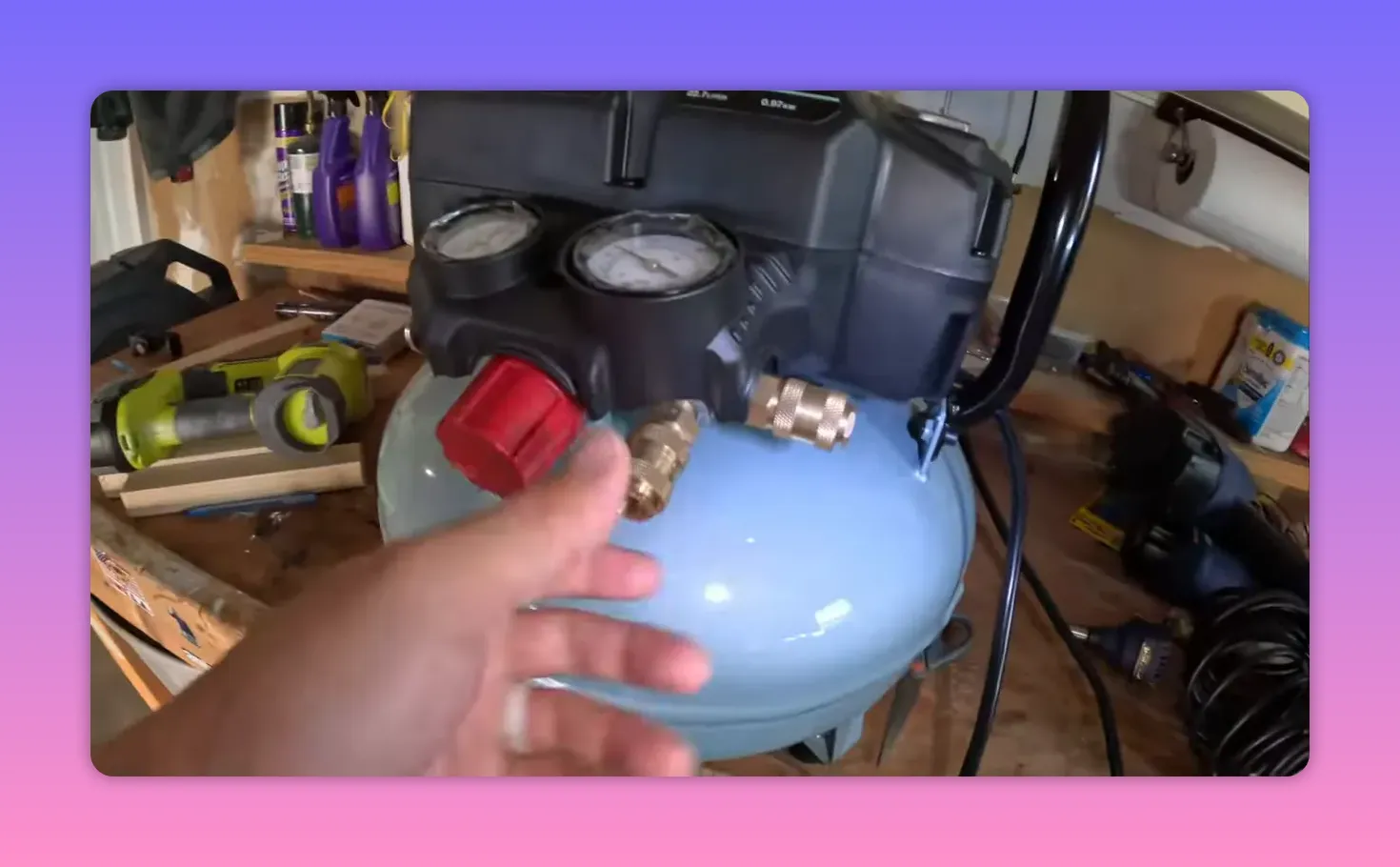
The control area places the tank gauge, regulated-pressure gauge, red regulator knob, and two quick-connect couplers together. This layout lets you confirm stored pressure, set the outlet pressure for the connected tool, and attach a second hose without installing a separate manifold.
The top-mounted motor and metal carry handle keep the working parts within the tank’s footprint. The handle feels more substantial than a thin plastic grip, but the compressor still weighs about 41 to 42 pounds. It is portable from a garage to a driveway or job area, not a lightweight unit you will want to carry continuously.
Tank Drainage and Maintenance
The pump is oil-free, so there is no compressor oil to check or replace. That reduces routine service, but it does not make the tank maintenance-free. Compressed air releases moisture as it cools, and water can collect at the bottom of the tank.
Open the drain valve after use, following the instruction manual and keeping your face and hands away from the discharge path. Drain the tank more often in humid conditions or during long work sessions. Inspect the cord, hose, couplers, regulator, safety valve, and tank before use, and stop using the compressor if you find damage, heavy corrosion, or an air leak.
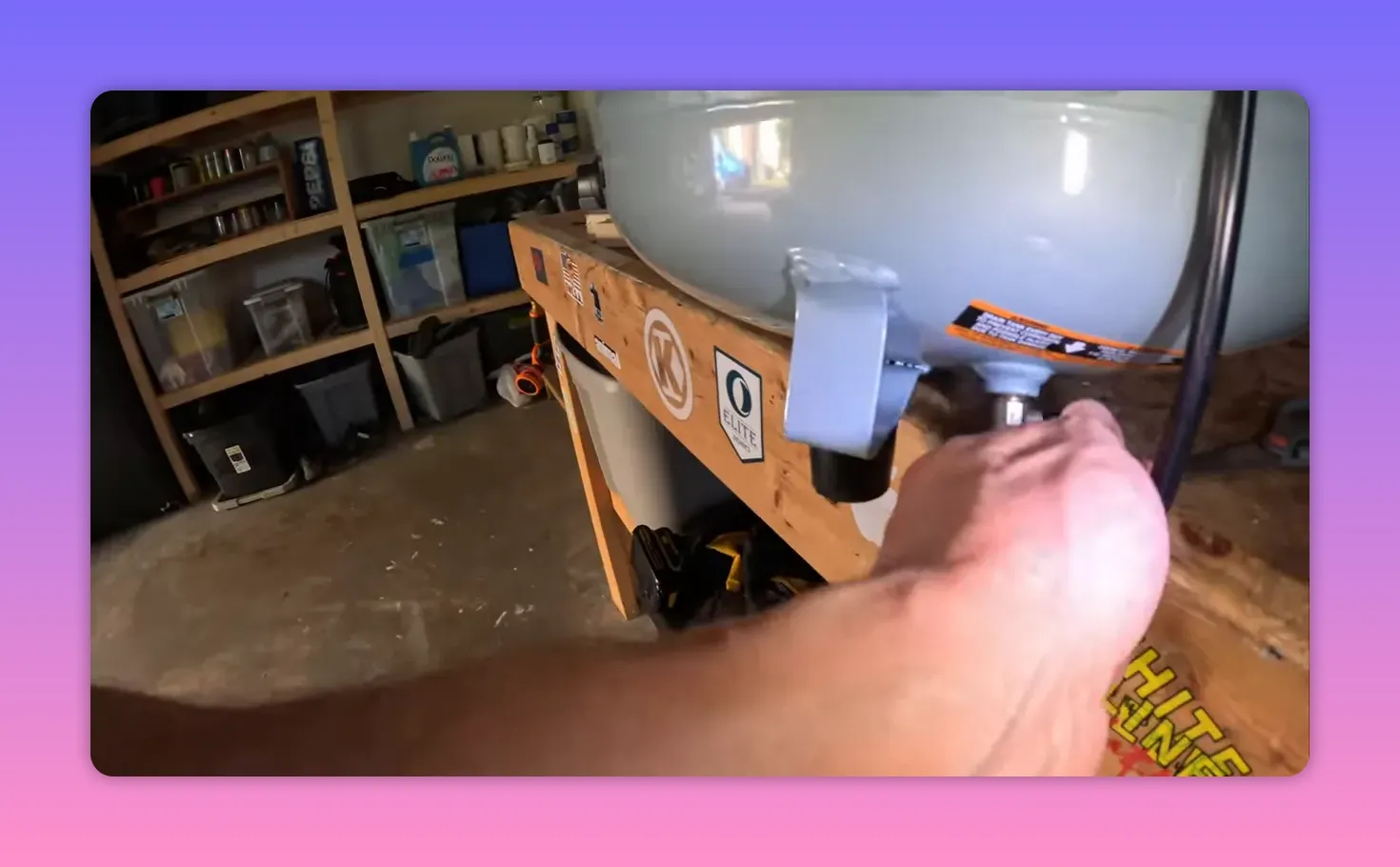
Pro Tip: Store the compressor with the tank drained and the outlet pressure released. A dry tank and a loosely coiled hose reduce moisture problems and make the next setup faster.
Airflow, Pressure, and Recovery
The 200 PSI maximum gives the 6-gallon tank more stored-air capacity than a similar tank filled to a lower pressure. The motor cuts back in near 170 PSI, so the compressor begins recovering while substantial pressure remains in the tank.
At the outlet, the EC914S provides 5.1 CFM at 40 PSI and 4.0 CFM at 90 PSI. That output suits intermittent nailing because each shot uses a short burst of air. It also provides useful recovery for tire inflation and blow-off tasks, although you should use an approved blow gun and pressure setting.
Noise and Portability
Metabo HPT rates the EC914S at 76 dB under its stated test procedure. That is manageable outdoors or in an open garage, but the motor will be intrusive in a small enclosed room. Hearing protection is a sensible choice during extended use, and anyone nearby should be warned before the compressor cycles.
The roughly 42-pound weight is reasonable for the output, but it is still a two-handed carry for many users. The compact footprint helps on a shelf or under a workbench, while the upright handle gives you a clear lifting point. Disconnect hoses, release regulated outlet pressure, and secure the unit before transport.
Who Should Buy It?
Best For
- Homeowners who want one compact compressor for nailers, tires, and garage jobs
- Remodelers who need better recovery than a basic 6-gallon pancake model
- Small crews that occasionally connect two compatible pneumatic nailers
Skip If
- You need a quiet compressor for an occupied indoor space
- Your main tools require continuous airflow above 4.0 CFM at 90 PSI
- You need a lighter unit for frequent stairs or all-day carrying
How It Performs in Real Use
Framing Nailer Bursts
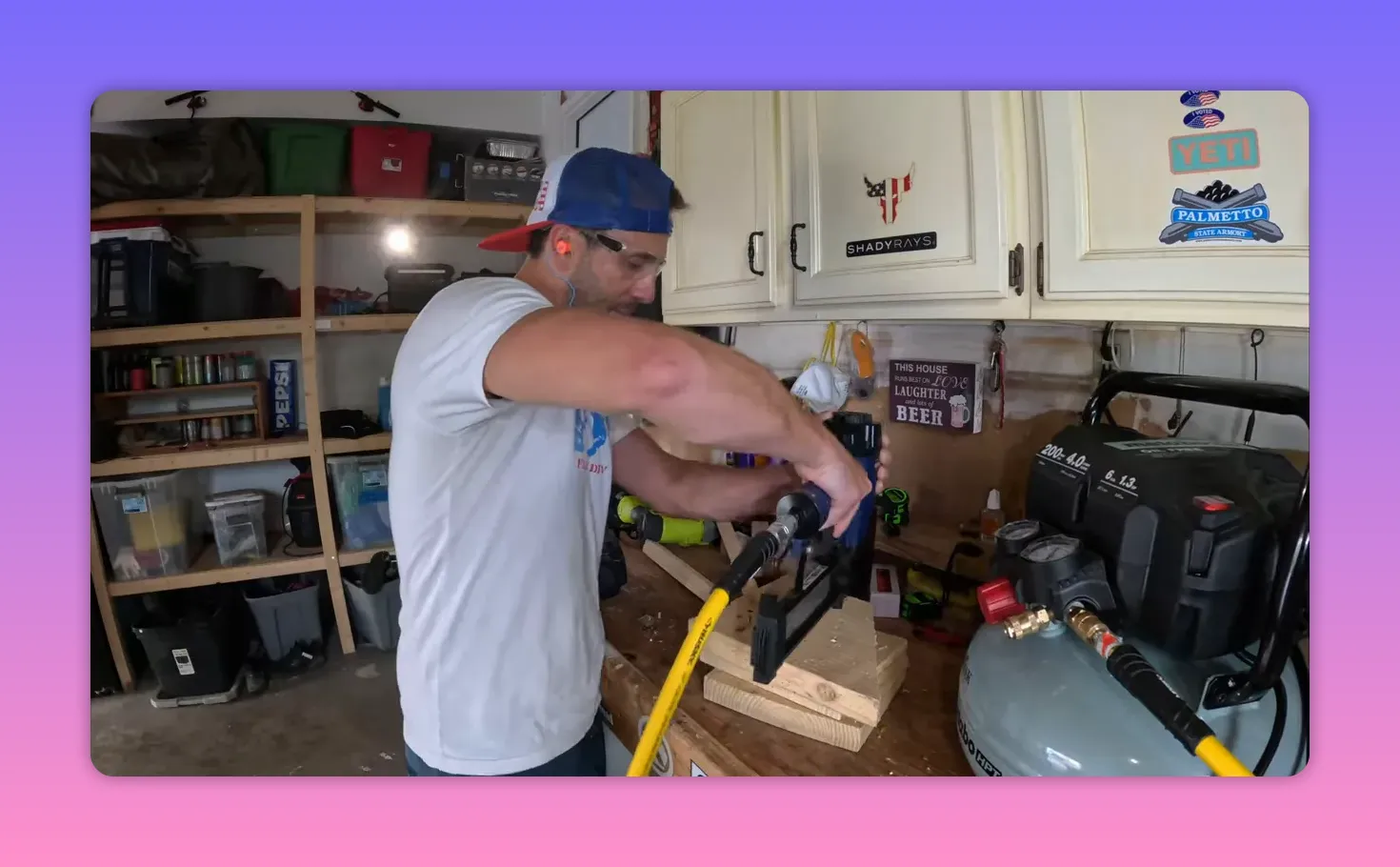
In the hands-on source test, the compressor powered a full sleeve of framing nails and then needed about 10 seconds to recover. The nailer continued driving fasteners flush while the motor cycled, which shows why the 170 PSI cut-in point and 4.0 CFM rating matter during intermittent use.
Trim Nailing and Two-Tool Use
A trim nailer set to 110 PSI completed a full sleeve of two-inch nails in the source test. The compressor also powered two nail guns fired at the same time without a noticeable stumble. That does not guarantee unlimited production with every tool combination, but it supports the manufacturer’s claim that the dual couplers are more than a convenience feature.
Tire Inflation
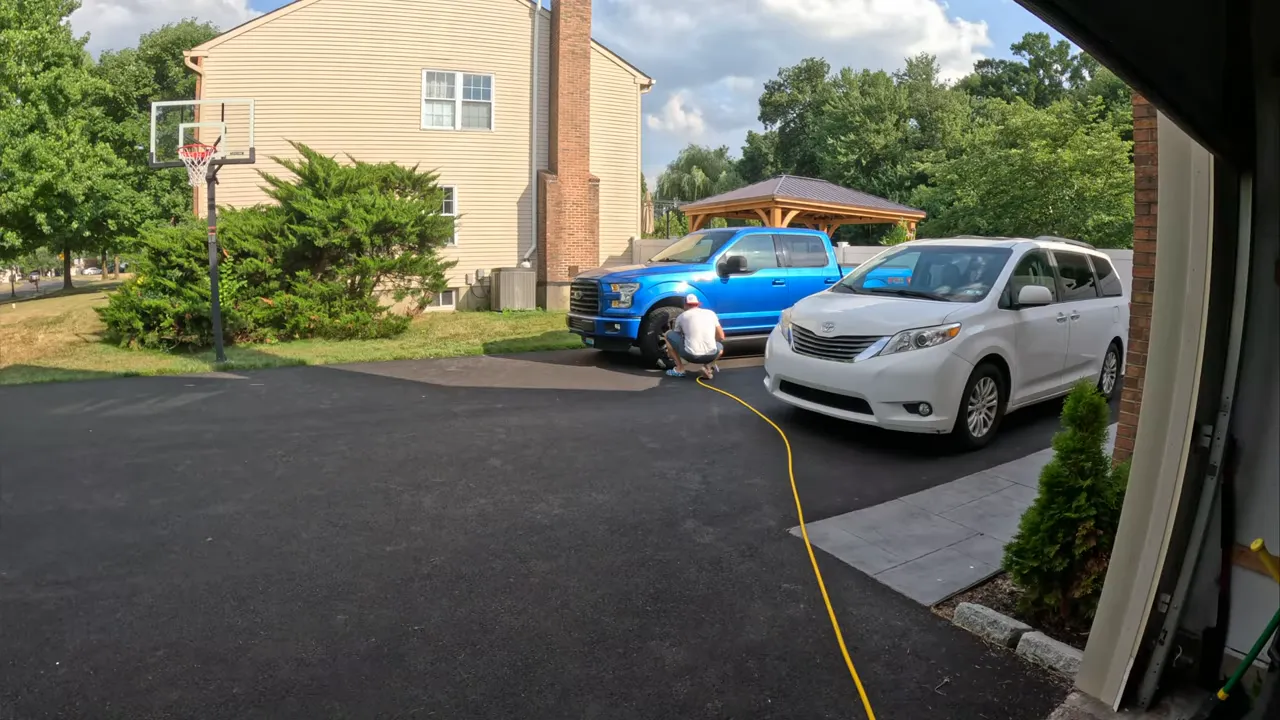
The source test also used the EC914S to inflate a truck tire. A 6-gallon tank and 200 PSI maximum provide enough reserve for routine top-offs, but you still need an accurate tire gauge and must follow the pressure listed on the vehicle’s tire-information label. Do not use the maximum compressor pressure as the tire’s target pressure.
Garage and Occasional Jobsite Work
For finish work, repairs, small framing jobs, and seasonal inflation, this compressor offers a practical balance of storage size and recovery speed. It can remain on a bench between jobs, then move to a driveway or work area by the top handle. Its limits become clear when a tool draws air continuously, because a 6-gallon tank empties quickly even when the maximum pressure is high.
Setup Tips Before First Use
- Read the manual first. Confirm the break-in, electrical, drain, safety-valve, and shutdown instructions for your unit.
- Use a suitable grounded circuit. The compressor is rated at 120V and 13.5 amps. Avoid sharing the circuit with other heavy loads, and use only an extension cord size and length allowed by the manual.
- Match pressure to the tool. Set the regulator to the tool manufacturer’s specified range. Higher pressure can damage tools, hoses, fittings, fasteners, or the workpiece.
- Check hose and fitting ratings. Every connected component must be rated for the pressure it may receive.
- Test for leaks. Listen at the couplers, regulator, hose ends, and drain valve after the tank reaches pressure.
- Drain after work. Turn the unit off, unplug it, release pressure as directed, and remove collected moisture from the tank.
Compatibility and Safety
The EC914S is designed for compressed-air tools that operate within its pressure and airflow limits. Nailers are a strong match because they use short bursts of air. Inflation accessories, blow guns, hoses, and couplers must be pressure-rated and connected securely.
Do not alter the safety valve, pressure switch, regulator, tank, or electrical plug. Keep the compressor on a stable surface with clear ventilation around the motor. Never aim compressed air at yourself or another person, and never use compressed air to clean clothing or skin. Review the manufacturer’s EC914S specifications and support resources before operation.
Pros and Cons
Pros
- 200 PSI maximum stores more usable air in a compact 6-gallon tank
- 4.0 CFM at 90 PSI supports larger nailers and faster recovery
- Two installed brass couplers simplify dual-hose setups
- Oil-free pump reduces routine maintenance
- Metal carry handle and pancake footprint suit garage and jobsite storage
Cons
- The 76 dB sound rating is not ideal for quiet indoor work
- Roughly 42 pounds can feel heavy during frequent transport
- The 6-gallon tank cannot replace a larger compressor for continuous high-CFM tools
Is It Worth the Price?
The EC914S sits above basic homeowner pancake compressors because you are paying for higher pressure, stronger airflow, dual couplers, and better support for larger nailers. It offers strong value when you need compact storage but do not want to step down to entry-level recovery speed.
You get the most value if one compressor must cover framing, finish work, tire inflation, and occasional two-tool use. It is less compelling if your only task is topping off tires or firing a brad nailer a few times per month, since a smaller or lower-cost compressor may handle those jobs.
It is also not the best value for sustained sanding, grinding, or spraying. In that case, compare the tool’s CFM requirement with a larger tank and higher-output pump before buying.
Products Worth Considering

[Inclusions]: This ECOMAX air compressor come with 1*1/4 in x 25 ft pvc air hose, 1* thread seal tape, 1* 1/4 fntp ball foot air chuck, 1* 1/4 npt auto plug, 1* 1/4 npt auto plug, 1* 1/4 npt auto coupler, 1* tire pressure gauge, 1* nozzle, 1* high performance blow gun and 1* sleeve.

【Inclusions】 This ECOMAX air compressor come with 1*1/4 in x 25 ft pvc air hose, 1* thread seal tape, 1* 1/4 fntp ball foot air chuck, 1* 1/4 npt auto plug, 1* 1/4 npt auto plug, 1* 1/4 npt auto coupler, 1* tire pressure gauge, 1* nozzle, 1* high performance blow gun and 1* sleeve.

6 GALLON CRAFTSMAN AIR TOOL: 6 Gallon pancake style electric air compressor. 120V 1.0 HP, perfect for home, shop, or workshop projects
How It Compares to Alternatives
The DEWALT DWFP55126 is a common 6-gallon alternative with lower maximum pressure and lower 90 PSI airflow, so it may suit lighter nailing work at a lower cost. The Metabo HPT EC28M is much quieter and easier to carry, but its 1-gallon tank and lower output are aimed at trim and punch-list work rather than framing crews.
If you need more reserve and easier rolling transport, Metabo HPT’s 8-gallon THE TANK EC1315S is worth comparing. The EC914S makes the most sense when you want higher-output nailing performance in the traditional pancake footprint.
Products Worth Considering

POWERFUL AND EFFICIENT: This 6 gallon air compressor delivers a maximum of 165 PSI, providing longer runtime and performance. With 2.8 CFM at 90 PSI and 3.7 CFM at 40 PSI, our 165 psi air compressor supports multiple nail guns for various applications.

OIL-FREE: Requires no daily maintenance and eliminates risk of oil stains on work surfaces.

MORE POWER AND PRESSURE: At 200 PSI, THE TANK from Metabo HPT offers 25% more pressure than a basic pancake air compressor. This portable air compressor is ideal for heavy-duty tasks, providing consistent performance for various pneumatic tools.
Frequently Asked Questions
Can the EC914S run two framing nailers at once?
Metabo HPT states that the compressor can run two framing nailers, and the source test fired two nail guns together successfully. Actual performance depends on each nailer’s air use, firing pace, hose setup, and supply voltage.
Is THE TANK quiet enough for indoor use?
The manufacturer rates it at 76 dB, so it is not a quiet compressor. It can be used indoors where appropriate, but the motor cycle will be noticeable and hearing protection may be needed during extended work.
Can it inflate truck tires?
Yes, the source test inflated a truck tire without difficulty. Use an accurate gauge and inflate only to the pressure specified by the vehicle or tire manufacturer, not the compressor’s 200 PSI maximum.
Can it run an impact wrench, grinder, or sander?
It may operate some tools briefly, but continuous tools often require more than 4.0 CFM at 90 PSI. Compare the exact tool rating before buying and expect frequent cycling or limited run time if demand approaches the compressor’s output.
How often should you drain the tank?
Drain collected moisture after each use or at the interval stated in the manual. Humid weather and long operating sessions can produce more water, so inspect and drain the tank more often in those conditions.
Does the compressor require oil changes?
No. The EC914S uses an oil-free pump, so there is no pump oil to replace. You still need to drain the tank, inspect the cord and fittings, keep ventilation openings clear, and follow the manual’s maintenance schedule.
What comes with the EC914S?
The manufacturer lists the compressor, two installed 1/4-inch brass couplers, and the instruction manual. Hoses, nailers, inflation chucks, and other accessories may need to be purchased separately, so check the current package details before ordering.
Who should choose a larger compressor?
Choose a larger tank and higher-output pump if your tools need sustained airflow, if several workers will fire high-demand tools continuously, or if you want longer run time between motor cycles. The EC914S is strongest with intermittent nailing and inflation tasks.
The Bottom Line
The Metabo HPT THE TANK EC914S is a strong choice for homeowners, remodelers, and small crews that need more nailing capacity than a basic pancake compressor can provide. Its 200 PSI maximum, 4.0 CFM at 90 PSI, dual couplers, and oil-free pump are the main strengths, while noise, weight, and limited continuous-air capacity are the main tradeoffs. Skip it for quiet indoor work or sustained high-CFM tools, but keep it on your list for framing, finish work, and inflation in a compact format.
Ready to Buy?
Check the latest price, seller, package contents, and product details before you decide.