Disclosure: As an Amazon Associate, we earn from qualifying purchases. If you click a link on this page and make a purchase, we may receive a small commission at no extra cost to you.
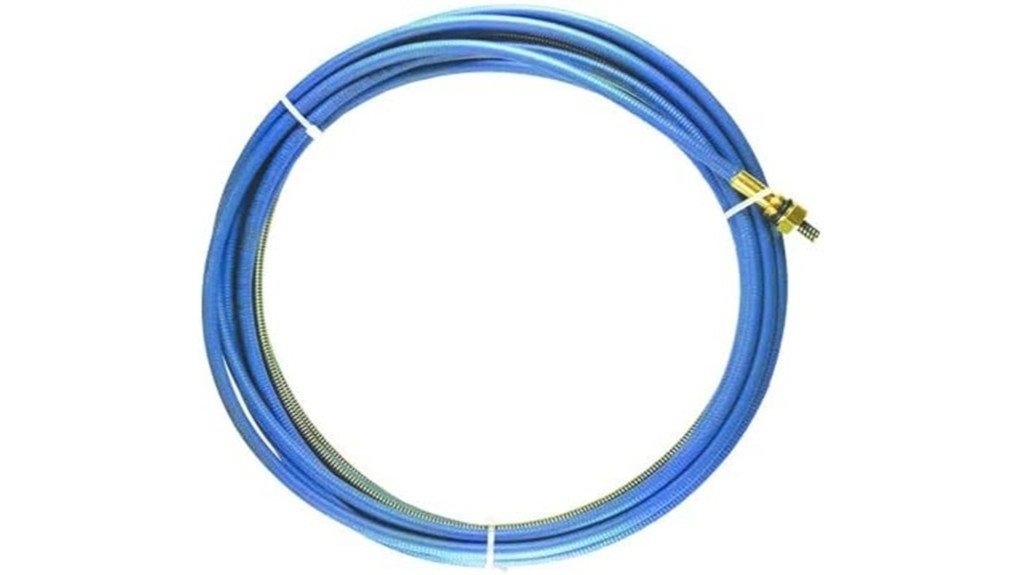
A worn or dirty MIG gun liner can cause wire-feed problems, burnback, and frustrating stops during a weld. The Miller Welding Cable Liner is made for welders who want a direct replacement liner for compatible Millermatic Series setups using .030 to .035 inch wire. This review helps you decide whether its 15-foot length, lightweight handling, and simple replacement process match your welder and work style. It is a practical buy for the right Miller setup, but it is not the right choice if your gun, wire size, or machine series does not match.
Quick Verdict
Rating: 8.2/10
Best For: Millermatic Series users running .030 to .035 inch welding wire who need smoother wire feeding from a replacement liner.
Bottom Line: The Miller Welding Cable Liner is a smart replacement part if your current liner is causing drag, inconsistent wire feed, or frequent jams. The main tradeoff is compatibility, since you need to confirm your welder, gun, and wire size before ordering.
| Specification | Detail |
|---|---|
| Brand | Miller |
| Product Type | Replacement welding cable liner |
| Length | 15 feet |
| Wire Size Support | .030 to .035 inch wire |
| Compatibility | Article-supported compatibility with Millermatic Series welders |
| Weight | 12.6 ounces |
| Package Dimensions | 8.03 x 7.68 x 1.93 inches |
| Best Use | Restoring smoother wire feed on a compatible Miller MIG setup |
| Safety Note | Install with the welder powered off and follow the machine or gun manual for correct trimming and alignment. |
What Is the Miller Welding Cable Liner?
The Miller Welding Cable Liner is a replacement liner that sits inside the welding gun cable and guides the welding wire from the feeder toward the contact tip. When the liner is clean, straight, and sized correctly, the wire can move with less drag. When the liner is worn, kinked, dirty, or mismatched, you may notice feeding problems even if the drive rolls and contact tip are in good shape.
This liner is described as a 15-foot part for .030 to .035 inch wire and Millermatic Series welders. That makes it most useful for welders who already know their machine uses this wire-size range and need a replacement rather than a full gun assembly. Its 12.6-ounce weight and compact package dimensions also make it easy to keep as a spare in a shop drawer, service kit, or mobile repair box.
Before You Buy: Confirm your welder series, MIG gun model, cable length, and wire size before ordering. This liner is described for .030 to .035 inch wire and Millermatic Series use, so it may not fit every Miller gun or other welding machine.
Who Should Buy It?
Best For
- Millermatic Series users who run .030 to .035 inch MIG wire.
- Welders dealing with wire drag, feeding inconsistency, or repeated wire jams from an old liner.
- Shop, garage, and mobile welders who want a lightweight spare liner for quick service.
Skip If
- Your welder or MIG gun does not match the Millermatic Series compatibility described in the article.
- You use a wire size outside the .030 to .035 inch range.
- Your feeding problem is caused by drive-roll tension, a worn contact tip, rusty wire, or a damaged gun cable instead of the liner.
Fit and Compatibility
Compatibility is the most important buying factor with this liner. The article supports use with Millermatic Series welders and wire sizes from .030 to .035 inch. That range covers common MIG wire sizes, but it does not cover every setup, especially if you use very small wire, larger wire, flux-cored wire outside the supported size, or a different gun series.
Before you install it, compare the liner length, wire-size range, and gun style with your welder manual. A liner that is too short, too long, or not matched to the correct wire size can cause the same feed problems you are trying to fix. If your machine uses a different liner part number, choose the correct part for that setup instead.
Wire Feeding Performance
The main reason to replace a cable liner is to improve wire movement through the gun cable. A clean, properly fitted liner helps reduce drag as wire moves from the feeder to the contact tip. That can make the arc feel steadier, reduce stuttering, and lower the chance of wire nesting near the drive rolls.
This liner is described for .030 to .035 inch wire, so it is best used within that range. Using wire that does not match the liner can lead to poor contact, excess friction, or inconsistent feed speed. You should also inspect the contact tip, drive rolls, wire spool, and cable bends because a new liner cannot fix every wire-feed issue by itself.
Installation and Setup
Installation is described as straightforward, which is useful if you need to replace the liner between jobs or during shop maintenance. The basic process usually includes removing the old liner, feeding the new liner through the gun cable, trimming it to the correct length, and securing the front-end hardware. Always follow the manual for your exact welder and gun because trimming and seating details can vary.
Good alignment matters. If the liner is not seated correctly, the wire may scrape, bind, or hesitate near the contact tip. Take time to keep the gun cable as straight as possible during setup, then test feed the wire before you start welding on a real workpiece.
Build, Handling, and Storage
At 12.6 ounces, this liner is light enough to handle easily during installation and compact enough to store without taking much shop space. The listed package dimensions of 8.03 x 7.68 x 1.93 inches make it easy to keep as a spare part for planned maintenance or a jobsite backup.
The 15-foot length is useful for compatible gun cable setups, but it also means you need to trim and install it carefully. Avoid sharp bends during storage because a kinked liner can create feed resistance. Keeping it clean, dry, and protected from crushing helps preserve its shape before installation.
Maintenance and Replacement Timing
A welding liner is a wear part, not a permanent part of the gun. Dust, metal particles, wire shavings, and normal friction can build up inside the cable over time. If your welder starts feeding poorly and the contact tip, wire, drive rolls, and tension settings look correct, the liner should be part of your troubleshooting checklist.
The original article suggests replacement every 6 to 12 months, depending on usage. That is a reasonable planning window for regular welders, but the real timing depends on wire condition, shop cleanliness, cable handling, and how often you weld. Heavy users may need to inspect the liner more often, while occasional users may go longer if the liner stays clean and straight.
Pro Tip: If you replace the liner, also check the contact tip, drive-roll groove, spool tension, and gun cable bends. Wire-feed problems often come from more than one small issue.
How It Performs in Real Use
For Daily MIG Welding
For regular shop use, this liner can help restore smoother feeding when the old liner is dirty, worn, or causing drag. The biggest benefit is consistency, since steady wire movement helps you keep a more controlled arc and bead. It is most useful when your machine already matches the .030 to .035 inch wire range.
For Tight Spaces and Mobile Work
The lightweight design helps when you are working around benches, vehicle panels, frames, or small garage spaces. A liner will not make a stiff gun cable flexible, but a clean liner can reduce feed resistance when the cable is routed properly. Keep the cable as straight as practical during welding to reduce friction.
For Occasional Hobby Use
If you weld only on weekends or for small repair jobs, this part can still be useful as a maintenance item. A liner can collect debris even when the welder is not used daily, especially if the wire is dusty or stored in a damp area. Keeping a spare on hand can reduce downtime when feed problems appear during a project.
For Long-Term Use
Long-term performance depends on correct installation and routine inspection. The liner should be checked when wire feeding becomes uneven, when the gun cable has been kinked, or when you change wire type or size. Replacing it before it causes major feeding problems can protect your workflow and reduce wasted wire.
How to Use It Correctly
Start by confirming that the liner matches your welder, gun, and wire size. Turn the welder off, disconnect power when required by the manual, and remove wire tension before working on the gun. Feed the liner through the cable gently so you do not kink it during installation.
After trimming and securing the liner, run wire through the gun without welding to check for smooth movement. If the wire hesitates, do not assume the liner is defective right away. Recheck drive-roll tension, contact tip size, spool drag, wire condition, and the path of the gun cable.
Compatibility and Safety
This is a welding component, so correct fit matters for both performance and safe operation. A mismatched liner can increase friction, create erratic feeding, and make the welder harder to control. Do not force it into a gun or machine that requires a different part.
Use the welder manual as your main guide during replacement. If you are unsure about your gun model, wire-size range, or correct trimming length, check with Miller documentation, a qualified technician, or your welding supplier before installing it. Good setup protects the liner, the gun, and the quality of your welds.
Pros and Cons
Pros
- Supports .030 to .035 inch wire, a common range for MIG welding setups.
- 15-foot length suits compatible gun cable setups described in the article.
- Light 12.6-ounce weight makes handling and storage simple.
- Can help reduce wire-feed drag when the old liner is worn, dirty, or damaged.
- Good spare part for shops that want less downtime during maintenance.
Cons
- Limited to the compatible Miller and wire-size range described in the article.
- Will not fix feed issues caused by drive rolls, contact tips, rusty wire, or bad tension settings.
- Requires careful installation and trimming, so first-time users should follow the manual closely.
Is It Worth the Price?
The Miller Welding Cable Liner is worth considering if you already own a compatible Millermatic Series setup and need smoother feeding with .030 to .035 inch wire. It is not a flashy upgrade, but it can be a smart buy for everyday use because a bad liner can waste time, wire, and patience.
The best value comes from using it as a maintenance part before feed problems interrupt a job. If your current liner is old, dirty, or kinked, replacing it may be more cost-effective than chasing the same problem through settings alone. It is not the best fit if your machine needs a different liner size or if the root issue is somewhere else in the feeding system.
How It Compares to Alternatives
Compared with generic cut-to-fit liners, this Miller liner makes more sense when you want a part aimed at the compatible Miller setup described in the article. Generic liners may be useful for some welders, but they require extra care with sizing, trimming, and fit confirmation.
Compared with other Miller liners in different wire-size ranges, this one is the better match only if you run .030 to .035 inch wire. If you run smaller or larger wire, compare the correct Miller liner for that wire size instead of forcing this one into the wrong setup.
Frequently Asked Questions
What wire size does the Miller Welding Cable Liner support?
The article supports use with .030 to .035 inch welding wire. Do not use it for a different wire size unless your welder or gun documentation confirms compatibility.
Is this liner compatible with every Miller welder?
No. The article describes compatibility with Millermatic Series welders, but you should still check your exact welder and MIG gun model before buying. Miller uses different liners for different guns, lengths, and wire sizes.
How long is the Miller Welding Cable Liner?
The supported article details list the liner as 15 feet long. Check your gun cable length before installation so you can trim and seat the liner correctly.
When should you replace a welding liner?
Replace the liner when you notice wire drag, uneven feeding, birdnesting, or repeated jams after checking the contact tip and drive rolls. The article suggests a 6 to 12 month replacement window, but heavy use or dirty wire may shorten that timeline.
Can a new liner fix all wire-feed problems?
No. A new liner can help when the old liner is worn, dirty, kinked, or mismatched. It will not solve problems caused by incorrect drive-roll tension, the wrong contact tip, rusty wire, spool drag, or a damaged gun cable.
What tools are usually needed for installation?
The original article lists a wrench, screwdriver, and wire cutter as useful tools for replacement. Your exact welder or gun may require different steps, so follow the manual before trimming or tightening parts.
Who should skip this liner?
Skip it if your welder does not match the supported Millermatic Series compatibility or if your wire size is outside .030 to .035 inch. You should also skip it if your machine manual lists a different liner part for your MIG gun.
The Bottom Line
The Miller Welding Cable Liner is a recommended replacement part for compatible Millermatic Series users who run .030 to .035 inch wire and want more consistent wire feeding. Its strongest points are the 15-foot length, light handling, and practical maintenance value, while its main limitation is narrow compatibility. Skip it if your welder, gun, or wire size requires a different liner.
Ready to Buy?
Check the latest price and product details before you decide.