Disclosure: As an Amazon Associate, we earn from qualifying purchases. If you click a link on this page and make a purchase, we may receive a small commission at no extra cost to you.
Uneven tungsten tips can make TIG welding harder than it needs to be. Poor grinding can lead to wandering arcs, rough starts, and wasted electrodes, especially when you switch between thin and medium material. The 3mirrors Aluminum Tungsten Electrode Sharpener gives you a compact rotary-tool attachment for repeatable tungsten prep without buying a full bench grinder system. This review explains what it does well, what you need before using it, and whether it fits your welding setup.
Quick Verdict
Rating: 8/10, Recommended with caveats
Best For: TIG welders who already own a compatible rotary tool and want repeatable tungsten points
Bottom Line: The 3mirrors sharpener is a useful low-bulk option for sharpening 1/16″ and 3/32″ tungsten electrodes at controlled angles. It is not a standalone grinder, so your results depend on proper rotary-tool fit, steady handling, and safe setup.
Key Specifications
| Specification | Detail |
|---|---|
| Brand | 3mirrors |
| Product Type | Tungsten electrode sharpener grinder head for TIG welding |
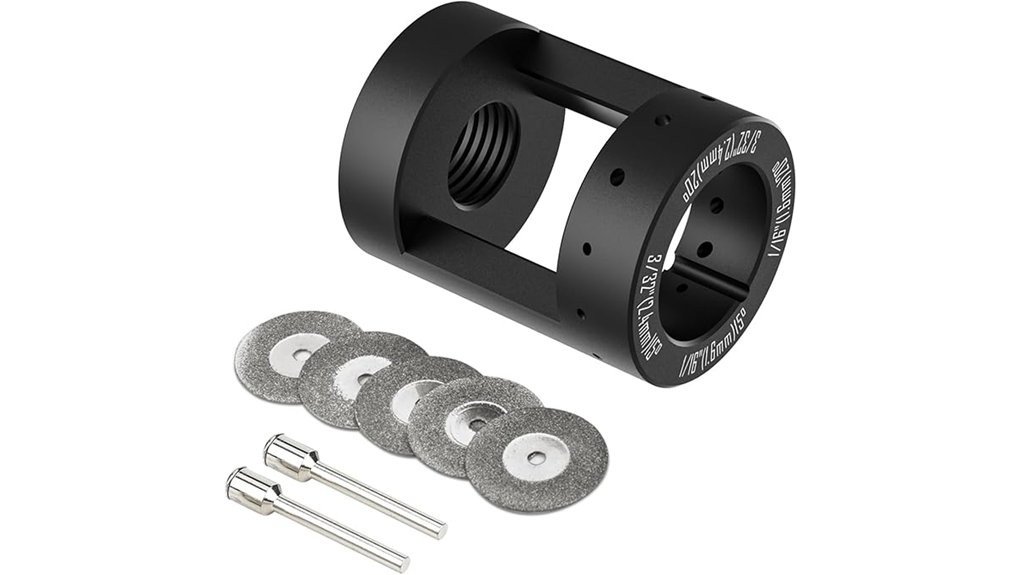
| Design | Rotary-tool attachment with fixed guide holes and cut-off port |
| Main Body Weight | 87 grams |
| Material | Upgraded aluminum alloy with CNC finishing |
| Compatible Tungsten Sizes | 1/16″ (1.6 mm) and 3/32″ (2.4 mm) |
| Guide Angles | 15° and 20° guide holes, producing 30° and 40° ground tip angles |
| Rotary Tool Fit | Most rotary tools with a 3/4-12 thread |
| Compatible Tool Examples | Black & Decker, Milwaukee, Bosch, Dremel, and similar rotary tools with matching threads |
| Included Accessories | 5 x 25 mm double diamond wheels and 2 connecting rods |
| Package Note | Rotary tool, Dremel body, and drill are not included |
| Best Use | Sharpening and trimming TIG tungsten electrodes for repeatable arc starts |
| Safety Note | Use eye, respiratory, and hand protection when grinding tungsten, and follow your rotary tool instructions. |
What Is the 3mirrors Aluminum Tungsten Electrode Sharpener?
The 3mirrors Aluminum Tungsten Electrode Sharpener is a grinder-head attachment for TIG tungsten prep. It mounts to compatible rotary tools with a 3/4-12 thread, then guides the tungsten through fixed angle holes for more consistent sharpening.
The tool is made for welders who sharpen electrodes often and want better repeatability than freehand grinding. It supports 1/16″ and 3/32″ tungsten electrodes, which makes it practical for many light and medium TIG welding tasks.
It also includes a cut-off port, 5 x 25 mm double diamond wheels, and 2 connecting rods. The main limitation is clear: it is only the sharpening attachment, not the powered rotary tool.
Design and Build Quality
The 87 gram aluminum alloy body keeps the attachment light enough for handheld rotary tools. That matters because extra weight near the front of a rotary tool can make small tungsten adjustments harder to control.
The CNC-finished aluminum construction gives the guide body a more rigid feel than a basic plastic jig. It is also better suited to repeated grinding sessions because aluminum handles heat and wear better than low-grade plastic accessories.
The fixed guide-hole layout helps reduce setup changes between sharpening passes. Each tungsten size and angle has its own path, so you can focus more on steady insertion and less on guessing the grinding angle by hand.
Grinding Angles and Tungsten Control
This sharpener supports 15° and 20° guide holes for 1/16″ and 3/32″ tungsten electrodes. Those guide angles produce 30° and 40° ground tip angles, giving you two practical point profiles for different TIG work.
A sharper point can help with tight arc control on thinner metal, while a slightly wider point can feel more durable during general welding. You still need to match tungsten type, amperage, and weld settings to your project, but the guide holes make the sharpening process more repeatable.
The guide system also uses different contact areas on the diamond wheel. That helps spread wear across the wheel instead of grinding one narrow track every time.
Cut-Off Port and Tungsten Reuse
The built-in cut-off port helps when the tungsten tip gets contaminated, balled, or damaged. Instead of grinding forever at the end of a ruined tip, you can trim the bad section and reshape the electrode.
- Helps remove contaminated tungsten tips before reshaping
- Reduces avoidable electrode waste during regular TIG prep
- Supports faster recovery after dipping the tungsten into the weld pool
- Lets you keep a consistent prep routine near your welding table
Pro Tip: Mark your most-used tungsten size and angle on the tool case or storage bag. That makes it quicker to repeat the same point profile during a long TIG session.
Compatibility With Rotary Tools
The sharpener is designed for most rotary tools with a 3/4-12 thread. The listing mentions compatibility with Black & Decker, Milwaukee, Bosch, Dremel, and similar rotary tools, but the thread match matters more than the brand name.
You should confirm the nose thread on your rotary tool before buying. If the tool does not mount tightly, the diamond wheel can wobble or grind unevenly.
The package does not include a Dremel body, drill, or powered rotary tool. This is a good fit if you already own the right tool, but it adds another purchase if you are starting from scratch.
Before You Buy: Check your rotary tool thread size first. This sharpener is not a standalone electric grinder, and a loose or mismatched rotary tool can lead to poor sharpening results.
Setup Tips Before First Use
Start by installing the diamond wheel and connecting rod according to the product instructions. Make sure the wheel sits flat and runs true before inserting a tungsten electrode into any guide hole.
Use light, steady pressure while grinding. Heavy pressure can overheat the tip, wear the diamond wheel faster, and make the finished point less consistent.
Keep the tungsten aligned with the guide hole and rotate it evenly as needed. Do not force the electrode into the guide, and stop if you feel binding or unusual vibration from the rotary tool.
Safety Notes for Tungsten Grinding
Grinding tungsten creates fine dust and sparks, so you should treat this as a workshop safety task. Wear eye protection, use respiratory protection when needed, and work in a controlled area with good ventilation.
Keep loose gloves, sleeves, cords, and shop rags away from the spinning wheel. A rotary tool can grab loose material quickly, especially when you work close to a small guide body.
If you sharpen thoriated tungsten or any tungsten type with special handling warnings, follow the electrode manufacturer’s safety instructions. This sharpener controls the angle, but it does not remove the need for safe grinding habits.
How It Performs in Real Use
For Daily Workshop TIG Prep
In a small fabrication shop, this attachment can save time when you need repeatable tungsten points throughout the day. The fixed holes help you sharpen without resetting a jig for every electrode.
For Precision TIG Welding
For thin material, stainless work, and detail welding, consistent tungsten shape helps you start with better arc control. The 15° and 20° guide options give you two useful profiles without freehand guesswork.
For Electrode Recycling
The cut-off port makes the tool more useful after accidental contamination. You can trim a damaged tip, then sharpen the electrode again instead of throwing away usable tungsten length.
For Portable Job Sites
The lightweight body is easier to carry than a bench-top tungsten grinder. It works well in a mobile kit if you already bring a compatible rotary tool and spare diamond wheels.
Who Should Buy It?
Best For
- TIG welders who often sharpen 1/16″ or 3/32″ tungsten electrodes
- Users who already own a 3/4-12 compatible rotary tool
- Workshop or mobile welders who want a compact alternative to a bench grinder
Skip If
- You need a fully powered, standalone tungsten grinder
- Your rotary tool does not have a compatible 3/4-12 thread
- You want enclosed dust collection built into the sharpener
Pros and Cons
Pros
- 87 gram aluminum body keeps the attachment light and easy to handle
- Supports 1/16″ and 3/32″ tungsten electrodes for common TIG work
- 15° and 20° guide holes help create repeatable 30° and 40° tip angles
- Cut-off port helps remove contaminated or worn tungsten tips
- Includes 5 x 25 mm double diamond wheels and 2 connecting rods
Cons
- Requires a compatible rotary tool, which is not included
- Only supports the listed tungsten sizes on this version
- Results still depend on setup, wheel alignment, pressure, and safe handling
Want a Compact Tungsten Prep Tool?
Check the current product details and make sure your rotary tool is compatible.
Common Mistakes to Avoid
Do not assume every Dremel-style tool will fit. Check the thread size before you buy, because the attachment depends on a secure 3/4-12 connection.
Do not press the tungsten hard into the wheel. Light pressure usually gives you a cleaner point and helps the diamond wheel last longer.
Do not skip safety gear just because the tool is small. Tungsten grinding still creates particles, heat, and wheel-contact hazards.
Is It Worth the Price?
This sharpener fits the budget-to-mid accessory category for TIG welding prep. It makes the most sense if you already own a compatible rotary tool and want better repeatability than freehand grinding.
You get strong value from it if you sharpen tungsten often, reuse electrodes, or work away from a fixed bench grinder. The included diamond wheels and connecting rods also help make the kit more complete for first setup.
It is not the best fit if you want automatic grinding, enclosed dust control, or support for a wider range of tungsten sizes. In those cases, a dedicated tungsten grinder may be worth comparing.
How It Compares to Alternatives
Compared with a dedicated bench-top tungsten grinder, the 3mirrors sharpener is smaller, easier to store, and easier to carry. A bench grinder system may still be better if you need higher automation, enclosed dust handling, or constant production use.
Compared with freehand grinding on a bench wheel, this attachment gives you better angle control and less guesswork. Compared with simple manual blocks, it removes material faster because it works with a powered rotary tool.
Frequently Asked Questions
Does the 3mirrors tungsten sharpener include a rotary tool?
No. This kit is the sharpening attachment, not a powered rotary tool. You need a compatible rotary tool with a 3/4-12 thread.
What tungsten sizes does this version support?
This version supports 1/16″ (1.6 mm) and 3/32″ (2.4 mm) tungsten electrodes. Those sizes cover many common TIG welding jobs, but they do not cover every electrode size.
What tip angles can it grind?
The guide holes are 15° and 20°. Those guide positions produce 30° and 40° ground tip angles on the tungsten.
Will it fit a Dremel?
It is designed for most rotary tools with a 3/4-12 thread, including many Dremel-style tools. You should still check your exact rotary tool model before buying.
Can this improve TIG weld quality?
It can help by giving you a more consistent tungsten point. A better-prepped tungsten can support steadier arc starts, but weld quality still depends on your settings, technique, material prep, and electrode choice.
Can it cut contaminated tungsten tips?
Yes. The tool includes a cut-off port for trimming worn or contaminated tungsten tips before reshaping. This can help you reuse more of the electrode instead of discarding it too early.
Is it beginner-friendly?
It is easier than freehand grinding, but it still requires correct setup and safe rotary-tool handling. Beginners should read the instructions, start slowly, and practice on spare tungsten first.
Who should skip this sharpener?
Skip it if you do not own a compatible rotary tool or need a fully enclosed, powered tungsten grinder. You may also want another version if you regularly sharpen tungsten sizes beyond 1/16″ and 3/32″.
The Bottom Line
The 3mirrors Aluminum Tungsten Electrode Sharpener is a smart buy for TIG welders who want repeatable tungsten prep in a compact rotary-tool attachment. Its biggest strengths are the fixed guide angles, lightweight aluminum body, cut-off port, and included diamond wheels.
Skip it if you need a standalone electric grinder, built-in dust collection, or wider tungsten-size support. For the right setup, it earns its 8/10 rating as a practical workshop accessory with clear compatibility limits.