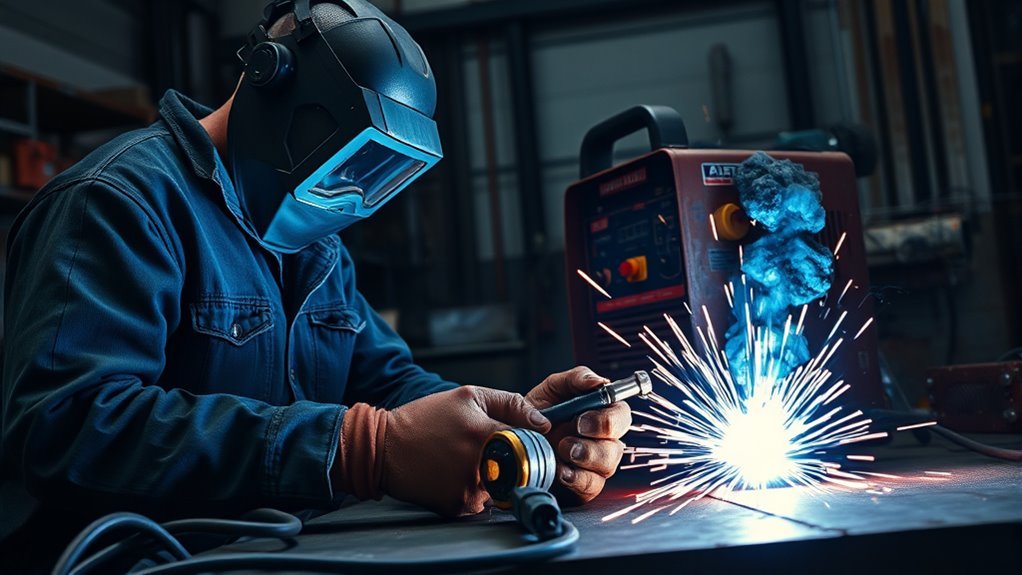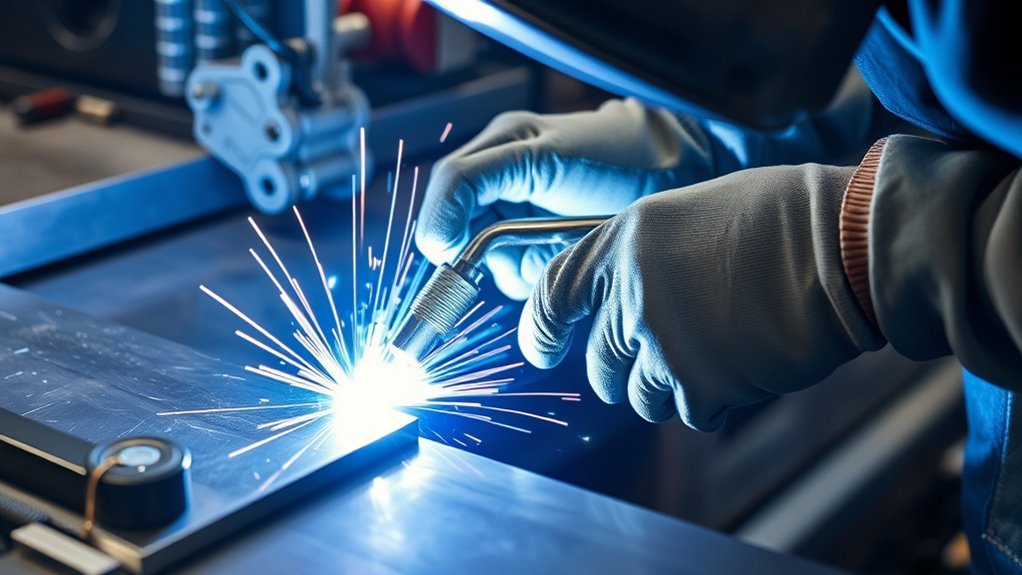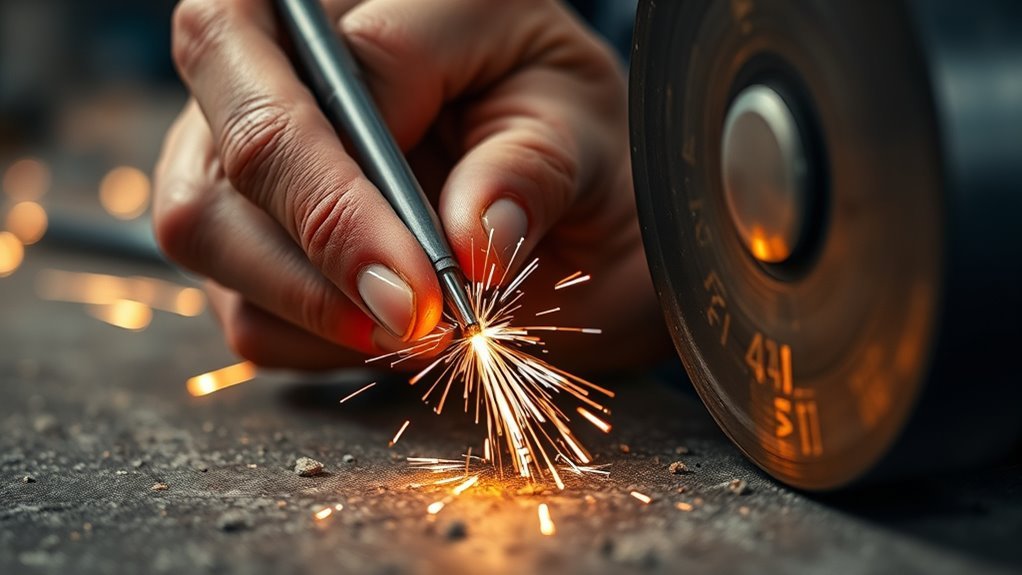
A clean, correctly shaped tungsten electrode makes TIG welding easier to start and control. Poor preparation can cause arc wander, inconsistent penetration, tungsten contamination, and a tip that breaks down sooner than expected.
For most general TIG work, start with a symmetrical point ground lengthwise at about a 30° to 35° included angle. Lightly truncate the needle-sharp end when the current or your machine instructions call for it. AC preparation depends heavily on whether you use a modern inverter or an older transformer-based welder.
Quick Answer
Sharpen TIG tungsten by grinding from the electrode body toward the tip so every scratch runs lengthwise. Start near a 30° to 35° included point for general work, rotate the electrode evenly, and lightly truncate the tip when needed. Use a dedicated fine wheel and follow your welder’s AC-specific instructions.
Key Takeaways
- Grind parallel to the electrode centerline. Circular or spiral marks can make the arc less stable.
- Treat 30° to 35° as a general included-angle starting point, not a universal specification.
- Use a dedicated fine grinding wheel that has not touched steel, aluminum, or other metals.
- Modern inverter AC welders commonly use alloyed tungsten with a pointed, truncated tip instead of a deliberately balled tip.
- Cut away contaminated or cracked material before restoring the taper.
- Control thoriated-tungsten dust with local exhaust and appropriate protective measures, or use a non-thoriated alternative when practical.
At a Glance
| Time Required | About 2 to 5 minutes per electrode |
| Difficulty | Easy, but consistent angle control takes practice |
| Tools Needed | Dedicated tungsten grinder or clean fine wheel, electrode holder, eye protection, and dust control |
| Cost | No added cost if suitable dedicated equipment is already available; otherwise it varies by wheel or grinder |
What’s in This Article
- Why Tungsten Preparation Matters
- Common Tungsten Tip Problems
- Tools and Safety Equipment
- How to Sharpen Tungsten Step by Step
- How Point Angle Changes the Arc
- How Tungsten Alloy Affects Preparation
- AC Tungsten Preparation
- How to Match the Tip to the Job
- Common Sharpening Mistakes
- Electrode Maintenance and Storage
- Frequently Asked Questions
Why Tungsten Preparation Matters
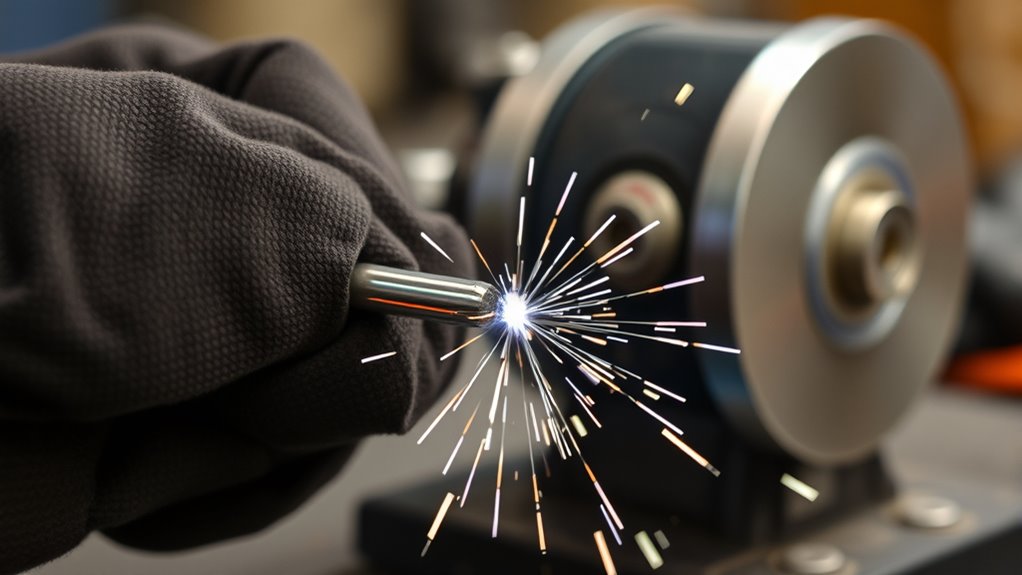
The tungsten electrode directs the TIG arc. Its point angle, surface finish, cleanliness, and symmetry all influence how easily the arc starts and how predictably it follows the joint.
A correctly prepared electrode can provide cleaner starts, a steadier arc, and more repeatable puddle control. A contaminated, uneven, split, or badly eroded tip can cause arc wander, poor starts, tungsten inclusions, and inconsistent bead shape.
The grinding scratches should run parallel to the tungsten’s centerline, not around the electrode.
Miller’s tungsten-preparation guidance recommends using equipment dedicated to tungsten and keeping the scratches parallel to the electrode centerline. Angled, circular, or spiral marks can contribute to an unstable arc.
A 30° included point has roughly a 15° taper on each side and produces a taper length close to twice the electrode diameter. However, that geometry is only a starting point. The best preparation also depends on amperage, electrode diameter, alloy, polarity, power-source design, and the desired arc profile.
Note: Angle labels are not universal. Some grinders display the full included point angle, while others describe the angle on one side. Check the grinder manual before copying a numerical setting.
Common Problems With Blunt, Contaminated, or Damaged Electrodes
Tungsten problems usually appear as changes in tip shape, surface condition, or arc behavior. The electrode may become blunt, discolored, pitted, split, contaminated, covered with nodules, or balled beyond its diameter.
These conditions can have several causes, including excessive current, too much electrode-positive time during AC welding, poor shielding, touching the puddle, filler-rod contact, a contaminated grinding wheel, or an electrode diameter that is too small for the current.
Common Causes of Tip Damage
- Excessive current: The tip overheats, erodes, or develops nodules.
- Too much AC electrode-positive time: The electrode becomes hotter and may form an oversized ball.
- Puddle or filler contact: Molten metal transfers to the tungsten and contaminates the point.
- Cross-contaminated grinding wheel: Steel, aluminum, or abrasive residue becomes embedded in the electrode.
- Improper cutting: Bending, snapping, or using unsuitable cutters can create hidden cracks.
- Uneven grinding: An off-center point directs the arc away from the electrode axis.
How Tip Condition Affects Arc Stability
A symmetrical point helps the arc leave the electrode in a predictable direction. If one side is longer, rougher, or more contaminated than the other, the arc may favor that side and wander away from the joint.
Contamination can also make high-frequency starts less reliable and may transfer foreign material into the weld. Miller identifies puddle contact, filler contact, and transferred base-metal impurities as common causes of tungsten contamination.
Signs of Pitting, Nodules, Splitting, or Contamination
| What You See | Likely Cause | What to Do |
| Metal stuck to the point | Puddle or filler-rod contact | Cut beyond the contaminated area, then restore the taper. |
| Off-center or hooked point | Uneven pressure or angle | Regrind while rotating evenly in a stable holder. |
| Rough nodules or a swollen tip | Excessive current, excess AC electrode-positive time, or wrong electrode type | Check current, AC balance, electrode diameter, alloy, and machine instructions. |
| Longitudinal split or cracked end | Overheating, unsuitable cutting, or damaged electrode | Cut back to sound material. Replace the electrode if cracking continues. |
| Arc wanders after sharpening | Circular scratches, asymmetrical point, contamination, or excess arc length | Regrind lengthwise, inspect the point, and confirm torch setup. |
Tools and Safety Equipment for Tungsten Grinding
A purpose-built tungsten grinder provides the best control over point angle, dust, and repeatability. A clean bench grinder, belt grinder, disc grinder, or wet grinder can also work when it is properly guarded and a wheel or abrasive surface is reserved for tungsten.
Products Worth Considering

Common Sizes and Angles: This grinding head supports multiple electrode sizes: 0.040", 1/16", 3/32", and 1/8" (1.0mm, 1.6mm, 2.4mm, 3.2mm), and offers specific angles of 15∘, 22.5∘, and 30∘. It's designed for welding beginners, professionals, and hobbyists who want high-quality welds.

Common Sizes and Angles: This grinding head have 4 common sizes of tungsten electrode 1/16", 5/64", 3/32", 1/8" ( 1.6mm, 2mm, 2.4mm, 3.2mm), 6 common angled: 15°, 20°, 30°, 40°, 45°, 50°. It's suitable for welding beginners, professionals and hobbyists

HOW TO MAINTAIN PRECISE CENTER POINT ALIGNMENT DURING GRINDING? Integrated fixed holes feature specific offset compensation calculations. This tungsten grinder head centers every electrode tip precisely on the diamond grinding wheel without manual height adjustment, enabling stable arc starting performance for professional TIG welding processes.
Recommended Grinding Equipment
- Enclosed tungsten grinder: Best for repeatable angles and improved dust control.
- Dedicated diamond wheel: Produces a fine, consistent finish and should not be used on other metals.
- Dedicated fine grinding wheel: A practical shop option when the grinder is correctly guarded and maintained.
- Wet tungsten grinder: Helps control airborne dust and electrode temperature when used according to its instructions.
- Abrasive cutoff wheel: Used to remove contaminated or cracked sections before sharpening.
- Angle guide and electrode holder: Help keep the point centered while protecting fingers from the wheel.
ESAB recommends a dedicated 200-grit or finer grinding wheel when preparing TIG tungsten. The exact abrasive and grit should still match the grinder manufacturer’s instructions.
A power drill is not required. Beginners should use a purpose-built electrode holder or enclosed sharpening system rather than combining an improvised drill setup with an open abrasive wheel.
Safety Gear Essentials
Wear safety glasses with side protection, and use a face shield when the grinder or workplace assessment calls for one. Use hearing protection, protective clothing, and respiratory protection as required by the equipment instructions and your dust-exposure assessment.
Before grinding, check that the wheel is undamaged and rated for the grinder speed. Keep guards installed and the work rest correctly adjusted. OSHA’s abrasive-wheel grinder checklist covers guarding, wheel compatibility, work-rest spacing, eye protection, and dust collection.
Keep loose clothing, jewelry, hair, and loose-fitting gloves away from rotating equipment. Use hand protection for handling sharp tungsten only when it does not create an entanglement hazard and is allowed by the equipment manufacturer or workplace procedure.
Warning: Thoriated tungsten contains radioactive thorium. Grinding can create inhalable dust. Use local exhaust at the grinder, follow your respiratory-protection program, clean dust with an appropriate vacuum or damp method, wash your hands afterward, and keep food and drinks out of the area. Use lanthanated or ceriated tungsten instead when your welding procedure permits it.
The International Atomic Energy Agency’s guidance on thoriated tungsten electrodes identifies inhalation of grinding dust as the main concern and recommends exhaust ventilation, suitable protective equipment, controlled cleanup, and non-thoriated alternatives where practical.
How to Sharpen Tungsten Electrodes Step by Step
Sharpening normally takes two to five minutes. Do not rush a badly contaminated electrode directly into the point-grinding step. Remove damaged material first so contamination is not spread along the taper.
Products Worth Considering

1.【Professional Tungsten Sharpener】 First launched in 2021, trusted by thousands of TIG welders and DIYers for fast, consistent sharpening on any job—from thin sheet to heavy plate.

Caution: When using this tool, please wear a mask and other protective gear. Remove the sharpening guide attachment and scrap the collar cap, this grinder can be used as a regular rotary.

Portable & High Performance: Are you still suffering from cumbersome grinding machines? This tungsten sharpening grinder is a hand-held tool, very convenient. This set includes a Tungsten Electrode angle Sharpener and an electric rotary tool, which is light and portable, more convenient, you can grind more tungsten needles with more perfect angles faster. Help you improve welding efficiency.
What You’ll Need
- A tungsten electrode of the correct alloy and diameter
- A dedicated tungsten grinder or clean, fine abrasive wheel
- An abrasive cutoff wheel for damaged or contaminated ends
- An angle guide or grinder setting, if available
- A purpose-built electrode holder
- Safety glasses and any additional PPE required for the grinder
- Local exhaust or the grinder’s dust-collection system
- A clean, lint-free cloth
Step-by-Step Tungsten Sharpening Process
- Identify the electrode. Confirm the tungsten alloy, diameter, polarity, current range, and power-source recommendations before choosing the point shape.
- Inspect the end. Look for transferred metal, cracks, nodules, erosion, an oversized ball, or an off-center point.
- Cut away damaged material. Use an abrasive cutoff method to remove the entire contaminated or cracked section. Do not bend the electrode or snap it by hand.
- Set the point angle. For general hand TIG, begin around a 30° to 35° included angle unless the welder, procedure, or grinder manual specifies another geometry.
- Hold the electrode in line with the wheel. Point it in the direction of wheel travel so the scratches run from the electrode body toward the tip.
- Rotate it evenly. Turn the electrode slowly in a stable holder while applying light, consistent pressure. Avoid sweeping it sideways across the wheel.
- Truncate the tip when required. Lightly flatten the needle point for higher-current work or when the machine instructions specify a truncated point. Keep the flat centered.
- Inspect the result. The taper should be smooth, symmetrical, centered, and free from spiral scratches, chips, embedded metal, or discoloration.
- Clean and store it. Remove loose abrasive dust with a clean cloth and place the electrode in a clean holder or labeled container.
Pro Tip: Prepare several electrodes before welding. When one touches the puddle, you can replace it immediately instead of trying to repair a contaminated tip beside a hot workpiece.
How Point Angle Changes the TIG Arc
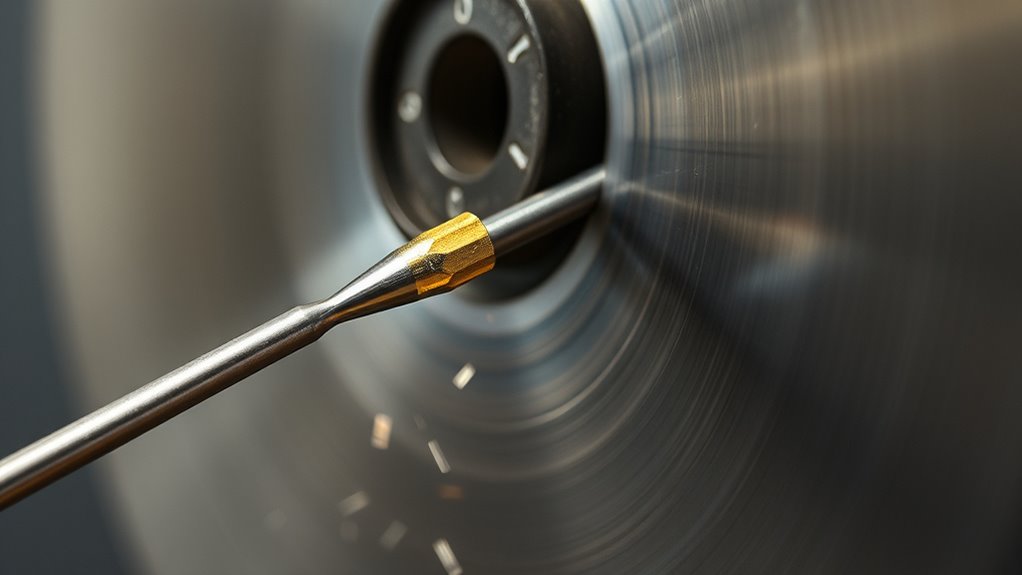
The point angle affects arc spread, penetration profile, starting behavior, and how well the tip carries heat. A smaller included angle produces a longer, sharper taper. A larger included angle produces a shorter, blunter taper.
Manufacturer guidance describes a general inverse relationship: a sharper point tends to spread the arc more widely, while a blunter point tends to concentrate the arc and penetration. CK Worldwide lists 25° for a wider arc, 35° as a balanced general option, and 45° for a more penetrating arc.
| Included Point Angle | General Arc Tendency | Typical Starting Use |
| About 20°–30° | Longer point and wider arc spread | Lower-current or thin-edge work where a broad, soft arc is useful |
| About 30°–35° | Balanced focus, starting, and tip life | General hand TIG starting point |
| About 40°–45° | Shorter, more heat-resistant point and more concentrated arc | Higher current, thicker material, or applications needing a narrower arc |
These ranges are starting points, not welding-procedure specifications. Electrode diameter, arc length, current waveform, AC balance, frequency, shielding gas, joint geometry, and torch technique can change the final result.
Choosing an Angle for Material Thickness
For thin sheet or edge welds, a longer point in the lower part of the range can create a wider, less concentrated arc. For general steel or stainless work, a 30° to 35° included point is a practical place to begin.
For thicker material or higher current, a blunter point with a small centered flat may hold its shape better and reduce the chance of the needle tip breaking away. Increase the electrode diameter when the current exceeds the range recommended by the welder or electrode manufacturer.
Angle Choice and Arc Stability
Consistency matters as much as the exact angle. Two electrodes sharpened to different tapers can produce noticeably different starts and puddle behavior even when the machine settings remain unchanged.
If the arc wanders after a fresh grind, first inspect the point for symmetry and confirm that the scratches run lengthwise. Then check contamination, arc length, shielding, electrode diameter, polarity, AC balance, and the condition of the collet and torch components.
How Tungsten Alloy Affects Preparation
Tungsten electrodes contain small amounts of alloying oxides that change arc starting, current capacity, tip life, and suitability for AC or DC welding. Common types include pure, thoriated, lanthanated, ceriated, zirconiated, and blended rare-earth electrodes.
- Pure tungsten, green: Historically used with older transformer-based AC machines. It tends to form a ball and is generally not the first choice for modern inverter AC equipment.
- 2% thoriated, red: Traditionally used for DC welding because of dependable starting and current capacity. Grinding requires additional dust controls because it contains radioactive thorium.
- 2% lanthanated, blue: A versatile non-thoriated option commonly used for AC and DC with modern equipment.
- 2% ceriated, gray under current manufacturer guidance: Useful for low- and medium-current work and capable of AC or DC operation.
- Zirconiated, white: Commonly associated with AC welding of aluminum and magnesium where the specified setup calls for it.
- Rare-earth blends: Designed to improve starting, stability, or tip life across a range of applications.
Color codes and classifications can vary by standard, product age, and region. Read the package marking rather than identifying an electrode by color alone.
Miller’s current tungsten guide recommends 2% lanthanated as a versatile general-purpose choice and explains how modern alloyed electrodes have replaced pure and thoriated tungsten in many applications.
AC Tungsten Preparation: Modern Inverter vs. Legacy Transformer
AC tip preparation depends on the power source. The traditional instruction to form a spherical tip, sometimes called a ball or calotte, should not be applied automatically to every aluminum TIG setup.
Modern Inverter AC Welders
Modern inverter machines commonly use lanthanated, ceriated, or another approved rare-earth tungsten. Prepare a symmetrical point and lightly truncate the needle tip. During welding, the point may round slightly, but it should not normally form a large ball.
Miller recommends a truncated point for modern AC TIG because it gives a more focused arc than rounded pure tungsten while helping the electrode withstand arc heat. An oversized or deformed tip may indicate excess electrode-positive time, excessive current, an undersized electrode, or the wrong electrode type.
Older Transformer-Based AC Welders
Some older transformer machines and qualified welding procedures may call for pure or zirconiated tungsten with a rounded end. In that case, follow the power-source manual for the electrode type, preparation method, polarity, and acceptable ball diameter.
Do not deliberately increase current or use electrode-positive output to create a ball unless the equipment manufacturer or approved procedure specifically directs you to do so. An oversized ball can wander, split, or contaminate the puddle.
Note: If the tungsten changes shape rapidly during AC welding, correct the machine setup rather than repeatedly reshaping the same electrode. Check AC balance, current, electrode diameter, alloy, and cooling capacity.
How to Match the Tungsten Tip to Your Welding Job
Use the welder manual, welding procedure, and grinder instructions as your primary references. The following sequence provides a practical starting method:
- Choose the correct alloy. Use an electrode approved for the polarity, base metal, and power-source technology.
- Choose the diameter. Match it to the expected current range. A larger diameter generally carries more current, while a smaller diameter starts more easily at very low current.
- Select the initial included angle. Start around 30° to 35° for general hand TIG, then adjust based on arc behavior and current.
- Decide whether to truncate. Use a small centered flat when required for higher current or modern AC preparation.
- Make a test weld. Observe starting, arc focus, penetration, tip condition, and puddle response on clean scrap of the same material.
- Change one variable at a time. Do not change angle, current, arc length, gas flow, and AC balance together, or you will not know which adjustment helped.
The correct tungsten electrode size for the amperage range is as important as the grind angle. A perfect point on an undersized electrode can still overheat and deform.
Avoid These Common Mistakes in Tungsten Sharpening
- Grinding around the electrode: Circular or spiral scratches can encourage an unstable arc.
- Using a shared wheel: A wheel used on steel, aluminum, or other metals can contaminate the tungsten.
- Grinding contamination into the taper: Cut away transferred metal before restoring the point.
- Bending or snapping the electrode: This can create hidden fractures and an erratic arc.
- Using a needle point at excessive current: The tiny tip may overheat, break away, or contaminate the weld.
- Pressing too hard: Excess pressure increases heat and makes it harder to maintain a centered taper.
- Freehanding every electrode differently: Inconsistent geometry creates inconsistent starts and puddle behavior.
- Ignoring the grinder’s angle convention: A 30° included point is not the same as grinding each side at 30°.
- Automatically balling tungsten for AC: Modern inverter machines often perform better with a pointed, truncated alloyed electrode.
- Holding a short electrode close to an open wheel: Use a proper holder and keep fingers clear of rotating equipment.
Best Practices for Maintaining Tungsten Electrode Longevity
Inspect the tungsten before important welds and whenever the arc starts behaving differently. Regrind or replace an electrode that is contaminated, split, badly eroded, off-center, or unable to hold the preparation required by the job.
- Keep sharpened electrodes in a clean, labeled tube or holder.
- Separate clean electrodes from contaminated ones.
- Keep several pre-sharpened spares near the welding station.
- Use the correct electrode diameter instead of forcing a small electrode to carry excessive current.
- Avoid touching the weld puddle or filler rod with the tungsten.
- Keep the torch collet, collet body, gas lens, cup, and back cap clean and correctly tightened.
- Maintain a short, steady arc to reduce wandering and accidental puddle contact.
- Confirm gas type, flow, and coverage when a clean tungsten quickly becomes discolored.
TIG welding commonly uses pure argon or an approved argon-based blend. Incorrect gas, leaks, turbulence, or poor coverage can contaminate the tungsten and mimic a sharpening problem. Review the complete TIG shielding gas setup when a newly prepared electrode repeatedly deteriorates.
Frequently Asked Questions
How do you sharpen a tungsten TIG electrode?
Cut away any contaminated or cracked material, set the required point angle, and grind from the electrode body toward the tip. Rotate the electrode evenly so the point stays centered and all scratches run parallel to its length.
What grit is best for sharpening tungsten?
Use a dedicated fine wheel that matches the grinder manufacturer’s instructions. A 200-grit or finer wheel is a practical benchmark for producing a smooth TIG tungsten point without deep scratches.
What angle should you sharpen a tungsten electrode?
A 30° to 35° included point is a useful general starting range. Use a smaller included angle for a longer point and wider arc, or a larger included angle for a shorter point that handles more heat. Follow the welding procedure and equipment manuals.
Should tungsten be ground lengthwise or sideways?
Grind it lengthwise so the scratches run parallel to the electrode centerline. Sideways, circular, or spiral grinding marks can make the arc less stable and encourage it to leave the point off center.
Should you ball tungsten for AC aluminum welding?
Not automatically. Modern inverter AC welders commonly use lanthanated, ceriated, or another approved alloyed tungsten with a pointed, truncated tip. Older transformer machines or qualified procedures may call for a rounded tip, so follow the power-source manual.
Can you sharpen tungsten on a regular bench grinder?
Yes, provided the grinder is properly guarded and uses a fine wheel reserved only for tungsten. The wheel must be undamaged, correctly rated, and paired with suitable eye protection and dust controls. A purpose-built tungsten grinder gives more repeatable results.
What are the most common tungsten grinding mistakes?
Common mistakes include grinding across the electrode, using a contaminated wheel, leaving an off-center point, pressing too hard, failing to cut away contamination, snapping the electrode, and using transformer-era balling advice on a modern inverter welder.
Conclusion
A well-prepared tungsten electrode gives you cleaner starts, a steadier arc, and more predictable control of the weld puddle. Grind lengthwise on a dedicated fine wheel, keep the point centered, and begin near a 30° to 35° included angle for general work unless your equipment or welding procedure specifies another shape.
Do not use one preparation method for every machine. Modern inverter AC welders commonly favor alloyed tungsten with a pointed, truncated tip, while some older transformer setups may require a rounded end. Inspect the electrode often, remove contamination completely, and correct current, balance, gas, or electrode-size problems when the tip repeatedly deteriorates.
Sources
- Miller — All About Tungsten in TIG Welding — electrode types, cutting, point shape, longitudinal grinding, and contamination.
- Miller — How to Choose the Best Tungsten for AC TIG Welding — modern inverter AC electrodes and truncated-point preparation.
- CK Worldwide — Tungsten Electrode and Sharpening Guide — point-angle effects and electrode classifications.
- ESAB — A Beginner’s Guide to TIG Welding — dedicated fine-wheel preparation and TIG setup guidance.
- OSHA — Abrasive Wheel Equipment Grinder Checklist — guards, work rests, eye protection, wheel speed, and dust collection.
- International Atomic Energy Agency — Radiation Safety for Consumer Products — thoriated-tungsten grinding hazards and control measures.