Yes, you can TIG weld steel with 100% argon. In fact, pure argon is the standard all-around shielding gas for most carbon-steel and stainless-steel TIG work. Clean metal, the correct polarity, steady gas coverage, and a short arc matter just as much as the gas itself.
Quick Answer
Yes. For carbon steel and most stainless-steel TIG work, 100% argon is the standard all-around shielding gas. Use DCEN, clean metal, a short arc, and a flow rate matched to the cup and draft conditions. Avoid argon-CO2 MIG blends because active gas can contaminate the tungsten and weld pool.
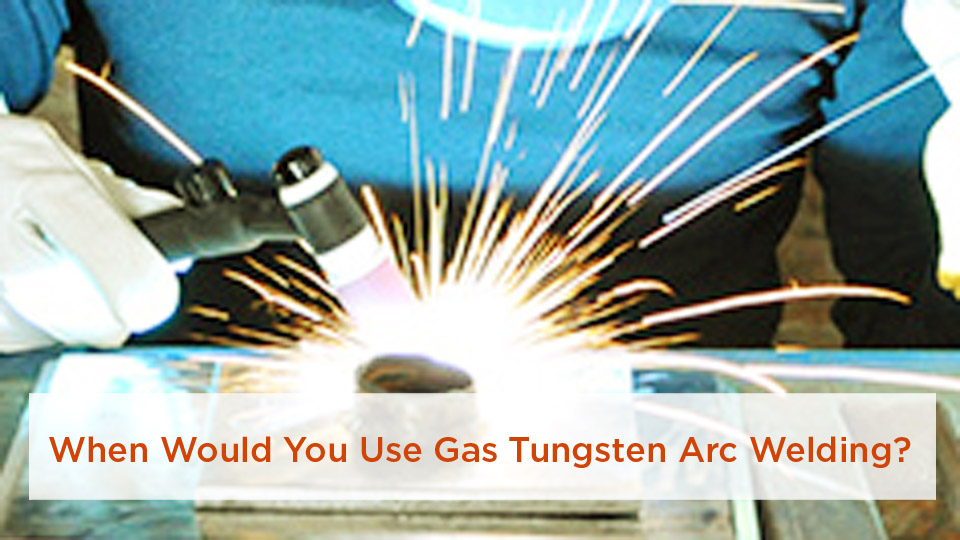
TIG welding, also called Gas Tungsten Arc Welding (GTAW), uses a nonconsumable tungsten electrode to create the arc. Argon surrounds the tungsten and molten weld pool so oxygen, nitrogen, and moisture in the air cannot readily contaminate the weld.
Argon does not make a weld strong by itself. Joint design, filler selection, amperage, travel speed, fit-up, cleaning, and welder skill still control the result. For structural, trailer, pressure-vessel, sanitary, or other code-controlled work, follow the approved drawing and welding procedure instead of treating general settings as a substitute.
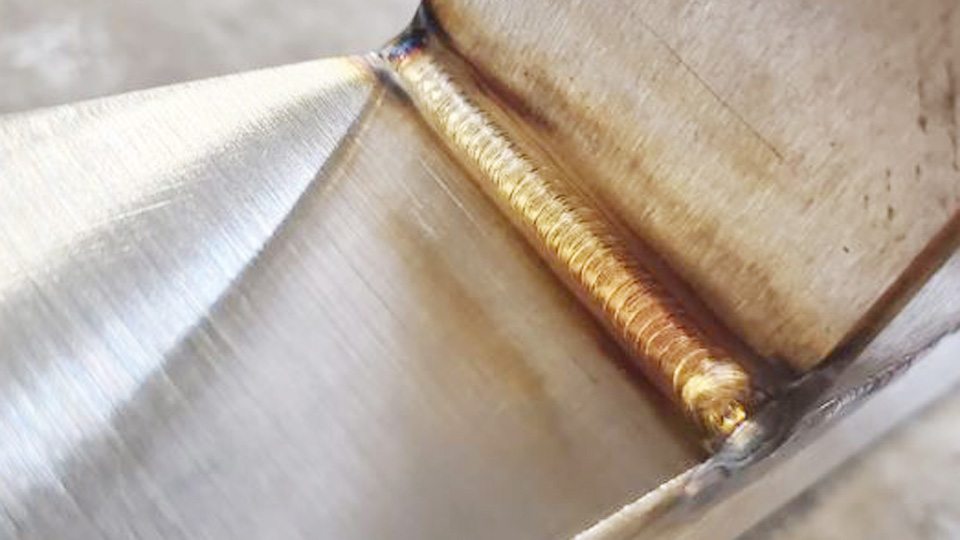
Photo by katanakenley
Key Takeaways
- Use 100% argon for routine TIG welding of mild steel and most stainless steel.
- Set a conventional DC TIG machine to DCEN for steel.
- Start near 15–20 CFH, then adjust for cup size, gas lens, torch position, and drafts.
- Do not use a 75/25 argon-CO2 MIG mix for TIG welding.
- Treat amperage and filler charts as starting points, not code-qualified procedures.
- Control fumes, secure the cylinder, and never use argon in a confined space without a proper atmospheric-control plan.
At a Glance
| Time Required | About 15–30 minutes for setup, cleaning, leak checks, and test coupons; actual weld time varies. |
| Difficulty | Beginner to intermediate for practice work; advanced for critical joints and thin stainless. |
| Tools Needed | DC-capable TIG welder, torch, 100% argon, regulator/flowmeter, tungsten, correct filler rod, clamps, cleaning tools, and welding PPE. |
| Cost | Varies with cylinder rental or ownership, local argon refill prices, filler use, and PPE already on hand. |
Why Use 100% Argon for TIG Welding Steel?
Argon is a noble gas, so it is chemically inert under normal welding conditions. That makes it well suited to shielding the tungsten and molten metal from the surrounding air. It also starts easily and produces a stable, focused arc, which helps when you are learning puddle control or working on thin material.
Pure argon is useful across a wide range of TIG work. You can use it with DC TIG on carbon steel and stainless steel and with AC TIG on materials such as aluminum. For steel, the normal polarity is DCEN, or direct-current electrode negative. DCEN places most of the arc heat in the workpiece and helps keep the tungsten from overheating.
A common shop mistake is connecting a TIG torch to a cylinder of 75% argon and 25% carbon dioxide because that mix is already being used for MIG welding. Carbon dioxide is an active gas. In TIG welding it can oxidize the tungsten, destabilize the arc, and contaminate the weld. Switching to 100% argon normally solves the gas-chemistry part of that problem, although dirty metal, leaks, or poor technique can still cause defects.
The shielding gas protects the weld pool; it does not replace correct joint preparation, filler selection, heat control, or a qualified welding procedure.
How Does 100% Argon Affect Weld Quality?
Good argon coverage helps prevent oxygen, nitrogen, and moisture from reaching the hot tungsten and weld pool. When coverage is steady, the arc is easier to aim and the finished bead is usually smooth with little or no spatter. Poor coverage may show up as porosity, a dull or sooty surface, tungsten discoloration, or an unstable arc.
For many air-cooled torch setups, 15–20 cubic feet per hour (CFH) is a practical starting range. It is not a universal setting. A small cup, a large gas-lens cup, an inside corner, long tungsten stickout, or a drafty work area may need a different flow. Too little flow leaves the weld exposed. Too much can create turbulence that pulls room air into the shielding envelope.
The cup should be close enough to cover the puddle, and the tungsten should not stick out farther than the cup and gas-lens setup can shield. Keep the torch moving smoothly and avoid pointing a fan across the joint. If a breeze can move smoke sideways, it can often move argon away from the weld as well.
For stainless steel, 100% argon is also a standard choice. Some qualified industrial procedures use hydrogen-bearing or other specialty blends for specific austenitic stainless applications, but those mixes are not a general upgrade for every stainless grade and should not be substituted on carbon steel. Follow the filler-metal maker, gas supplier, and approved welding procedure for specialty work.
Pro Tip: If increasing the flow makes the bead worse, turn it back down and check the cup, O-rings, torch parts, hose fittings, and nearby airflow. Excess flow can cause the same contamination symptoms as low flow.
When Should You Use 100% Argon for TIG Welding Steel?
Use 100% argon for most manual TIG welding on low-carbon steel, mild steel, chromoly, and common stainless grades when the applicable procedure allows it. It works well for sheet metal, tubing, brackets, exhaust components, furniture, art, and general fabrication.
Argon is also the sensible first cylinder for a home shop because it covers DC TIG on steel and stainless and AC TIG on aluminum. That versatility does not mean the same tungsten, filler, amperage, or polarity works for every metal.
For repairs such as a workbench or noncritical bracket, the starting ranges in this guide can help you make test welds. For trailer hitches, roll cages, pressure vessels, load-bearing structures, sanitary piping, or any work governed by AWS or ASME requirements, use the specified welding procedure, qualified personnel, inspection method, and approved filler. Argon alone cannot make a joint code compliant.
An argon-helium blend may be useful when more heat input or travel speed is needed, especially on thick or highly conductive material. Helium changes arc behavior and cost, so it should solve a defined problem rather than be used simply because it is available. There is no single thickness at which every job must switch gases.
Note: Do not weld over paint, zinc coating, plating, oil, or an unknown coating. Remove the coating far enough from the joint, identify the material, and use ventilation and respiratory controls appropriate to the hazard.
Step-by-Step Guide to TIG Welding Steel with 100% Argon
The following process is a practical starting point for clean, noncritical shop work. Read the welder and torch manuals first, and use test coupons made from the same material and thickness as the project.
Products Worth Considering

Premium welding kit training steel, makes 1 dice and 1 Cube

Crafted with precision, our steel plates are laser-cut, offering unparalleled edge smoothness and dimensional accuracy compared to stamped and sheared parts.
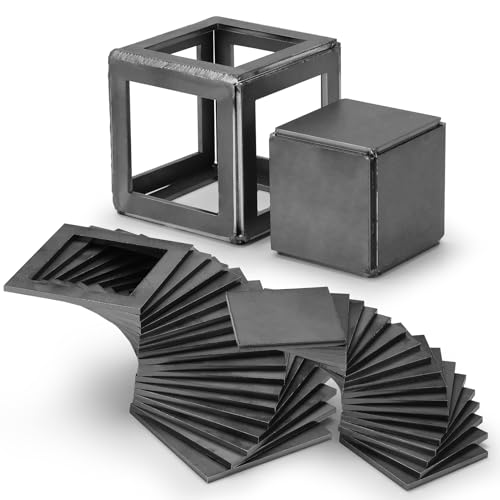
Quantity and size: Welding practice kit, with 18 of 3.6 inch, 18 of 2.6 inch, set of 36
Step 1: Prep Your Materials
Cleanliness matters more in TIG than in many other arc-welding processes. Remove rust, paint, oil, mill scale, moisture, and plating from the joint area. Use a clean abrasive, file, or wire brush, then wipe the surface with a compatible cleaner and let it evaporate fully before striking an arc.
Use a dedicated stainless-steel brush and clean abrasives on stainless so carbon-steel particles do not become embedded in the surface. Clean the filler rod as well, and keep it off dirty benches and floors.
Prepare the joint to match its thickness, fit-up, position, and required penetration. Thin sheet may need only a square edge and tight fit. Thicker butt joints may require a bevel, root face, and root opening. Do not assume that every plate over 1/8 inch needs the same 30-degree bevel; follow the drawing, procedure, or a tested joint design.
Step 2: Set Up Your TIG Welder
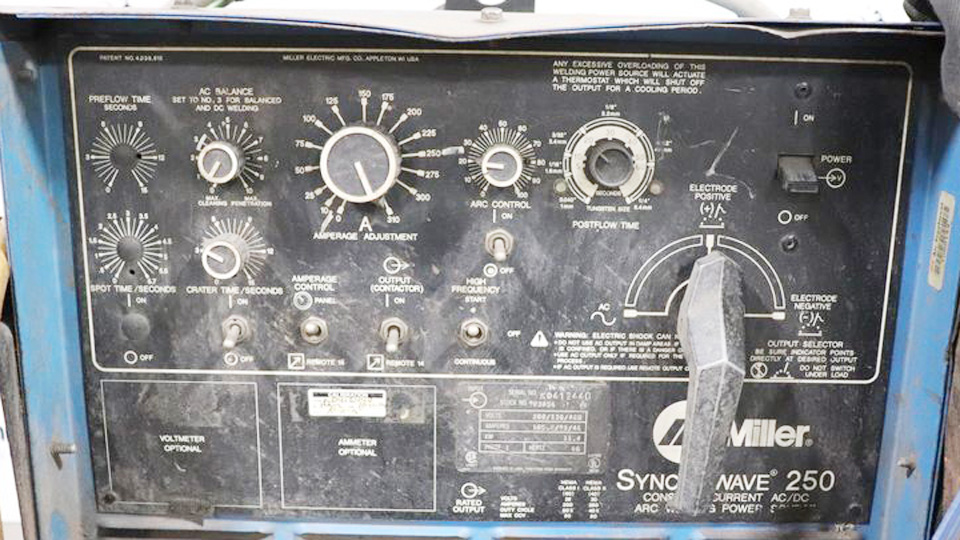
Set a conventional TIG machine to DCEN for carbon and stainless steel. Install clean torch parts and a sharpened 2% lanthanated or ceriated tungsten sized for the expected current. A 3/32-inch tungsten is a useful general-purpose size, while a 1/16-inch tungsten can improve control at low current.
- Amperage: Start with the machine maker’s chart or calculator, then fine-tune on scrap. A foot pedal or fingertip control makes heat changes easier.
- Gas flow: Start around 15–20 CFH for a typical cup in still indoor air; adjust to the torch setup and conditions.
- Tungsten: Grind lengthwise to a centered point with a small flat at the tip when recommended for the current range.
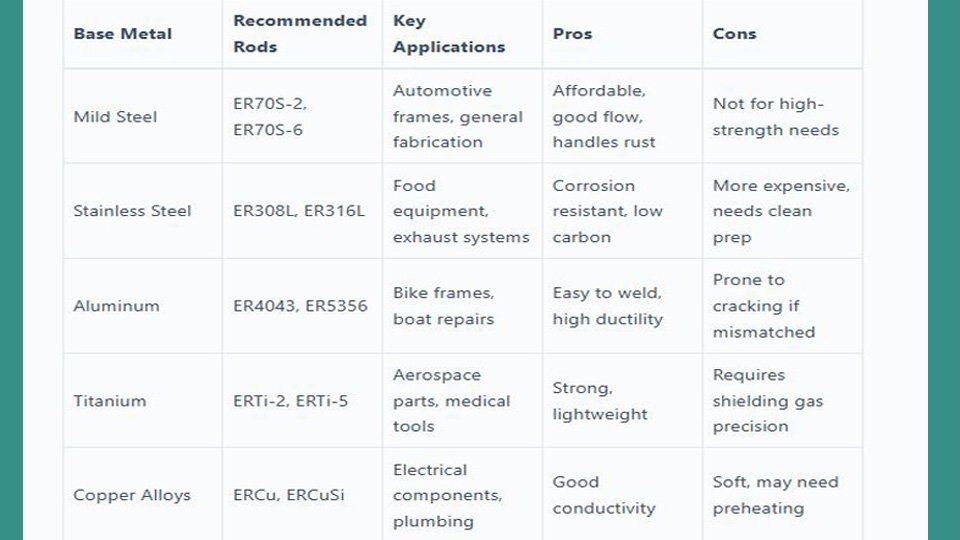
- Filler rod: Match the base metal and procedure. ER70S-2 is common for mild steel, while ER308L is commonly used for 304/304L stainless. Other stainless grades may need different filler.
- Pre-flow and post-flow: Use enough pre-flow to establish shielding before the arc and enough post-flow to protect the hot tungsten and crater after the arc stops.
Check the regulator, hose, torch connections, collet body, gas lens, and back cap. Apply an approved leak-detection solution to external gas fittings and repair any leak before welding. Purge the hose briefly after changing cylinders or opening a system that may contain air.
Warning: Never use oxygen, compressed air, an argon-CO2 MIG mix, or an unidentified cylinder as TIG shielding gas. Use the correct regulator and hose, secure the cylinder upright, and keep the valve protected from impact.
Step 3: Dial In Your Technique
Start on a test coupon. Hold the TIG torch about 10–15 degrees from vertical and keep the arc short, often about 1/16 to 1/8 inch. Use high-frequency or lift-arc starting when available so you do not scratch the tungsten across the work.
Form a small puddle, then move steadily along the joint. Add filler to the leading edge of the puddle without touching the tungsten. Withdraw the rod only far enough to keep it clear of the arc; pulling the hot end outside the argon shield can oxidize it.
For thin steel, use a tight fit, lower average heat, and a steady travel speed to limit burn-through and distortion. For thicker steel, prepare the joint and use the number of passes the joint requires. Do not weave automatically; stringer beads or a small controlled oscillation may be better depending on the procedure.
For stainless tubing or full-penetration stainless joints, the back side may also need an inert-gas purge. Without root shielding, the underside can oxidize heavily, which can reduce corrosion resistance and make sanitary cleaning difficult.
Step 4: Inspect and Clean Up
Let the post-flow protect the hot tungsten and crater before moving the torch away. Inspect the bead for uniform width, adequate tie-in, undercut, overlap, pinholes, cracking, and signs of incomplete fusion. A pretty stack of ripples is not proof of penetration or strength.
If the weld is porous or sooty, stop and correct the cause instead of covering it with another pass. Check gas type, flow, leaks, drafts, cup condition, tungsten contamination, filler cleanliness, and base-metal preparation.
Brush mild-steel welds with a clean carbon-steel brush after they cool. Stainless discoloration may be removed mechanically, electrochemically, or with an approved chemical process chosen for the service requirement.
Warning: Stainless pickling paste can contain hydrofluoric and nitric acids that cause severe burns and systemic injury. Do not treat it as a routine wipe-on cleaner. Use it only with product-specific training, ventilation, PPE, first-aid planning, and the Safety Data Sheet.
Pros and Cons of TIG Welding Steel with 100% Argon
Pure argon is the best default for most steel TIG work, but it still has limits.
| Aspect | Pros | Cons |
|---|---|---|
| Arc Stability | Easy starting and a smooth, controllable arc. | Provides less heat input than helium-rich shielding for some demanding applications. |
| Weld Quality | Supports clean, low-spatter welds when coverage and preparation are correct. | Cannot overcome contamination, poor fit-up, wrong filler, or bad technique. |
| Cost | Widely available and usually less expensive than helium-rich blends. | Waste from leaks, excessive flow, and long post-flow can empty a cylinder quickly. |
| Versatility | Works for carbon steel, stainless steel, aluminum, and many other TIG applications. | Polarity, tungsten, filler, and machine settings still change with the metal. |
| Ease of Use | Forgiving gas choice for beginners and precise enough for skilled work. | TIG remains slower and more technique-sensitive than MIG for many production jobs. |
Common Mistakes and How to Fix Them
Most bad TIG welds blamed on argon are actually caused by coverage, preparation, torch setup, or heat-control problems.
- Porosity: Confirm the cylinder contains 100% argon, check for leaks, clean the joint and filler, reduce drafts, and test a flow near 15–20 CFH.
- Contaminated tungsten: Stop after a dip. Remove the contaminated section if needed, then regrind lengthwise on a dedicated wheel or tungsten grinder.
- Burn-through: Improve fit-up, lower average heat, use a smaller filler or tungsten when appropriate, increase travel speed, and use pulse or a heat sink if the procedure permits.
- Inconsistent bead: Stabilize your hand, shorten the arc, keep the torch angle consistent, and add filler at a repeatable pace.
- Gray or sugary stainless root: Improve back-purge coverage, reduce excess heat, and keep air from entering the tube or back side of the joint.
- Arc wandering: Regrind the tungsten to a centered point, shorten the arc, verify DCEN, and move the work lead close to clean bare metal.
- Gas use is too high: Leak-test the system, lower excessive flow, shorten unnecessary post-flow, and close the cylinder valve when finished.
Pro Tip: Change one variable at a time on scrap and write down the result. If you change gas flow, amperage, cup, tungsten stickout, and travel speed together, you will not know which change solved the problem.
Machine Settings for Different Steel Types
These ranges are starting points for flat-position practice coupons with 100% argon and a machine capable of the listed current. Joint type, fit-up, travel speed, torch cooling, pulse settings, and the machine’s actual output can change the result. Use the welder maker’s chart and the approved WPS when one applies.
- Mild Steel, 1/8 inch:
- Amperage: about 80–120 amps
- Tungsten: 3/32-inch 2% lanthanated or ceriated
- Filler: ER70S-2, often 1/16 inch
- Gas flow: about 15–18 CFH with a typical indoor cup setup
- 304/304L Stainless Steel, 1/16 inch:
- Amperage: about 50–80 amps, often controlled with a pedal
- Tungsten: 1/16-inch 2% lanthanated or ceriated
- Filler: ER308L, often 1/16 inch, when compatible with the base metal and service
- Gas flow: about 12–18 CFH depending on cup and gas-lens setup
- Mild Steel, 1/4 inch:
- Amperage: about 150–200 amps for a prepared joint, subject to machine duty cycle
- Tungsten: 3/32- or 1/8-inch 2% lanthanated, matched to the current
- Filler: ER70S-2, commonly 3/32 inch
- Gas flow: about 15–20 CFH with a typical indoor cup setup
Always run a test coupon and break, bend, etch, or otherwise inspect it when joint quality matters. Keep a notebook of settings that worked with your machine, torch, cup, tungsten, filler, and joint.
Products Worth Considering

ER70S-6 TIG WELDING ROD: The main alloying elements of ER70S - 6 welding wire are C, Mn, Si, etc. Moderate carbon content ensures weld strength. Mn and Si, as deoxidizers and alloying elements, enhance weld's mechanical properties, crack resistance, toughness and strength

ER308L TIG WELDING ROD: ER308L is a low -carbon stainless steel tig welding rod, which has excellent anti -crystal interval corrosion properties and full -location welding performance.

ER70S-6:Copper-coated mild steel TIG welding rod.Can be welded with Ar & CO2 mixed gas or with 100% CO2 as the shielding gas
Safety Considerations When TIG Welding with Argon
Argon is nonflammable, but it is not harmless. It can displace oxygen, and welding creates arc radiation, hot metal, electric-shock risks, and metal fumes.
Ventilation and oxygen displacement: Use local exhaust or effective general ventilation. Argon can collect in enclosed or low areas and create an oxygen-deficient atmosphere without warning. Do not weld in a tank, pit, vessel, or other confined space unless a qualified confined-space program covers atmospheric testing, ventilation, gas-cylinder placement, rescue, and continuous monitoring where required.
Stainless-steel fumes: Welding stainless can generate hexavalent chromium and other hazardous fume. Keep your head out of the plume and use source-capture ventilation. Respirator selection, when needed, must be based on the hazard assessment and a proper respiratory-protection program.
Eye and face protection: Wear safety glasses with side shields under a welding helmet. Select the filter shade for the actual process and amperage. OSHA lists minimum GTAW shades of 8 below 150 amps and 10 from 150 to 500 amps; start darker and lighten only enough to see the weld without going below the minimum.
Clothing and fire prevention: Wear flame-resistant clothing, dry welding gloves, closed footwear, and coverage for exposed skin. Clear combustibles from the area, protect nearby people from arc flash, and keep a suitable fire extinguisher available.
Gas-cylinder safety: Keep the argon cylinder upright and secured to a cart or fixed support. Protect the valve, use the correct regulator, open the valve slowly while standing to the side, close it when work is finished, and remove the regulator and install the cap before moving the cylinder unless it is secured on a suitable carrier.
Electrical safety: Inspect cables, torch parts, and the work lead. Keep gloves and clothing dry, and do not weld while standing in water or contacting the electrode circuit with bare skin.
Warning: A household fan aimed at the weld is not a safe substitute for fume extraction. It may blow fumes toward another person and strip argon from the puddle. Position source capture to pull fumes away without creating a cross-draft through the shielding gas.
Why 100% Argon Is a Welder’s Best Friend
Pure argon earns its place in a TIG setup because it is stable, widely available, and useful on many metals. For steel, pair it with DCEN, clean material, the correct filler, a properly prepared tungsten, and a tight arc. Those basics produce far more improvement than simply turning up the gas flow.
The best habit is to test before welding the real part. Confirm gas coverage, tune the amperage, and inspect the coupon. When a joint carries a load, contains pressure, affects vehicle safety, or falls under a code, use the approved procedure and qualified inspection. For more process help, see the complete welding guides.
Frequently Asked Questions
Can I use 100% argon for MIG welding steel?
Pure argon is not the normal shielding gas for MIG welding carbon steel. It often produces poor bead shape, weak sidewall fusion, and unstable transfer compared with the argon-CO2 or CO2 gases specified for the wire and transfer mode. Pure argon is commonly used for MIG welding aluminum, which is a different application.
What happens if I use the wrong shielding gas for TIG welding?
An active gas such as carbon dioxide can oxidize and damage the tungsten, destabilize the arc, and contaminate the weld. Stop, install the correct gas, purge the line, replace or regrind the contaminated tungsten, and test on scrap before continuing.
How do I know if my argon flow rate is correct?
Start near 15–20 CFH for a common indoor torch setup, then watch the result. Clean bead color, a stable arc, and an undamaged tungsten suggest adequate coverage. Porosity or soot may mean low flow, a leak, or a draft. If higher flow makes the weld worse, turbulence may be pulling in air.
Can I TIG weld stainless steel with 100% argon?
Yes. Pure argon is a standard shielding gas for TIG welding many stainless grades. Match the filler to the base metal and service, control heat input, and back purge full-penetration roots when corrosion resistance or sanitary quality requires it.
Why does my TIG weld look dirty even with 100% argon?
Common causes include oil, mill scale, moisture, a leaking hose, a damaged cup, incorrect torch assembly, excessive or insufficient flow, long arc length, too much tungsten stickout, a draft, or a contaminated tungsten. Check each item in order rather than assuming the cylinder is bad.
Do I need to back purge stainless steel?
Back purging is commonly needed on full-penetration stainless pipe and tube welds when the root surface must resist corrosion or meet sanitary requirements. It may not be necessary for every partial-penetration or cosmetic joint. Follow the drawing, service requirements, and welding procedure.
Can I TIG weld steel outdoors with argon?
Only if you can fully shield the torch and weld from moving air. Even a light breeze can disrupt argon coverage. Use wind screens and verify the setup on scrap; increasing gas flow alone may create turbulence and waste gas.
Sources
- Miller — Best Practices for Proper Shielding Gas in TIG Welding — argon, helium, flow-rate factors, and gas-coverage guidance.
- Miller — Guide to TIG Welding Basics — DCEN, tungsten size, flow, post-flow, arc length, and troubleshooting.
- OSHA — Controlling Hazardous Fume and Gases During Welding — oxygen displacement, welding fumes, and hexavalent chromium.
- OSHA 29 CFR 1910.133 — minimum protective filter shades for GTAW.
- OSHA 29 CFR 1926.350 — compressed-gas cylinder handling and securing practices.
- UK Health and Safety Executive — Post-Weld Cleaning Using Pickling Pastes — hydrofluoric/nitric acid risks and controls.