Choosing between oxy-acetylene and MIG welding for sheet metal comes down to the metal, joint, heat control, finish requirements, work location, and your experience. MIG is usually the practical choice for repeatable welds on clean mild-steel sheet. Oxy-acetylene still earns a place when you need heating, brazing, forming, direct flame control, or repair capability without electrical power.
Quick Answer
For most mild-steel sheet-metal welding, MIG is the better all-around choice because it is faster, easier to learn, and easier to repeat. Choose oxy-acetylene when you need brazing, heating, forming, careful flame work, or a process that does not depend on electrical power.
Key Takeaways
- MIG welding is usually the best starting point for beginners, patch panels, brackets, and repeat fabrication on clean mild steel.
- Oxy-acetylene gives a trained operator direct control of the flame and filler rod, but it adds cylinder, leak, open-flame, backfire, and flashback hazards.
- Neither process prevents warping. Tight fit-up, small tacks, short stitches, skip welding, cooling time, and a backing bar help control heat.
- Your filler, wire, shielding gas, torch tip, and settings must match the exact alloy, thickness, joint, and equipment instructions.
- Welding fumes and process gases require controls. Clean metal helps, but it does not replace ventilation, local exhaust, respiratory protection when required, or a hot-work procedure.
This comparison is general guidance. Follow your welder or torch manual, filler-metal instructions, safety data sheets, site hot-work rules, and applicable regulations. Get hands-on training before using oxygen-fuel equipment or welding structural, pressure-containing, vehicle-safety, or load-bearing parts.
Oxy-Acetylene Welding: Precision and Control for Thin Materials
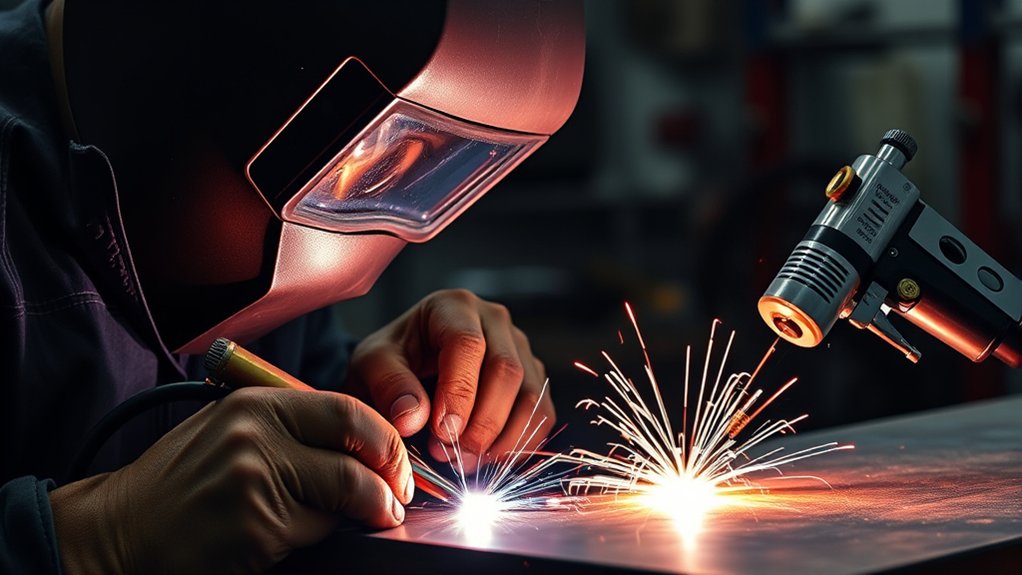
Oxy-acetylene welding uses oxygen and acetylene to produce a flame that melts the joint edges and, when needed, a separate filler rod. On sheet metal, you can see the metal warm, form a puddle, and respond to changes by adjusting the flame position, torch angle, filler timing, and travel speed.
This process is useful for thin-steel repair, brazing, patch work, metal shaping, heating seized parts, and jobs where electrical power is unavailable. The same outfit can also heat, braze, solder, and cut when it is fitted with the correct approved equipment. That versatility is one reason gas equipment remains useful in restoration and field repair.
Oxy-acetylene is not automatically easier on thin sheet. Its heat spreads over a wider area than a small electric arc, and slow travel can produce burn-through, distortion, oxidation, or an oversized heat-affected zone. Good results require the correct tip, a properly adjusted flame, close joint fit-up, steady travel, and coordinated filler-rod control.
The setup also demands disciplined safety. You need compatible cylinders, regulators, hoses, check valves, flashback protection, a torch, approved tips, a striker, leak-testing solution, and secure cylinder handling. Pressure settings are not universal. Use the exact torch-tip chart and lighting, purging, and shutdown procedure supplied by the equipment manufacturer.
Warning: Oxygen-fuel work combines pressurized gas with an open flame. Secure cylinders, keep oil and grease away from oxygen equipment, test for leaks with an approved solution rather than a flame, and use the backflow and flashback protection specified for your system. Do not perform hot work on a used tank, drum, pipe, or container unless it has been properly identified, disconnected, thoroughly cleaned, tested, vented or purged, and authorized under a safe hot-work procedure. See OSHA 29 CFR 1910.252 and the HSE welding and flamecutting guidance.
MIG Welding: Fast and Efficient for Sheet Metal
MIG welding, commonly used to describe gas metal arc welding or GMAW, feeds a solid wire electrode continuously through the gun. The wire becomes filler metal while an external shielding gas protects the arc and molten weld pool from the surrounding air.
For many sheet-metal jobs, MIG is faster and easier to repeat than oxy-acetylene. You set the polarity, voltage, wire-feed speed, wire diameter, and gas flow for the material and joint, then make controlled tacks or short welds. This makes MIG common for mild-steel panels, brackets, patch panels, light fabrication, and repeat production.
MIG does not automatically prevent warping. Short-circuit-transfer MIG can give good heat control on thin steel, but long beads, high wire-feed or voltage settings, slow travel, contamination, or wide gaps can still distort or burn through the panel. The goal is not simply to use the lowest possible setting. You need enough heat for fusion while limiting how long the arc stays in one area.
Practical MIG Starting Points for Light-Gauge Steel
- Start with the machine chart or manual: Settings vary by machine, joint, position, wire, gas, and thickness. Make test welds on matching scrap before touching the part.
- Use small solid wire: For most light-gauge steel, Miller recommends .023- or .024-inch wire. Some 18-gauge and thicker work can use .030-inch wire when the machine and procedure support it.
- Match filler to the steel: ER70S-6 is a common choice for mild steel, but the correct classification depends on the base metal and required weld properties.
- Use the correct polarity: Solid-wire GMAW normally uses electrode positive. Confirm the polarity shown in the wire and machine instructions.
- Use an appropriate shielding gas: A 75% argon and 25% carbon dioxide blend is a common starting choice for short-circuit MIG on mild-steel sheet because it supports a stable arc with less spatter than straight carbon dioxide. Follow the wire and machine recommendations.
- Keep stickout and gun angle consistent: Excessive stickout, an unstable angle, or poor gas coverage can reduce fusion and create porosity.
A machine that also runs self-shielded flux-cored wire is operating FCAW, not gas-shielded MIG, when that wire is installed. Self-shielded flux core is useful outdoors and on thicker or less-clean steel, but it usually puts more heat and spatter into the work, so it is often a poor first choice for very thin sheet.
| MIG Advantage | What to Watch |
|---|---|
| Fast, repeatable welds | Too much heat or arc time can still warp or blow through thin sheet |
| Easier learning curve for basic steel work | Settings must match thickness, wire, gas, joint design, position, and fit-up |
| Good for mild-steel patch panels and brackets | Wind can disturb shielding gas and cause porosity |
| Clean welds when preparation and gas coverage are right | Paint, rust, oil, zinc, moisture, leaks, and poor gas flow can contaminate the weld |
Pro Tip: Tack the panel, move to a distant area, and keep skipping around instead of joining the tacks in one continuous pass. Pause long enough for the panel to lose heat. This reduces local shrinkage, waves, oil-canning, and burn-through.
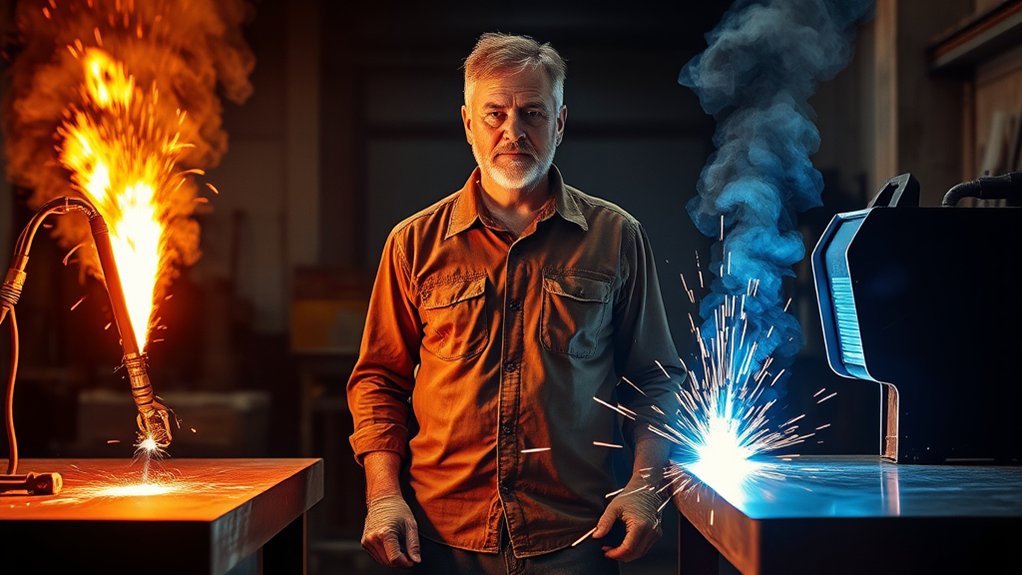
Oxy-Acetylene vs MIG Welding: Side-by-Side Comparison
| Factor | Oxy-Acetylene | MIG Welding |
|---|---|---|
| Best for | Brazing, heating, forming, restoration work, remote repair, and skilled flame control | Fast mild-steel sheet welding, patch panels, brackets, fabrication, and repeat work |
| Skill level | Higher; flame, puddle, filler rod, and travel must be coordinated by hand | Lower for basic work once the machine is set correctly |
| Speed | Slower and more manual | Faster because wire feeds continuously |
| Heat pattern | Broader heated area; highly responsive to tip, flame, distance, and travel speed | More concentrated arc; controlled by transfer mode, voltage, wire feed, stickout, and travel |
| Distortion control | Requires strong flame and travel discipline because heat spreads farther | Fast tacks and short stitches can limit heat, but long beads still warp panels |
| Post-weld metal finishing | Often chosen by skilled restorers who plan to hammer, dolly, or planish the seam | Fast and practical, but the deposited weld can be harder to stretch during metal finishing |
| Portability | No electrical supply needed, but cylinders are heavy and must be transported and secured correctly | Needs suitable power and usually a shielding-gas cylinder; engine-driven power is another option |
| Outdoor work | Usable outdoors with fire, wind, cylinder, and fume controls | Wind can disrupt shielding gas; screens may help only when they do not restrict ventilation or create another hazard |
| Main risks | Open flame, fire, leaks, backfire, flashback, cylinder failure, fumes, burns, and distortion | Arc radiation, electric shock, spatter, fumes and gases, fire, porosity, burn-through, and distortion |
Products Worth Considering
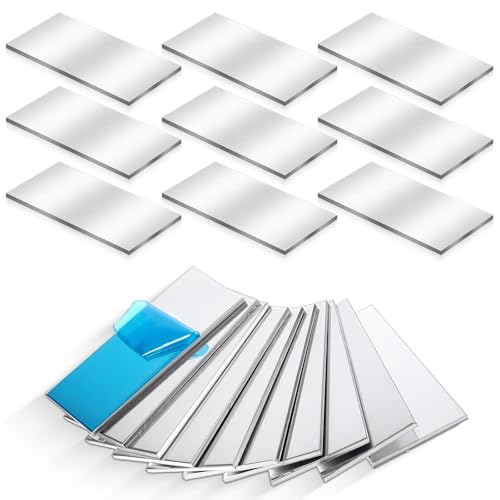
Detailed Dimensions with Ample Quantity: Our package includes 20 pieces of aluminum sheet welding kit, each crafted to precise dimensions of 2 x 4 inches (5 x 10 cm) with a thickness of 1/8 inches (3 mm). These plates are perfect for tasks demanding precision, such as laser cutting and professional welding, delivering consistent results every time.

Perfect gift for any Stick Welding, MIG Welding, TIG Welding, Plasma Arc Welding, Electron Beam Welding, Laser Welding or Gas Welding you know. Men or Women. Heck, even grab one for the little boys or girls in your life.
How Oxy-Acetylene and MIG Welding Setups Differ
Both methods join metal with heat, but the equipment, controls, and pre-use checks feel very different in the shop.
- Oxy-acetylene setup: You need oxygen and acetylene cylinders, compatible regulators, hoses, a torch handle, welding tips, filler rods, a striker, check valves or non-return valves, and the flashback protection required by the system. The outfit works without electricity, but storage, transport, ventilation, leak checks, purging, lighting, and shutdown require training.
- MIG setup: You need a suitable MIG power source, the correct solid-wire spool, drive rolls, liner, contact tip, nozzle, work lead and clamp, shielding-gas cylinder, and regulator or flowmeter. The base metal and clamp area must be clean. A machine may also run self-shielded flux-core wire, but that is FCAW rather than gas-shielded MIG.
- Control style: Oxy-acetylene control comes from tip selection, gas pressures, flame adjustment, torch distance, filler timing, and travel speed. MIG control comes from polarity, transfer mode, voltage, wire-feed speed, wire diameter, gas flow, stickout, gun angle, and travel speed.
- Consumables and maintenance: Oxy-fuel systems require sound hoses, clean fittings, correct tips, and leak-free gas equipment. MIG systems require the right drive-roll tension, a clean liner, a sound contact tip and nozzle, smooth wire feeding, and reliable gas delivery.
For sheet metal, setup accuracy matters as much as the process. A clean joint with tight, consistent fit-up is easier to weld than a contaminated joint with changing gaps, regardless of which method you choose.
Match the Process to the Metal and Joint
Mild-Steel Sheet
Both methods can weld mild steel. MIG is usually the better general-purpose choice for patch panels, brackets, cabinets, guards, and repeated joints. Oxy-acetylene becomes more attractive when you also need brazing, heating, forming, or traditional metal-finishing techniques.
Stainless-Steel Sheet
MIG can weld stainless sheet when the wire, shielding gas, cleanliness, and procedure match the exact alloy. Oxy-acetylene welding of stainless is less common because oxidation and heat control can be difficult. TIG is often chosen for thin, visible stainless work, but the correct process depends on joint design, production speed, corrosion requirements, and the qualified procedure.
Aluminum Sheet
Do not treat aluminum like mild steel. MIG welding aluminum normally needs pure argon, compatible filler, the correct polarity, and a reliable wire-feeding system such as a spool gun or push-pull setup. TIG or properly equipped MIG is more common for modern aluminum sheet work. Do not apply a steel welding procedure to aluminum without alloy-specific guidance.
Galvanized, Painted, Plated, or Unknown Metal
Do not weld until you know the base metal and every coating or residue in the heat-affected area. Zinc, lead, cadmium, chromium-containing coatings, paint, undercoating, oil, adhesives, and cleaning chemicals can create serious fume, fire, or toxic-gas hazards. Coating removal can also create hazardous dust, so it needs its own control method. Use the safety data sheet, exposure assessment, ventilation or extraction, and respiratory protection required for the job.
Joint Design and Access
- Butt joints: Keep the gap consistent and as tight as the procedure allows. Thin-sheet butt joints punish poor fit-up.
- Lap joints: They are easier to fit, but trapped coatings, sealers, moisture, and corrosion can cause contamination and long-term problems.
- Plug welds: MIG plug welds can replace factory spot welds in some repair procedures, but hole size, spacing, preparation, and strength requirements must follow the approved repair method.
- Edge and corner joints: These edges heat quickly, so reduce arc or flame dwell time and support the joint when possible.
- Restricted access: Choose the process only after confirming that you can maintain the correct gun or torch angle, see the puddle, protect nearby materials, and position fume controls effectively.
Sheet-Metal Heat Control Tips
Thin sheet can burn through or distort before a poor technique becomes obvious. The following habits help with either process:
- Clean the metal first: Remove rust, oil, adhesive, undercoating, paint, moisture, and other contamination with a method that does not create an uncontrolled dust, vapor, or fire hazard.
- Fit the joint tightly: Large or changing gaps invite burn-through and make the puddle harder to control.
- Tack before welding: Place small, sound tacks around the panel to hold alignment and distribute shrinkage.
- Use stitch or skip welding: Weld a short section or tack, move far away, and return only after the area has cooled. Miller identifies skip welding as a key way to distribute heat.
- Use backing when practical: A clean copper or aluminum chill bar can support the puddle and draw heat from the joint. Make sure the backing material and setup are appropriate for the job.
- Clamp without forcing the panel: Uneven or excessive clamping can lock stress into the part. Hold alignment while allowing for normal expansion and contraction.
- Do not chase a hot panel: When the sheet starts to move, stop adding heat. Let it cool, recheck alignment, and correct the cause before continuing.
- Avoid aggressive quenching: Sudden cooling can increase shrinkage, stress, hardness, or distortion in some metals. Let the work cool naturally unless an approved procedure says otherwise.
- Practice on matching scrap: Use the same alloy, thickness, joint, orientation, backing, and cleaning method. Break or section test pieces when weld strength matters.
Note: Clean mild steel can still produce hazardous welding fume. Stainless, galvanized, painted, plated, and coated metals can add more serious hazards. Use source capture or local exhaust where practical, keep your breathing zone out of the plume, and use suitable respiratory protection when engineering controls do not adequately control exposure.
Common Sheet-Metal Welding Problems and Fixes
| Problem | Likely Cause | Fix |
|---|---|---|
| Burn-through | Too much heat or arc time, large gap, slow travel, oversized wire or tip, or poor edge support | Use matching scrap to reset the process, shorten welds, improve fit-up, reduce dwell time, and use suitable backing |
| Warping or oil-canning | Long bead, uneven tack sequence, heat concentrated in one area, or forced clamping | Tack evenly, skip around, pause for cooling, use a chill bar when appropriate, and recheck panel shape often |
| Porosity | Contamination, damp metal, poor gas coverage, wind, leaks, blocked nozzle, or excessive stickout | Remove the defective weld, clean the joint, inspect the gas path, correct flow and stickout, and shield the work without restricting ventilation |
| Lack of fusion | Insufficient heat, excessive travel speed, poor angle, poor grounding, or dirty metal | Clean to sound metal, improve the work connection, correct angle and travel, and raise heat only enough to achieve fusion on test pieces |
| Soot or oxidation with oxy-acetylene | Incorrect flame, dirty base metal, wrong tip, or poor torch distance | Stop, clean the joint, confirm the tip and pressures, and set the flame according to the torch manual |
| MIG wire stubbing or burning back | Voltage and wire feed do not match, feeding resistance, wrong contact tip, or inconsistent stickout | Return to the machine chart, inspect drive rolls, liner and tip, then fine-tune on matching scrap |
Safety Tips for Welding: What You Should Know
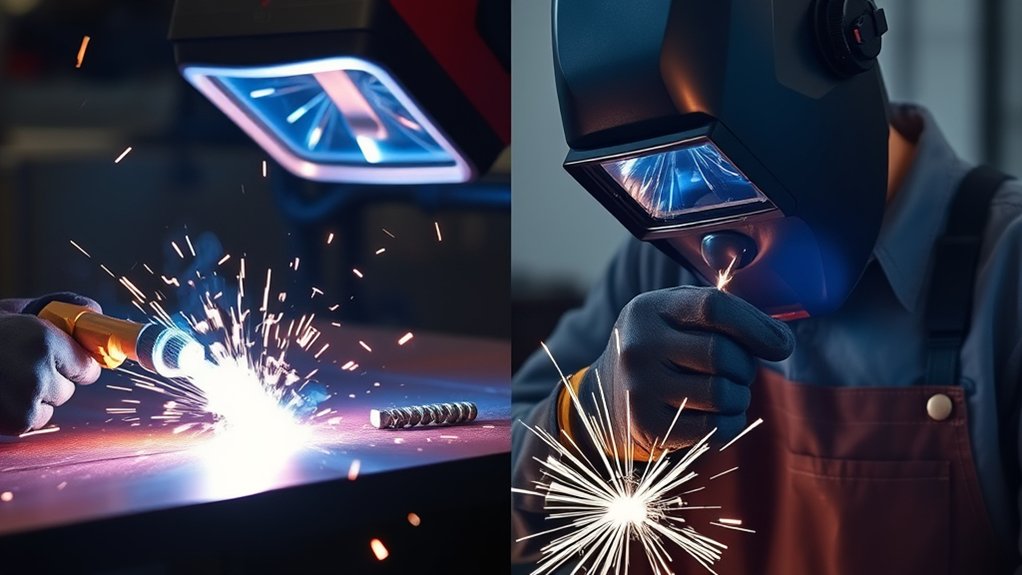
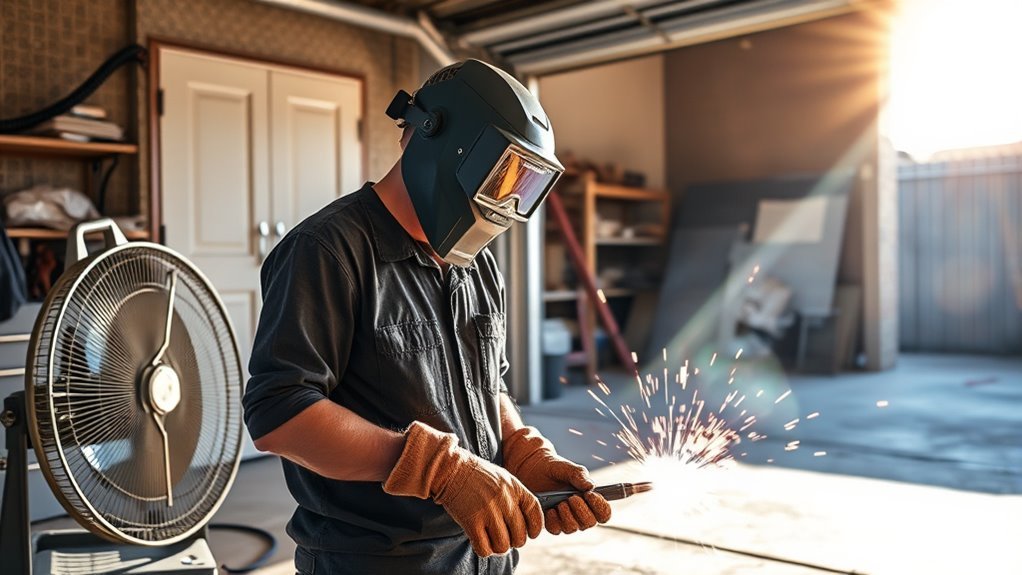
Welding and hot work can expose you to burns, arc radiation, sparks, fire, electric shock, compressed-gas hazards, oxygen-enriched atmospheres, oxygen-deficient atmospheres, fumes, and process gases. Wear process-appropriate PPE, including a welding helmet or gas-welding goggles with the correct filter shade, safety glasses with side protection, flame-resistant clothing, suitable gloves, and closed leather footwear. Protect nearby people with screens that do not block needed ventilation.
Ventilation matters with both methods. Welding fume contains fine particles from the base metal, filler, and coatings. Welding and cutting can also produce or release gases, including carbon monoxide, ozone, nitrogen oxides, and shielding gases. Shielding gases can displace oxygen in poorly ventilated or confined spaces. The OSHA welding-fume fact sheet explains that exposure depends on the process, metal, filler, coatings, work practices, location, air movement, and ventilation.
Do not assume outdoor work is automatically safe. Wind may move the plume through your breathing zone, and it can strip shielding gas from a MIG weld. Indoors, use source capture or local exhaust where practical. The HSE control hierarchy recommends reducing fume generation, using local exhaust, and adding suitable respiratory protection when exposure is not adequately controlled.
For oxy-acetylene, inspect hoses, regulators, tips, fittings, check valves, and arrestors before use. Keep oxygen equipment free of oil and grease. Use an approved leak-detecting solution, not a flame. Fit flashback arrestors as required by the equipment design and applicable rules. If an acetylene cylinder is heated, involved in a fire or flashback, starts warming, or vibrates, move away, prevent others from approaching, and call emergency services. Do not try to move or vent the cylinder.
For MIG welding, inspect the power cord, gun cable, work lead, clamp, gas hose, contact tip, nozzle, and wire path. Keep the work lead connection clean and close enough for reliable current flow. Remove or protect combustibles, check both sides of the panel, and use a fire watch when sparks or conducted heat could reach hidden insulation, upholstery, fuel residue, dust, solvents, or other flammable material.
Treat cleaning chemicals as part of the hot-work hazard assessment. Follow the product label and safety data sheet, keep flammable or toxic vapors away from the work, and allow cleaned parts to dry fully before welding or heating. Do not use an unknown solvent on a part that will be exposed to an arc or flame.
Which Welding Method Is Right for You?
Choose the process that matches the job, material, finish, and safety conditions rather than simply using the tool that is closest.
- Choose MIG welding for most clean mild-steel sheet, patch panels, brackets, cabinets, light fabrication, and repeat work where speed and consistency matter.
- Choose oxy-acetylene for brazing, heating, forming, traditional repair, or remote work without electrical power when a trained operator can manage the gas system and broader heat pattern.
- Consider TIG when precise puddle control, a small visible bead, alloy-specific control, or post-weld metal finishing matters more than speed. TIG is not automatically the best choice for every thin sheet or production job.
- Use an approved repair procedure for vehicle structures, high-strength steels, safety-critical parts, pressure vessels, and load-bearing components. Heat can change material properties even when the bead looks acceptable.
- Do not weld unknown or contaminated material until the base metal, coatings, residues, nearby combustibles, ventilation needs, and fire controls have been identified.
For a beginner working on clean mild-steel sheet in a suitable shop, MIG is usually the most practical starting point. For a trained welder who also needs heating, forming, brazing, or field versatility, oxy-acetylene can be the better tool. The final choice should still be confirmed on matching scrap and against the equipment manual or approved welding procedure.
Products Worth Considering

PRE-CUT WELDING COUPONS: 2 x 4 in mild steel plates are sized for bead practice, TIG, MIG, stick, gas welding, and small fabrication work without cutting sheet stock.

Includes 2 pre-cut steel sheets that detach into 24 parts—weld them to build 2 hollow cubes and 2 dice.
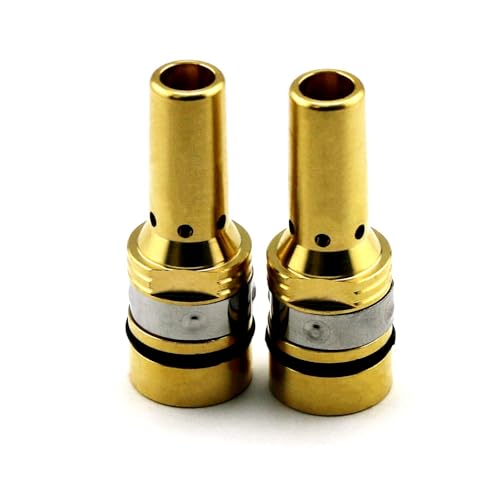
Premium quality heavy duty gas diffuser 404-26 for use with Tregaskiss MIG welding guns. Pack of 2-pcs gas diffusers.
Frequently Asked Questions
Which welding process is best for sheet metal?
MIG is usually the best all-around choice for clean mild-steel sheet because it is fast, repeatable, and easier to learn. Oxy-acetylene is useful for brazing, heating, forming, remote repair, and traditional restoration work. TIG may be better when appearance, alloy control, or precise metal finishing matters more than speed.
Is MIG or oxy-acetylene better for beginners?
MIG is usually easier for beginners once the wire, gas, polarity, and machine settings are correct. Oxy-acetylene requires you to coordinate flame adjustment, torch distance, puddle control, filler rod, and travel speed while also managing a pressurized fuel-gas system.
What MIG wire size works well for thin sheet metal?
For most light-gauge mild-steel sheet, .023- or .024-inch solid wire is a common starting choice because it melts with less heat and gives good control. Some 18-gauge and thicker work can use .030-inch wire. Always start with the machine and wire manufacturer’s chart, then test on matching scrap.
Does MIG welding warp sheet metal less than oxy-acetylene?
MIG can limit total heating because each tack or short weld is fast and concentrated, but poor settings or long beads can still warp a panel badly. Oxy-acetylene heats a broader area and usually requires more skill to control distortion. Fit-up, sequence, joint design, and cooling time matter with both processes.
Is flux-core wire good for very thin sheet metal?
Self-shielded flux-core wire is usually not the first choice for very thin sheet because it commonly produces more heat, spatter, and cleanup than small solid wire with shielding gas. It can be useful outdoors or on thicker steel, but the machine must be rated for the material thickness and the result should be proven on matching scrap.
Why do welders worry about fumes and gases?
Welding fume can contain fine particles of iron, manganese, chromium, nickel, zinc, lead, cadmium, and other metals depending on the job. Welding can also create gases such as ozone, nitrogen oxides, and carbon monoxide, while shielding gases may displace oxygen. Use process controls, ventilation or extraction, safe positioning, and suitable respiratory protection when required.
What is the golden rule for welding sheet metal?
Control heat without sacrificing fusion. Clean the joint, keep fit-up consistent, tack first, use short welds, skip around, let the panel cool, and inspect the backside or test pieces when penetration matters.
What are the disadvantages of oxy-acetylene welding?
Oxy-acetylene is slower than MIG, takes more skill on thin sheet, heats a broader area, and adds hazards from open flame, pressurized cylinders, gas leaks, backfires, and flashbacks. The equipment is versatile, but it requires training, inspection, secure transport, correct setup, and disciplined shutdown.
Can you weld galvanized sheet metal with MIG or oxy-acetylene?
Do not weld galvanized steel until the job has been assessed and controlled. Heating zinc produces zinc oxide fume, and coatings or residues may add other hazards. A safe procedure may require controlled coating removal, local exhaust, respiratory protection, fire precautions, and restoring corrosion protection after welding.
Conclusion
For most clean mild-steel sheet-metal jobs, MIG welding is the practical winner because it is fast, accessible, and repeatable. Oxy-acetylene remains valuable when you need brazing, heating, forming, traditional restoration techniques, or repair capability away from electrical power.
The process name alone does not guarantee a good weld. Identify the metal and coatings, follow the equipment instructions, prepare a tight joint, prove the setup on matching scrap, control heat with short welds and a planned sequence, and use the ventilation, PPE, fire controls, and gas-handling practices the job requires.
Sources
- OSHA 29 CFR 1910.252: General Welding, Cutting, and Brazing Requirements — fire prevention, used containers, eye protection, ventilation, coatings, and hot-work controls.
- OSHA 29 CFR 1910.253: Oxygen-Fuel Gas Welding and Cutting — oxygen-fuel equipment, cylinders, manifolds, piping, hoses, and operating requirements.
- OSHA: Controlling Hazardous Fume and Gases During Welding — welding-fume composition, process gases, exposure factors, and ventilation.
- CDC/NIOSH: Welding Fumes and Manganese — health concerns associated with manganese and welding-fume exposure.
- HSE: Welding and Flamecutting — flashback arrestors, leak testing, cylinder transport, and motor-vehicle repair precautions.
- Miller: Successfully Welding Sheet Metal with MIG and TIG — small wire, shielding gas, fit-up, skip welding, and backing-bar guidance.