Disclosure: As an Amazon Associate, we earn from qualifying purchases. If you click a link on this page and make a purchase, we may receive a small commission at no extra cost to you.
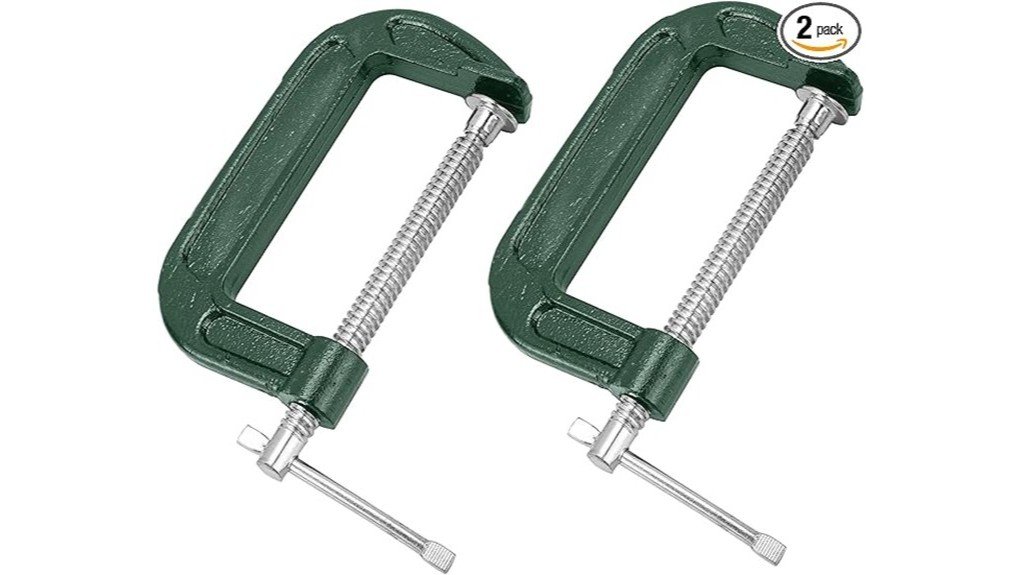
Holding small boards, metal pieces, or repair parts in place can get frustrating when your clamp slips, twists, or lacks enough pressure. The 2 Pack C Clamp is built for buyers who want a simple manual clamp set with a carbon steel frame, sliding T-handle, and 3.1-inch clamping width. This review helps you decide where it fits best in a workshop, what its size limit means in real use, and when a larger or faster clamp would make more sense. It offers strong value for general holding tasks, but you should measure your workpieces before buying.
Quick Verdict
Rating: 7.8/10, Recommended with caveats
Best For: Woodworking, light metal fabrication, home repair, and small workshop setup tasks
Bottom Line: The carbon steel frame and sliding T-handle give you strong manual pressure for everyday clamping work. The main tradeoff is the fixed 80mm, 3.1-inch clamping width, which limits larger assemblies.
| Specification | Detail |
|---|---|
| Product Type | C Clamp Set |
| Count | 2 clamps |
| Material | Carbon steel |
| Clamping Width | 80mm, 3.1 in |
| Dimensions | 275 × 125 × 30 mm |
| Handle Type | Sliding T-handle |
| Weight | Approx. 1.5 lb each |
| Clamping Face | Flat polished flange cap |
| Structure | Heat-treated frame |
| Best Use | Woodworking, light metalworking, DIY repairs, and fixture setup |
| Care Note | Keep clean, lightly lubricate moving parts, and store dry |
What Is the 2 Pack C Clamp?
The 2 Pack C Clamp is a dual set of manual clamping tools made for holding materials steady during cutting, drilling, gluing, welding preparation, and assembly work. Each clamp uses a carbon steel body, which gives the frame rigidity when you apply tightening pressure.
The set is best for DIY users, woodworking hobbyists, light fabrication work, and general repair jobs. It is not a quick-release clamp or a hydraulic clamping system, so its biggest strength is simple, steady pressure rather than fast one-handed adjustment.
The 80mm, 3.1-inch clamping width is the key buying detail. It works well for smaller workpieces and moderate assemblies, but it will not fit thick furniture frames, large stacked materials, or oversized metal fabrication projects.
Key Features That Matter in Real Use
Carbon Steel Construction for Strength
The carbon steel frame gives the clamp the stiffness needed for steady pressure on wood, metal sheets, and small shop parts. This matters when you need the clamp to hold position while glue cures, holes are drilled, or fasteners are installed.
Frame strength also helps reduce flex during tightening. You still need to stay within the clamp’s size and duty limits, but the material choice makes sense for everyday workshop pressure.
Sliding T-Handle for Better Torque Control
The sliding T-handle gives you more leverage than a small knob-style handle. You can tighten gradually, which helps when you need controlled pressure instead of a sudden hard clamp-down.
This design is useful when you work with hardwood, small steel parts, or repair pieces that need firm positioning. The tradeoff is speed, since manual tightening takes more effort than a trigger clamp or quick-release clamp.
Flat Polished Clamping Flange
The flat polished flange cap helps spread pressure at the contact point and may reduce marks on some work surfaces. This is helpful when you clamp painted metal, finished wood, or softer materials.
Even with a polished flange, soft wood can still dent under high pressure. Use scrap blocks, pads, or thin protective pieces when appearance matters.
Heat-Treated Structure
The heat-treated structure is designed to improve wear resistance and help the clamp hold up through repeated tightening cycles. This is useful if you use clamps often for bench work, repairs, or small shop projects.
Heat treatment does not remove the need for basic care. Wipe off dust, glue residue, and metal debris so the screw and handle continue to move smoothly.
Before You Buy: The 3.1-inch, 80mm clamping width is the main limitation. Measure your material thickness and total stack height before ordering, especially for furniture frames, thick boards, or larger metal assemblies.
Who Should Buy It?
Best For
- Woodworkers assembling small to mid-size boards, frames, or glued joints
- DIY users who need steady pressure for home repairs and fixture work
- Light metal shop users positioning sheet metal or small parts before drilling or welding prep
Skip If
- You need more than 3.1 inches of clamping capacity
- You want quick-release, ratcheting, or one-handed clamping speed
- You regularly handle large structural or industrial fabrication jobs
How It Performs in Real Use
For Woodworking Projects
The clamp works well for holding small boards, trim pieces, and glued joints where steady pressure matters more than speed. The T-handle lets you tighten gradually, which helps reduce the chance of crushing soft wood when you use proper padding.
For Metalworking Tasks
For light metalworking, it can help position sheet metal, small steel parts, or pipe edges during layout, drilling, and welding preparation. The carbon steel frame resists bending under moderate pressure, but it is not the right choice for oversized industrial clamping.
For Repair and Maintenance Work
In home repair work, the clamp can hold frames, brackets, or parts in place while you align fasteners. The two-pack format is useful because many repairs need pressure on more than one side of a workpiece.
For Workshop Setup and Fixture Work
The clamp can help align pieces during bench assembly, jig setup, or small fixture building. Its compact size makes it easier to store than larger industrial C clamps, but the same compact size limits how much material it can span.
Setup and Usage Tips for Better Results
Start by checking the thickness of the material you plan to clamp. The total stack must fit within the 80mm, 3.1-inch clamping width, including any protective pads or scrap blocks you place between the clamp and the workpiece.
Position the flat flange cap squarely against the surface before tightening. If the clamp sits at an angle, pressure can shift the workpiece, leave a deeper mark, or reduce holding stability.
Tighten the T-handle gradually. For glue-ups, use enough pressure to close the joint without forcing out too much adhesive. For metal parts, make sure the workpiece sits flat and does not rock before drilling or tack preparation.
Pro Tip: Keep a few thin scrap blocks near your bench. They help protect finished surfaces, spread clamping pressure, and make the clamp more useful on softer wood.
Safety and Material Notes
Because this is a manual clamping tool, safe use depends on correct placement and steady tightening. Keep fingers clear of pinch points, check that the clamp is seated flat, and avoid using it on unstable workpieces that can shift under pressure.
For welding preparation or metalworking, use the clamp only as a holding aid within its practical size range. Follow normal shop safety practices, including eye protection, gloves when appropriate, and proper workpiece support.
Do not treat this clamp as a lifting, towing, or structural support device unless the product instructions specifically allow that use. Inspect the frame, screw, handle, and flange before use, and stop using the clamp if it bends, cracks, or no longer tightens smoothly.
Pros and Cons
Pros
- Carbon steel frame helps resist flex under normal workshop pressure
- Sliding T-handle gives you better leverage and tightening control
- Flat polished flange cap helps reduce surface marking when used carefully
- Two-pack format gives you more flexibility for alignment and repair tasks
- Compact size is easy to store in a small shop, garage, or tool drawer
Cons
- 3.1-inch clamping width will not fit larger projects or thick assemblies
- Manual tightening takes more effort than quick-release clamp designs
- Soft or finished surfaces may still need protective pads to avoid marks
Is It Worth the Price?
This clamp set fits best in the budget-to-mid range category for everyday workshop holding tasks. It is worth considering if you want simple mechanical pressure, carbon steel construction, and a two-pack setup without paying for larger specialty clamps.
You get the most value if your projects stay within the 3.1-inch clamping range. Woodworkers, DIY repair users, and light fabrication hobbyists are more likely to benefit than buyers who need deep throat capacity, fast one-handed operation, or heavy industrial force.
The value drops if you often clamp thick laminated boards, wide frames, or large steel assemblies. In those cases, a larger C clamp, bar clamp, pipe clamp, or welding clamp may be a better long-term buy.
How It Compares to Alternatives
Compared to quick-release clamps, this C clamp offers stronger steady pressure but takes longer to adjust. Quick-release clamps are better for speed and repeated repositioning, while this style is better when you want a firm hold that stays put.
Compared to larger industrial C clamps, this set is easier to store and handle but much more limited in capacity. If you need deeper reach, faster setup, or specialized welding angles, compare it with bar clamps, locking pliers, corner clamps, or larger C clamps before deciding.
Frequently Asked Questions
What materials can this 2 Pack C Clamp hold?
It can hold wood, sheet metal, small steel parts, and general workshop materials. Its carbon steel frame is best suited for light to medium-duty pressure within the listed 3.1-inch clamping width.
How wide can this clamp open?
The listed clamping width is 80mm, or about 3.1 inches. Measure the full thickness of your material stack before buying, including any protective pads you plan to use.
Is it suitable for heavy industrial use?
It is better suited for DIY, woodworking, repairs, and light fabrication. Large structural projects, thick steel assemblies, or high-force industrial work usually call for larger clamps or specialized clamping systems.
Does it damage wood surfaces?
The polished flange cap can help reduce marks, but soft wood and finished surfaces can still dent under pressure. Use scrap blocks or protective pads when the surface appearance matters.
Can you use it for welding projects?
You can use it to hold small metal parts during layout or welding preparation when the pieces fit within the clamp’s capacity. Use proper welding safety gear and make sure the clamp is stable before starting any work.
How do you maintain these clamps?
Keep the screw, handle, and contact surfaces clean after use. Lightly lubricate moving parts and store the clamps in a dry place to reduce rust and maintain smooth operation.
Who should skip this clamp set?
Skip it if you need more than 3.1 inches of clamping width, quick one-handed adjustment, or heavy industrial clamping force. It is a better match for smaller workshop and repair tasks.
The Bottom Line
The 2 Pack C Clamp is a practical choice if you need compact, manual holding force for woodworking, DIY repair, and light metalworking tasks. Its carbon steel body, T-handle, and polished flange make it useful for everyday shop work, but the 3.1-inch clamping width is a firm limit.
Buy it if your projects fit within that size range and you value simple durability over speed. Skip it if you need larger capacity, quick-release operation, or a clamp made for heavy industrial fabrication.