Disclosure: As an Amazon Associate, we earn from qualifying purchases. If you click a link on this page and make a purchase, we may receive a small commission at no extra cost to you.
Welding cables take a lot of abuse when they drag across metal tables, pass near hot work zones, or rub against sharp edges. The TIG Welding Torch Cable Cover gives you a simple way to add a protective outer layer around torch cables and hoses without replacing your existing setup. Its main strengths are the cowhide leather exterior, Kevlar fiber stitching, and hook-and-loop closure. The main tradeoff is fit planning, because the article-supported listing details mention an approximate 6 ft length while also referencing a longer expanded measurement.
Quick Verdict
Rating: 7.5/10, Recommended with caveats
Best For: TIG welders, fabricators, and DIY users who need extra cable protection from sparks, abrasion, and shop wear
Bottom Line: This cover is worth considering if your torch cable often rubs against workpieces, tables, or rough shop surfaces. It offers stronger abrasion protection than basic fabric sleeves, but you should confirm the usable length and cable fit before you buy.
| Specification | Detail |
|---|---|
| Product Type | TIG welding torch cable cover / protective sleeve |
| Design | Wraparound sleeve for welding cables and hoses |
| Material | Cowhide leather exterior |
| Stitching | Kevlar fiber thread |
| Heat Resistance Claim | Flame-retardant, as stated in the product description |
| Length | Approx. 6 ft, with a separate longer expanded measurement referenced in listing details |
| Attachment Method | Magic tape / hook-and-loop closure |
| Compatibility | TIG and MIG torch cable or hose protection, depending on cable thickness and routing |
| Best Use | Shop welding, fabrication, repair work, and portable welding setups |
| Safety Note | Not a substitute for certified insulation, proper cable routing, or safe welding practices |
| Care Note | Inspect for burn marks, seam wear, and closure weakness during regular cable checks |
What Is the TIG Welding Torch Cable Cover?
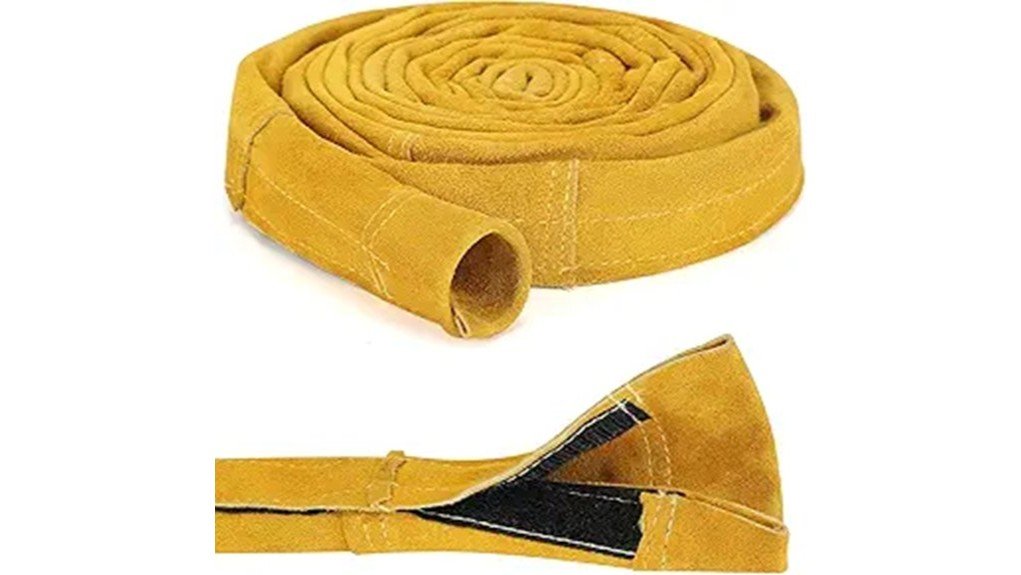
The TIG Welding Torch Cable Cover is a protective sleeve that wraps around welding torch cables and hoses. It is designed to reduce wear from sparks, hot debris, dragging, and repeated contact with rough shop surfaces.
The cover uses a cowhide leather exterior instead of a light fabric shell. That matters because leather gives you better abrasion resistance when cables move across workbenches, metal frames, and fabrication tables. The Kevlar fiber stitching also helps reinforce the seams, which often take the most stress when a sleeve bends around cable curves.
This product makes the most sense as an add-on layer for everyday cable protection. It does not turn a damaged cable into a safe cable, and it should not replace proper inspection, routing, or certified safety equipment.
Who Should Buy It?
Best For
- TIG welders who want extra protection near the torch handle and hose bundle
- Fabricators who drag cables across metal tables, frames, or shop floors
- DIY welders upgrading from thinner fabric sleeves or uncovered cables
Skip If
- You need waterproof, sealed, or chemical-resistant cable protection
- You require certified industrial insulation with verified test ratings
- Your cable routing is so tight that added leather bulk may limit movement
Materials and Build Quality
The strongest feature is the cowhide leather construction. In daily welding work, cables often fail from abrasion before they fail from one dramatic accident. A leather sleeve helps reduce surface scuffing when the cable rubs against tables, workpieces, cart edges, and floor grit.
The Kevlar fiber thread improves seam durability. This is important because a cable cover needs to bend, twist, and flex with your torch lead. If the seams open early, the sleeve loses coverage and starts catching on nearby surfaces.
The listing-supported heat claim is flame-retardant, not fully fireproof. That distinction matters. The cover can help shield against sparks and brief heat exposure, but you should still keep cables away from direct flame, molten metal, and prolonged contact with hot workpieces.
Fit and Compatibility
This cover is described for TIG and MIG torch cable or hose protection, but exact fit depends on your cable bundle size. TIG setups can vary based on air-cooled or water-cooled torch style, gas hose layout, and how tightly the cable needs to bend near the handle.
The hook-and-loop closure gives it more flexibility than a fixed tube sleeve because you do not need to thread the full cable through the cover. You can wrap it around the section that needs protection, close the tape, and adjust the position as your setup changes.
Before You Buy: The listing-supported details include a sizing inconsistency, with an approx. 6 ft length and a separate longer expanded measurement claim. Measure the cable section you want to cover before ordering, especially if you expect full torch-lead coverage.
Installation and Ease of Use
The hook-and-loop design makes installation simple. You place the cover around the cable, align it along the wear-prone section, and secure the closure along the sleeve. This is faster than using a closed sleeve that requires cable disassembly or threading from one end.
This design also helps when you use the same torch setup for different jobs. You can move the sleeve closer to the torch handle for bench work, place it along a section that rubs against a cart, or remove it when you need a lighter cable feel.
The tradeoff is bulk. Leather adds protection, but it can also make a cable bundle feel stiffer. That may matter if you weld in tight corners, inside small frames, or around awkward fixtures where cable movement affects torch control.
Pro Tip: Start by covering the first high-wear section near the torch handle, then check where the cable naturally rubs during your normal welding posture. Move the sleeve to protect the actual contact point, not just the section that looks neat on the bench.
How to Use It Correctly
Before installing the cover, inspect your cable for cuts, exposed conductors, brittle spots, or heat damage. A sleeve can protect a healthy cable from wear, but it should not hide damage that needs repair or replacement.
Wrap the sleeve snugly without forcing the cable into a tight curve. If the cover changes how your torch feels, reposition it so the cable can still move naturally. A protective sleeve should reduce wear without making your hand position harder to control.
After installation, check that the hook-and-loop strip stays closed when you pull the cable across your usual work area. If the closure catches on fixtures or table edges, rotate the seam away from the main contact surface.
Compatibility and Safety Notes
This is an accessory for cable and hose protection, not certified welding PPE. You should still use proper gloves, eye protection, ventilation, torch handling, and cable routing for the work you are doing.
Do not treat the leather sleeve as a guarantee against heat damage. Sparks and short exposure are different from direct flame or prolonged contact with hot metal. If your work area exposes cables to extreme heat, compare certified fiberglass or industrial insulation options before choosing a leather cover.
Also avoid using the cover to hide a damaged lead. If your cable insulation is cracked, burned, or exposing inner material, repair or replace the cable before adding a sleeve.
How It Performs in Real Use
For Daily Shop Use
In a regular fabrication shop, this cover helps most with abrasion. It gives your cable a tougher outer layer when it slides across metal tables, cart corners, clamps, and floor debris.
For TIG Welding Near Hot Work Zones
TIG welding often keeps hoses and leads close to the work area. The leather exterior gives you a buffer against sparks and brief heat exposure, especially when your cable would otherwise rest near the edge of a hot bench or fixture.
For Portable Welding Jobs
When you move between work areas, cables can get scuffed during transport, setup, and teardown. A wraparound sleeve helps protect the covered section from light dragging, rubbing, and contact with rough surfaces in a truck, trailer, or job-site cart.
For Long-Term Use
The Kevlar stitching should help the seams hold up better than basic thread under repeated flexing. Still, leather can wear, dry, or mark over time in harsh shop conditions, so regular inspection matters.
Cleaning and Maintenance
Maintenance is simple. Shake off dust and metal debris after use, wipe the leather surface when it gets dirty, and check the seam line for fraying or separation. You should also inspect the hook-and-loop closure to make sure it still grips well.
Avoid soaking the cover or treating it as waterproof. The article-supported details do not confirm sealed liquid protection, so keep it away from standing water, coolant spills, and harsh chemicals when possible.
Pros and Cons
Pros
- Cowhide leather exterior gives better abrasion resistance than many thin fabric sleeves
- Kevlar fiber stitching improves seam strength during bending and repositioning
- Hook-and-loop closure installs without threading the full cable through the sleeve
- Useful for TIG, MIG, fabrication, repair, and portable welding setups
- Can be repositioned to protect the cable section that sees the most contact
Cons
- Length details need careful checking before purchase
- Not fully waterproof, sealed, or certified as industrial insulation
- Leather may add bulk or stiffness to tightly routed torch leads
Want Extra Cable Protection?
Check the current product details and confirm the fit for your welding setup.
Is It Worth the Price?
This cover fits the mid-range value space for welding accessories. It offers more protection than a basic uncovered cable or thin fabric sleeve, while staying simpler than a full industrial cable management system.
You get the most value if your cable wear comes from dragging, rubbing, sparks, and normal shop contact. In that situation, the leather exterior and Kevlar stitching address real weak points without making installation complicated.
It is not the best fit if you need documented insulation ratings, waterproof sealing, or maximum flexibility. For those needs, you should compare certified fiberglass sleeves, silicone sleeves, or purpose-built industrial cable protection.
How It Compares to Alternatives
Compared with fabric welding sleeves, this leather design offers better abrasion and spark resistance, but it may feel heavier or less flexible. Compared with fiberglass sleeves, it focuses more on practical shop durability than maximum heat resistance.
If you want the lightest cable feel, a fabric sleeve may be easier to handle. If your priority is harsh heat exposure, fiberglass is worth comparing. This TIG Welding Torch Cable Cover makes the most sense when you want a durable, removable sleeve for everyday welding cable protection.
Frequently Asked Questions
Is this sleeve compatible with all TIG torches?
It can work with many standard TIG torch cable setups, but fit depends on cable thickness, hose layout, and bend radius. Measure the section you want to cover before buying.
Can you use it on MIG torch cables too?
The article-supported details mention TIG and MIG torch cable or hose protection. Confirm the diameter and routing of your MIG lead because bulkier cables may need more room.
Can it handle high heat exposure?
It is described as flame-retardant and useful for sparks or brief heat exposure. It should not be used as a substitute for certified heat insulation or direct flame protection.
How do you install it correctly?
Wrap it around the cable section that gets the most wear, then secure the hook-and-loop strip firmly. Rotate the seam away from sharp contact points so the closure does not catch during use.
Is leather better than fabric for welding cable protection?
Leather usually gives better abrasion and spark protection than thin fabric. Fabric can still be better when you need the lightest, most flexible sleeve for tight cable bends.
Will this fix a damaged welding cable?
No. This cover is an add-on protective sleeve, not a repair for cracked, burned, or exposed cable insulation. Inspect and repair damaged cables before covering them.
Does it require maintenance?
Yes, but maintenance is light. Wipe off dust and debris, check the stitching, and inspect the closure after heavy use or heat exposure.
Who should skip this cable cover?
Skip it if you need certified industrial insulation, waterproof protection, or a very thin sleeve for tight torch movement. It is better for abrasion and spark protection in typical shop use.
The Bottom Line
The TIG Welding Torch Cable Cover is a practical choice if you want tougher cable protection for shop welding, fabrication, or repair work. Its cowhide leather exterior and Kevlar stitching are the main reasons to buy it, while the sizing inconsistency and lack of certified insulation details are the main reasons to pause.
Choose it if you need a removable sleeve for sparks and abrasion. Skip it if you need waterproof sealing, verified industrial heat ratings, or the thinnest possible cable setup.