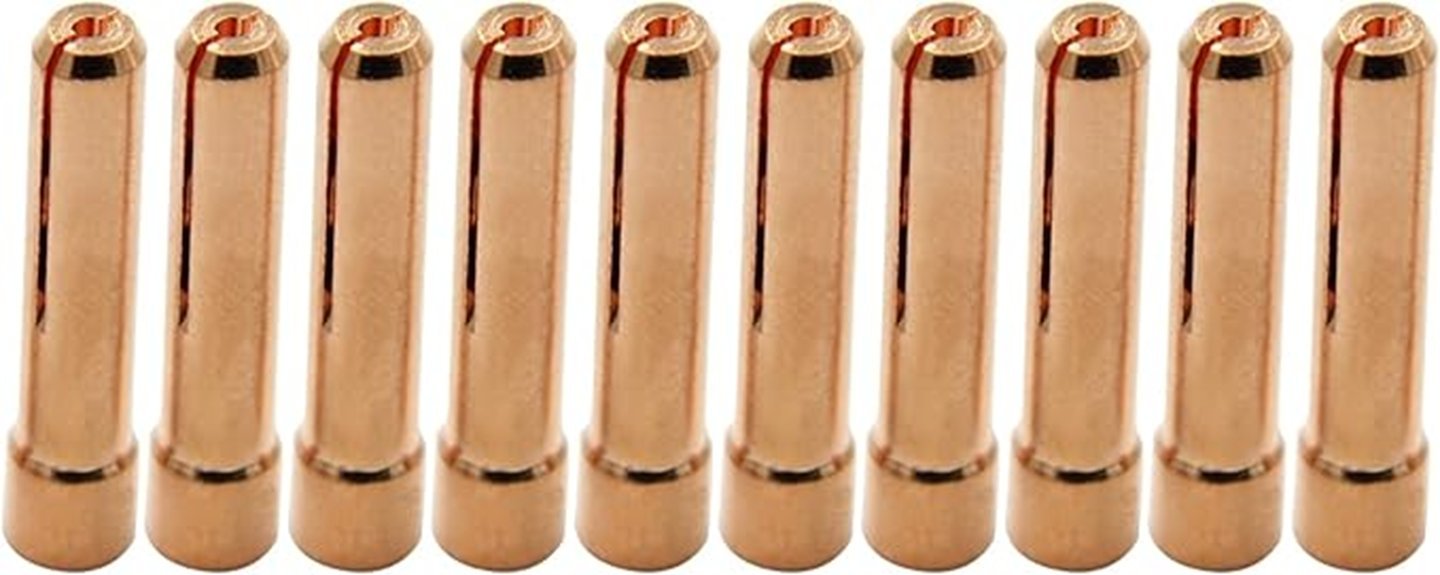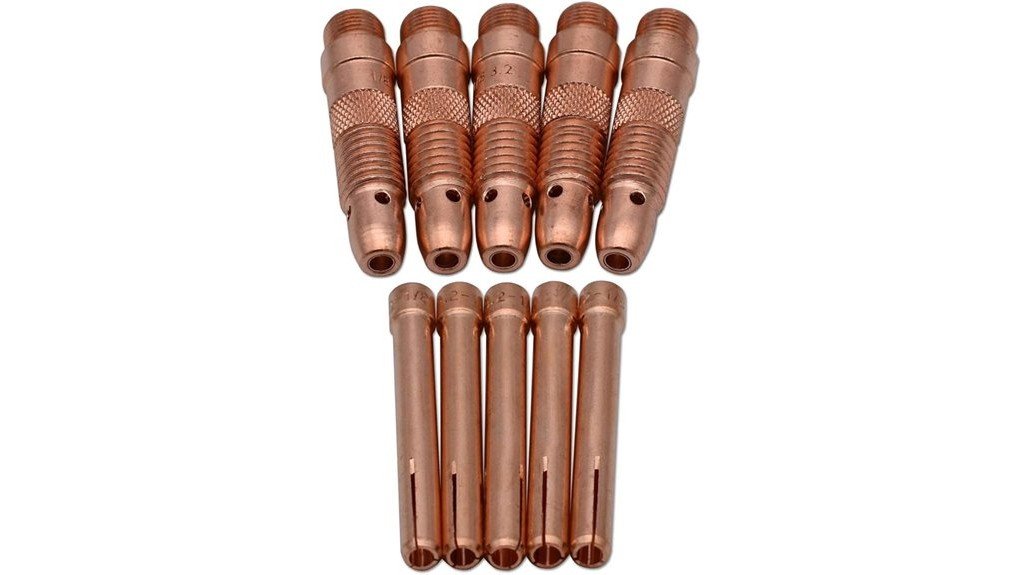
This 10N28 collet body kit is a small set of TIG torch consumables: five 10N25 collets and five 10N28 collet bodies, sized for 1/8 in (3.2 mm) tungsten. The 10N-series parts fit the common 17, 18 and 26 style TIG torches. Buy it if your torch uses these parts and 1/8 in tungsten; skip it if you run smaller tungsten or a gas lens setup.
Quick Facts
| Item | Detail |
|---|---|
| Contents | 5 x 10N25 collets and 5 x 10N28 collet bodies (10 pieces), per the listing |
| Tungsten size | 1/8 in (3.2 mm) |
| Torch style | WP-17, WP-18 and WP-26 style TIG torches (10N series) |
| Cup type | 10N-series cups; gas lens kits use different bodies |
| Material | Not clearly stated on the listing; check before buying |
| Not included | Cups, back caps, tungsten, torch |
What the 10N28 Collet Body and 10N25 Collet Do
The collet grips the tungsten electrode. The collet body threads into the torch head, holds the collet and routes shielding gas to the cup. Retailers list the 10N28 as the standard collet body with a 1/8 in bore for 17, 18 and 26 series torches, and the 10N25 as the matching 1/8 in collet.
Both are wear parts. A collet that no longer grips, or a body with damaged threads or a gas leak, makes the arc wander and the tungsten slip.
Check Fit Before You Order
- Confirm your torch is a 17, 18 or 26 style torch that uses 10N-series consumables.
- Confirm you run 1/8 in (3.2 mm) tungsten. Smaller electrodes need different collets and bodies.
- If you use a gas lens, you need gas lens collet bodies, not this kit.
- Match the part numbers (10N25 and 10N28) against your existing consumables.
The listing mentions a 150 A to 350 A range and other brands. Those claims are not supported by manufacturer data here, so check your torch rating in its manual and do not exceed it.
When to Replace Collets and Bodies
- The tungsten slips or will not stay centered when you tighten the back cap.
- Threads feel rough or the body will not seat firmly.
- You see discoloration, cracks or heat damage.
- You hear or suspect a gas leak around the head.
Tighten parts by hand or only snugly. Overtightening can strip threads and crush the collet.
Pros and Limitations
Pros
- A matched set of five collets and five bodies means you can swap both parts.
- Standard 1/8 in size that many torch styles use.
- Handy as shop spares.
Limitations
- Narrow fit: 1/8 in tungsten and 17, 18 or 26 style torches only.
- Material and brand are not clearly stated, so quality depends on the batch.
- Does not include cups or back caps.
Related Reading
Not sure which electrode to run? See how to choose the right tungsten electrode size. If you need a full set of torch parts, our ARCCAPTAIN TIG torch accessories kit review and YESWELDER WP-17V torch review cover other options.
Frequently Asked Questions
What is a 10N28 collet body?
It is a standard collet body with a 1/8 in bore used in WP-17, WP-18 and WP-26 style TIG torches. It holds the collet and directs gas to the cup.
Which collet goes with the 10N28 body?
The 10N25 collet for 1/8 in (3.2 mm) tungsten. Use the collet size that matches your tungsten diameter.
Will this fit a gas lens torch?
No. Gas lens setups use their own collet bodies, so match the part numbers to your torch.
How do I know a collet is worn out?
If the tungsten slips, will not center, or the body shows damaged threads or heat discoloration, replace it.
Bottom Line
A cheap, practical stock of spares for 1/8 in tungsten on 17, 18 and 26 style torches. Check the part numbers first, and treat the amp and brand claims in the listing with caution.