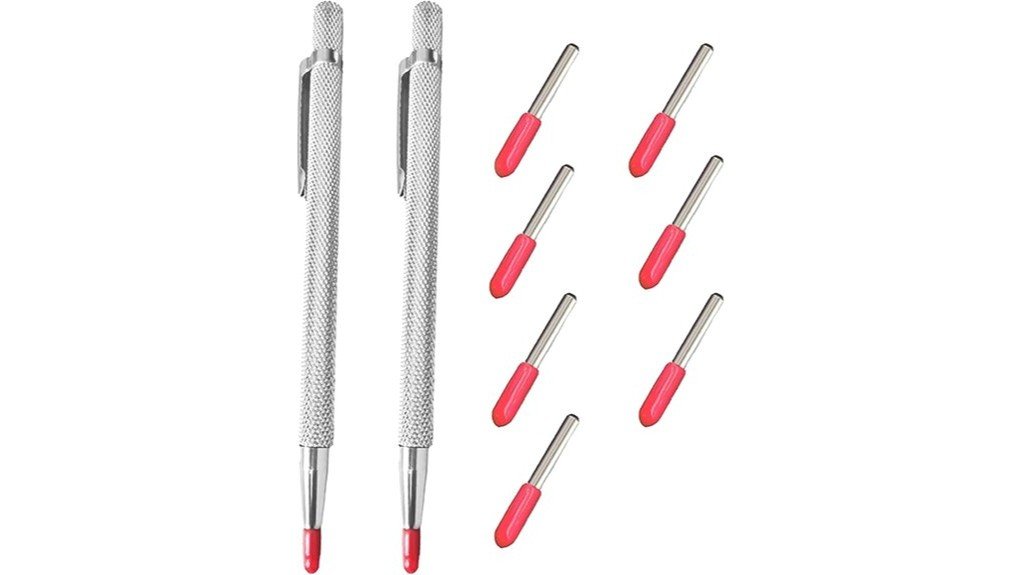
The 2PCS tungsten carbide scriber tool is a pair of pocket-size marking pens with a sharpened carbide tip. It scratches a fine layout line on steel, glass, ceramics and wood, and the listing says each one has a non-slip grip, a pocket clip and a protective cap. For a fabricator it is a cheap way to mark cut lines and hole centers that survive grinding and handling.
Quick Verdict
Verdict: A simple, low-cost pair of scribers for layout work. Specs on this page come from the listing and are not independently tested.
Best for: Welders, fabricators and DIY builders who need a permanent line on bare metal.
Skip if: you need a calibrated marking gauge or a scriber with a long reach or magnetic end.
2PCS Tungsten Carbide Scriber Tool Specs (Per the Listing)
| Spec | Listed detail |
|---|---|
| Quantity | 2 scribers |
| Tip | Sharpened tungsten carbide |
| Length | About 5.6 inches |
| Weight | 3.84 ounces (listing value, unclear whether per tool or per set) |
| Grip and clip | Non-slip grip, pocket clip |
| Extras mentioned | Protective cap and replacement tips |
| Marks on | Metal, glass, ceramics, wood |
Brand, tip angle and the number of spare tips are not confirmed here. Check the listing for the current contents.
Who Should Buy It
- Welders and fabricators laying out cuts and fit-up marks on steel plate and tube.
- Machinists and metalworkers who want a scribe line instead of a marker line that wipes off.
- DIY builders marking glass, tile or ceramics.
Skip it if you only mark wood, where a pencil does the job, or if you need a precision height gauge.
How to Scribe a Clean Line
- Clean the surface. Mill scale, rust and oil blur the line.
- Brush layout dye or a thin coat of marker on bare metal so the scratch shows up as a bright line.
- Hold the scriber at a slight angle and pull it toward you along a straightedge.
- Use light, even pressure. One steady pass is better than several heavy ones.
- Wear safety glasses, especially on glass or ceramics where chips can fly.
Care and Safety
The tip is sharp, so put the cap back on after use and never carry it loose in a pocket without the clip and cap. Carbide is brittle: do not pry or hammer with it. Wipe it clean and store it dry.
Pros and Limitations
- Pro: Two scribers, so one can stay in the shop and one in the truck.
- Pro: Hard tip that marks metal and glass.
- Pro: Pocket clip and cap for carrying.
- Limit: Weight and contents are unclear in the listing.
- Limit: Brittle tip can chip if dropped or misused.
- Limit: No warranty details confirmed.
Related guides: Tungsten Carbide Scriber Set Review · 6 Pack Tungsten Carbide Scriber Tools Review · Tungsten Carbide Tip Scriber Review
Frequently Asked Questions
What is a tungsten carbide scriber used for?
It scratches a thin, permanent layout line on metal, glass, ceramics and similar hard surfaces. Welders and fabricators use it to mark cut lines and hole centers on steel before cutting or fit-up.
Does it mark hardened steel?
Tungsten carbide is harder than most mild steel and many tool steels, so it usually leaves a visible line. Very hard or coated surfaces can still resist marking, so test on scrap first.
Can I use it on plastic?
Use light pressure and test on scrap. The sharp tip can gouge or scratch soft plastics and leave a rough line.
Are the tips replaceable?
The listing mentions replacement tips and a protective cap. Check the current listing for how many tips are included and how they are fitted.
How do I keep the tip from breaking?
Carbide is hard but brittle. Do not use it as a pry bar or punch, keep the cap on when stored, and avoid dropping it on a concrete floor.
Is the warranty or return period confirmed?
Not on this page. Check the current Amazon listing and seller terms for returns and warranty before ordering.
The Bottom Line
If you want a permanent layout line on steel, a pair of carbide scribers is a cheap, practical shop tool. Treat the listing specs as unverified, and test on scrap before marking finished work.