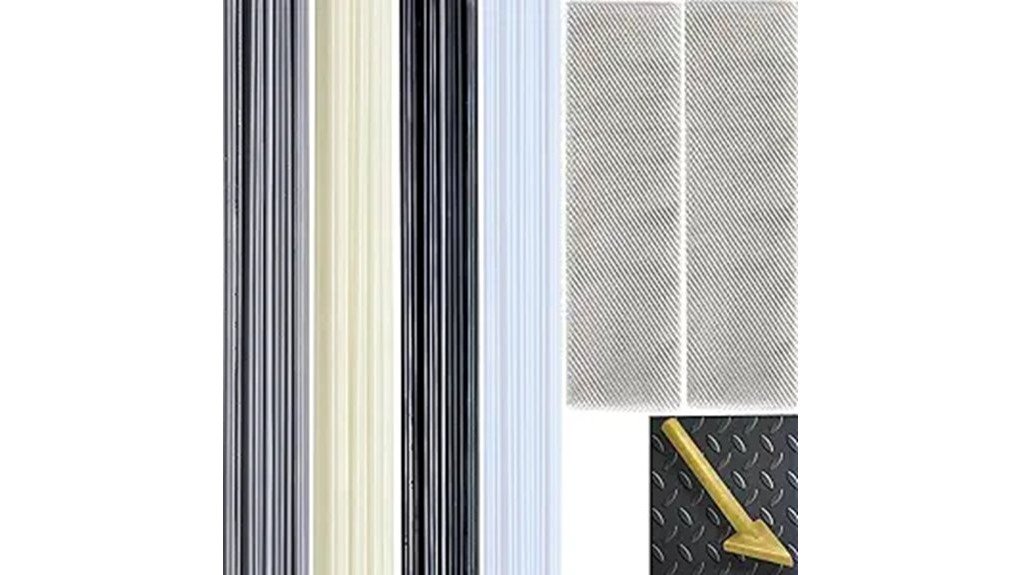
A cracked bumper, split storage bin, or broken plastic chair may be repairable, but the filler material must match the damaged plastic. The YOKOMING Plastic Weld Kit gives you 40 rods across four common thermoplastics, plus reinforcing mesh and a heating tip. It is a useful accessory pack for small repairs, but it is not a complete powered plastic welder. This review explains its compatibility, limitations, safe-use needs, and value before you order it.
Quick Verdict
Editorial Rating: 7.8/10
Best For: DIY users who already own a compatible plastic welding tool and need PP, PE, ABS, or PVC filler rods.
Bottom Line: The four-material assortment and included mesh make this a flexible refill set for small plastic repairs. Its main drawback is that you must supply the powered tool, identify the base plastic correctly, and confirm that the heating tip fits your equipment.
Key Specifications
| Specification | Detail |
|---|---|
| Brand | YOKOMING |
| Model | YK00424042543 |
| ASIN | B0DKPFSZRQ |
| Product Type | Plastic welding rod and reinforcement accessory set |
| Total Pieces | 43 pieces |
| Welding Rods | 40 rods, 10 each in PP, PE, ABS, and PVC |
| Rod Length | 7.9 inches per rod |
| Reinforcement | Two listed stainless steel mesh pieces |
| Additional Accessory | One heating tip |
| Packaged Dimensions | Approximately 8.23 × 3.15 × 0.67 inches |
| Packaged Weight | Approximately 4.2 ounces |
| Power Source | No powered welder or batteries included |
| Common Uses | Compatible bumper plastics, dashboards, bins, benches, furniture, and household plastic parts |
| Main Requirement | You must identify the plastic and use a compatible heating tool |
What Is the YOKOMING Plastic Weld Kit?
The YOKOMING YK00424042543 is an accessory and refill set for heat-based plastic repair. It contains 40 filler rods, divided evenly among polypropylene (PP), polyethylene (PE), acrylonitrile butadiene styrene (ABS), and polyvinyl chloride (PVC). Those four materials appear in many automotive, garage, garden, and household plastic products.
You also receive two mesh pieces for reinforcing thin or weakened areas and one heating tip. The package does not include a powered plastic welder, hot-air gun, soldering iron, or hot stapler. Its value therefore depends on whether you already own suitable equipment and can match the rod to the damaged part.
Before You Buy: This is not a complete plastic welding machine. Confirm that you own a suitable heat tool and compare the included tip with your tool’s connection before ordering. The listing does not state universal tip compatibility.
Who Should Buy It?
Best For
- DIY users who already have a compatible plastic welding tool.
- Garages that repair small PP, PE, ABS, or PVC parts.
- Buyers who want several filler materials without purchasing four separate rod packs.
Skip If
- You need a powered welder, temperature controls, staples, cutters, or a carrying case.
- Your part is made from nylon, polyurethane, polycarbonate, TPO, or another plastic not included.
- You are repairing a safety-critical, structural, fuel-system, pressurized, or child-restraint component.
Feature-by-Feature Review
43-Piece Accessory Set
The package contains 40 welding rods, two mesh pieces, and one heating tip. Calling it a 43-piece kit is accurate, but most of the quantity comes from the filler rods. You do not receive the powered equipment required to melt and apply them.
This format is most useful as a refill or add-on for an existing workshop setup. The compact package is also easier to store than a full welder case, although you will need your own labeled container if you want to keep the four materials separated after opening it.
Four Rod Materials
You receive 10 rods each in PP, PE, ABS, and PVC. This assortment covers more repair situations than a single-material refill pack, but it does not make the rods interchangeable. A PP rod should be used with PP plastic, an ABS rod with ABS plastic, and so on.
Look for a molded recycling or material code on the back of the part. Common markings include “PP,” “PE,” “HDPE,” “ABS,” or “PVC.” Do not choose a rod only by color because two plastics can look alike while having different melting and bonding behavior.
7.9-Inch Welding Rods
Each rod is 7.9 inches long, giving you enough filler for several short cracks or one repair that requires multiple passes. The useful amount depends on groove size, damage length, and how much material you lose while practicing.
The 10-piece allocation per material is convenient for occasional work. A shop that frequently repairs one plastic type may use that group quickly and would get better value from a larger single-material refill pack.
Mesh Reinforcement
The two listed stainless steel mesh pieces are intended to strengthen holes, splits, and thin areas. Mesh is normally embedded on the hidden side of a repair so it bridges the damaged section without remaining loose or exposed.
Reinforcement can improve a repair where the surrounding plastic is still sound, but it cannot restore every part to its original engineered strength. High-load mounting tabs, hinges, structural panels, and parts exposed to constant flex may still need replacement or professional repair.
Heating Tip and Tool Compatibility
The included heating tip can help melt or smooth filler material when attached to a suitable tool. However, the listing does not identify a universal thread size, shank size, wattage range, or complete compatibility list.
Compare the tip shape and connection with your current tool before buying. Do not force an unmatched tip into a soldering iron or welder because poor contact can cause unstable heating, damage the tool, or create a burn hazard.
How It Performs in Real Use
For Bumper and Dashboard Repairs
Many vehicle bumpers and interior trim parts carry molded material codes, making rod selection easier. The kit may work for small cracks, tears, or missing edge material when the part is made from one of the four included plastics.
Automotive plastics can also contain blends, coatings, paint, or fillers that affect the weld. Work from the back whenever possible, remove dirt and loose coating from the repair zone, and treat visible front-side finishing as a separate step. Do not use this kit on airbag covers, seat-belt hardware, child-seat components, fuel-system parts, or structural crash components.
For Bins, Trash Cans, and Outdoor Furniture
PP and PE are common in molded bins, garden products, and outdoor furniture. These plastics can be difficult to bond with ordinary household glue, so matching filler material may provide a more practical repair method.
The repair is most promising when the damaged area is clean and all major pieces are present. Sun-brittle plastic may crack beside the weld because the surrounding material has already lost flexibility.
For Holes and Missing Sections
The included mesh is useful when a crack has widened into a hole or a small section is missing. It can provide backing while you build filler over the opening. Shape the mesh before heating and keep it within the repair boundary so sharp edges do not remain exposed.
Large missing sections require more filler, better temperature control, and careful surface finishing. For a valuable or highly visible part, professional repair may be more economical than repeated trial and error.
For First-Time Practice
The variety of rods makes the set useful for learning material matching, but your first attempt should not be on an expensive part. Practice on scrap plastic carrying the same material code. This lets you test heat, pressure, and travel speed before working on the actual item.
How to Use It Correctly
- Identify the plastic. Check the molded material marking, service information, or manufacturer documentation. Stop if you cannot confirm the material.
- Confirm tool compatibility. Follow the powered tool’s instructions and make sure any fitted heating tip is secure and approved for that tool.
- Clean the repair zone. Remove dirt, grease, loose paint, and damaged fragments. Let the surface dry fully.
- Align the part. Hold the crack in its original position before adding filler. Poor alignment is difficult to correct after the plastic cools.
- Practice on matching scrap. Find the lowest effective heat and avoid holding the tip in one spot long enough to burn or deform the plastic.
- Add mesh when needed. Use it on the hidden side to bridge a hole or weak section, keeping all edges embedded.
- Allow full cooling. Do not flex, sand, paint, or reinstall the part while the repair remains warm.
Pro Tip: Sort and label the rods as soon as you open the package. Material identity matters more than rod color, and an unlabeled leftover rod may be difficult to identify later.
Compatibility and Safety
Plastic welding creates heat and may release fumes from the base plastic, filler material, paint, oil, adhesives, or surface coatings. Work in a well-ventilated area and use local exhaust close to the repair when possible. Keep your face out of the rising fume path and follow the safety directions for your heating tool.
Use suitable eye protection and heat-resistant gloves. Place the work on a stable, nonflammable surface, keep a safe distance from solvents and fuel, and unplug or switch off the tool before changing tips. You can review general workplace guidance in the HSE guidance on controlling plastic-processing fumes.
Use extra caution with PVC. Excessive heat can release hazardous gases and vapors, so PVC work needs correct temperature control and effective fume extraction. Do not heat an unknown plastic, and stop if the material burns, discolors heavily, bubbles unusually, or produces strong irritating fumes.
This product is intended for repair materials, not for proving that a repaired part is safe for every application. Replace the item or seek a qualified repair professional when failure could cause injury, a leak, loss of vehicle control, electrical exposure, food contamination, or pressure release.
Pros and Cons
Pros
- Includes 40 rods rather than a small sample of each material.
- Provides 10 rods each in PP, PE, ABS, and PVC.
- Two mesh pieces can reinforce holes and weakened areas.
- Compact package is easy to store with an existing welding setup.
- Useful for automotive trim, bins, furniture, and other correctly identified plastics.
Cons
- No powered welder, heat controls, staples, cutters, or storage case are included.
- Heating-tip compatibility is not clearly specified.
- Only four plastic types are covered, and accurate material identification is required.
Is It Worth the Price?
The YOKOMING Plastic Weld Kit is positioned as a basic accessory and refill bundle rather than a complete repair station. It offers strong value for the price when you already own compatible equipment and expect to work on several of the included plastics. Buying one mixed pack can be more convenient than ordering four separate rod types.
The value is lower if most of your work uses only one material. In that case, a larger PP-only, ABS-only, or PE-only pack may provide more usable filler. It is also not a smart buy when you still need the powered tool, safety equipment, and preparation accessories, because those items can cost more than the rod set itself.
How It Compares to Alternatives
An ATOLS hot-stapler kit may suit you better when you need a powered tool and metal staples for reinforcing cracks. Hot staplers and filler-rod welding are related repair methods, but one does not fully replace the other.
Polyvance offers more complete plastic welding systems for buyers who need a welder, several rod types, interchangeable tips, mesh, and workshop-oriented support. J-B Weld PlasticWeld is an adhesive-style alternative for repairs where heat welding is unsuitable or where the plastic and service conditions match the adhesive instructions. The YOKOMING set makes the most sense as a compact refill assortment for equipment you already own.
Frequently Asked Questions
Does this kit include a powered plastic welder?
No. The package contains 40 filler rods, two mesh pieces, and one heating tip. You must supply a compatible powered plastic welding or heating tool.
How many rods of each plastic type are included?
You receive 10 PP rods, 10 PE rods, 10 ABS rods, and 10 PVC rods. Each rod is listed as 7.9 inches long.
How do I identify the plastic before welding?
Look for a molded material code on the hidden side of the part or check the manufacturer’s service information. Do not identify the plastic by color or appearance alone.
Will the included heating tip fit every plastic welder?
Universal compatibility is not stated. Compare the tip connection, dimensions, and tool instructions before fitting it, and never force it into an incompatible tool.
Can it repair a car bumper?
It may help with a non-structural crack or tear when the bumper is made from PP, PE, ABS, or PVC. Many bumpers use blends such as TPO, so verify the molded material code before choosing a rod.
When should I use the reinforcing mesh?
Use mesh when a crack needs support or a hole lacks enough plastic to hold filler by itself. Embed it on the hidden side and make sure no sharp edge remains exposed.
Is plastic welding safe to do indoors?
Only work where fumes can be controlled effectively. Use good ventilation or local exhaust, keep your face away from fumes, and follow the powered tool’s safety instructions, especially when heating PVC or coated plastic.
How should I store the leftover rods?
Keep each material type labeled and separated in a clean, sealed container. Store the rods in a cool, dry area away from sunlight, oil, dust, and heat sources.
The Bottom Line
The YOKOMING Plastic Weld Kit is worth considering when you already own a compatible tool and want a compact supply of PP, PE, ABS, and PVC filler rods. Its four-material assortment and reinforcing mesh are useful strengths, but buyers who need a complete powered kit or cannot identify their plastic should skip it.
Our 7.8/10 verdict reflects its practical refill value, compact size, and material variety, balanced against unclear heating-tip compatibility and the need for separate equipment.
Ready to Buy?
Check the latest package details and confirm tool compatibility before you decide.