Disclosure: As an Amazon Associate, we earn from qualifying purchases. If you click a link on this page and make a purchase, we may receive a small commission at no extra cost to you.
Cracked bumpers, kayaks, dashboards, and other plastic parts can be expensive to replace when the damage is small enough to repair. The BIAJIYA WelderBlack Plastic Welding Kit gives you an adjustable 200–480℃ (392–896℉) heat range, reinforcing mesh, welding rods, and several basic repair accessories in one package. Its main strength is the amount of control you get from the adjustable heat setting, but successful repairs still depend on identifying the plastic, preparing the damaged area, and using compatible filler material. This review explains where the kit makes sense, how to use it more carefully, and when a different repair method may be safer.
Quick Verdict
Rating: 8/10
Best For: DIY users repairing non-critical plastic surfaces such as bumper covers, dashboards, kayaks, canoes, toys, and plastic furniture.
Bottom Line: The adjustable 200–480℃ range and included reinforcement materials give you more flexibility than a fixed-temperature repair iron. The tradeoff is that plastic welding requires correct material matching and careful heat control, so this is not a simple press-and-fix tool for every damaged plastic part.
Key Specifications
| Specification | Detail |
|---|---|
| Brand | BIAJIYA |
| Model | WelderBlack / BIAJIYA-WelderBlack |
| Product type | Airless-style plastic surface welding and repair kit |
| Power source | Corded electric |
| Input voltage | 110V |
| Temperature range | 200–480℃ (392–896℉) |
| Heating element | Ceramic |
| Handle | Insulated plastic handle with ventilation/thermal-hole design |
| Repair reinforcement | Stainless steel mesh |
| Filler material | Black and white plastic welding rods |
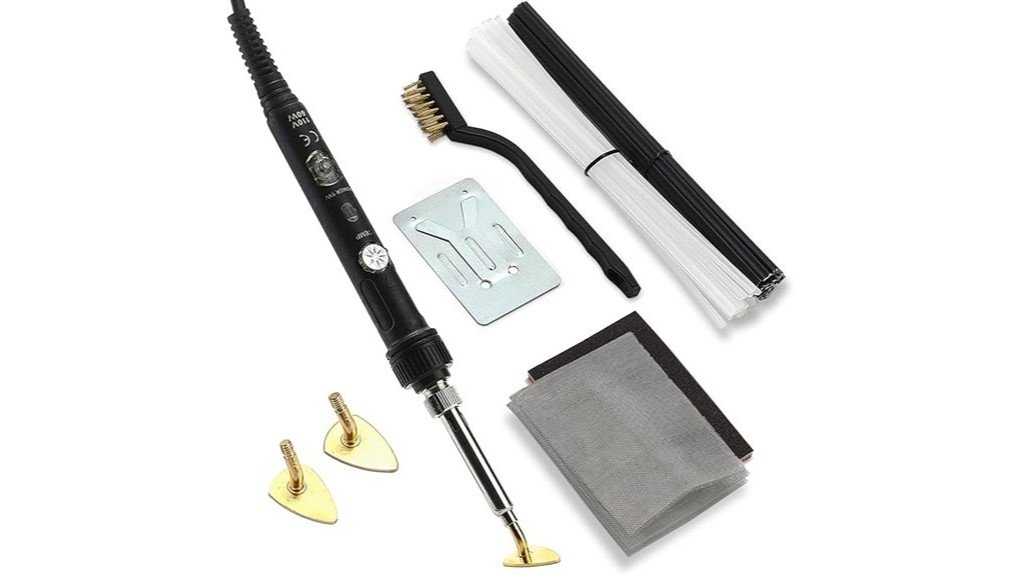
| Other included items | Copper welding tips, metal stand, metal brush, scrub sponge, screwdriver, and instructions |
| Typical listed uses | Bumper covers, dashboards, kayaks, canoes, plastic furniture, and plastic toys |
Key Takeaways
- The adjustable 200–480℃ temperature range gives you more control when working with different plastic repair situations.
- The kit combines the heating tool with plastic rods, stainless steel mesh, copper tips, a stand, brush, sponge, and screwdriver.
- The insulated handle and ventilation design help separate your hand from the heated section, but the tip and surrounding repair area still become extremely hot.
- It is best suited to non-critical surface repairs where you can identify the plastic and use suitable filler material.
- Correct preparation and material matching matter as much as temperature. An incorrect filler rod can produce a weak joint even when the surface looks repaired.
What Is the BIAJIYA WelderBlack Plastic Welding Kit?
The BIAJIYA WelderBlack is a corded plastic welding tool designed to soften compatible filler rod and damaged plastic so the materials can be joined. Its temperature control spans 200–480℃, allowing you to reduce or increase heat rather than working at one fixed temperature.
The kit also includes stainless steel mesh for reinforcing suitable repairs from behind the damaged area. That can be useful on cracked bumper covers, furniture panels, recreational plastic items, and similar parts where reinforcement can reduce movement around the crack.
This is still a manual repair tool. It does not automatically identify the plastic or select the correct temperature. You need to confirm the base material, choose compatible filler, clean the repair area, and control how much heat reaches the surrounding plastic.
Who Should Buy It?
Best For
- DIY users repairing cracked or split non-critical plastic parts.
- Car owners working on removable plastic trim, dashboards, or bumper-cover damage.
- Kayak, canoe, furniture, or toy owners who want a reusable plastic repair tool instead of relying only on adhesive.
Skip If
- You cannot identify the plastic or confirm that your filler rod is compatible.
- The damaged part is structural, safety-critical, pressurized, or exposed to fuel or hazardous vapors.
- You want a professional hot-air welding system with dedicated nozzles and a broader selection of known plastic-specific rods.
Before You Buy: A temperature-adjustable plastic welder does not make every plastic repair safe or permanent. Avoid using it on fuel-containing, pressurized, structural, or safety-critical components unless the repair method is specifically approved for that part and you have the required professional knowledge.
Key Features of the Plastic Welding Kit
Adjustable 200–480℃ Temperature Control
The main advantage over a basic fixed-temperature iron is control. The 200–480℃ range lets you start conservatively and adjust heat instead of immediately exposing the repair area to maximum temperature.
That matters because too little heat may leave poor fusion, while excessive heat can distort, char, thin, or otherwise damage the surrounding plastic. The correct setting depends on the material and repair method, so use the lowest effective temperature and follow any material-specific guidance available for the part and filler rod.
Insulated Handle and Ventilation Design
The tool uses an insulated plastic handle and thermal ventilation openings around the body. These features are intended to reduce heat transfer into the gripping area and protect the tool housing from prolonged heat exposure.
They do not make the heated end safe to touch. Keep your hands away from the copper tip, softened filler material, stainless steel mesh, and recently welded plastic until everything has cooled.
Copper Tips and Stainless Steel Reinforcing Mesh
The copper welding tips transfer heat into the plastic and filler material. For cracks that need extra support, the stainless steel mesh can be embedded into a suitable area behind the repair and covered with softened plastic.
Mesh is most useful where you can reinforce the back of a cracked surface without interfering with surrounding hardware or fit. It should not be treated as a substitute for a manufacturer-approved structural repair.
Included Plastic Rods and Repair Accessories
The kit includes black and white plastic rods along with a brush, scrub sponge, stand, screwdriver, reinforcing mesh, and instructions. Having these items together is convenient for small DIY projects because you do not need to assemble every basic accessory separately.
The important limitation is material compatibility. Rod color does not tell you which plastic resin it contains. Before making an important repair, identify the base plastic and confirm that the filler rod is suitable for it.
Step-by-Step Usage Instructions
Start by reading the supplied instructions and inspecting the damaged item. Wear appropriate eye protection and heat-resistant work gloves. Work in a well-ventilated area on a stable, heat-resistant surface, and keep flammable material away from the tool.
| Step | Action | Why It Matters |
|---|---|---|
| 1 | Identify and clean the plastic | Contamination and incompatible filler can weaken the repair. |
| 2 | Tighten the copper tip clockwise | A properly installed tip improves stability during heating. |
| 3 | Turn on the tool and allow about two minutes to heat | The supplied usage guidance calls for a short warm-up before welding. |
| 4 | Keep the tool on its metal stand when not in your hand | This keeps the heated end away from your workbench. |
| 5 | Position reinforcing mesh when appropriate | Mesh can strengthen a suitable crack from the back side. |
| 6 | Melt compatible filler into the prepared repair area | Use controlled heat and avoid overheating the surrounding material. |
Pro Tip: Practice on a scrap piece of the same plastic before touching a visible part. It helps you learn how quickly the material softens and how much pressure is needed without risking the actual repair.
How It Performs in Real Use
Car Bumper and Trim Repairs
The tool is most useful for cracks or splits in repairable plastic bumper covers and trim where you can reach the back side. Reinforcing mesh may help support the crack before you smooth filler material across the repair.
Before welding, check the molded resin identification on the part when available. Automotive plastics vary, and a filler that works well with one bumper material may not bond properly to another.
Kayaks and Canoes
The compact pen-style tool can be useful for localized damage on compatible plastic kayaks and canoes. The adjustable heat setting gives you some control around thinner areas where excessive temperature could distort the hull.
A watercraft repair should be inspected carefully before use. Large cracks, damage around load-bearing areas, or repairs that could affect flotation or hull integrity deserve professional assessment.
Plastic Furniture and Household Items
For cracked plastic chairs, storage items, toys, and similar household pieces, the kit can be more useful than adhesive when the material is actually weldable. A welded joint fuses softened material rather than simply placing glue between two surfaces.
Do not assume every household plastic can be welded with the supplied rods. Test compatibility on a hidden or scrap area first.
Occasional Workshop Repairs
Because the kit includes the basic stand, mesh, filler rods, and cleanup accessories, it is practical as an occasional workshop repair tool. Frequent professional work may justify a higher-end system with clearly identified rod types, more specialized tips, and more detailed process control.
Applications and Benefits of Plastic Welding
Plastic welding can extend the usable life of parts that would otherwise be discarded because of a crack, split, or broken edge. The original product listing identifies uses such as bumper covers, dashboards, kayaks, canoes, furniture, and ride-on toys.
The BIAJIYA kit’s strongest buyer benefit is flexibility. The adjustable temperature lets you change the amount of heat, while reinforcing mesh gives you another option for cracks that need support. The included rods mean you can begin practicing without immediately buying separate filler material.
The limitation is that successful plastic welding is material-dependent. The appearance of a finished surface alone does not confirm a strong bond. A reliable repair requires compatible plastics, adequate preparation, controlled heating, and a joint design appropriate for the load the part will experience.
Compatibility and Safety
Plastic welding involves temperatures up to 480℃, so treat the copper tip, filler material, reinforcing mesh, and surrounding plastic as burn hazards. Use the stand whenever you put the heated tool down, unplug it when finished, and allow it to cool completely before storage.
Work with ventilation appropriate for the material you are heating. Do not intentionally weld unknown plastic, and stop if you cannot identify the material or determine whether heating it is appropriate.
Although some marketplace descriptions mention fuel-tank applications, fuel-containing parts introduce fire, explosion, vapor, and material-compatibility hazards. They are not appropriate beginner projects. Use a qualified repair professional and an approved repair procedure for fuel-system components.
Pros and Cons
Pros
- Wide 200–480℃ adjustable temperature range.
- Includes reinforcing mesh for suitable crack repairs.
- Comes with plastic rods and several basic repair accessories.
- Insulated handle and ventilation design help manage heat around the gripping area.
- Useful across several non-critical automotive, recreational, and household plastic-repair situations.
Cons
- You still need to identify the plastic and match the correct filler material.
- The correct temperature may require practice and testing on scrap material.
- It is not the right tool for structural, safety-critical, pressurized, or fuel-system repairs without an approved procedure.
Is It Worth the Price?
This kit makes the most sense as a value-focused DIY option because it combines the heating tool with filler rods, reinforcing mesh, a stand, and basic preparation accessories. That reduces the number of separate pieces you need before practicing a small plastic repair.
Its adjustable temperature control also gives it an advantage over the simplest fixed-temperature repair irons. You can change heat as the material responds rather than working with one setting.
It is less attractive if you repair plastics professionally or need clearly identified filler rods for many different resin families. In that case, paying more for a specialized system with a broader documented material selection may save time and reduce trial and error.
How It Compares to Alternatives
The Polyvance Mini-Weld Model 7 is a more specialized airless plastic-welding system with built-in temperature control and multiple clearly identified welding-rod types. That type of setup makes more sense for frequent automotive or workshop repairs where material identification and rod selection are a regular part of the job.
A professional hot-air system such as the Leister TRIAC ST uses heated airflow and specialized nozzles rather than the simpler direct-contact approach used here. The BIAJIYA kit is the more straightforward choice for occasional surface repair, while a hot-air or professional airless system is better suited to buyers who need broader process control and specialized accessories.
Frequently Asked Questions
What plastics can the BIAJIYA WelderBlack repair?
The listing describes the tool for several plastic repair applications, but it does not provide a complete verified resin-compatibility chart for the supplied rods. Identify the damaged plastic and confirm filler compatibility before relying on the repair.
How long does the plastic welder take to warm up?
The supplied usage guidance says to turn on the tool and wait about two minutes before beginning. Actual readiness can still depend on the selected temperature and working conditions.
Do you need to use the stainless steel mesh on every repair?
No. The mesh is an optional reinforcement for suitable cracks where you can embed it without interfering with the finished part. Small cosmetic repairs may not require it, while structural parts may require a completely different approved repair process.
Can you use the kit on a car bumper?
Bumper-cover repair is one of the listed applications. Check the plastic identification marking first, confirm filler compatibility, and remember that cosmetic bumper-cover plastic is different from structural crash components.
Can it be used for outdoor plastic repairs?
It can be used on outdoor items such as compatible kayaks or furniture, but the tool itself is corded electrical equipment and should be operated only in a dry, safe workspace. The durability of the finished repair depends on the material, preparation, filler compatibility, and loads placed on the repaired part.
Are replacement plastic rods available?
Plastic welding rods are sold separately, but you should buy them by resin type and compatibility rather than color alone. Confirm the base plastic before selecting replacement filler rods.
What warranty does this plastic welding kit include?
A specific manufacturer warranty term could not be verified from the available product information. Check the current Amazon listing and seller terms before purchase if warranty coverage is important to you.
The Bottom Line
The BIAJIYA WelderBlack Plastic Welding Kit is worth considering if you want an adjustable-temperature tool for occasional bumper-cover, kayak, furniture, toy, or other compatible plastic surface repairs. Its 200–480℃ control range and reinforcing accessories are useful strengths, but you still need to identify the plastic, select compatible filler, and avoid using a DIY repair process on critical components.
Buy it if you are comfortable learning proper plastic-welding technique and want a reusable DIY kit. Skip it in favor of a professional system or qualified repair service when material identification, structural integrity, hazardous components, or precision are major concerns.