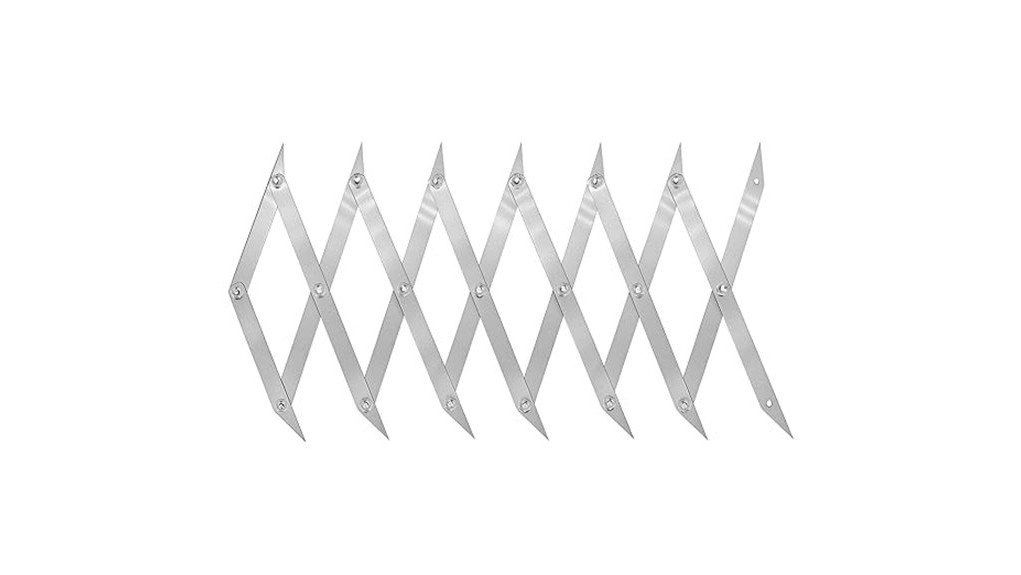
Finding the true center of a board, bar, or project part can slow down layout work when you must measure, divide, and recheck every mark. The Eikovia 7 Point Center Finder, model USB-GJ0639-PCF, is a manual stainless-steel layout tool designed to find a center reference without repeated arithmetic. Its linked design can speed up drilling, cutting, furniture, craft, and welding-layout tasks, but it still depends on careful alignment. This review explains the verified specifications, practical uses, limits, and buying points that matter before you add it to your toolbox.
Eikovia 7 Point Center Finder Review
Quick Verdict
Rating: 8/10, recommended with caveats
Best For: Woodworkers, metal fabricators, furniture builders, crafters, and DIY users who make repeated center marks
Bottom Line: The adjustable 7-point layout design can make center marking faster than measuring and dividing each workpiece by hand. Its main tradeoff is that no verified accuracy tolerance or calibration certificate is listed, so you should confirm important marks before drilling or cutting.
Key Specifications
| Specification | Detail |
|---|---|
| Brand | Eikovia |
| Model | USB-GJ0639-PCF |
| ASIN | B0DZXH7TCZ |
| Product type | Manual center-finding and equidistant layout tool |
| Design | 7-point system with three-point positioning |
| Listed length | 6 inches in the supplied article; confirm the current listing if exact reach matters |
| Material | Stainless steel |
| Color | Silver gray |
| Listed item weight | 0.5 lb (about 230 g) |
| Package quantity | 1 center finder |
| Primary uses | Woodworking, welding layout, metalworking, furniture projects, crafts, and home-improvement marking |
| Important limitation | No verified measurement tolerance, calibration certificate, or manufacturer warranty term was found |
What Is the Eikovia 7 Point Center Finder?
The Eikovia USB-GJ0639-PCF is a manual layout aid that helps you locate the midpoint between opposing edges or contact points. Instead of measuring the full width and dividing by two, you open or close the linked body until the outer contact points sit evenly on the workpiece. The center position then gives you a reference for a pencil, marker, scribe, punch, drill, or cut line.
The product listing describes a 7-point system and three-point positioning. In practical terms, the tool uses its articulated geometry to keep the center reference aligned as you adjust it. It is not a digital measuring device, and it does not replace a square, caliper, or calibrated machinist gauge. Its value is speed and repeatability during common shop layout tasks.
Who Should Buy It?
Best For
- Woodworkers marking centers for holes, hardware, joinery, or cut lines
- Metalworking and welding users who need quick reference marks before fabrication
- DIY, furniture, and craft users who repeat the same center-marking task across several parts
Skip If
- You need a documented accuracy tolerance or inspection-grade measurements
- You mainly work on pieces beyond the tool’s usable opening or reach
- You need angle measurement, digital readouts, depth measurement, or edge offsets
Before You Buy: Treat this as a fast layout aid, not a calibrated precision instrument. Verify the tool’s current dimensions and check critical center marks with a ruler, square, or caliper before you drill, weld, or cut an expensive workpiece.
Feature-by-Feature Review
7-Point Layout Design
The linked 7-point body is the main reason to choose this tool over a standard ruler. As you adjust the outer sections to the workpiece, the geometry is intended to place the middle reference at the center. This can remove the arithmetic step from routine layout and reduce mistakes caused by reading a fraction, converting a measurement, or dividing an odd width.
The design still requires equal contact on both sides. If one point rests on a bevel, burr, rounded edge, weld bead, or damaged corner, the reference can shift. Clean contact surfaces and a steady hand matter more than speed.
Stainless-Steel Construction
The listed stainless-steel body is better suited to workshop handling than a thin paper guide or flexible plastic ruler. It should tolerate normal contact with wood, sheet material, and metal parts, provided you do not force the joints or use the tool as a lever. Wipe away sawdust, grinding residue, marker ink, and moisture after use so the pivots continue to move freely.
Compact Manual Operation
The supplied article lists a 6-inch length, and the verified listing describes a lightweight 0.5-pound tool. That combination makes it easy to keep near a workbench or carry in a layout-tool pouch. It needs no batteries, app, charging cable, or calibration routine for basic use.
The compact format also limits reach. Larger panels, wide stock, or unusual profiles may be easier to center with a long center-finding ruler, straightedge, or measured diagonal method.
Versatility Across Shop Tasks
You can use the same center-finding process for woodworking, welding layout, furniture assembly, crafts, and many home-improvement jobs. The tool is most useful when the workpiece has clear opposing edges or repeatable contact points. It is less dependable on soft, flexible, heavily rounded, or irregular surfaces where the outer points cannot seat evenly.
How It Performs in Real Use
For Drill and Hardware Layout
On a board, rail, bracket, or furniture part, the finder can give you a fast midpoint before you mark a pilot hole or hardware location. This is useful when several parts share the same width. Mark one center, verify it, and then repeat the process without recalculating every piece.
For Cutting and Joinery Reference Lines
The center mark can guide a cut line, dado layout, mortise location, or symmetrical joint. The finder does not create a full straight line by itself, so pair the center mark with a square or straightedge. That extra step keeps the final line perpendicular or parallel to the correct edge.
For Metalworking and Welding Prep
On clean metal stock, the tool can help establish a center reference before you use a fine marker, scribe, or center punch. Remove scale, spatter, burrs, and loose debris from the contact area first. A raised defect under one side can move the apparent center enough to affect drilling or part alignment.
For Craft, Furniture, and Home Projects
The finder can help center knobs, decorative pieces, labels, fasteners, or design elements. It works best when visual symmetry matters but machinist-level inspection is not required. For visible finished surfaces, use a removable pencil or low-risk marking method and test it on scrap first.
How to Use the Center Finder Correctly
- Prepare the surface: Remove chips, dust, burrs, glue, weld spatter, or anything that can prevent even contact.
- Choose matching reference edges: Place the outer points against the two edges or locations you want to center between.
- Adjust without forcing: Open or close the linkage until both sides sit evenly. Do not twist the tool to make it fit.
- Hold it flat: Keep the body in the same plane as the surface so the center point does not shift.
- Make a fine mark: Use a sharp pencil on wood or an appropriate marker or scribe on metal.
- Verify critical work: Check the mark from both edges with a ruler, square, or caliper before drilling or cutting.
Pro Tip: Make two center marks from slightly different positions on the same workpiece. If the marks agree, your contact points are probably seated evenly. If they differ, clean the edges and reset the tool before continuing.
Common Mistakes to Avoid
- Using damaged edges: A chipped board edge or burred metal edge can shift the contact point.
- Marking before the tool is flat: A tilted linkage can produce an off-center reference.
- Assuming every shape is compatible: Flexible, tapered, deeply curved, or irregular parts may not provide stable opposing contact.
- Skipping verification: A quick check takes less time than repairing a misplaced hole or cut.
- Forcing the pivots: Excess pressure can loosen or distort the linked sections over time.
Materials, Workshop Safety, and Care
The verified listing identifies the tool as stainless steel with a silver-gray finish. No calibration standard, accuracy certification, or detailed manufacturer care guide was found. Use it only as a marking and layout aid, and do not use the linked body as a clamp, pry bar, cutting guide, or drill guide.
Secure the workpiece before drilling, cutting, grinding, or welding. Remove the center finder from the work area after marking, and use eye protection and other project-specific protective equipment. For care, wipe the tool clean and dry, keep abrasive grit out of the joints, and store it where the linkage will not be bent under heavier tools.
Pros and Cons
Pros
- Finds a center reference without repeated measuring and division
- Stainless-steel body suits normal workshop and craft use
- Compact manual design needs no battery, app, or charging
- Useful across woodworking, metal layout, furniture, crafts, and DIY projects
- Can speed up repeated marks on parts with matching dimensions
Cons
- No verified measurement tolerance or calibration certificate
- Accuracy depends on clean edges, even contact, and correct alignment
- Compact reach may not suit wide panels or large workpieces
Is It Worth the Price?
The Eikovia 7 Point Center Finder is worth considering when center marking is a repeated part of your workflow. You get the most value when the tool saves several measuring and calculation steps across boards, brackets, rails, craft parts, or fabrication pieces. Its manual design also keeps operating costs simple because there are no batteries or accessories to replace.
It is less compelling if you only need one occasional midpoint or already own a combination-square center head, long center-finding ruler, or layout system that covers the same work. Because the live price can change, judge the value against the tool’s limited reach and the absence of a verified tolerance or warranty statement.
How It Compares to Alternatives
A center-finding ruler is often better for wide, flat boards because it gives you a scale and a direct midpoint reading. A combination square with a center head is a stronger choice for round stock and shop users who want a more established measuring system. A marking gauge is better for consistent offsets from an edge, but it does not automatically find the midpoint.
The Eikovia finder makes the most sense when you want a compact, single-purpose tool that quickly establishes equal spacing between opposing contact points. Choose an alternative when you need longer reach, documented precision, angle work, or measurements beyond center finding.
Frequently Asked Questions
What is the Eikovia 7 Point Center Finder used for?
It is a manual layout tool for finding a midpoint between opposing edges or contact locations. You can use the center reference before drilling, cutting, punching, welding, fitting hardware, or placing decorative elements.
Is it accurate enough for precision machining?
No verified tolerance or calibration certificate was found for this model. It is better treated as a fast layout aid, with critical marks confirmed by a calibrated ruler, square, or caliper.
Can you use it on both wood and metal?
Yes, the listing supports woodworking and welding or metal-layout use. Use a pencil on wood and a suitable marker or scribe on metal, and remove burrs or debris before seating the contact points.
Does it replace a ruler, square, or caliper?
No. The finder creates a center reference, but a ruler or caliper is still useful for verification, and a square or straightedge is needed to extend the mark into an accurate layout line.
What workpieces may be difficult to center?
Flexible, tapered, heavily rounded, rough, or irregular pieces can prevent even contact. Very wide stock may also exceed the tool’s usable reach, so check the current dimensions before buying.
How do you clean and store the center finder?
Wipe off sawdust, metal grit, ink, and moisture after use. Store the tool dry and flat, and avoid placing heavy tools on top of the linked sections or pivots.
Does the Eikovia center finder include a warranty?
A verified manufacturer warranty term was not found during review. Check the current Amazon listing, seller terms, and product packaging for the latest return or warranty information.
The Bottom Line
The Eikovia 7 Point Center Finder is a practical choice for woodworkers, fabricators, furniture builders, crafters, and DIY users who want faster repeatable center marks without manual division. Its stainless-steel, battery-free design is simple to use, but the lack of a verified accuracy tolerance means you should confirm critical marks with a standard measuring tool. Skip it if you need machinist-grade documentation, long reach, digital features, or a complete layout system.
Ready to Buy?
Check the latest price, dimensions, seller terms, and product details before you decide.