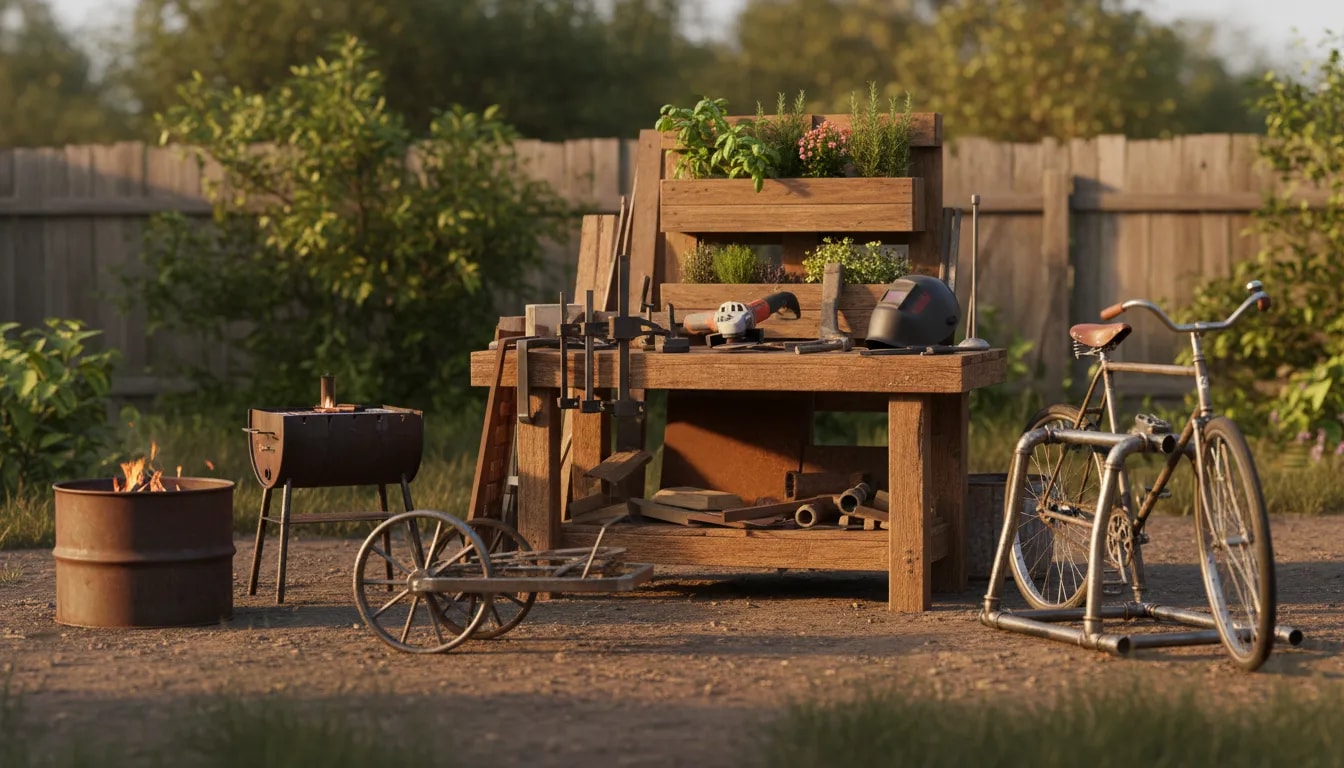
A worn circular saw blade can become a useful weeder, scraper, or edging tool, but the safest build starts with the right blade and attachment method. Because many circular saw blades use hardened steel plates and brazed carbide teeth, you should avoid direct welding or uncontrolled tooth grinding unless you know exactly what the blade is made from. This guide shows you how to inspect the blade, shape a safe tool head, mount it to a mild-steel adapter, finish the edge, and test the tool before garden use.

Quick Answer
To repurpose an old saw blade into a garden tool, reject cracked or badly pitted blades, remove or isolate unsafe teeth, shape and deburr the steel, then attach it to a broad mild-steel adapter. Use mechanical fastening for unidentified hardened blades. Weld only when the steel is known and you have an appropriate welding procedure.
Key Takeaways
- Use a flat blade with no cracks, severe pitting, missing sections, or heat damage.
- Prefer a plain steel blade body; carbide-tipped teeth require extra dust and cutting precautions.
- A bolted or clamped mild-steel adapter is safer than welding to unidentified hardened steel.
- Keep guards fitted, use eye and face protection, and control grinding dust and welding fumes.
- Deburr every edge, inspect the attachment, and test the tool under light load before normal use.
At a Glance
| Time Required | About 2 to 4 hours for a simple mechanically mounted tool, plus coating and drying time |
| Difficulty | Intermediate metalworking; advanced if direct welding is required |
| Tools Needed | Clamps, angle grinder with guard, suitable abrasive discs, drill and fasteners when applicable, files, measuring tools, and PPE |
| Cost | Usually low when you already own the tools and use scrap steel; fasteners, abrasives, and coating add variable cost |
What’s in This Article
- Why repurpose a saw blade instead of buying new?
- What makes a good saw blade for garden tools?
- Safety and setup before you weld or grind
- Design ideas: What garden tool can you build?
- Before you begin: Materials and setup
- Choose the safer attachment method
- Welding considerations for saw blade steel
- Step-by-step: Building a simple saw blade garden tool
- Tips for making it stronger and safer
- Common mistakes to avoid
- Inspection and load testing
- Maintenance to keep your tool working
- Where to add project photos in your own build
- Frequently asked questions
🛠️ Why repurpose a saw blade instead of buying new?
A saw blade that no longer cuts cleanly may still have a flat, rigid steel body that works for light garden tasks. Reusing it can keep usable metal out of the scrap bin and give you a practical fabrication project.
A reused blade can offer:
- Wear resistance for scraping soil and cutting small weeds or roots
- Rigidity for a compact weeder, scraper, or edging head
- Reuse value from material you already own
- Low material cost when you already have suitable tools, fasteners, and scrap mild steel
This project suits DIYers who already understand grinder safety and basic metal fabrication. It is not a good first project for someone who has never used an angle grinder, drill press, or welder.
🔎 What makes a good saw blade for garden tools?
Not every item called a saw blade is a safe tool blank. Use only a solid steel blade body. Do not use a bonded abrasive cut-off wheel, diamond masonry blade, cracked segment blade, or any composite disc as a garden-tool head.
Blade condition
- Reject every cracked blade. Cracks can grow during cutting, grinding, mounting, or garden use.
- Avoid deep rust pits. Light surface rust can usually be removed, but deep pitting reduces the remaining section thickness.
- Reject badly warped blades. A distorted blank is harder to clamp, align, and control.
- Reject fire-damaged or blue-black heat-damaged blades. Severe overheating may have changed the steel and its tension.
- Reject blades with loose or missing brazed tips near the section you plan to keep.
Identify the blade construction
Many modern circular saw blades have a fully hardened, tensioned steel plate with separate carbide tips. For example, Makita describes some framing blades as having a fully hardened steel saw plate and carbide-tipped teeth. That construction is useful for cutting, but it means the plate and tooth material should not be treated as ordinary mild steel. See Makita’s blade construction description.
Warning: Do not grind through carbide tips as though they were plain steel. Cemented tungsten carbide commonly contains cobalt or nickel binders, and grinding can create hazardous fine dust. Remove the entire tipped rim without touching the tips, use effective local dust control, or choose a plain steel blade instead.
Best blade candidates
The easiest candidates are plain steel blades with enough flat body area for a broad mounting plate. A carbide-tipped circular blade can still provide a usable center section, but only when you can remove or completely isolate the tipped rim without heating or grinding the carbide teeth.
✅ Safety and setup before you weld or grind
Cutting and grinding can throw hot particles and broken abrasive fragments. Welding can add ultraviolet radiation, electrical shock, burns, fire, and metal-fume hazards. OSHA identifies eye damage, burns, shock, fumes, and ultraviolet exposure among the main welding hazards. Review OSHA’s welding hazards and controls.
Personal protective equipment (PPE)
- Wear safety glasses with side protection under a full face shield while grinding.
- Wear a welding helmet with the correct shade when arc welding.
- Use hearing protection during cutting and grinding.
- Wear fire-resistant clothing, closed footwear, and suitable gloves.
- Control dust at the source. Use local exhaust or a HEPA-rated collection method that is suitable for metal dust.
- Use respiratory protection only as part of a proper hazard assessment. Select a NIOSH-approved respirator and filter for the actual dust or fume, follow the manufacturer’s instructions, and make sure it seals correctly.
Workspace and fire safety
- Work on a stable, nonflammable surface.
- Remove sawdust, paper, dry grass, solvents, fuel, oily rags, and other combustibles from the spark area.
- Keep an appropriate fire extinguisher nearby and check the area again after hot work ends.
- Use local exhaust or effective ventilation that keeps welding fumes out of your breathing zone.
- Clamp the work securely so it cannot spin, kick, or fall.
- Keep other people and pets away from sparks, arc light, hot metal, and sharp offcuts.
Grinder and abrasive-disc safety
- Keep the grinder guard installed and correctly positioned.
- Use a disc rated for the grinder’s maximum speed and for the exact task.
- Inspect the disc before use and replace damaged, wet, contaminated, or expired bonded abrasives.
- Let the grinder reach full speed before contacting the work.
- Stand out of the wheel’s plane during startup and maintain a two-handed grip.
OSHA requires eye protection for abrasive-wheel work and requires appropriate machine guarding for abrasive wheels. See OSHA’s abrasive-wheel requirements.
🧱 Design ideas: What garden tool can you build?
Choose a design that uses controlled hand pressure. A repurposed blade is suitable for light scraping, weeding, and edging, not for striking, chopping, prying, or use as a machete.
Option A: Root-cutter weeder
Use a short section of the blade body as a narrow cutting head. Mount it so the working edge stays close to the adapter and does not create a long, flexible overhang. This style works for weeds and small roots in loose soil.
Option B: Scraper or leveling blade
Attach a broad, smooth blade section at a shallow angle to a handle. You can scrape compacted soil, remove light debris, or level small planting areas.
Option C: Edging tool
Mount a rounded or straight blade section vertically to a sturdy bracket. Keep both side edges smooth and provide enough handle clearance to keep your foot and hands away from the cutting edge.
Option D: Multi-use carry tool
Build a mild-steel receiver that accepts different tool heads with through-pins or bolts. Each head still needs a positive anti-rotation feature so it cannot twist during use.
🧰 Before you begin: Materials and setup
Plan on about 2 to 4 hours for a simple tool, not including paint drying time. Complex brackets, heavy reshaping, or a professionally developed welding procedure can add substantial time.
Gather these items before you start:
- Old solid-steel saw blade body with no cracks, deep pitting, or major warping
- Handle material such as a sound wood handle, square steel tube, or flat bar
- Mild-steel mounting plates for a broad clamp, socket, tang, or backer
- Grade-marked bolts, washers, and locking nuts sized for the adapter design
- Angle grinder with guard and task-rated cut-off, grinding, and flap discs
- Files and abrasive paper for final deburring
- Degreaser and wire brush for cleaning plain steel surfaces
- Clamps, square, marker, and measuring tools
- Welding equipment and low-hydrogen consumables only when direct welding is justified by known material and procedure
- Optional gussets or a thicker backer plate for side-load support
- Outdoor metal primer and paint or protective oil
Products Worth Considering
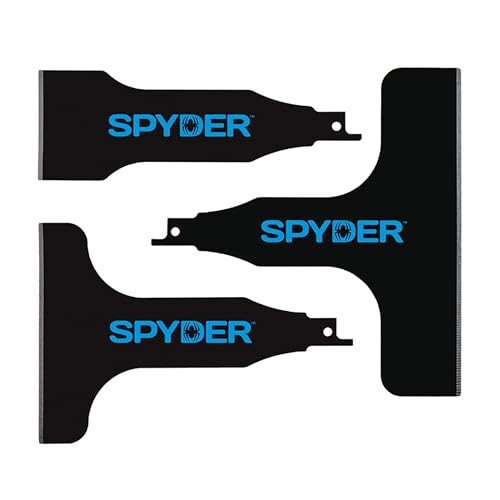
Faster than doing the job by hand and ideal for removing tile, linoleum flooring, mastics, adhesives, and more

【Wide Range of Use】: This multi tool blade kit contains 100 pack 1-3/8inch saw blades, for cutting wood, soft metal and plastic. These oscillating saw blades can meet a variety of needs, which could be used professionally for workshop, household or other place.

【TiCN Coating Enhanced】PRETEC carbide oscillating tool blade with Titanium Carbo-Nitride (TiCN) coating, improved carbide blend, and precise tooth design. Cuts sharper, moves faster, holds up longer. Upgraded titanium-enhanced bi-metal & laser welding offer 50x longer life and 2x higher durability, outlasting standard multitool blades, oscillating saw blades, and other multi tool blades—ideal for heavy-duty metal cutting.
🔩 Choose the safer attachment method
The attachment method matters more than the cutting edge. A blade head that loosens or cracks can cause a serious injury.
Products Worth Considering

Universal Compatibility: Designed to fit most scroll saws. Whether you're a professional carpenter or a DIY enthusiast, this tool is perfect for various DIY projects and professional woodworking tasks.

The package includes 2pcs pin-less scroll saw blade holders/clamps for upper and lower saw blades.

Preferred method: clamp or bolt the blade to an adapter
For an unidentified blade, use two broad mild-steel plates that sandwich the blade body. Use the arbor hole plus a positive anti-rotation feature, such as a second existing hole or a fitted tab that engages an existing slot. Do not rely on one center bolt alone because the head can rotate under side load.
Avoid drilling hardened blade steel unless you have suitable tooling, secure fixturing, and experience. Never enlarge a crack, heat-check, or damaged slot to make a fastener fit.
Pro Tip: Build the handle, tang, socket, and gussets entirely from mild steel. Let the adapter clamp a large area of the blade so the unknown blade steel carries less concentrated stress.
Direct welding: only for known material and a suitable procedure
Do not assume a circular saw blade can be welded like mild steel. If the blade chemistry, hardness, coating, or tooth construction is unknown, use the mechanical method. Direct welding is appropriate only when you can identify the steel, select compatible filler, control hydrogen, set any required preheat and interpass limits, and manage cooling according to a suitable procedure.
💡 Welding considerations for saw blade steel
Hardened, high-carbon, and alloy steels can form a hard heat-affected zone beside the weld. That zone may crack during cooling or hours later. TWI notes that preheat can slow cooling, reduce heat-affected-zone hardness, and lower hydrogen-cracking risk in susceptible steels. Read TWI’s hydrogen-cracking prevention guidance.
Do not use a universal heat recipe
There is no reliable one-size-fits-all preheat temperature, filler metal, amperage, or bead sequence for an unknown saw blade. The correct procedure depends on composition, thickness, hardness, restraint, joint design, and welding process.
Clean the weld zone completely
- Remove paint, printing ink, plating, adhesive, oil, and rust from the weld area.
- Clean both mating surfaces to bright metal.
- Keep low-hydrogen consumables dry and use them as directed by the manufacturer.
- Do not weld near brazed carbide teeth or through an unknown coating.
Control heat without forcing rapid cooling
Short welds can reduce distortion in thin parts, but repeatedly letting a crack-sensitive steel cool to room temperature is not a universal cracking remedy. Follow the selected procedure’s preheat, heat-input, interpass, and cooling requirements. Do not water-quench a hot blade or place it on a wet surface.
Use tight fit-up and low restraint
Fit the parts closely before tacking. A joint that is forced into alignment stores stress and can increase cracking risk. Use a broad adapter and modest weld size rather than a small, highly restrained attachment point.
Inspect after the weld has cooled
Clean the joint and inspect both sides under bright light and magnification. Because some hydrogen cracks are delayed, inspect the joint again before use rather than assuming a hot, fresh weld is sound.
📋 Step-by-step: Building a simple saw blade garden tool
This workflow uses a mechanically fastened mild-steel adapter because it is the safer choice for an unidentified blade.
- Pick your tool style. Choose a weeder, scraper, or edging design. Keep the blade head compact and avoid a long unsupported overhang.
- Inspect and identify the blade. Reject cracks, severe pitting, warping, heat damage, and loose tips. Confirm that the blank is a solid steel blade body, not an abrasive or diamond disc.
- Mark the safe blade section. Lay out a shape that removes tooth points and sharp corners. On a carbide-tipped blade, mark a cut line inside the tooth gullets so the tipped rim can be removed without grinding through carbide.
- Clamp the blade securely. Support both sides of the cut and keep the cut-off path clear. Position the grinder guard between you and the wheel.
- Cut the blade to shape. Make shallow, controlled passes with a suitable disc. Do not twist or side-load a cut-off wheel.
- Deburr and round the blank. Remove burrs, tooth remnants, and sharp corners. Use a file for the final edge so you can feel and control the result.
- Make the mild-steel adapter. Build two broad clamp plates, a tang, or a socket that spreads load over the blade body. Add an anti-rotation tab or second fastener position.
- Dry fit the assembly. Confirm handle clearance, working angle, edge direction, fastener fit, and balance before final assembly.
- Attach the blade head. Install grade-marked bolts with washers and locking nuts. Tighten evenly so the plates clamp the blade without bending it. If a known material is welded instead, follow the qualified procedure rather than improvising.
- Attach and secure the handle. A wood handle should fit into a steel socket or tang and use through-fasteners or another proven hand-tool attachment method. Do not weld directly to wood or rely only on adhesive.
- Shape the working edge. Grind only the intended cutting edge. Keep it sturdy rather than razor thin, and let it air-cool between light grinding passes.
- Coat and label the tool. Degrease, prime, and paint exposed steel while leaving the working edge unpainted. Mark the tool for light garden use only.
- Inspect and test. Check every fastener and joint, then apply light pressure in a controlled area before normal use.
🧠 Tips for making it stronger and safer
- Use a broad backer plate to spread force over more of the blade body.
- Add gussets to the mild-steel adapter when the tool will face twisting loads.
- Keep the cutting edge close to the support so the blade does not act like a long spring.
- Use a positive anti-rotation feature instead of depending on bolt friction alone.
- Shape the handle for a two-handed grip when the tool may need push-and-pull force.
- Cover the edge during transport and storage with a durable sheath or guard.
- Do not strike the tool with a hammer or use it for prying, splitting, or chopping.
⚠️ Common mistakes to avoid
Mistake 1: Using a cracked or deeply pitted blade
Grinding does not repair a crack or restore lost section thickness. Scrap a damaged blade instead of trying to save it.
Mistake 2: Grinding carbide teeth without dust control
Carbide-tipped teeth are not plain steel. Avoid grinding the tips, and choose a different blade when you cannot remove the tipped rim safely.
Mistake 3: Treating the blade like mild steel
Unknown hardened steel may need preheat, low-hydrogen practice, controlled cooling, and delayed inspection. A few short welds are not proof that the joint is safe.
Mistake 4: Cooling hot steel with water
Rapid cooling can increase hardness and stress in susceptible steel. Let the work cool as required by the procedure and never quench an unknown welded blade.
Mistake 5: Relying on one center bolt
A single arbor bolt can allow the head to rotate. Use broad clamp plates and a positive anti-rotation feature.
Mistake 6: Leaving sharp tooth points and corners
Unfinished edges can cut you during use, cleaning, transport, or storage. Round every nonworking edge and protect the cutting edge.
Mistake 7: Leaving bare steel outdoors
Soil and moisture speed corrosion. Coat the noncutting surfaces and store the tool clean and dry.
🧪 Inspection and load testing
Test the completed tool in a clear area while wearing eye protection and gloves. Keep your body out of the likely path of the blade head.
- Visual check: Look for cracks, fresh rust lines, loose tips, bent clamp plates, and gaps around the adapter.
- Fastener check: Confirm that locking nuts are engaged and that the blade cannot rotate by hand.
- Light-load test: Press the tool into soft soil with low force. Stop if you hear a click, see movement, or feel the handle shift.
- Side-load test: Apply only the modest side force expected in normal scraping. Do not jump on the tool or use body weight to prove its strength.
- Reinspection: Check the assembly again after the first few minutes of use and after the first full garden session.
Note: A homemade tool should not be used where a failure could injure a bystander, damage utilities, or create a fall. Stop using it immediately if the blade, adapter, handle, or fasteners show movement or cracking.
🧽 Maintenance to keep your tool working
Good maintenance helps your handmade tool last longer. Focus on cleaning, rust control, edge care, fastener security, and crack inspection.
- Clean after each use. Remove soil, wipe the tool dry, and avoid storing wet dirt against the adapter.
- Reapply protection. Touch up paint or protective oil after scratches or moisture exposure.
- Sharpen only when needed. Use light passes and keep a durable edge rather than a thin knife edge.
- Check fasteners. Retighten or replace damaged hardware with the same suitable grade and size.
- Inspect the blade and joint. Retire the tool if you find a crack, permanent bend, loose carbide tip, enlarged hole, or repeated fastener movement.
📸 Where to add project photos in your own build
If you document your project, take photos before coating so you can review the condition of the blade and attachment later. Useful photos include:
- The blade before cutting, showing its model markings and tooth construction
- The blade head after shaping and deburring
- The adapter plates, anti-rotation feature, and dry fit
- The completed attachment before final coating
- The final tool with its edge guard or storage cover
Frequently Asked Questions
Can you weld any saw blade steel?
No. Saw blades vary in alloy, hardness, heat treatment, coating, and tooth construction. Unknown hardened steel can crack during or after welding. Use a mechanical adapter when you cannot identify the material and develop a suitable welding procedure.
What welding process works best for this project?
There is no universal best process for an unidentified blade. MIG, TIG, and stick can all make sound welds on compatible known steels, but filler selection, hydrogen control, preheat, heat input, and cooling must match the actual material. Mechanical fastening is the safer default for unknown blade steel.
How do you prevent the blade from cracking near a weld?
Start by identifying the steel. Use a suitable low-hydrogen procedure, clean fit-up, the required preheat and interpass controls, low restraint, and controlled cooling. Inspect after cooling and again before use because some cracks can appear later.
Do you need to remove the teeth?
For most garden tools, remove or fully isolate the tooth rim. Exposed teeth can snag soil, cut your hands, and make storage unsafe. On carbide-tipped blades, cut inside the tooth gullets rather than grinding through the carbide tips.
Is bolting better than welding for an old saw blade?
For an unidentified blade, usually yes. Broad clamp plates, suitable bolts, and a positive anti-rotation feature avoid changing the blade’s heat treatment. The design still needs careful inspection because a loose or rotating head is dangerous.
Can you use a carbide-tipped circular saw blade?
You can sometimes use the plain steel center section, but avoid grinding or welding the carbide tips and their brazed joints. If you cannot remove the tipped rim without creating carbide dust or damaging the plate, choose a plain steel blade instead.
How should you protect the tool from rust?
Clean and dry the metal, then apply metal primer and outdoor paint to noncutting surfaces. Keep the working edge lightly oiled when appropriate, wipe off excess before soil use, and store the tool in a dry place.
Safety Disclaimer: This article is for general information only and does not replace a qualified welding procedure, tool-manufacturer instructions, workplace safety rules, or professional fabrication advice. Do not use unknown, cracked, coated, carbide-tipped, or heat-treated metal when you cannot control the hazards.
Sources
- OSHA: Welding, Cutting, and Brazing Hazards and Solutions — welding fumes, radiation, burns, shock, and work-practice controls
- OSHA: Abrasive Wheels and Tools — guarding, wheel fit, and eye-protection requirements
- NIOSH Pocket Guide: Cemented Tungsten Carbide — carbide composition and potential cobalt or nickel exposure
- TWI: Hydrogen Cracks in Steels, Prevention and Best Practice — preheat, cooling rate, hydrogen control, and delayed cracking
- Makita: Carbide-Tipped Circular Saw Blade Construction — example of a fully hardened steel plate with carbide-tipped teeth
🏁 Key takeaway
A worn saw blade can become a useful garden tool when you start with a sound steel blank, remove or isolate unsafe teeth, support it with a broad mild-steel adapter, and finish every edge carefully. For unidentified hardened blades, a clamped or bolted attachment is safer and more predictable than direct welding.
Start with a compact scraper or weeder, test it under light load, and retire it at the first sign of cracking, bending, or movement. A successful reuse project should be controlled, inspectable, and safer than the scrap you started with.