Disclosure: As an Amazon Associate, we earn from qualifying purchases. If you click a link on this page and make a purchase, we may receive a small commission at no extra cost to you.
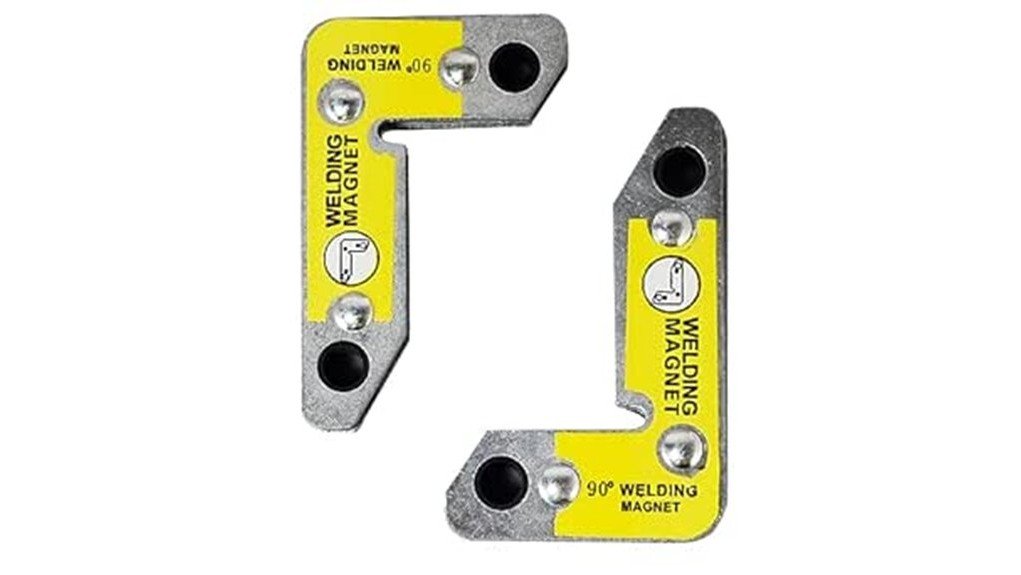
Holding two metal pieces at a clean 90-degree angle can be frustrating when one hand is on the torch and the other is trying to keep the joint aligned. The RIVERWELD Magnetic Corner Squares are designed to make that setup easier by gripping ferrous metal from the outside of the corner. Each square is described with a maximum pull force of 25 lbs (10 kg), which gives you useful holding strength for tack welding, layout work, and small fabrication jobs. This review helps you decide where these compact welding magnets work well, where they have limits, and who should consider them.
Quick Verdict
Rating: 8.2/10
Best For: Welders, DIY fabricators, and hobbyists who need a compact 90-degree magnetic holder for ferrous metal corners.
Bottom Line: The RIVERWELD Magnetic Corner Squares are worth considering if you need a simple outside-corner holder with a 25 lbs (10 kg) pull-force rating. They are not a universal clamp replacement, and they will not work on non-ferrous metals such as aluminum, brass, or copper.
| Specification | Detail |
|---|---|
| Brand | RIVERWELD |
| Product Type | Magnetic corner square / welding angle holder |
| Primary Angle | 90-degree corner holding |
| Maximum Pull Force | 25 lbs (10 kg) |
| Dimensions | 85 mm high x 55 mm wide x 14 mm thick |
| Design | Outside-corner grip that leaves the inside corner open for tack welds |
| Compatibility | Ferrous metals only |
| Best Use | Tack welding, corner alignment, layout work, and small metal fabrication setups |
| Safety Note | Use as a positioning aid, not as a substitute for proper clamping when the joint needs stronger restraint. |
What Is the RIVERWELD Magnetic Corner Square?
The RIVERWELD Magnetic Corner Square is a compact welding holder made to help you align ferrous metal at a 90-degree angle. Instead of placing a clamp inside the joint, it grips from the outside, which keeps the inside corner more open for tack welds.
Its listed size, 85 mm high, 55 mm wide, and 14 mm thick, makes it easier to use in small frames, brackets, boxes, and tight corner setups. The 25 lbs (10 kg) pull-force rating gives it enough holding strength for many light and medium alignment tasks, but you should still treat it as a setup aid rather than a heavy-duty structural clamp.
Before You Buy: These magnetic squares work only on ferrous metals. They are not the right tool for aluminum, brass, copper, or stainless grades that do not respond well to magnets.
Who Should Buy It?
Best For
- DIY welders who need a simple way to hold 90-degree corners before tack welding.
- Small-shop users working with mild steel frames, brackets, and square tubing.
- Hobbyists who want a compact magnetic holder for tight spaces and quick alignment.
Skip If
- You mainly weld aluminum, brass, copper, or other non-ferrous metals.
- You need a clamp that can resist heavy movement, twisting, or high-load positioning.
- You need adjustable angles beyond a basic 90-degree corner setup.
Design and Build Quality
The main design advantage is the outside-corner grip. By holding the workpieces from the outer faces, the RIVERWELD Magnetic Corner Squares leave the inside of the joint open, so you can place tack welds without fighting a bulky clamp inside the corner.
The article-supported dimensions make these squares compact enough for smaller fabrication work. At 85 mm high, 55 mm wide, and 14 mm thick, they should be easier to position around small frames, box sections, repair brackets, and other confined work areas where a larger welding magnet may get in the way.
The build is described as robust and durable, but the source article does not verify a specific material. For that reason, this review focuses on the practical design, magnet strength, size, and ferrous-metal use rather than making unsupported claims about the exact construction material.
Performance and Efficiency
The strongest performance claim is the 25 lbs (10 kg) maximum pull force. That level of grip can help hold small and medium ferrous workpieces steady while you check alignment, make layout marks, and place initial tack welds.
You still need realistic expectations. Magnetic holding force depends on the metal surface, thickness, cleanliness, contact area, and workpiece position. Paint, rust, mill scale, dust, and uneven edges can reduce grip, so you should clean the contact area before relying on the magnet.
For welding accuracy, the 90-degree design is the key feature. It helps reduce the need to hold two pieces by hand while you tack the joint, which can improve consistency and make setup less stressful, especially when you are working alone.
Fit, Compatibility, and Metal Type
These corner squares are made for ferrous metals. In normal shop terms, that means they are most useful on steels and other metals that respond to a magnet. If a magnet will not stick to your material, these squares will not hold it in place.
This matters most if you work across different materials. A steel tube frame may be a good match, while an aluminum project will need another setup method, such as clamps, fixtures, jigs, or a dedicated corner vise.
Pro Tip: Before welding, place the magnet on clean bare metal and test the hold with light hand pressure. If the pieces shift, add a clamp or fixture before you tack the joint.
How It Performs in Real Use
For Tack Welding Corners
The outside-corner design is useful when you need access to the inside corner for tack welds. You can use the square to hold the pieces in position, place a tack, check the angle, and then continue with your normal weld sequence.
For Small Frames and Brackets
The compact size helps when you are building small frames, brackets, and repair pieces. The magnet can act like an extra hand during layout, which is especially helpful if you do not have a full welding table fixture setup.
For Tight Spaces
At 14 mm thick, the square is slim enough for many tight work areas. It will not replace specialty clamps in every position, but it can make basic corner alignment easier when larger tools feel awkward.
For Repeated Shop Use
For repeat use, the biggest advantage is speed. You can quickly position ferrous workpieces at 90 degrees and keep moving, as long as you clean the contact surfaces and avoid using the magnet where stronger clamping is required.
How to Use It Correctly
Start by cleaning the contact faces on both pieces of metal. Dirt, heavy rust, slag, paint, and loose scale can reduce magnetic grip and may keep the workpieces from sitting flat against the square.
Next, position the square on the outside of the corner and confirm that both workpieces sit firmly against it. Check your angle before tacking, because the magnet helps hold alignment but does not correct poor cuts, warped stock, or uneven edges.
After the first tack, let the joint settle and recheck alignment. Heat can move metal during welding, so you may still need clamps, spacers, or a fixture for larger parts or jobs where the final angle matters closely.
Compatibility and Safety Notes
Magnetic squares are helpful positioning tools, but they should not be your only safety control. Keep your hands clear, support heavy workpieces properly, and do not trust a small magnet to hold parts that could fall, twist, or shift under load.
You should also keep the magnet away from sensitive electronics, magnetic storage media, and items that can be affected by magnetism. In a welding area, use normal protective gear and follow your welder, material, and shop safety instructions.
If you are working on structural, load-bearing, vehicle, or safety-critical parts, use proper clamps, fixtures, and professional welding practices. A magnetic corner square can help with positioning, but it does not verify weld quality or joint strength.
Pros and Cons
Pros
- Holds ferrous metal at a 90-degree angle for easier tack welding setup.
- 25 lbs (10 kg) maximum pull force gives useful grip for many small and medium alignment tasks.
- Outside-corner design leaves the inside joint area more open for tack welds.
- Compact 85 mm x 55 mm x 14 mm size fits better in tight work areas.
- Simple tool with no power, batteries, or complicated setup required.
Cons
- Not suitable for non-ferrous metals such as aluminum, brass, or copper.
- May not replace clamps or fixtures for heavy parts, awkward positions, or high-precision work.
- Holding strength can drop on dirty, painted, rusty, thin, or uneven metal surfaces.
Is It Worth the Price?
The RIVERWELD Magnetic Corner Squares can be a smart buy for everyday welding setup if your projects often involve 90-degree corners in ferrous metal. You get the most value from them if you build small frames, brackets, shelves, repairs, or hobby metal projects where fast alignment matters.
The value depends on how you work. If you already have a welding table with strong fixtures, these may serve as backup setup tools. If you often work alone or rely on one hand to hold parts in place, a compact magnetic square can make your workflow easier.
The honest limitation is compatibility. These squares are worth considering if you work mostly with steel, but they are not the best fit if your projects use non-ferrous metal or require adjustable angles.
How It Compares to Alternatives
Compared with standard clamps, magnetic corner squares are faster to place and easier to reposition. Clamps usually provide stronger mechanical pressure, though, so they may be better for heavy pieces or joints that need firm restraint.
Compared with adjustable angle magnets or corner vises, the RIVERWELD Magnetic Corner Squares are simpler and more compact. They make the most sense if you want a small 90-degree holder for quick alignment rather than a larger fixture with more angle options.
Frequently Asked Questions
Can the RIVERWELD Magnetic Corner Squares hold metal at 90 degrees?
Yes. The article-supported use is 90-degree corner alignment for ferrous metal workpieces. They grip from the outside of the corner, which helps keep the inside area open for tack welding.
What metals do these magnetic squares work with?
They are made for ferrous metals, which means the metal must respond to a magnet. They are not suitable for non-ferrous materials such as aluminum, brass, or copper.
How strong is the magnetic hold?
Each square is described with a maximum pull force of 25 lbs (10 kg). Real holding strength can vary based on surface cleanliness, metal thickness, contact area, and the position of the workpiece.
Are these safe for beginner welders?
They can be useful for beginners because they make basic metal positioning easier. Beginners should still use proper clamps when needed, wear welding safety gear, and avoid relying on the magnet to support heavy or unstable parts.
How do you clean and maintain the corner squares?
Wipe off metal dust, grinding debris, and welding residue after use. Store the squares in a dry place and keep the contact faces clean so the magnet can sit flat against the metal.
Can these replace clamps?
Not completely. They are better viewed as positioning aids for alignment and tack welding. For heavy workpieces, awkward setups, or joints under stress, you should use proper clamps or fixtures.
What should you check before buying?
Confirm that your projects use ferrous metal and that a fixed 90-degree holder fits your workflow. You should also check the current Amazon listing for package quantity, seller notes, and any warranty information before ordering.
The Bottom Line
The RIVERWELD Magnetic Corner Squares are a practical choice if you need a compact 90-degree holder for ferrous-metal welding setup, tack welding, and small fabrication projects. Their main strength is simple outside-corner alignment with a 25 lbs (10 kg) pull-force rating, while the main limitation is that they do not work on non-ferrous metals and cannot fully replace clamps. Skip them if you need adjustable angles, heavy mechanical clamping, or a solution for aluminum work.