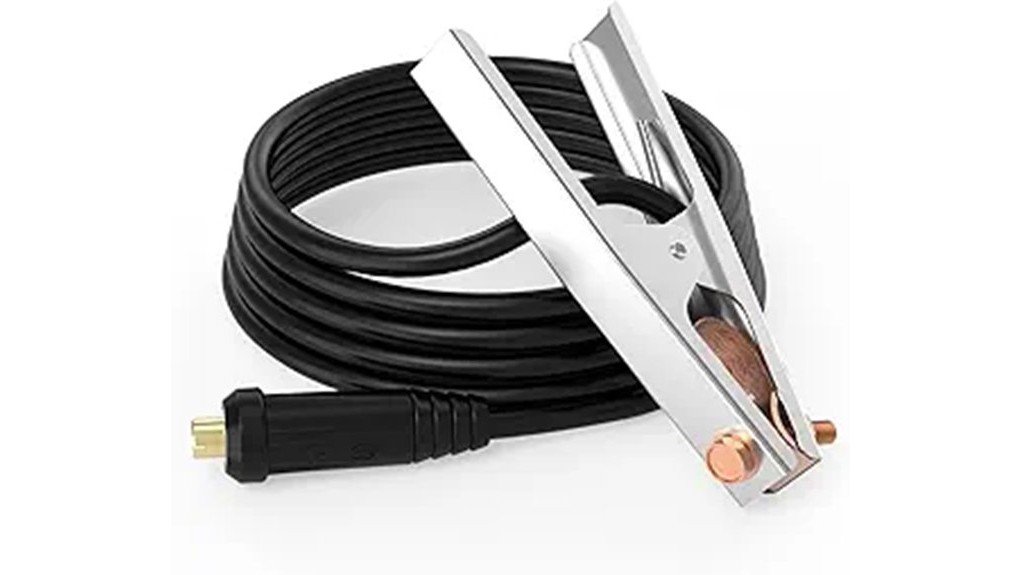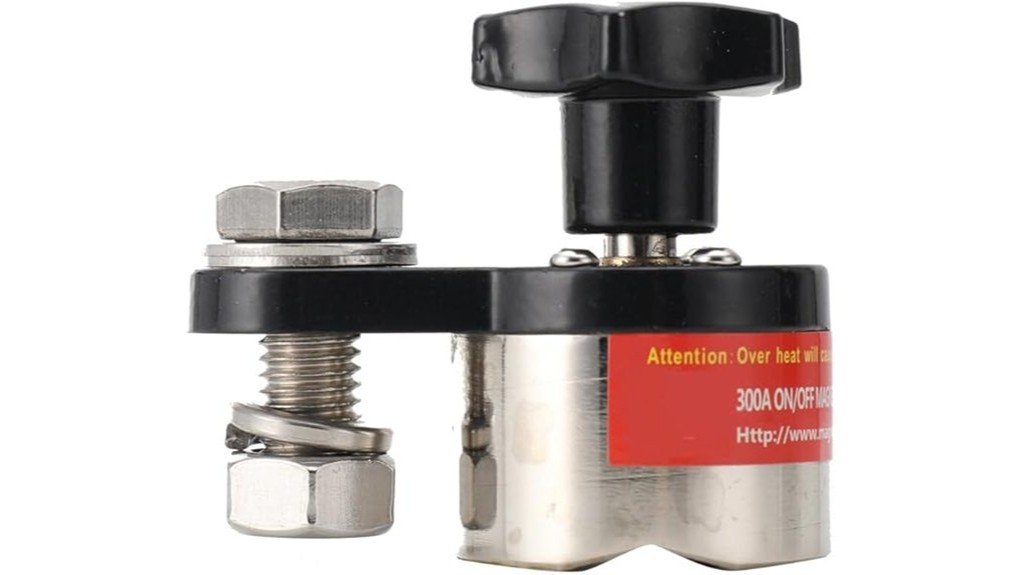
The 300A magnetic welding ground clamp is a switchable magnet clamp that sticks a work lead to steel without a screw or spring grip. The listing describes a 300A rating and a 40 kg (about 88 lb) pulling force. It suits quick set-ups on clean, flat steel, but it is not a substitute for a bolted ground on long, high-amp welds.
Quick Answer
- Best for: hobby and light fabrication work on flat, clean mild steel where you move the ground often.
- Skip if: you weld aluminum or non-magnetic stainless directly on the clamp surface, run near the top of the amp rating for long periods, or work on rusty or painted steel you cannot clean.
- Main limit: the connection is only as good as the contact patch. A magnet does not push current through rust or paint.
300A Magnetic Welding Ground Clamp Specs From the Listing
These details come from the Amazon listing and were not independently measured. Confirm them on the product page before you buy.
| Item | Per the listing |
|---|---|
| Rated current | 300A |
| Magnet pulling force | 40 kg (about 88 lb) |
| Control | ON/OFF switchable magnet |
| Size | 3.15 x 2.99 x 2.01 in |
| Weight | About 380 g (13.4 oz) |
| Cooling claim | Marketed as a fast-cooling design (the listing gives a 27% figure; we could not verify how it was measured) |
How a Switchable Magnetic Ground Clamp Works
A switchable magnet has an ON/OFF knob or lever that redirects the magnetic field into the work surface. When it is off, the clamp releases easily and metal dust or spatter can be shaken off. When it is on, the clamp holds to ferrous steel and your welding cable connects to it.
Because the clamp is small, the contact area is small. The listing size of about 3 x 3 inches is handy in tight spots, but it also means less surface to carry current than a large bolted lug.
Pros and Limitations
Pros
- Fast to place and move, with no hands needed to hold it.
- Useful on vertical or overhead steel where a spring clamp will not reach.
- Switch-off release makes it easier to clear dust and spatter.
- Compact body fits tight corners.
Limitations
- Works only on magnetic steel.
- Needs bare, flat metal. Paint, rust and mill scale increase resistance and heat.
- Small contact area compared with a bolted or large spring clamp.
- Strong magnets can add to arc blow on some joints.
- Durability is not something we can confirm from the listing, so inspect the cable connection and body regularly.
How to Use a Magnetic Ground Clamp Safely
- Grind or brush the contact spot to bright metal.
- Place the clamp flat on the steel and turn the magnet fully on before you strike an arc.
- Keep the cable lug tight and check it is not loose in the clamp body.
- Feel the clamp after the first few welds. If it is hot, clean the contact spot or switch to a bolted clamp.
- Switch the magnet off before moving it and keep it away from pacemakers, credit cards and your welding helmet electronics.
- Keep fingers clear when the magnet snaps onto steel.
Always ground as close to the weld as is practical, and make sure the return path does not run through bearings, chains or other parts that can be damaged by current.
Alternatives
If you need a different amp rating or style, compare these related reviews: the 200A magnetic welding ground clamp review, the 500 amp magnetic welding ground clamp review, and the 2 pack magnetic ground clamp review. For placement advice, read where to place the ground clamp when welding a car.
Frequently Asked Questions
Is a magnetic ground clamp good enough for MIG, stick and TIG?
It can work for light to moderate jobs on clean, flat steel, because the magnet gives a quick connection. The weld current still has to pass through the contact patch, so for long, high-amp welds a bolted or spring clamp onto bare metal is the safer choice.
Will it work on aluminum or stainless steel?
Only on magnetic material. Aluminum, copper and most austenitic stainless steels are not magnetic, so the clamp will not hold. Clamp it to a magnetic steel table or fixture that is bonded to the work instead.
What does the 300A rating mean?
It is the maximum current the clamp is rated for according to the listing. Duty cycle and cable size matter too, so check the product page and keep your welding amperage well inside the rating.
How do I get a good connection with a magnetic clamp?
Grind or wire-brush the contact spot to bare metal, place the clamp flat, and switch the magnet on fully. Rust, paint, mill scale and spatter all raise resistance and cause heat at the clamp.
Can a magnetic clamp affect the arc?
Strong magnets near the weld can contribute to arc blow, where the arc wanders. If you see it, move the clamp to the other end of the work or switch to a conventional clamp.